Why I Only Use Dumbbells for Strength Training at Home Now
The Day I Retired My Barbell
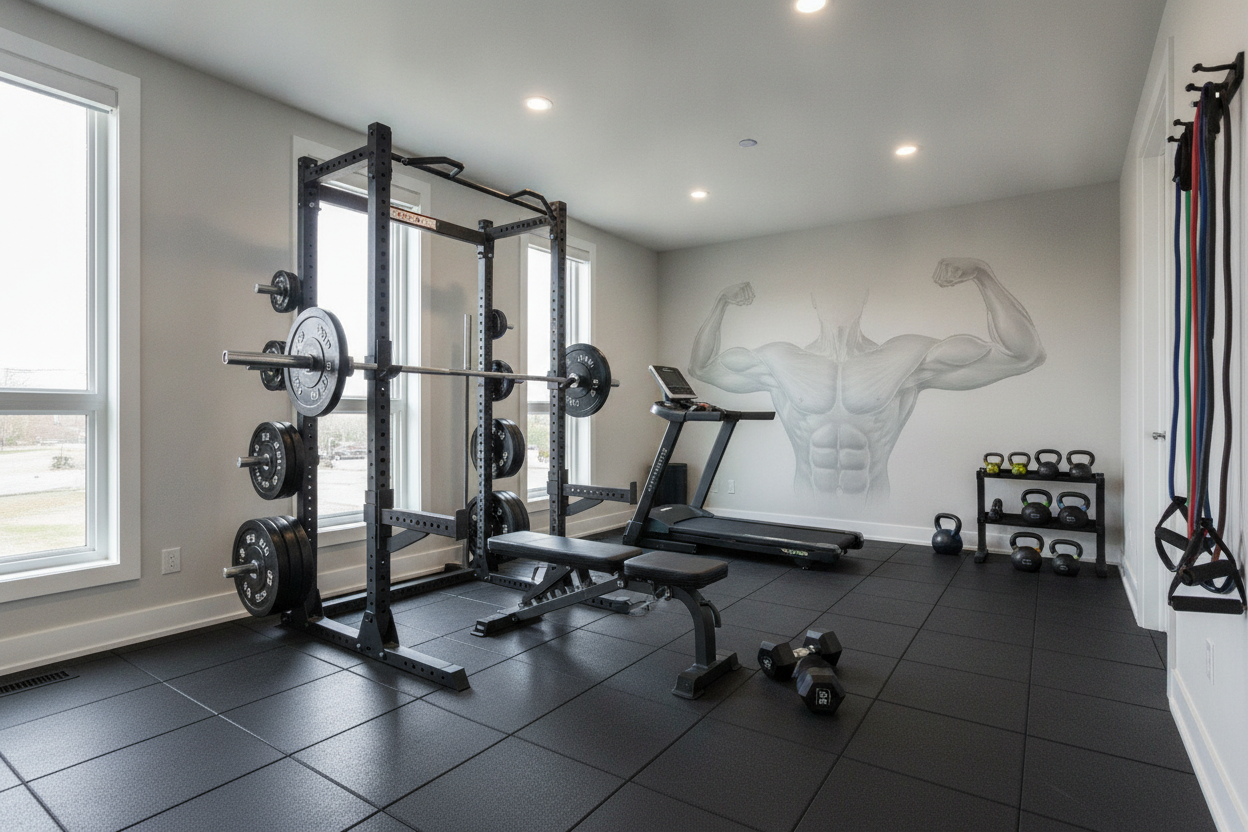
I used to be that guy. My garage looked like a basement powerlifting club from the 80s—rusting iron plates, a massive power rack that ate half the floor, and a 7-foot barbell that I treated like a sacred relic. I lived for the heavy triples. But eventually, my body started sending me invoices. My shoulders felt like they were filled with crushed gravel every morning, and my lower back was constantly in a state of high alert. The ritual of loading four plates just to feel something was becoming a chore, not a workout.
The breaking point came when I realized I was avoiding my workouts because the setup was too much work. Moving the car, clearing the debris, and warming up for 20 minutes just to survive a heavy squat session felt like a part-time job. I decided to strip it all back. I sold the rack, kept a solid bench, and went all-in on dumbbells for strength training at home. It wasn't just a space-saving move; it was a total shift in how I viewed longevity and muscle tension.
Why Dumbbells Are the Ultimate Space-Saving Hack
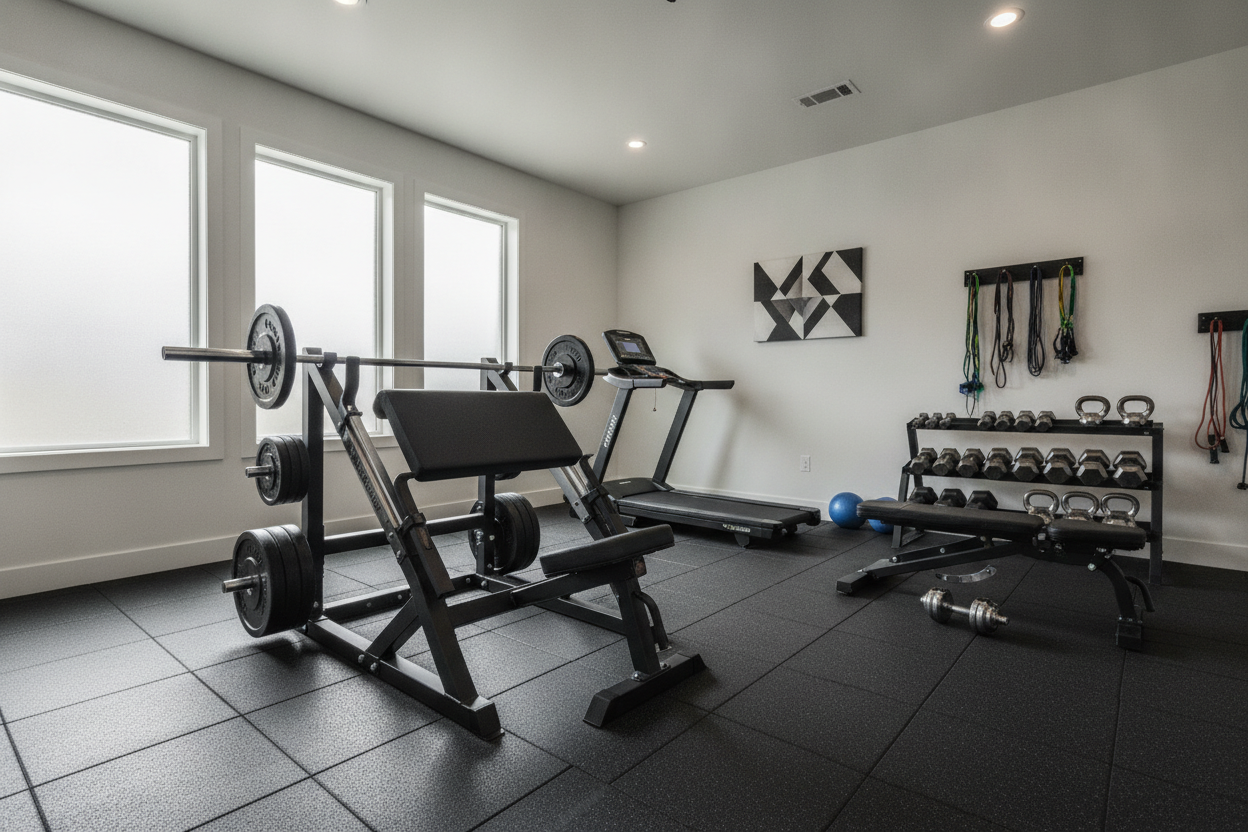
Let’s be real: most of us don’t have a 1,000-square-foot commercial space. We have a corner of the bedroom or a sliver of the garage. A full barbell setup requires a 7-foot horizontal clearance just to fit the bar, plus another 3 feet on each side to actually load the plates. That is a massive footprint for a single piece of gear. When you switch to dumbbells for weight training at home, your entire gym can fit under your bed or in a single vertical rack.
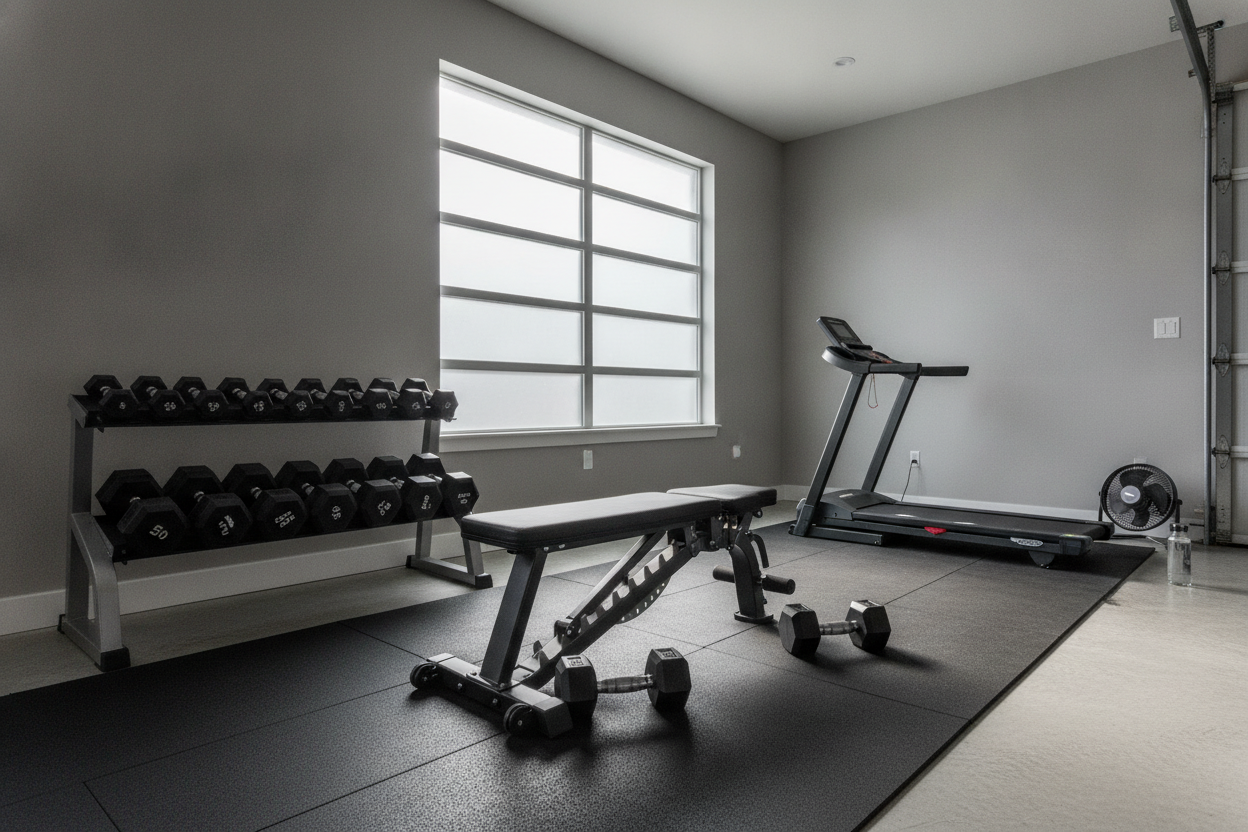
The efficiency is unmatched. I can move from a heavy chest press to a goblet squat in five seconds. You don't need a massive platform or a bolted-down rack to get work done. In fact, setting up a dedicated lifting zone is as simple as rolling out a large exercise mat for home gym. It gives you a defined boundary for your workout and saves your floor from the inevitable scuffs. If you are training in a 6x8 ft space, a pair of high-quality adjustable dumbbells is objectively superior to a cramped, dangerous barbell setup.
Quick Takeaways
- Dumbbells allow for a more natural range of motion, saving your shoulders and elbows from chronic wear.
- Unilateral training (one side at a time) fixes muscle imbalances that barbells often hide.
- You can achieve maximum muscle growth using tempo and tension rather than just raw poundage.
- A quality mat is non-negotiable if you want to keep your security deposit or your floor's resale value.
Fixing the Muscle Imbalances You Didn't Know You Had
The biggest lie the barbell tells you is that both sides of your body are working equally. They aren't. Your dominant side will always compensate, subtly shifting the load and creating imbalances that eventually lead to injury. When I switched to dumbbells, I realized my left lat was significantly weaker than my right. On a barbell row, I never noticed. On a single-arm dumbbell row? There was nowhere to hide.
Dumbbells force your stabilizer muscles to work overtime. Because each hand is moving independently, your core has to fire constantly to keep you from tipping over. When comparing dumbbells vs kettlebells, dumbbells usually win for pure hypertrophy because they are easier to load heavy and offer a more balanced center of gravity. This stabilization requirement means you are getting more 'bang for your buck' on every rep. You might lift less total weight than you would on a bar, but the quality of the contraction is often much higher.
A Quick Note on Protecting Your Floors
I learned this the hard way. I once dropped a 50-pound hex dumbbell on a piece of 'gym-grade' puzzle foam I bought at a big-box store. The foam compressed like tissue paper, and the weight left a permanent crater in the subfloor. If you are serious about training at home, you need a heavy-duty 6x8ft exercise mat that can actually absorb an impact.
Don't trust cheap, thin mats with heavy iron. A real mat should be thick enough to dampen the sound and dense enough that it doesn't slide when you are doing split squats. It turns any room into a legit training space and keeps your spouse or downstairs neighbors from hating your new hobby.
How to Actually Build Muscle Without a Rack
The most common objection I hear is: 'But I can't lift as heavy with dumbbells.' My answer is always: 'So what?' Muscle fibers don't have scales; they only respond to tension. If you want to build a stronger chest at home, you don't need a 315-pound bench press. You need deep-stretch dumbbell flies, high-volume presses with a 3-second eccentric, and floor presses that kill your triceps.
Progressive overload still applies, but you have more tools than just adding weight. You can decrease rest periods, increase the range of motion, or use pause reps. I've found that my muscle density has actually improved since leaving the barbell behind. My joints feel lubricated and healthy, which means I can train more frequently. Consistency beats a one-rep max every single time.
What to Buy (And What to Avoid Like the Plague)
If you are starting out, do not buy those cheap, sand-filled plastic weights. They leak, they are bulky, and the handles are usually slippery garbage. Buy cast iron hex dumbbells or a reputable adjustable system. If you go the adjustable route, look for a system that goes up to at least 50 lbs per hand. If you're an experienced lifter, you'll eventually want a set that hits 80 or 100 lbs.
Fixed hex dumbbells are the gold standard for durability. You can drop them (within reason), they don't roll away, and the knurling is usually better. However, they take up a lot of room. If you are tight on space, the high-end adjustable sets that change weight with a turn of a handle are worth the investment. Just don't buy the off-brand versions—I've seen the locking mechanisms fail on those, and a 50-pound plate falling on your face is a bad way to end a workout.
FAQ
Can I get big with just dumbbells?
Absolutely. Some of the greatest physiques in history were built with free weights. You just have to be willing to push your sets close to failure and focus on the mind-muscle connection. Volume and intensity are what drive growth, not the shape of the iron.
How much space do I really need?
If you can lie down flat and stretch your arms out, you have enough space. A 6x8 area is the sweet spot. It gives you enough room for lunges and lateral raises without hitting the walls.
Are dumbbells better for beginners?
Yes, because they teach you how to control weight in three dimensions. Barbells are more stable, which can actually lead to poor form habits early on. Dumbbells force you to develop the coordination and stabilizer strength that protects you long-term.