Why You're Not Building Muscle Mass (And What Your Body Needs)
I remember staring at my first $200 tub of 'anabolic' powder thinking it was the secret key to my transformation. It wasn't. The real secret to build muscle mass isn't found in a plastic jar with a holographic label; it's found in the grit of a cold barbell and the discipline to eat another chicken breast when you're bored of chewing. I've spent a decade testing racks, breaking bars, and failing reps so you don't have to.
- Mechanical tension is the primary driver of growth, not 'feeling the burn.'
- You must eat in a caloric surplus; you can't build a house without extra bricks.
- Recovery happens in bed, not in the gym.
- Heavy compound movements provide the best bang for your buck.
The Hard Truth About Muscle Mass Gain
Building tissue is an expensive biological process. Your body doesn't actually want to grow; it wants to maintain the status quo to save energy. To force muscle mass gain, you have to convince your nervous system that its current strength is insufficient for survival. Most marketing tells you that you need a 12-step supplement routine or a membership to a gym with 50 plate-loaded machines. That's garbage.
Your muscle fibers don't have eyes. They don't know if you're in a $100-a-month luxury club or a dusty garage with a rusty bar. They only respond to the load you put them under. I've seen guys get huge using nothing but a sandbag and a pull-up bar, while others stay skinny-fat despite owning every 'bio-hacking' gadget on the market. Stop looking for the shortcut. The biological reality of growth is raw, heavy, and often uncomfortable.
What Does the Body Need to Build Muscle?
If you're asking what does the body need to build muscle, the answer is three-fold: mechanical tension, metabolic stress, and muscle damage. Of those three, mechanical tension is king. This means lifting weights that are heavy enough to challenge your fibers near failure. I spent years doing high-rep fluff work with pink dumbbells, but I stopped chasing the pump and started focusing on adding five pounds to the bar every single week.
When you lift heavy, you create micro-tears in the muscle fibers. Your body then uses protein and energy to repair those tears, making the fibers slightly thicker than they were before. This is hypertrophy. If you aren't progressively overloading—meaning you're doing the same reps with the same weight you were doing three months ago—you aren't giving your body a reason to change. Your body needs to think it's going to get crushed if it doesn't get bigger.
Deep recovery is the final piece. You don't grow while you're lifting; you grow while you're sleeping. If you're hitting the gym six days a week on five hours of sleep, you're just digging a hole that your body can't fill. Growth is a systemic response, and it requires a rested nervous system to fire those motor units effectively during your next session.
Exactly What Do You Need to Build Muscle Mass at Home?
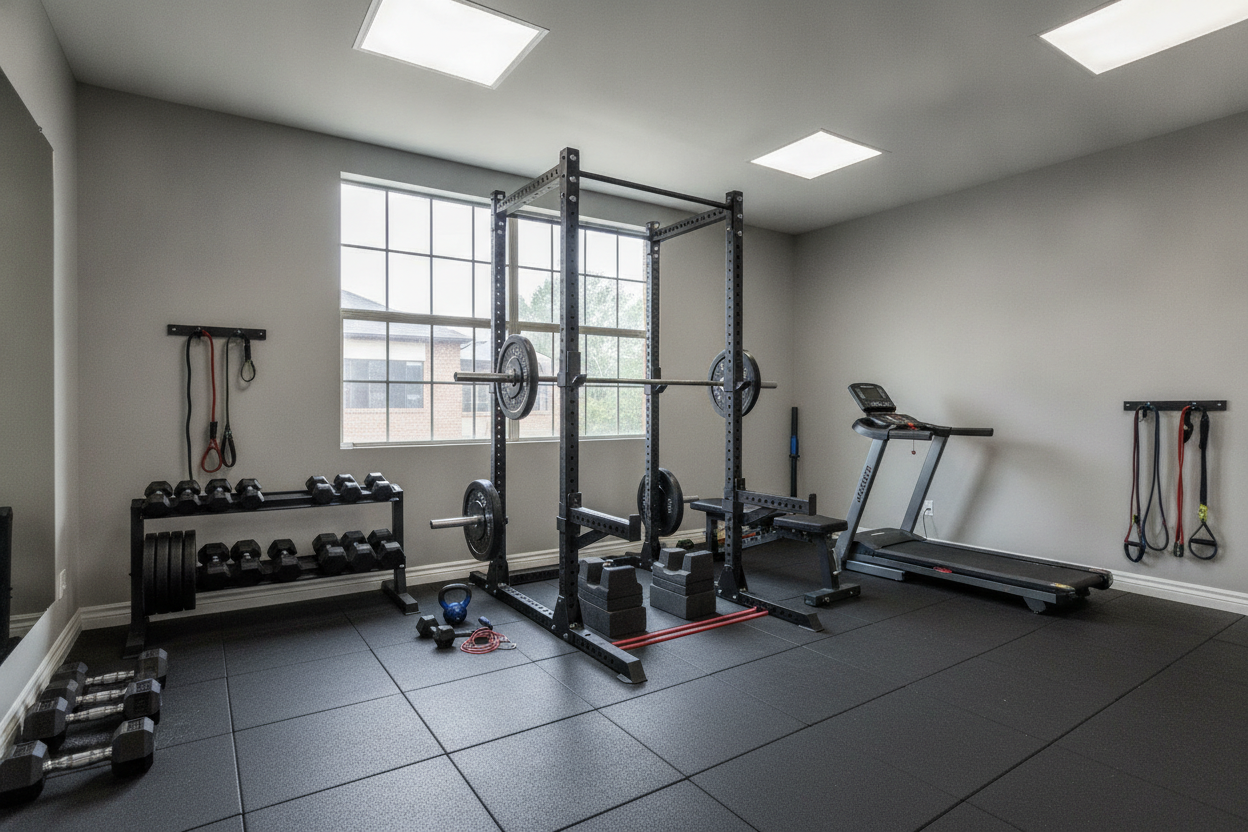
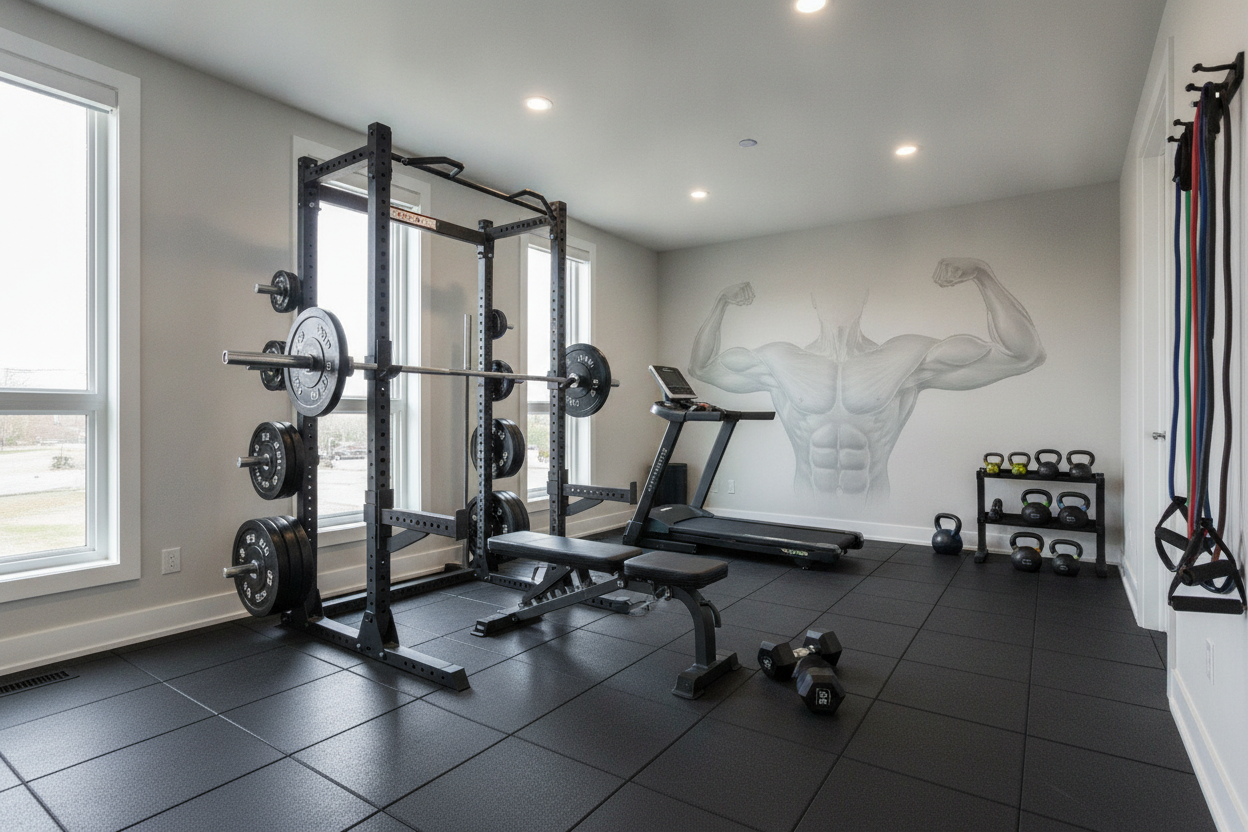
You don't need a 2,000-square-foot facility to see results. You can build muscle on a $500 budget if you prioritize the basics: a rack, a bar, and plates. When you're asking what do you need to build muscle mass at home, the answer is a setup that allows you to fail safely. If you're scared of getting pinned under a bench press, you'll never push hard enough to actually grow.
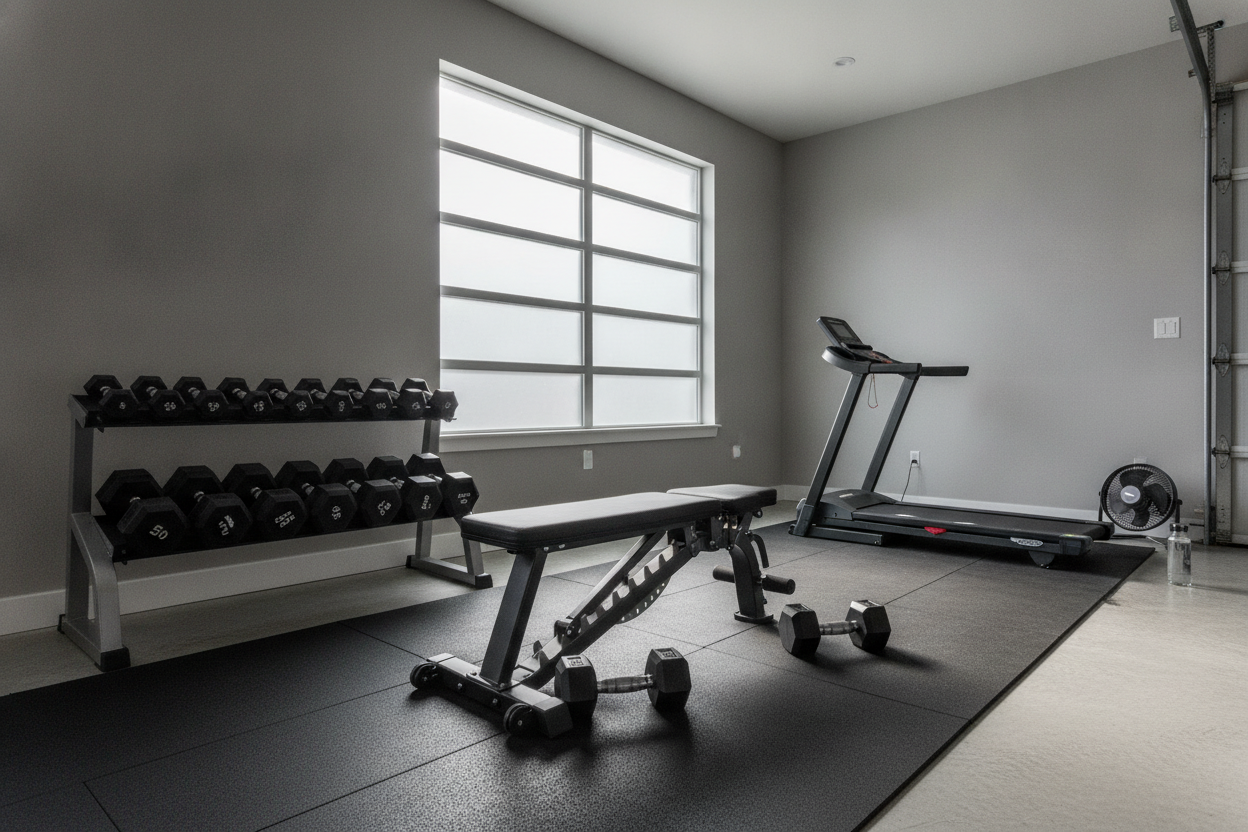
Don't skimp on the floor, either. If you're deadlifting 405 lbs on bare concrete or cheap 1/4-inch foam, you're asking for a slip or a cracked foundation. Investing in extra wide exercise mats gives you the grip and protection needed to actually push yourself. A stable surface is the difference between a confident lift and a tentative one. I've trained on slippery garage floors before, and it's a fast track to a groin strain.
Focus on equipment that offers versatility. A solid power rack with 3x3 steel uprights and 11-gauge steel is the gold standard. It will outlast you. Add a barbell with decent knurling—not the cheese-grater kind that draws blood, but enough to stay in your hands when they get sweaty—and you have everything you need to transform your physique.
Stop Skipping the Heavy Lower Body Work
Squats and deadlifts aren't just for building big legs. They trigger a massive systemic hormonal response that helps your entire frame grow. If you want a bigger chest and arms, you better be training your lower body with intensity. I see too many guys in home gyms focusing solely on curls and lateral raises while their squat rack gathers dust.
Training legs to failure is mentally taxing and physically dangerous without a spotter. If you're training alone, a lower body strength machine like a hack squat or a dedicated leg press can be a lifesaver. It allows you to absolutely torch your quads without worrying about a 300-lb bar crushing your spine. I used to skip legs because my lower back felt 'off'; once I incorporated machines that stabilized my torso, my leg volume tripled, and my overall body weight finally started climbing.
The Kitchen is Where the Real Growth Happens
You can't build a house without bricks, and you can't build muscle without a caloric surplus. Most people who 'can't gain weight' are simply not eating enough. You need protein to repair the tissue (aim for 1 gram per pound of bodyweight) and carbohydrates to fuel the intense sessions required to stimulate that growth. If you're eating like a bird, you'll stay the size of a bird.
Consistency is the boring truth. It’s not about one 'epic' workout; it’s about 150 'good' workouts and 400 'clean' meals. Track your macros for two weeks just to see how much you're actually consuming. Most people are shocked to find they're 500 calories short of what they actually need. Eat the steak, drink the water, and get to bed early.
How long does it take to see muscle mass gain?
For a natural lifter, you might see noticeable changes in 8 to 12 weeks of consistent training and eating. True, significant transformation usually takes 6 months to a year of disciplined work. Don't trust the 30-day 'shred' programs.
Do I need supplements to build muscle?
No. Supplements are the last 5% of your results. Focus on whole foods, sleep, and progressive overload first. If you have extra cash, creatine monohydrate is the only thing truly proven to help with power output and cell hydration.
Can I build muscle with just dumbbells?
Yes, but it's harder to progressively overload indefinitely. Eventually, you'll need heavier loads than most home dumbbell sets provide. A barbell is the most efficient tool for long-term growth because you can micro-load it with small plates.