Why I Finally Added a Treadmill to My Home Gym (And How It Changed Everything)
Setting up a home gym is one of the best investments you can make in your health, but choosing the right equipment can feel overwhelming. After months of research and testing, I learned that adding a treadmill to my home gym was the missing piece that transformed my fitness routine from inconsistent to sustainable.
A treadmill for home gym use offers something no other cardio equipment can match: the natural movement of walking and running without weather constraints or safety concerns. Unlike outdoor running, you control every variable—speed, incline, duration—making it easier to stick to structured training plans and track progress accurately.
The Reality of Building a Treadmill Home Gym
When I started building my home gym three years ago, I focused on weights, resistance bands, and a yoga mat. I convinced myself I'd run outside for cardio. That lasted about two weeks into winter. Rain, snow, darkness after work, and icy sidewalks became convenient excuses to skip cardio entirely.
The turning point came when I realized I was sabotaging my strength training results. You can't build a balanced fitness foundation without cardiovascular conditioning. My recovery between sets was poor, my endurance lagged, and I felt winded climbing stairs despite being able to deadlift respectable weight.
Space and Budget Considerations
The biggest concern most people have about adding a treadmill to their home gym setup is space. Modern treadmills come in various sizes, including folding models that can be stored vertically or slid under a bed. I measured my available space and found that even in a modest 10x10 foot room, a treadmill fit comfortably alongside my other equipment.
Budget matters too. Quality treadmills range from $500 for basic models to $3,000+ for commercial-grade machines. I went with a mid-range option around $1,200, which has held up perfectly through daily use. The key is prioritizing motor power (at least 2.5 continuous horsepower), deck size (at least 55 inches long for running), and warranty coverage.
Features That Actually Matter
Marketing materials will bombard you with features you don't need. Touchscreens, built-in fans, and speaker systems are nice bonuses, but they shouldn't drive your decision. What matters is motor reliability, cushioning quality, incline capability, and sturdy construction.
The treadmill I chose has a simple LCD display showing speed, distance, time, and calories. That's it. No subscription services, no Wi-Fi connectivity, no apps. This simplicity means fewer things to break and zero ongoing costs beyond electricity.
How a Treadmill Complements Other Equipment
A treadmill and home gym equipment work together synergistically. On strength training days, I use the treadmill for a 5-10 minute warm-up to increase blood flow and prepare my joints. This simple addition reduced my injury rate noticeably compared to jumping straight into heavy lifts.
Active recovery is another benefit I didn't anticipate. After intense leg days, a 20-minute walk at a gentle incline helps flush out metabolic waste and reduces soreness. I can do this while watching a show or listening to a podcast, making recovery feel less like a chore.
High-intensity interval training (HIIT) on a treadmill provides efficient cardio sessions that don't require much time. I alternate between 30-second sprints and 90-second recovery walks for 15-20 minutes. This approach maintains my cardiovascular fitness without interfering with muscle recovery from weight training.
Practical Tips From Real Use
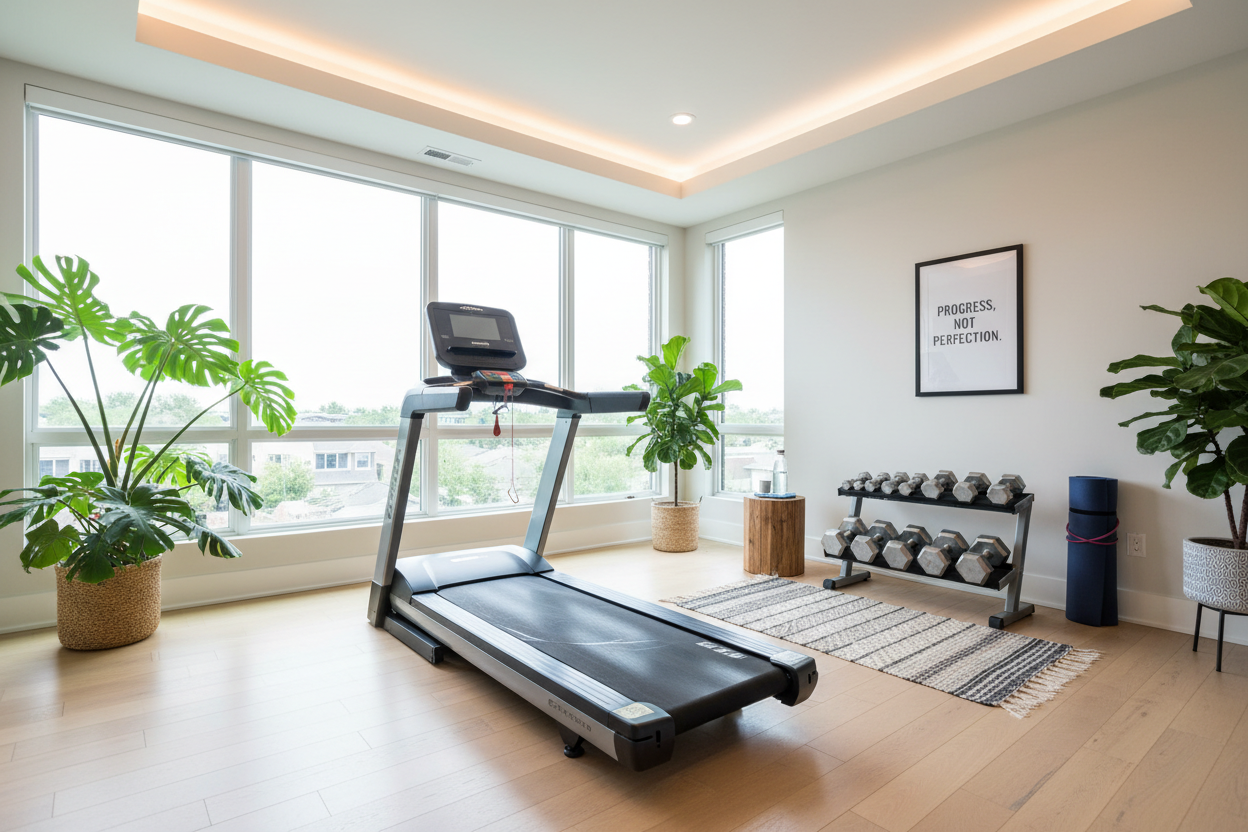
After three years of daily treadmill use, I've learned what works and what doesn't. Placement matters more than you'd think. I positioned mine near a window for natural light and good ventilation. Running in a dark corner of the basement made workouts feel like punishment rather than self-care.
Maintenance is minimal but essential. I vacuum under and around the treadmill weekly to prevent dust buildup in the motor. Every few months, I apply lubricant to the deck according to the manufacturer's instructions. These simple habits have kept my machine running smoothly with zero repairs needed.
Noise was a concern initially since I live in an apartment. A quality rubber mat underneath the treadmill absorbs vibration and reduces noise transmission significantly. My downstairs neighbors have never complained, even during early morning workouts.
The Mental Health Advantage
Beyond physical fitness, having a treadmill in my home gym has improved my mental health in unexpected ways. Bad days happen. Sometimes motivation is nonexistent. On those days, I can still put on shoes, step onto the treadmill, and walk for 15 minutes. That's often enough to shift my mood and restore some sense of accomplishment.
The convenience factor eliminates excuses. No commute to a gym, no waiting for equipment, no concern about what you're wearing or who's watching. This psychological barrier removal means I actually use the equipment consistently rather than letting it collect dust.
Training Versatility You Can't Get Elsewhere
Walking meetings have become part of my work routine. I take phone calls while walking at a comfortable 2.5-3 mph pace. This turns sedentary time into light activity without requiring dedicated workout time. Over a week, these walking meetings add up to several miles of movement I wouldn't have gotten otherwise.
Incline training deserves special mention. Most quality treadmills offer incline up to 10-15%, which simulates hill climbing and engages different muscle groups than flat running. I use incline walks as a low-impact alternative to running that still provides excellent cardiovascular and lower body benefits.
Making the Investment Worthwhile
A treadmill for home gym use only provides value if you actually use it. I track my usage in a simple notebook—just date and duration. Seeing the consistency builds momentum. Some months I log 50+ miles, other months maybe 20, but the habit remains intact.
The cost per use calculation helped justify the investment. After three years of nearly daily use, my treadmill has cost roughly 30 cents per workout session. Compare that to gym memberships, outdoor running shoes that wear out faster on pavement, or the health costs of a sedentary lifestyle.
Integration with your existing routine is crucial. I don't view treadmill time as separate from my home gym workouts—it's part of the same ecosystem. Some days it's the warm-up, other days it's the main event, and sometimes it's just background movement while I think through problems.
Common Mistakes to Avoid
Don't buy a treadmill that's too small for your stride. I'm 6'1" and initially considered a compact model to save space. Testing it in the store revealed I felt cramped and couldn't run naturally. Spending extra for a longer deck was worth every penny for comfort and safety.
Avoid the temptation to go too cheap. Budget treadmills under $400 often have weak motors that burn out quickly under regular use. They're also louder, less stable, and provide poor cushioning that can lead to joint pain. Saving a few hundred dollars upfront can cost you more in replacements and potential injuries.
Assembly matters. I paid an extra $150 for professional assembly, which ensured everything was properly calibrated and tightened. Watching the technician work made me glad I didn't attempt it myself—there are safety-critical adjustments that aren't obvious from instruction manuals.
Frequently Asked Questions
How much space do I really need for a treadmill in my home gym?
Plan for at least 7 feet long by 3 feet wide, plus an additional 2-3 feet of clearance behind the treadmill for safety. Folding models can reduce the footprint when not in use, but you still need adequate space during workouts. Measure your available area before shopping to avoid buying equipment that doesn't fit comfortably.
Is a treadmill worth it if I already have other cardio equipment?
Yes, because running and walking are fundamental human movements that engage your body differently than cycling or rowing. A treadmill provides weight-bearing exercise that supports bone density and uses running-specific muscle patterns. Having variety also prevents boredom and overuse injuries from repetitive motion.
What's the minimum motor size I should consider for regular running?
Look for at least 2.5 continuous horsepower (CHP) if you plan to run regularly, or 3.0 CHP if you're a heavier runner or want the machine to last longer. Peak horsepower ratings are marketing fluff—continuous horsepower is what matters. A quality motor runs quieter, lasts longer, and provides smoother speed transitions during workouts.