Why I Do All My shoulder workout exercises Against a Bare Wall
I remember the afternoon I realized my seated overhead press was a lie. I was grinding out reps with 80-pound dumbbells, feeling like a beast, until I caught my profile in the mirror. My back was arched like a bridge, my chest was pointing at the ceiling, and I was basically doing a high-incline bench press. If you are looking for effective shoulder workout exercises, the first thing you need to do is stop let the equipment help you cheat.
- Benches allow for lumbar arching that shifts the load from delts to chest.
- Wall-seated pressing forces absolute isolation of all three shoulder heads.
- It immediately exposes 'ego lifting' by removing momentum.
- Requires zero expensive machinery—just a wall and a solid mat.
The Problem With Your Seated Press (And Why Your Chest Takes Over)
Most people searching for what exercise works shoulders end up on a padded adjustable bench. It seems logical. But the moment the weight gets heavy, your body looks for the path of least resistance. You arch your lower back, sliding your butt forward, which changes the pressing angle. Suddenly, you aren't doing weightlifting shoulder exercises anymore; you are doing an upper chest workout. Your deltoids get a break, and your ego gets a boost because you can move more weight.
This is why so many gym shoulder workouts fail to build that capped look. When you are workouts for your shoulders, you want the medial and anterior deltoids to take the brunt of the force. By allowing your spine to curve against a soft pad, you're effectively turning a vertical press into a diagonal one. It is a subtle cheat that sabotages your gains and puts unnecessary shear force on your lumbar spine. If you want to work shoulders properly, you have to find a way to stay vertical.
Why Pinned Wall Movements Are the Ultimate Form Check
About a year ago, I ditched the bench and moved to the floor. I sat with my legs out, glutes pinned to the drywall, and my shoulder blades pressed flat. The difference was staggering. Without the ability to lean back, my 'heavy' sets felt twice as heavy. This setup removes every bit of 'body English' and momentum. It is a brutal reality check for anyone used to standard gym shoulder workouts where the equipment does half the stabilizing for you.
When you are pinned against a bare wall, your head, upper back, and butt must maintain contact at all times. This forces your core to engage and ensures the weightlifting shoulder workout stays focused on the target muscles. You can't leg drive. You can't hip drive. It is just you and the iron. This is how to workout shoulder muscles for density rather than just chasing a number on the side of a dumbbell. It forces a level of strictness that most lifters haven't experienced since their first day in the gym.
The Bare-Wall Routine: 3 Moves That Will Humble You
I don't mess around with twenty different types of shoulder workouts. I pick three movements that cover the bases and perform them with zero-momentum strictness. If you can't do these for 10 reps with your back glued to the wall, the weight is too heavy. Period.
The Dead-Stop Wall Press
Sit on the floor with your back against the wall. Hold dumbbells at shoulder height, palms facing in or forward. Press them up until your arms are straight, ensuring your shoulder blades never leave the wall. This is the gold standard for shoulder training. You will likely have to drop your usual weight by 20% to 30%. It’s a humbling experience, but it ensures that the anterior and medial delts are doing 100% of the work without any lower shoulder workout compensation or lower back arching.
Strict Scapular Lateral Raises
Most people swing their lateral raises like they’re trying to take flight. To fix this, stand with your back against the wall and your heels a few inches out. Perform your lateral raises so that the dumbbells or your knuckles lightly brush the wall behind you as you lift. This answers exactly what is shoulder exercise efficiency—it’s about keeping the tension on the lateral head. You cannot use your hips to swing the weight when the wall is right there to catch you.
The Zero-Momentum Front Raise
Front raises are the most abused exercise in the gym. People swing their whole bodies to move the weight. Sit back down against your wall, legs extended. Raise the dumbbells to eye level and hold for a split second. Because you are pinned, your front delts have to fight for every inch. This is one of those shoulder exercises in gym settings that people usually skip because it’s 'too hard,' but it’s the fastest way to build that front-end thickness.
How to Set Up Your Floor Space for Strict Pressing
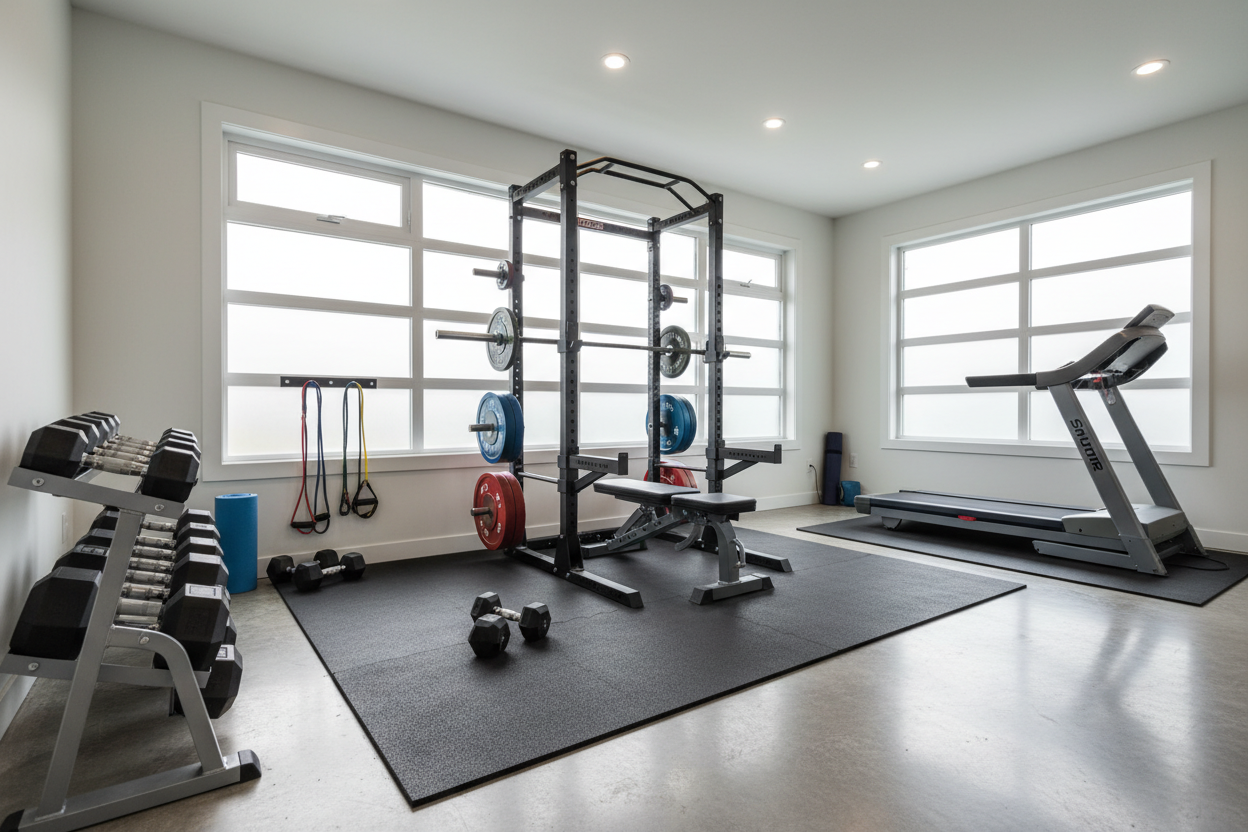
You don't need a fancy rack for this, but you do need to protect your tailbone. Sitting on a hard garage floor while pressing heavy weights is a recipe for a bruised coccyx. I personally use a 6x8ft exercise mat which provides enough density to support my weight without being so squishy that I lose stability. It’s a much better setup than trying to balance on a thin yoga mat that slides around while you’re trying to hit a PR.
If you're outfitting a larger garage space, a large exercise mat is a solid investment. You want something that stays put when you're pushing your back into the wall. I’ve found that having a dedicated 'strict zone' in the gym helps with the mental shift. When I'm on the mat, I'm not ego lifting. I'm focused on the contraction. It’s a simple shift, but it’s the difference between just moving weight and actually building muscle.
Is there a lower shoulder workout?
Technically, the 'shoulder' is the deltoid, which has three heads: anterior, lateral, and posterior. There isn't really a 'lower' shoulder muscle. Usually, when people say this, they mean the rear delts or the lower traps. Wall-supported face pulls or rear delt flies are great for that area.
Can I do these movements with a barbell?
It’s tough. The bar path usually requires your head to move back, which is hard when there's a wall in the way. I recommend dumbbells, kettlebells, or even a pair of heavy resistance bands for wall-based shoulder training.
What if my wall has baseboards?
Just sit an inch or two away from the wall so your butt clears the baseboard, but make sure your shoulder blades and the back of your head are still making firm contact. The goal is to keep the spine neutral and vertical.