Is Your Anatomical Exercise Selection Hitting the Right Muscles?
I spent three hours last night scrolling through a forum comparing the tensile strength of various power rack bolts, only to realize I was overthinking the steel and underthinking the person using it. We buy the best barbells with the sharpest knurling and the most expensive plates, but then we fill our programs with 'circus' movements we saw on a 30-second TikTok. If your anatomical exercise selection is based on what looks cool rather than how your joints actually move, you are just expensive-equipment-adjacent, not an athlete.
Quick Takeaways
- Gravity only pulls down; if your 'chest' move loses tension at the top, it is a bad move.
- Stability is the king of hypertrophy—if you are wobbling, your brain won't let your muscles grow.
- Stop doing three variations of the same movement; your muscle fibers can't tell the difference between two different brands of dumbbells.
- The best exercise is the one that fits your specific limb lengths, not a generic 'must-do' list.
Why Most 'Optimal' Lifts Belong in the Trash
Social media has absolutely poisoned the well when it comes to the anatomy of a workout. I see guys in my local gym doing weird, twisting cable movements that look more like a mating dance than a chest press. They call it 'optimal,' but they are ignoring basic physics. They think they are reinventing the wheel, but they are just making the wheel square and wondering why the ride is bumpy.
Instead of chasing the newest 'hack,' you need to understand that your muscles respond to tension, not novelty. If you want to stop guessing, you should check out this definitive anatomy guide for growth. It helps you map out what each muscle actually does so you can stop doing movements that look good on camera but do nothing for your physique.
The Line of Pull: Why Dumbbell Flyes Are Wasting Your Time
Let's talk about the relationship between exercise and anatomy. Take the dumbbell flye. It is a classic, right? Arnold did them. But look at the mechanics. At the bottom, the tension on your pec is massive. As you bring the weights together at the top, gravity is still pulling straight down toward the floor, but your arms are vertical. There is zero tension on your chest at the peak of the movement.
If you want to respect the anatomy for exercise, you have to follow the line of pull. A cable flye provides constant tension because the resistance is coming from the side, not just from gravity. In my garage, I’ll take a functional trainer over a pair of 50-lb dumbbells for flyes every single day. You want the resistance to oppose the muscle's direction of contraction, not just fall toward your feet.
You Can't Out-Train a Shaky Foundation
I’ve seen guys try to do heavy overhead presses while standing on a bosu ball. That is the fastest way to shut down your gains. Your nervous system is smarter than you are. If it senses that you are unstable, it will down-regulate the force your muscles can produce. It’s a safety mechanism to prevent you from snapping a tendon while performing anatomy exercises on an unstable base.
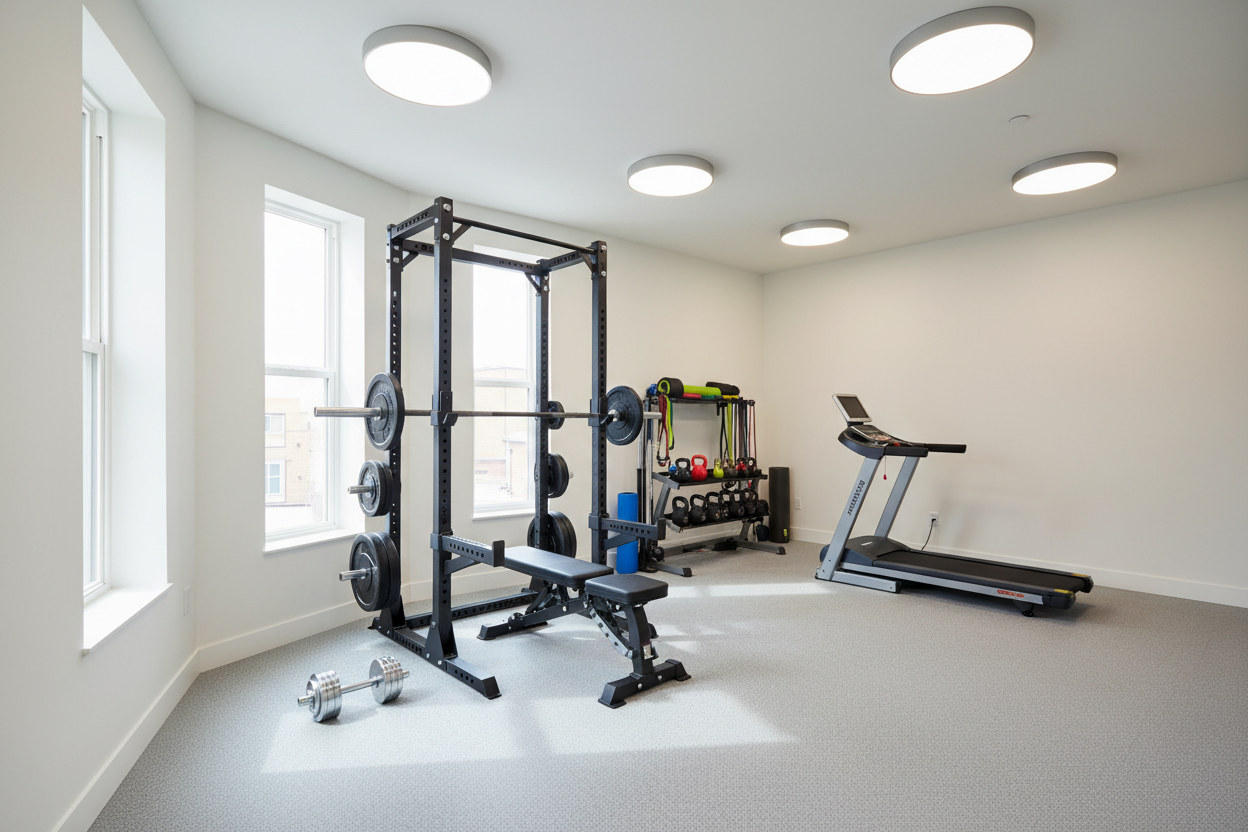
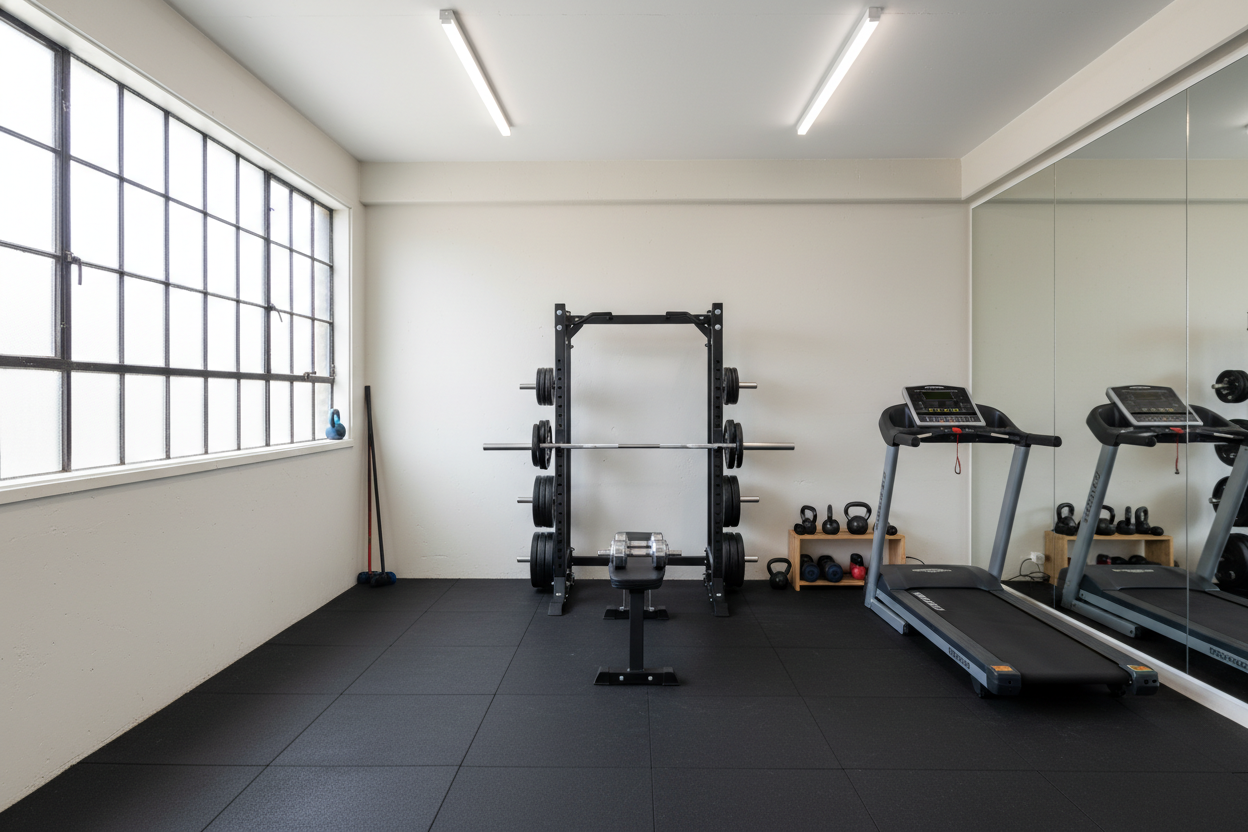
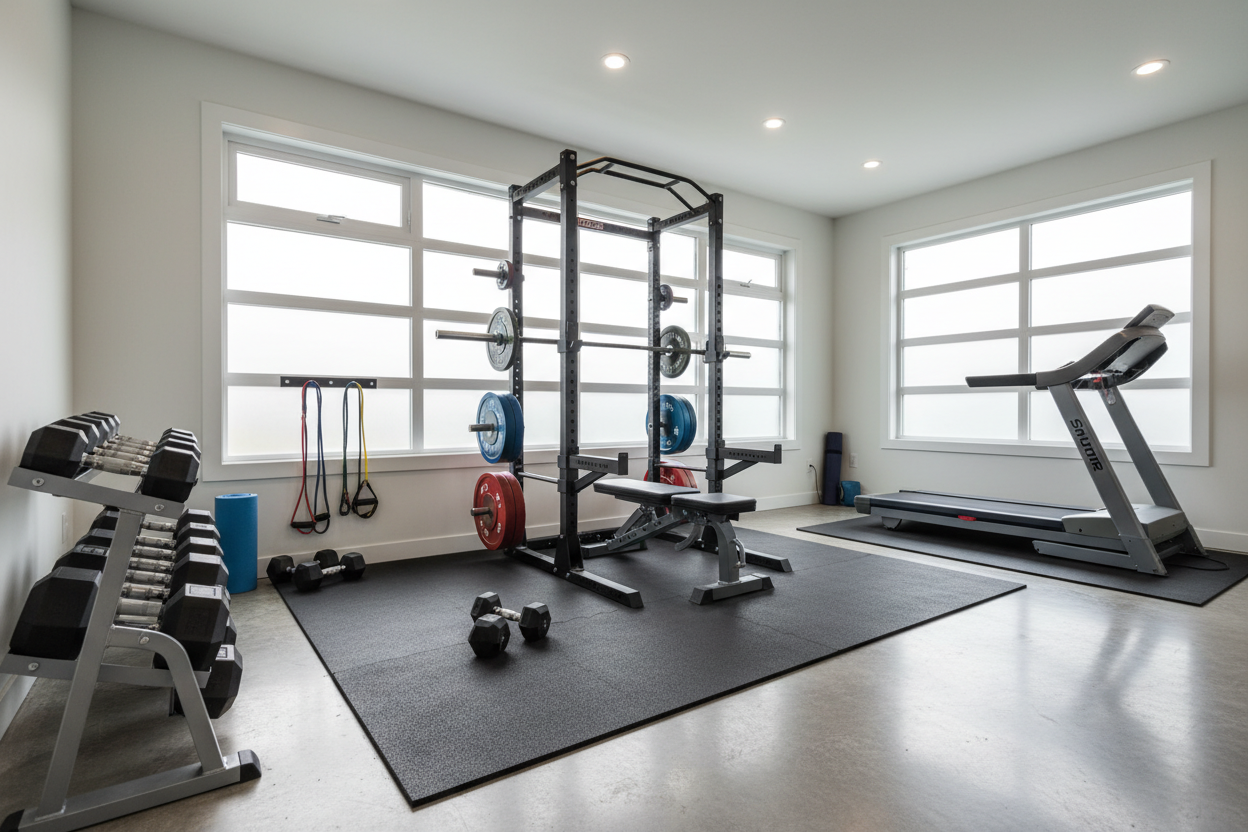
This is why I'm a stickler for a solid floor. Whether you are doing split squats or heavy rows, you need to be anchored. I always recommend a large exercise mat for home gym use because it provides that high-friction surface that prevents your feet from sliding. If you're sliding, you're not growing. You're just surviving the set.
How to Audit Your Own Workout Anatomy
Most people have way too much redundancy in their workout anatomy. If you are doing a flat barbell bench press, a flat dumbbell press, and a flat machine press in the same session, you are wasting time. You are hitting the exact same fibers from the exact same angle. Your body doesn't know you switched equipment; it just knows the resistance is coming from the same direction.
Pick one heavy compound move, then one or two isolation moves that hit the muscle from a different point in the strength curve (one where it's hardest at the stretch, and one where it's hardest at the contraction). I like to clear out a space on my 6x8ft exercise mat gym flooring and actually lay out my equipment to visualize the flow. If two moves look the same, one of them has to go.
My 3-Step Test Before Adding Any New Lift
Before I let a new anatomy workout move into my permanent rotation, it has to pass three tests. First, does it actually load the target muscle through a full range? Second, does it fit my skeletal structure? If a movement hurts my elbows (looking at you, straight-bar skull crushers), I don't do it. My 40-year-old joints don't care about 'hardcore' tradition.
Third, can I load it progressively? If a move is so awkward that I can't safely add 2.5 lbs next week, it’s a waste of time for the anatomy of exercise. Real growth comes from doing the boring, effective stuff with more weight over time. Don't let a 15-second reel convince you otherwise.
Personal Experience: The 'Pro' Program Trap
A few years back, I followed a high-volume shoulder routine from a pro bodybuilder. It had me doing behind-the-neck presses and upright rows with a narrow grip. Within three weeks, my right rotator cuff felt like it had been chewed on by a lawnmower. I was so focused on the 'pro' status of the workout that I ignored my own exercise anatomy. I had to take two months off and restart with nothing but a PVC pipe. Now, if a move feels 'crunchy' in my joints, I dump it immediately, no matter who recommends it.
FAQ
How do I know if an exercise fits my anatomy?
If you can feel the target muscle working without sharp pain in the surrounding joints, it's likely a good fit. If you only feel your joints 'clicking' or 'grinding,' the mechanics are wrong for your limb lengths.
Are machines better than free weights for anatomy?
Not necessarily, but machines provide better stability. For pure muscle growth, a machine often wins because you don't have to balance the weight, allowing you to push closer to absolute failure safely.
What is the 'line of pull'?
It’s the direction the resistance is traveling. To maximize a muscle, you want the resistance to pull directly opposite of the way that muscle's fibers run. For example, your lats pull down and slightly back, so your rows should follow that same path.