Why Every Home Gym Needs a Proper Storage Solution (And How It Changed My Workouts)
I'll never forget the day I nearly tripped over a rogue dumbbell in my garage gym. There I was, mid-burpee, when my foot caught the edge of a 15kg weight I'd left on the floor after my previous workout. That near-miss was my wake-up call: if I was serious about fitness, I needed to get serious about organization. That's when I discovered how much difference a good rack makes to not just safety, but to the entire workout experience.
The Foundation of a Functional Fitness Space
Whether you're working out at home or managing a commercial gym, proper equipment storage isn't just about tidiness—it's about creating an environment that supports your fitness goals. A well-organized space reduces injury risk, saves time between exercises, and honestly, makes you more likely to actually use your equipment. When everything has its place, you're not wasting precious workout time hunting for the right weight or untangling resistance bands.
Research from sports facility management studies shows that organized training environments correlate with better adherence to workout routines. When your space feels professional and purposeful, you treat your workouts with the same respect. It's psychology working in your favor.
What Makes a Storage System Worth Your Investment
Not all storage solutions are created equal, and I learned this the hard way. My first attempt at organizing my home gym involved a flimsy metal shelf from a discount store. Within three months, it was bowing under the weight of my kettlebells, and I was back to square one. Here's what actually matters when you're choosing equipment storage:
Weight Capacity and Durability
Your storage needs to handle the load—literally. Quality racks are typically constructed from heavy-gauge steel with weight capacities ranging from 200kg to over 500kg depending on the design. If you're storing cast iron weights, dumbbells, or plate-loaded equipment, you need something that won't buckle or warp over time. Look for powder-coated finishes that resist scratches and corrosion, especially if you're working out in a garage or basement where humidity can be an issue.
Footprint and Space Efficiency
Good racks maximize vertical space rather than eating up your floor area. This is particularly crucial in home gyms where every square meter counts. Vertical storage systems can hold dozens of dumbbells, kettlebells, or weight plates while occupying less than a square meter of floor space. I've seen compact designs that store everything from resistance bands to medicine balls in surprisingly small footprints.
Accessibility and Workout Flow
Here's something many people overlook: how easy is it to grab what you need mid-workout? During circuit training or supersets, you don't want to be wrestling equipment off a crowded shelf. Quality storage systems feature angled tiers or individual cradles that make selecting and returning weights effortless. This matters more than you'd think when you're between sets and your heart rate is elevated.
Different Types for Different Training Styles
Your storage needs depend entirely on your training approach and available equipment. Someone focused on powerlifting needs different solutions than someone doing high-intensity interval training or bodyweight exercises.
Dumbbell Storage Solutions
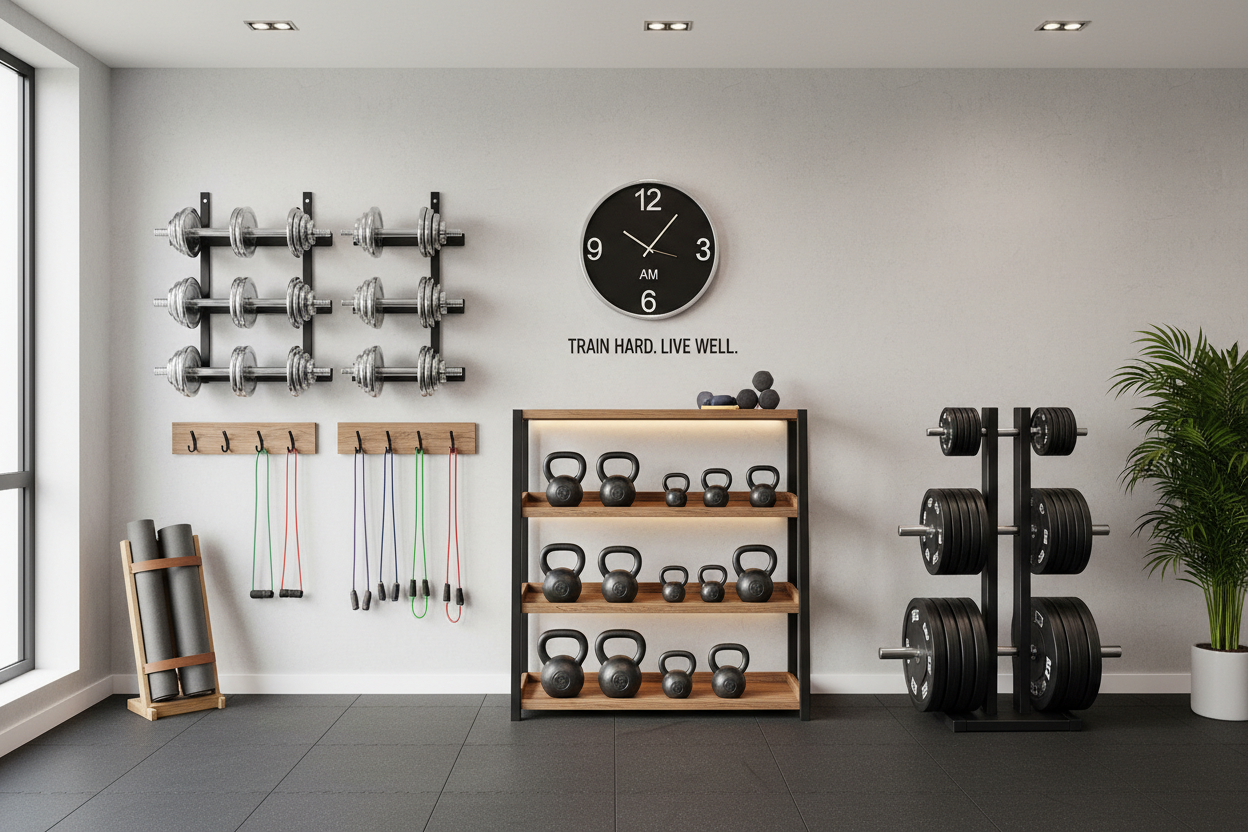
If dumbbells are your primary training tool, dedicated dumbbell racks are non-negotiable. Three-tier systems work brilliantly for complete sets ranging from 2kg to 30kg or beyond. The angled design prevents weights from rolling and makes identification instant—no more squinting at faded numbers. For smaller collections, two-tier options or even single-level horizontal racks can suffice.
Plate Storage Systems
Olympic plates and standard weight plates need sturdy pegs or posts that keep them organized by weight. Good racks for plates feature weight-rated posts with rubber or plastic sleeves to prevent metal-on-metal contact and the awful clanging that comes with it. Some designs incorporate wheels for mobility, which is brilliant if you need to reconfigure your space regularly.
Multi-Purpose Storage
For those of us with varied equipment—kettlebells, medicine balls, resistance bands, foam rollers—multi-purpose storage racks are lifesavers. These typically feature a combination of shelves, hooks, and compartments. I've got one in my garage that holds everything from my yoga blocks to my battle ropes, and it's kept my training area from looking like a sporting goods store exploded.
The Real-World Impact on Your Training
Since investing in proper storage, I've noticed genuine changes in my workout consistency and intensity. There's something about walking into an organized space that puts you in the right mental state. You feel more professional, more committed. Plus, the time saved adds up—what used to be a minute or two between exercises hunting for equipment is now five seconds of grabbing what I need.
Safety is the biggest win, though. No more weights scattered across the floor, no more tripping hazards, and no more wondering if that stack of plates in the corner might topple over. When you've got young kids or pets around, this peace of mind is priceless.
Making the Right Choice for Your Space
Before purchasing any storage solution, measure your space carefully and take inventory of what you actually need to store. Consider not just your current equipment but what you might add in the next year or two. Good racks are investments that should grow with your fitness journey.
Think about your training style, too. If you do a lot of circuit training, accessibility is paramount. If you're focused on progressive overload with barbells and plates, stability and weight capacity matter most. There's no one-size-fits-all solution, but there is a right solution for your specific needs.
Quality storage doesn't have to break the bank, but it's worth spending a bit more for something that'll last. Cheap options might save you money initially, but they'll cost you in frustration, potential damage to your equipment, and possibly replacement costs down the line. Look for reputable manufacturers with solid warranties and positive reviews from actual users.
Creating a Space You'll Actually Use
At the end of the day, fitness is about consistency. Anything that makes it easier to show up and do the work is worth considering. Proper storage might seem like a minor detail, but it's one of those things that compounds over time. Every workout becomes slightly smoother, slightly safer, and slightly more enjoyable.
Your training space should inspire you, not stress you out. When everything has its place and your equipment is protected and accessible, you remove one more barrier between you and your fitness goals. And in my experience, removing barriers is what this journey is all about.