Why Dumbbells for Resistance Training Beat a Room Full of Machines
I remember standing in my garage three years ago, looking at a 400-pound cable crossover machine that took up half my floor space. It looked impressive, sure, but I was getting bored and my progress had stalled. I realized I was spending more time adjusting pins and cables than actually moving heavy weight. That weekend, I sold the beast on Marketplace and invested in a serious rack of dumbbells for resistance training instead.
The shift was immediate. Suddenly, my 20x20 foot space felt like a professional gym. I wasn't locked into the fixed paths of expensive weight lifting machines anymore. I was fighting for stability, hitting deeper ranges of motion, and finally seeing the muscle definition that the machines had been hiding under a layer of guided-track comfort.
Quick Takeaways
- Dumbbells allow for a natural range of motion that machines simply can't replicate.
- Unilateral training (one side at a time) identifies and fixes muscle imbalances instantly.
- You can perform hundreds of exercises in a 6x6 foot space.
- Heavy dumbbells are the most efficient tool for home gym hypertrophy.
The Big Machine Lie (And Why I Cleared Out My Garage)
The fitness industry loves to sell you complexity. They want you to believe that you need a specific lever for your quads, a different pulley for your lats, and a seated contraption for your chest. It’s a space-killing lie. Most weight lifting machines are designed for commercial gyms where the goal is to get people on and off equipment quickly without them hurting themselves.
In a home gym, space is your most valuable currency. When I ditched my multi-station unit, I gained enough room for a dedicated deadlift platform and a full run of iron. Machines dictate how your body moves; dumbbells force your body to dictate the movement. That struggle to keep the weights steady is where the real growth happens.
Why Dumbbells for Resistance Training Actually Force Growth
If you've spent years on a barbell, you probably have a dominant side. Your right pec might be doing 60% of the work on a bench press while your left just goes along for the ride. Using dumbbells for resistance training makes that impossible. If your left arm is weaker, the dumbbell will tell you the truth immediately. This unilateral freedom is why I often prefer dumbbells vs kettlebells when the goal is pure muscle size. Kettlebells are great for swing-based power, but for strict, controlled muscle building, the balance of a dumbbell is king.
Dumbbells also let you manipulate your grip. You can go from a pronated grip to a neutral grip mid-rep to save your shoulders. You can't do that with a barbell or a fixed machine. That extra inch of depth you get on a dumbbell chest press compared to a barbell translates to more muscle fiber recruitment and, eventually, more mass.
The 'Too Light' Trap: Picking Your Weight Lifting Dumbbells
I see it all the time: someone buys a set of 10-pounders and wonders why their physique hasn't changed after six months. To see results, you need weight lifting dumbbells that actually challenge your central nervous system. If you aren't struggling on those last two reps, you're just doing cardio with extra steps.
Even for older lifters, the resistance shouldn't mean pink dumbbells. Bone density and muscle retention require load. Whether you're 25 or 65, you need a progression of weightlifting dumbbells that allows you to start heavy and get heavier. I usually recommend starting with a pair you can overhead press for 10 reps, and a pair twice that weight for rows and lunges.
3 Dumbbells for Strength Moves That Replaced My Barbell
You don't need a 500-pound squat to build massive legs. In fact, heavy dumbbells for strength work can be more brutal because of the stability requirements. Here are the three moves I swear by:
- Bulgarian Split Squats: Hold a heavy pair at your sides, put one foot back on a bench, and descend. It will humble you.
- One-Arm Dumbbell Rows: These allow for a massive stretch at the bottom and a hard contraction at the top that a barbell row can't match.
- Incline Dumbbell Press: To do this right, you need a Gxmmat Adjustable Weight Bench that doesn't wobble when you're handling 80s or 90s. The stability of the bench allows you to focus entirely on the chest drive.
These movements aren't just 'alternatives.' For many lifters, they are superior for hypertrophy because they allow for a more natural joint path and higher intensity without the spinal loading of a heavy back squat.
The Only Add-Ons You Need for a Complete Setup
You don't need much to make a dumbbell setup work, but a few strength training accessories are non-negotiable. First, get some liquid chalk. When you're doing high-rep rows with 100-pound weightlifting dumbbells, your grip will give out before your back does. Second, a solid pair of wrist wraps can help when you're transitioning to heavy pressing movements.
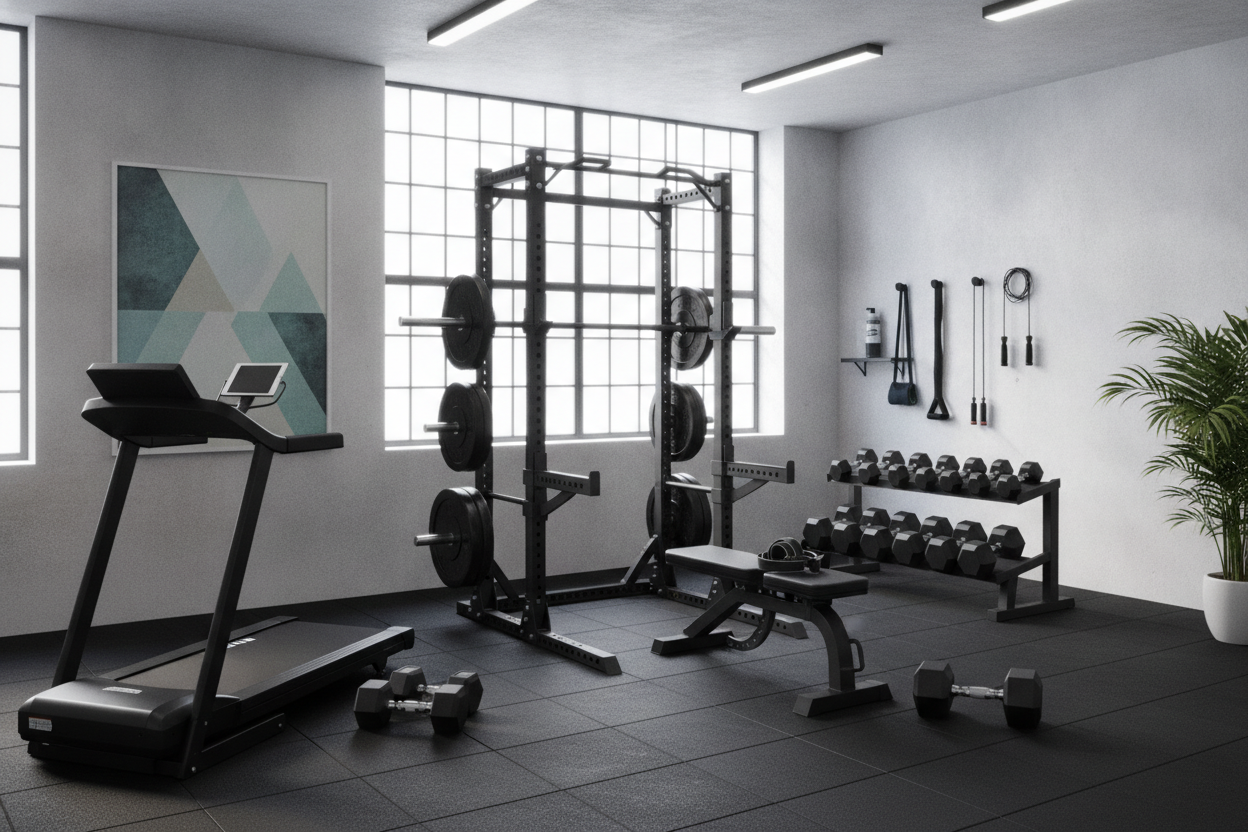
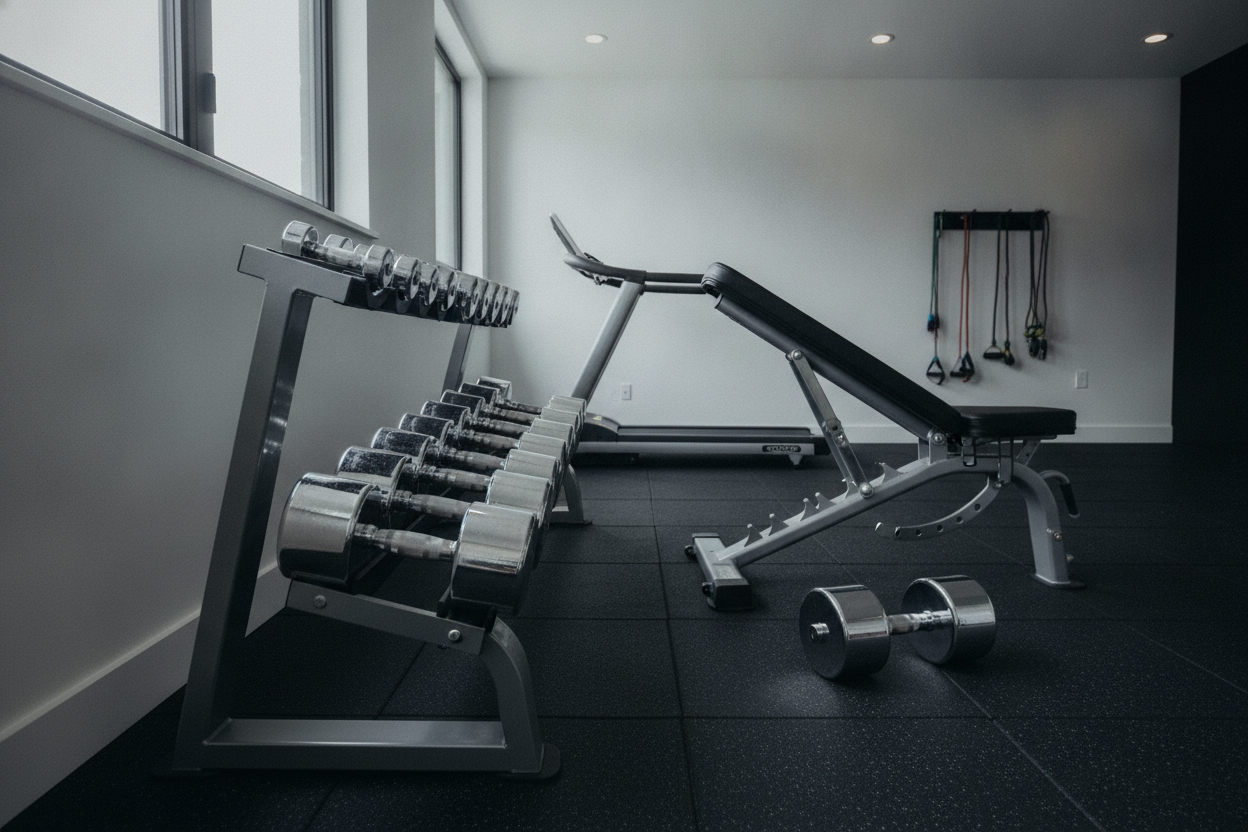
Don't overcomplicate the storage either. A simple two-tier rack keeps the floor clear. Clutter is the enemy of a good workout. If I have to trip over a 25-pounder to get to my 50s, I'm already losing focus.
My Personal Take: The Hex Mistake
I once bought a cheap set of chrome-plated dumbbells from a big-box store because they were on sale. Within three months, the chrome was flaking off and cutting my hands, and the heads started to jiggle. It was a safety hazard. I eventually swapped them for rubber-coated hex dumbbells. They don't roll away, they're quiet when you set them down, and the knurling is consistent. Buy once, cry once. Get the rubber hex or high-quality adjustables from the start.
Dumbbell Training FAQ
Can you really build as much muscle with dumbbells as a barbell?
Absolutely. While you might not move the same total weight, the increased range of motion and stabilization requirements often lead to better muscle activation and growth for many lifters.
Should I buy fixed sets or adjustable dumbbells?
If you have the space, fixed sets are better for fast-paced supersets. If you're in a tiny apartment, a high-quality adjustable set that goes up to 80 or 90 pounds is the most efficient use of your money.
How heavy should I go for my first pair?
Pick a weight you can strictly curl for 8 reps. For most men, that's a pair of 25s or 30s. For women, usually 12s or 15s. This gives you a versatile base for both upper and lower body movements.