Why Chasing Fatigue Is the Worst Way to Train for Strength
I remember staring at a literal puddle of sweat on my garage floor, chest heaving like I’d just finished a 400-meter sprint. I had just completed a 'high-intensity' barbell circuit that left me vibrating with exhaustion. I felt like a warrior. But three months later, my deadlift hadn't moved a single pound. I was getting better at being tired, but I wasn't learning how to train for strength.
- Sweat is a byproduct of heat, not a metric of a successful heavy session.
- True strength gains happen when the nervous system is fresh, not fried.
- Resting 3-5 minutes is a requirement, not a luxury, for moving heavy loads.
- A stable, high-quality bench is the most underrated piece of safety gear you can own.
The Difference Between Exercising and Actually Training
Most people walk into their home gym to 'get a workout in.' They want to move, burn some calories, and feel the endorphin rush. That’s exercising, and it’s great for general health. But fitness and strength training are not the same thing. Training is a deliberate, structured process where every set and rep is a calculated step toward a specific goal. If you are just doing random movements until you can't breathe, you aren't training; you're just testing your work capacity.
When you focus on exercise weight training, you often prioritize the 'feeling' of the workout over the objective performance. In a real strength program, some days feel easy. That’s by design. You are building the skill of lifting fitness, which requires you to stay under a certain fatigue threshold so you can maintain perfect form. If you treat every session like a survival challenge, you’ll hit a wall before you ever see a three-plate squat.
Why 'The Burn' Is a Terribly Inaccurate Metric
We’ve been brainwashed by 80s aerobics videos to believe that lactic acid is the gold standard of progress. In weights training, that burning sensation in your quads is just metabolic stress. It’s fine for hypertrophy, but it tells you almost nothing about your power output. So, how does weight lifting work on a neurological level? It’s about motor unit recruitment. Your brain has to learn how to fire every available muscle fiber at once to move a heavy object.
Strength training is primarily a central nervous system (CNS) adaptation. When you are drowning in metabolic fatigue, your CNS slows down to protect you. If you’re constantly chasing the burn, you’re training your brain to move slowly and inefficiently. To get strong, you need to lift heavy while you are fresh enough to exert maximum force. Muscular training for power requires you to stop a set when the bar speed slows down, not when your lungs start screaming.
Stop Turning Your Heavy Lifts Into a Cardio Circuit
The biggest mistake I see in home gyms is the urge to rush. You’ve got a busy life, so you try to squeeze ten sets into twenty minutes. You end up trying to balance cardio and strength work in the same movement, which is a recipe for mediocrity. If your heart rate is 170 BPM when you step under a heavy bar, your stability is gone. Your core won't brace correctly, and your stabilizers will give out long before your prime movers do.
For effective weight training and fitness, you need to respect the rest interval. I keep a literal stopwatch on my rack. If I’m pulling a heavy triple, I am sitting on my bench for at least four minutes afterward. It feels like 'doing nothing,' but your ATP stores need that time to chemically recharge. If you don't wait, you end up weight lifting for fitness rather than for raw power, and you'll find your progress stalling out because you're simply too tired to push your limits.
Structuring a Setup That Prioritizes Raw Power
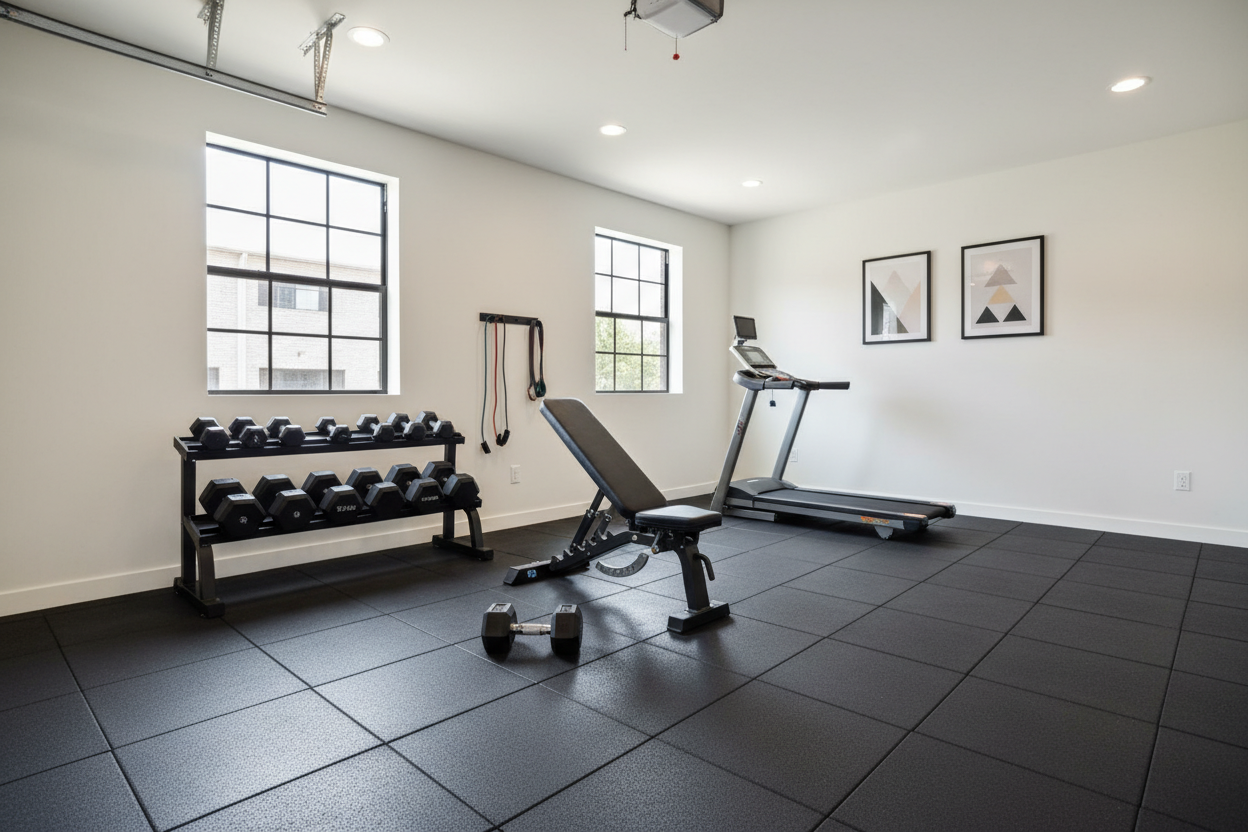
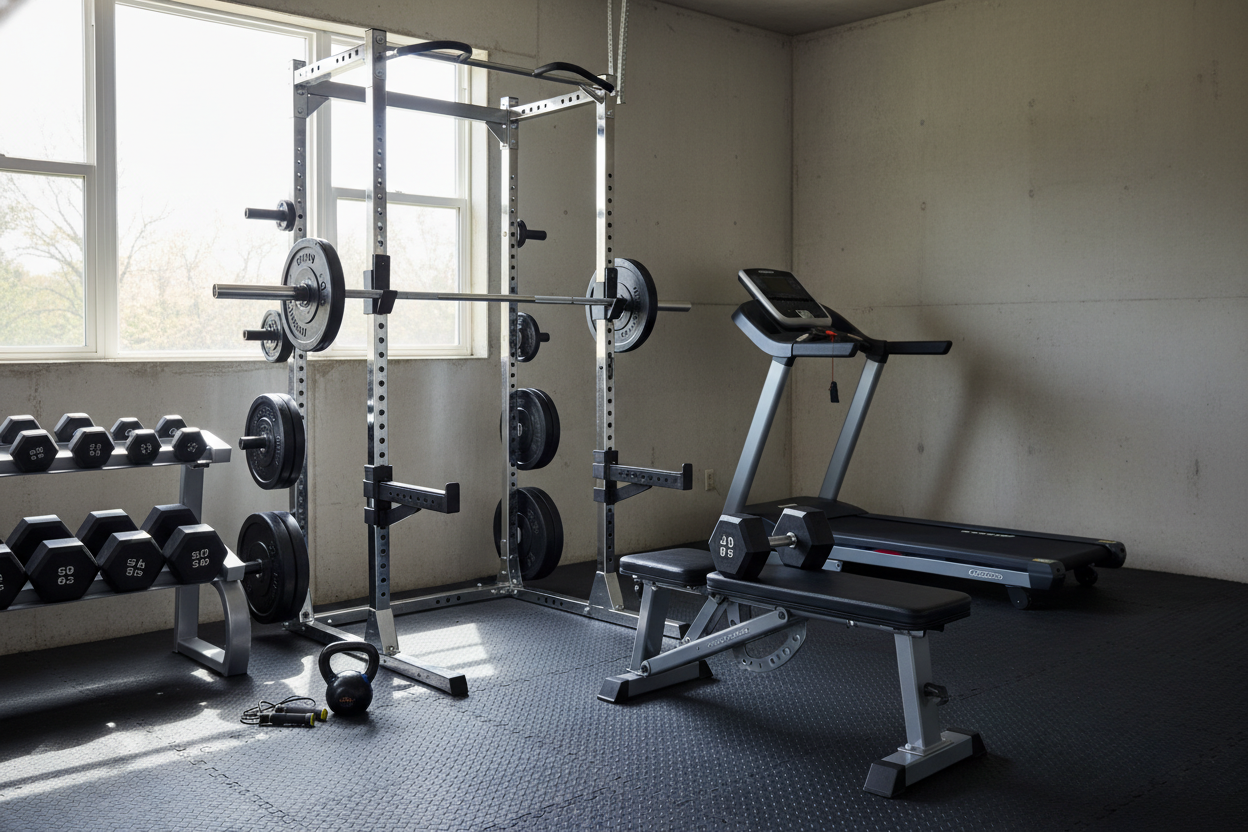
Getting strong requires gear that doesn't move when you do. You can’t train for weightlifting or powerlifting on equipment that feels like it was made of soda cans. I’ve owned the cheap $100 racks that shake when you re-rack 135 pounds, and I can tell you from experience: it gets in your head. When you’re weight training and exercise focused, you need a reliable weight set and bench that acts as a fortress.
Your training weight needs to be predictable. Cheap plates can be off by as much as 10%, meaning your '45-pound' plate might actually be 41 pounds. That's a nightmare for weight training strength progression. Investing in decent iron or competition bumpers ensures that when the program says to add five pounds, you are actually adding five pounds. A fitness training weight setup should be built around a 3x3-inch steel rack and a barbell with a high tensile strength—usually 190,000 PSI or better.
You Can't Push Heavy Without a Solid Anchor
The bench is the foundation of your upper body power. If you’re using a narrow, slick bench, your shoulder blades will slide the moment you try to create a bridge. I spent years on a budget bench before I realized it was holding back my weight training for fitness goals. My brain was literally holding back force because it didn't feel safe. Once I moved to a solid adjustable weight bench with a wide pad and 'sticky' vinyl, my press felt 20% more stable immediately.
Look for a bench with a tripod design or a very heavy base. You want something that weighs at least 60 to 80 pounds on its own. If you can pick it up with one finger, it’s not going to support a 300-pound strength training weights session. Stability equals safety, and safety equals the confidence to actually grind through a heavy rep without worrying about the equipment collapsing under you.
Dialing In Your Progression (The Boring Secret to Getting Big)
The most effective weight and strength training is mind-numbingly boring. It’s not about 'confusing the muscles' with a new YouTube workout every week. It’s about healthy weight training via progressive overload. You take the same five or six movements—squat, bench, deadlift, overhead press, and a row—and you add a tiny bit of weight every single week. This is weight training for strength in its purest form.
When you are choosing the right strength equipment, buy things that facilitate this. Get a pair of 1.25-pound fractional plates so you can make 2.5-pound jumps when 5 pounds becomes too much. This strength and weight training approach builds a massive base of power over years, not weeks. I’ve seen guys with the fanciest weight training and fitness gadgets get out-lifted by someone with a rusty bar and a pile of iron plates because the latter understood that consistency beats novelty every time.
Personal Experience: My 405-lb Deadlift Mistake
For two years, I stayed stuck at a 365-pound deadlift. I thought the answer was more volume, more sweat, and more accessory work. I was doing 12-rep sets until I saw stars. It wasn't until I hired a coach who told me to 'stop being so busy' that things changed. I cut my reps down to sets of 3, increased my rest to 5 minutes, and focused on training for weightlifting mechanics. Within six weeks, I hit 405. The downside? I had to admit that my 'hard work' was actually just 'busy work' that was holding me back.
Frequently Asked Questions
How many days a week should I train for strength?
Three to four days is the sweet spot. Your nervous system needs 48 hours to recover from truly heavy lifting fitness sessions. If you train six days a week, you’re likely just exercising, not building max power.
What is the best rep range for strength?
Generally, sets of 1 to 5 reps are best for weight training strength. This allows you to use a high enough percentage of your one-rep max to trigger the neurological adaptations you need.
Do I need a weight belt?
A belt is a tool for your core to brace against. It doesn't 'protect' a weak back; it helps a strong back stay rigid. It’s great for strength training weights once you’ve mastered the basic mechanics of the lift.