Stop Tacking Curls Onto Back Day: Try This bi and shoulder workout
I spent years following the standard 'bro split' logic because that is what everyone in the forums said to do. I would spend an hour destroying my lats with heavy rows and pull-ups, then expect my arms to grow by tacking on three sets of half-assed curls at the end. It didn't work. My grip was shot, my biceps were already fatigued from acting as secondary movers, and I was just going through the motions. If you want real sleeve-stretching results, you need a dedicated bi and shoulder workout.
- Fresh Muscle Output: Hitting biceps without prior back fatigue allows for heavier loads and better contraction.
- Shoulder Synergy: Shoulders and biceps do not compete for the same primary movers, making them an ideal pair.
- Recovery Management: This split allows your back and lats to recover while you focus on isolation and overhead power.
- Equipment Minimalist: You can execute this entire routine with just a solid set of dumbbells and an adjustable bench.
The Problem With Doing Curls After Heavy Pulls
Most lifters default to the 'Pull Day' mentality. It makes sense on paper: you are already using your biceps to pull, so why not finish them off? The reality is that your biceps are small muscles. By the time you finish four sets of weighted pull-ups and heavy barbell rows, your biceps are already 70% cooked. You are not training them for growth at that point; you are just training them to survive. This is the biggest hurdle when deciding what to workout after back day.
If your goal is hypertrophy, you need high-quality repetitions. When you are fatigued, your form breaks down. You start using momentum, swinging the weights, and engaging your lower back just to get the bar up. This often leads beginners to settle for a beginner back and shoulder workout because they think they have to group all 'pulling' muscles together. But if your arms are your weak point, grouping them with your strongest muscle groups is a recipe for stagnation. Your lats will always win the 'energy war' in a workout, leaving your biceps with the scraps.
Can You Work Shoulders and Biceps Together?
The short answer is yes, and you probably should. When people ask if shoulders and biceps is a good workout, they are usually worried about overtraining. But look at the anatomy. Your primary shoulder movements—overhead presses and lateral raises—are 'push' and 'lateral' movements. They do not recruit the biceps in any significant way. This means when you move from a heavy overhead press to a standing curl, your biceps are 100% fresh. You can move more weight, maintain better tension, and actually feel the muscle working.
Can you workout shoulders and biceps together without hitting a wall? Absolutely. In fact, it is one of the most efficient pairings for a home gym setting. Because you aren't pre-fatigued, you can focus on the 'strictness' of the movement. I have found that my overhead press stability actually improves when I am not coming off a heavy chest day, and my bicep peak has seen more growth in six months of this split than in three years of back-and-bi routines. It is about maximizing the 'fresh-muscle output' before the central nervous system starts to redline.
What About Triceps and Chest?
Naturally, if you move biceps to shoulder day, you have to figure out where the triceps go. Some people prefer the classic antagonist approach—pairing chest and biceps together. This is a solid strategy if you want to ensure your arms are hit twice a week. You could also look into a chest and back workout if you are following an Arnold-style split, which frees up an entire day just for arms and shoulders. The goal is to avoid 'interference.' If your triceps are sore from a heavy bench session, your shoulder pressing will suffer. By pairing shoulders and biceps, you avoid that overlap entirely.
The Heavy-to-Light Bi and Shoulder Routine
This routine is designed to be done with a standard weight set and bench. We start with the most taxing movement—the overhead press—and taper down into high-volume isolation work. This ensures you have the most stability for the heavy stuff and the most 'pump' for the finishers.
- Seated Dumbbell Overhead Press: 4 sets of 6-8 reps. Sit with the bench at a 90-degree angle. Don't arch your back. Drive the weights up until your biceps are by your ears.
- Standing Barbell Strict Curls: 4 sets of 8-10 reps. Pin your elbows to your ribs. If you have to swing your hips, the weight is too heavy. Use a 2-second eccentric (lowering) phase.
- Dumbbell Lateral Raises: 3 sets of 15-20 reps. Think about pushing the weights 'out' toward the walls, not 'up.' This keeps the traps out of the movement.
- Incline Dumbbell Curls: 3 sets of 12 reps. Set the bench to a 45-degree incline. This stretches the long head of the bicep, which you can't get with standard standing curls.
- Face Pulls or Rear Delt Flyes: 3 sets of 15 reps. Don't neglect the back of the shoulder. If you don't have a cable machine, use light dumbbells and a chest-supported position on your bench.
The key here is the transition. After the heavy pressing, your shoulders will be warm, which actually helps with the blood flow to the arms. I like to use a 1:1 ratio of rest—about 90 seconds for the big presses and 60 seconds for the curls. If you are using adjustable dumbbells, make sure the locking mechanism is secure before you start those overhead reps. Nothing ruins a workout like a 10lb plate falling on your head.
Setting Up Your Space for Heavy Freeweights
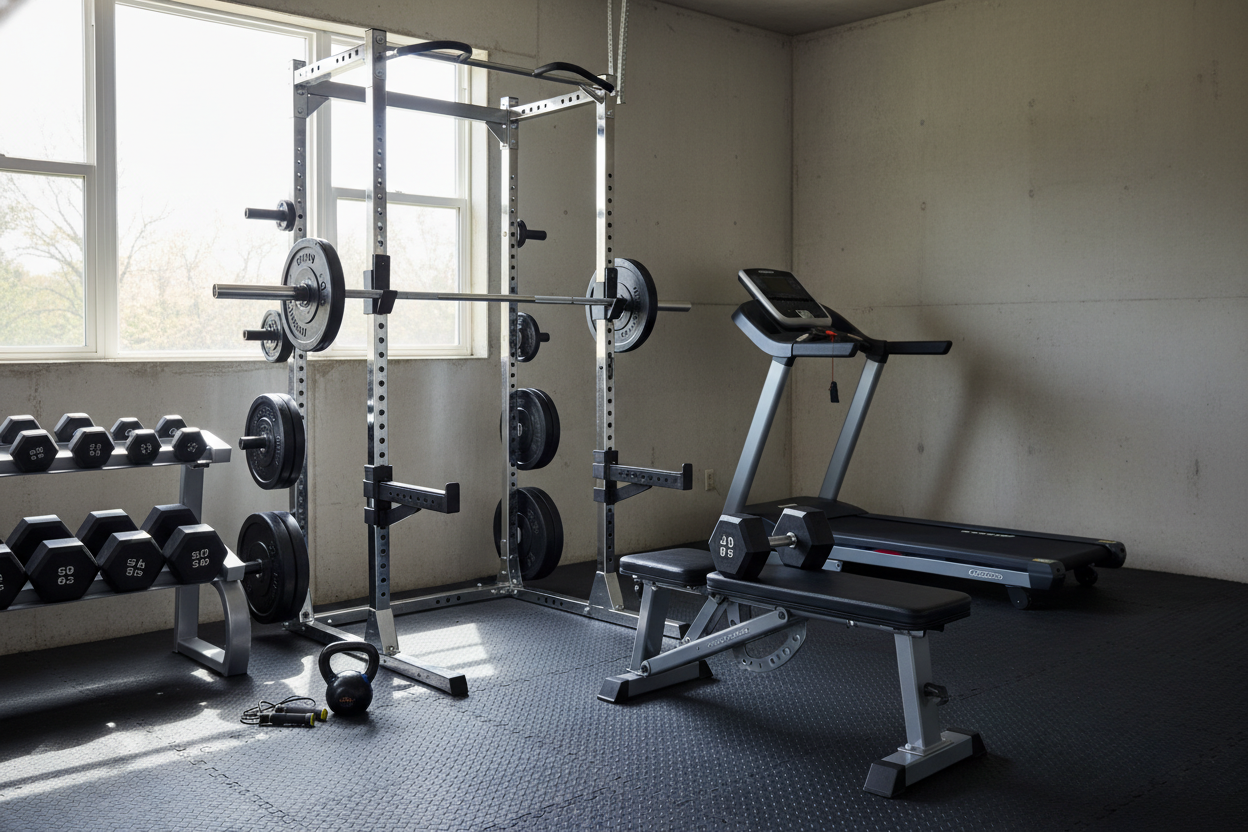
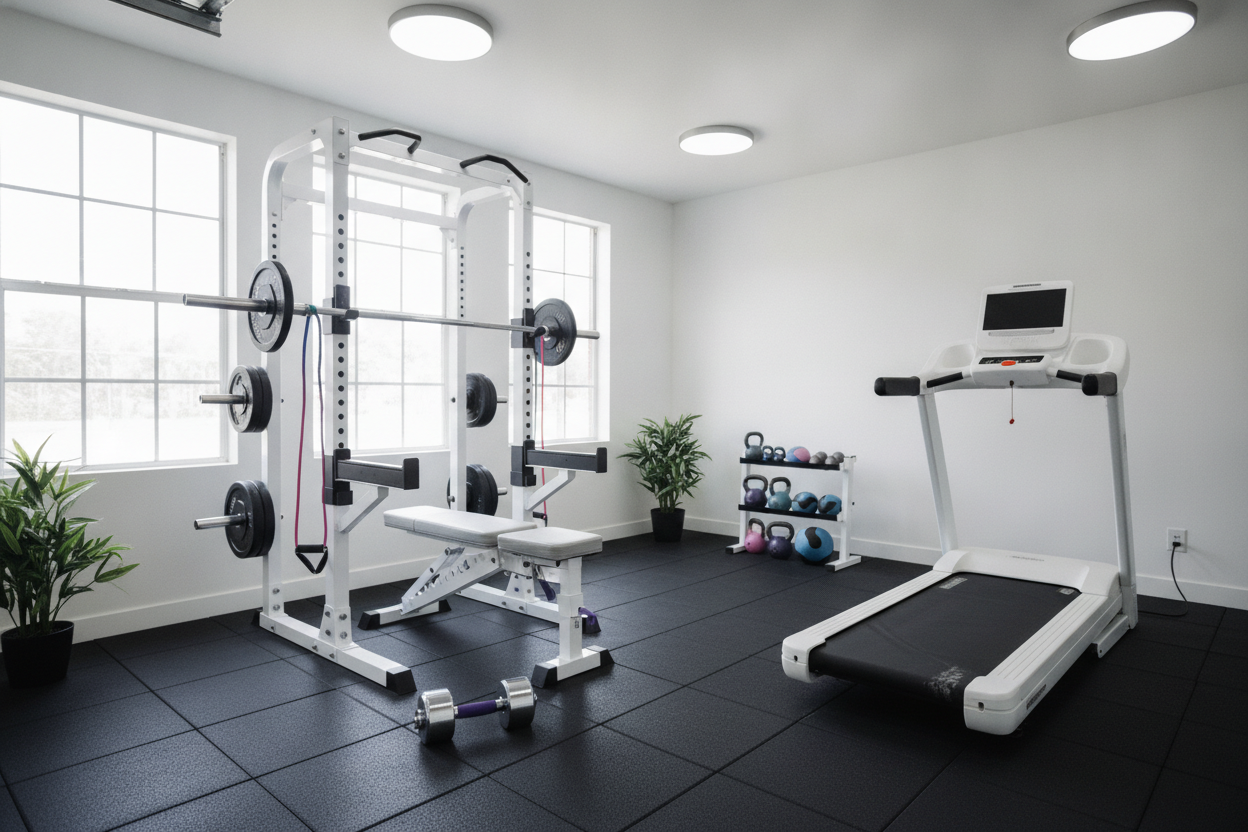
You don't need a 5-station cable jungle to get big arms. Most of my best growth happened in a garage with a 300-lb Olympic set and a pair of 50-lb dumbbells. However, if you are training at home, you need to respect your floor. Dropping a 60-lb dumbbell after a failure set of shoulder presses will crack your foundation or wake up the neighbors. I always recommend a thick exercise mat to dampen the noise and protect your gear. A good mat also provides a non-slip surface for standing curls; you don't want your feet sliding out when you're fighting for that last rep of a heavy set.
Where to Fit This Into Your Weekly Split
Programming is where most people mess up. You cannot do a heavy shoulder and biceps workout together the day before a heavy back day or a heavy chest day. Your biceps are secondary pullers and your front delts are secondary pushers. If you fry them on Monday, your Tuesday bench press will feel like you're lifting in quicksand. I recommend at least 48 hours of buffer. A typical week might look like: Monday (Chest/Triceps), Tuesday (Back), Wednesday (Rest), Thursday (Shoulders/Biceps), Friday (Legs).
This sequencing ensures that by the time you get to your arm and shoulder day, your 'big' movers have already done their job for the week. You can afford to push to failure on your curls because you don't need that grip strength for a heavy deadlift the next morning. It is about being strategic with your CNS recovery so you can bring 100% intensity to every single set.
Personal Experience: The Grip Failure Lesson
I learned this the hard way during a 'Pull Day' three years ago. I had just finished five sets of heavy rack pulls and moved straight into heavy alternating curls. On the third rep, my left hand just gave out. The dumbbell hit the floor, narrowly missing my toes, and I realized I hadn't actually 'trained' my biceps at all—I had just tested my remaining grip strength. Since switching to a dedicated shoulder and arm day, my overhead press has jumped 20 pounds, and my arms actually have the energy to reach true muscular failure, not just 'hand fatigue' failure. Don't be afraid to break the traditional mold.
FAQ
Is it okay to do shoulders and biceps on the same day?
Yes. They are non-competing muscle groups. You can train one without significantly fatiguing the other, allowing for higher intensity in both.
Should I do shoulders or biceps first?
Always do shoulders first. Overhead pressing is a compound movement that requires more stability and central nervous system output. Save the isolation curls for the end.
Can I do this workout if I only have dumbbells?
Absolutely. Dumbbells are actually superior for this pairing because they allow for a more natural range of motion on presses and prevent your dominant arm from taking over during curls.