Why Beginners Working Out Always Feel So Awkward (And the Fix)
I remember the first time I walked into a commercial gym. I spent twenty minutes pretending to read the instructions on a leg press machine just because I didn't want to look like I had no clue what I was doing. When I finally grabbed a pair of dumbbells, my arms shook like I was holding two live electric wires. beginners working out often feel like everyone is watching their every stumble, but the truth is, that 'baby giraffe' feeling is actually a sign of progress, not a lack of talent.
Quick Takeaways
- Expect to feel uncoordinated for the first 3-4 weeks; it is your brain, not your muscles, doing the heavy lifting.
- Treat your first month as 'movement practice' rather than a high-intensity workout.
- Focus on four foundational movements: the squat, the press, the row, and the core stabilizer.
- Invest in a dedicated, high-traction surface to avoid slipping and build confidence.
The 'Baby Giraffe' Phase Is Completely Normal
When you start a new routine, your muscles aren't the only things being taxed. Your central nervous system is currently trying to figure out how to fire your motor units in the right order. This is called neuromuscular adaptation. If you feel wobbly during a simple lunge, it isn't because you are 'weak'—it is because your brain hasn't finished mapping the movement. It’s like trying to write with your non-dominant hand; the muscles are there, but the signal is fuzzy.
I’ve coached people who could barely stand on one leg during their first week, only to see them deadlifting 200 pounds six months later. That initial shaking is just your body’s way of 'searching' for the right path. Don't fight it and don't get frustrated. Embrace the wobbles as data points. Every shaky rep is a calibration that makes the next one smoother. This is the reality of any beginning exercise.
Stop 'Training' and Start Practicing Your Movements
Most people fail because they try to go from zero to 'puking in a bucket' on day one. They think if they aren't drenched in sweat and unable to walk the next day, it wasn't a good workout. That is the fastest way to quit. Instead, frame your first 30 days as a skill acquisition phase. You aren't 'training' for a marathon; you are practicing the skill of moving weight safely. Shifting your mindset from exhaustion to practice is the best way to create a stress-free routine for beginners.
When you view your sessions as practice, the pressure to perform disappears. You don't care about the weight on the bar; you care about whether your spine stayed neutral or your knees stayed tracked over your toes. This approach builds a rock-solid foundation for a new to working out routine that actually lasts beyond January. It turns a grueling chore into an easy fitness routine for beginners because the goal is simply to show up and move better than you did yesterday.
The Only 4 Moves You Need for Your First Month
You don't need a 45-piece cable machine or a complex barbell setup to see results. In fact, too many options usually lead to 'paralysis by analysis.' I recommend sticking to a minimalist block of starting out exercises that cover all your bases without requiring a degree in kinesiology.
The Goblet Squat: Finding Your Legs
The Goblet Squat is hands-down the best fitness exercise for beginners. By holding a single dumbbell or kettlebell at chest level, the weight acts as a counterbalance. This naturally forces your torso upright and keeps your heels glued to the floor. It fixes about 80% of the common squatting mistakes people make without a coach ever saying a word. Start with a 10 or 15-lb weight and focus on sitting 'between' your knees, not just sitting back.
The Floor Press: Shoulder-Safe Pushing
If you aren't used to the bench press, it can be a shoulder-wrecker. The Floor Press is my favorite of all starting out exercises for chest and arm development. By lying flat on the floor, the ground acts as a hard stop for your elbows. This prevents you from overstretching the shoulder joint and keeps the tension on the muscles that actually matter. It’s a safer, more stable way to build horizontal pushing strength.
The Bent-Over Row: Building the Back
You need to pull just as much as you push. The dumbbell row is a fundamental beginning exercise that builds the muscles of the upper back and improves posture. Keep your back flat like a tabletop and pull the weight toward your hip, not your chest. This teaches you how to engage your lats and stabilize your spine under a load.
The Dead Bug: Core Control Without Back Pain
Crunches are overrated and often lead to neck strain. The Dead Bug is one of the most effective exercises to start working out with because it teaches 'anti-extension.' You lie on your back and move opposite limbs while keeping your lower back pressed firmly into the floor. It looks easy until you try to do it right. This move builds the core stability required for every other lift you’ll ever do.
Give Yourself a Forgiving Surface to Learn On
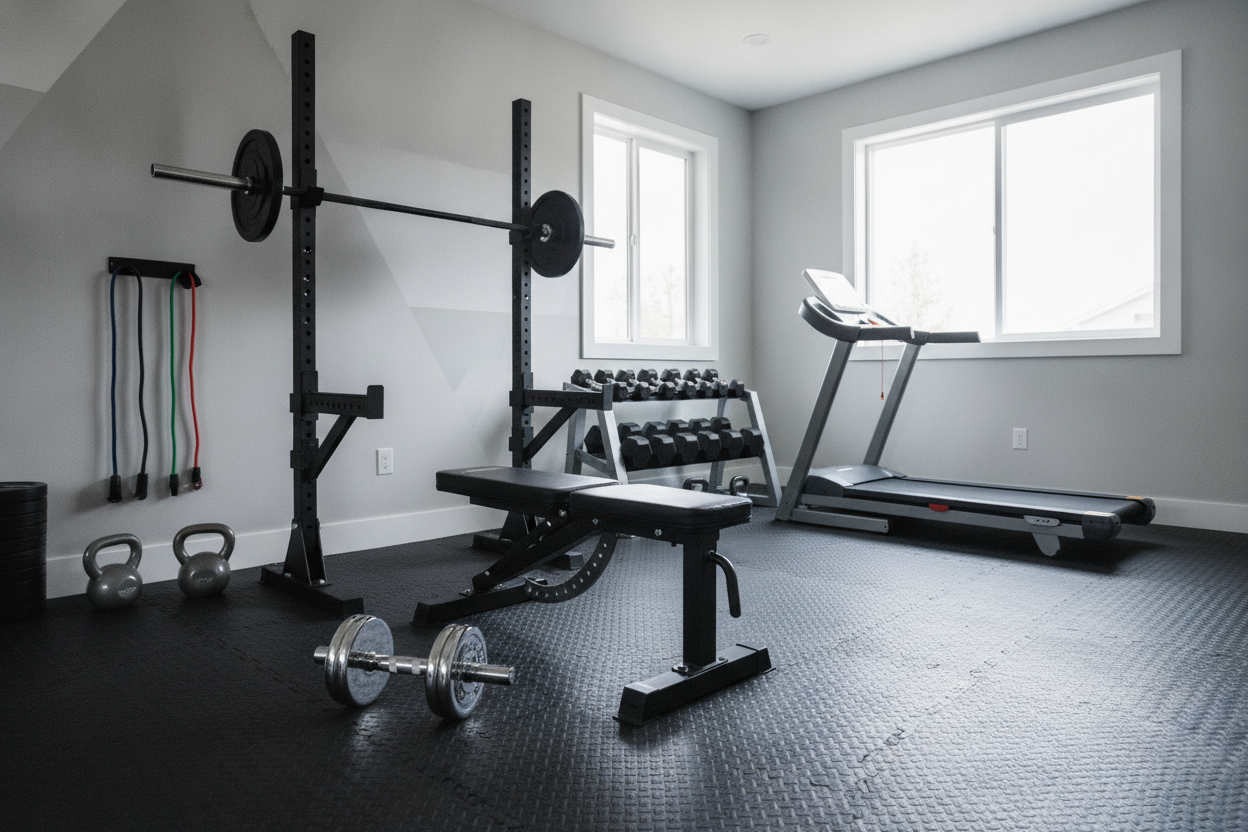
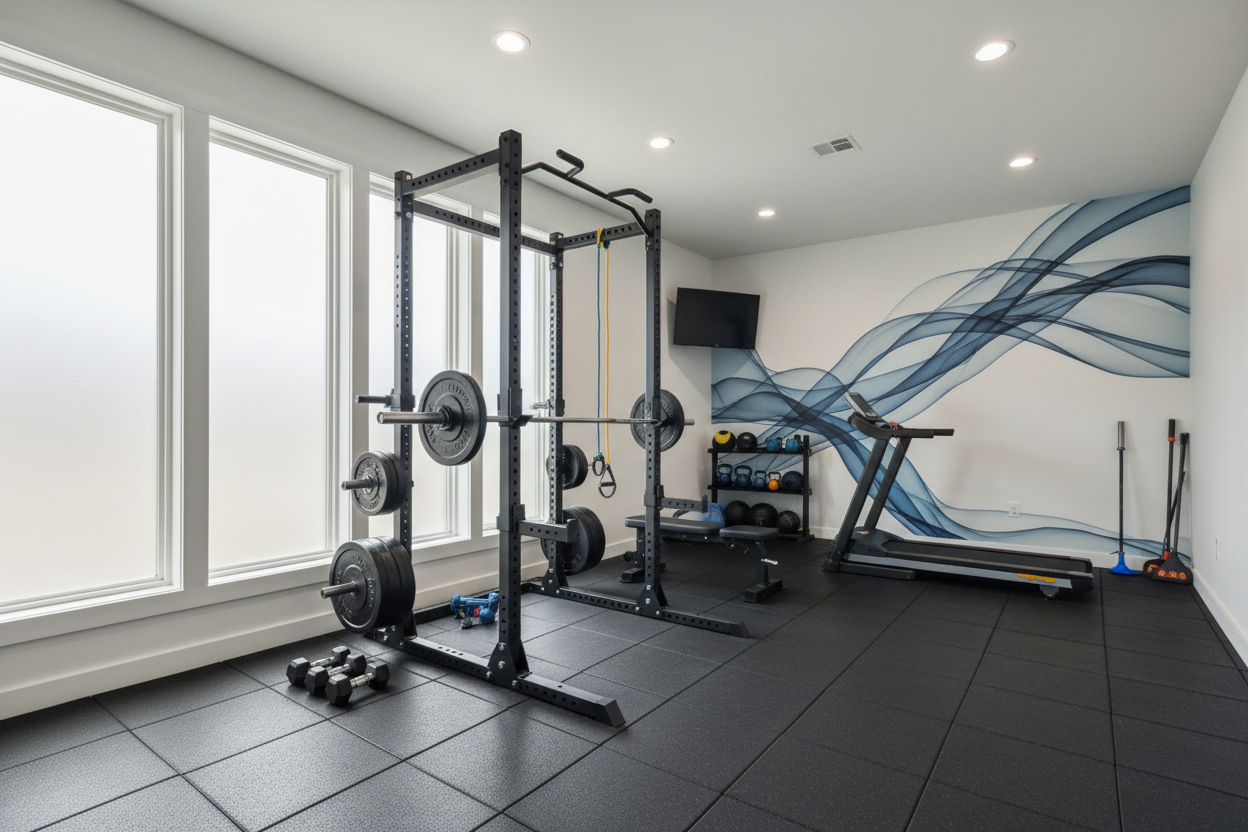
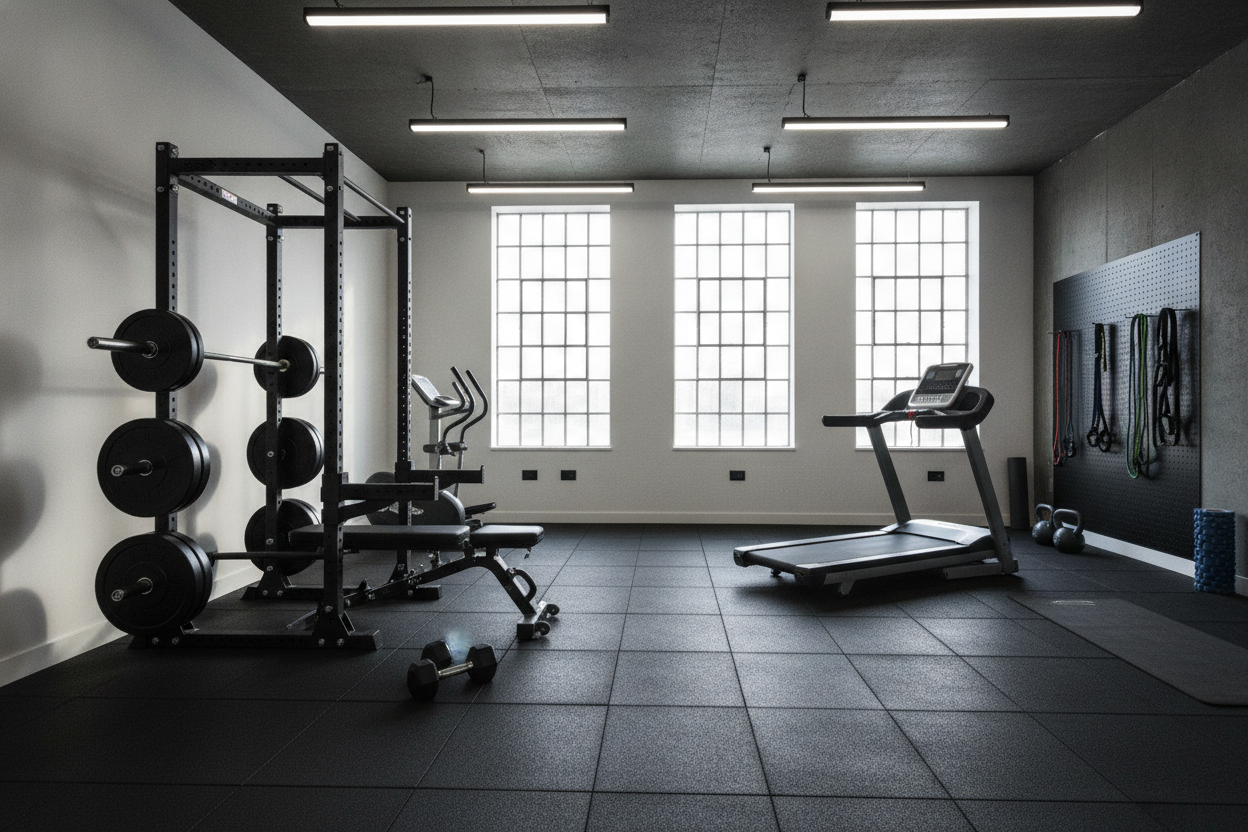
The environment where you train matters more than you think. If you’re trying to learn a Dead Bug or a Floor Press on a slippery living room rug or a hard, cold garage floor, your brain is going to spend more energy on not slipping than on the movement itself. You need a dedicated space that provides enough traction for your feet and enough cushion for your spine. Practicing floor-based work safely requires a high-quality gym flooring for home workout.
I always tell people that upgrading your floor space is the best first investment for a home setup. A large exercise mat for home gym use provides a 6×8 ft area where you can sprawl out, drop a dumbbell without cracking a tile, and actually feel stable. I’ve seen people try to train on those cheap, interlocking foam tiles that slide apart the moment you sweat—don't do that. Get a solid, high-density rubber or PVC mat that stays put.
How to Tell if You're Actually Getting Better
In the first month, the scale is a liar. You might even gain a pound or two as your muscles start holding onto more water and glycogen. Don't sweat it. Instead, look for 'coordination gains.' Are you wobbling less during your squats? Is the 15-lb dumbbell starting to feel like a toy? Are you less winded walking up the stairs? These are the real metrics of success for beginners working out.
I remember when I finally stopped feeling like a klutz and started feeling like an athlete. It wasn't when I hit a certain weight; it was the day I walked into the gym, grabbed my gear, and moved through my reps with total confidence. That confidence comes from repetition. Stick to the 'practice' mindset for 30 days, and I promise the awkwardness will vanish.
FAQ
How many days a week should I start with?
Three days is the sweet spot. It gives you 48 hours between sessions to recover. If you try to go six days a week right away, your central nervous system will fry before your muscles even have a chance to grow.
What if I'm too sore to move the next day?
That usually means you did too much, too soon. Light movement, like a 20-minute walk, is better for recovery than sitting on the couch. Next time, back off the weight or the number of sets by 20%.
Do I need expensive shoes to start?
Not really. For the movements I listed, a flat-soled shoe like a Chuck Taylor or even working out in socks (if you're at home on a good mat) is actually better than squishy running shoes because it provides a stable base for your heels.