Why Balance Drills Fail: Resistance Exercises for the Elderly That Work
I spent twenty minutes yesterday watching a 70-year-old man try to stand on one leg on a foam pad at my local YMCA. The trainer looked proud; the guy looked like he was about to break a hip. We’ve been sold a bill of goods regarding resistance exercises for the elderly. Most people think 'senior fitness' means silver sneakers and circus tricks on a Bosu ball, but that is a fast track to a nursing home.
- Stability comes from strength, not just 'balance.'
- Wobbly surfaces actually decrease muscle activation for force production.
- Progressive overload is the only way to improve bone density.
- If you cannot stop your own body weight, you will fall.
The Big Balance Lie: Why Wobbly Surfaces Don't Build Stability
The industry is obsessed with 'proprioception' on unstable surfaces. Here is the reality: when you trip on a curb, the curb is not moving. The ground is solid. Standing on a foam pad teaches you how to stand on a foam pad; it does not teach your nervous system how to produce the rapid force needed to catch yourself on concrete. Senior resistance exercises need to be performed on stable, predictable ground to be effective.
If you are always shaking on a Bosu ball, you cannot lift enough weight to actually trigger muscle growth. You are limited by your ankles' ability to twitch, not your quads' ability to push. To stop a fall, you need 'stiffness' and power. You get that by planting your feet and moving something heavy. Resistance training for seniors should prioritize floor-based movements where the only thing moving is the weight in your hands.
Ground Control: Setting Up a Safe Space to Push Hard
You cannot train for real life if you are terrified of your feet sliding out from under you. I have seen too many home setups where people try to do lunges on a slick hardwood floor or a plush living room carpet that bunches up. That subconscious fear of slipping kills your intensity. You end up doing half-reps because your brain is prioritizing staying upright over moving the load.
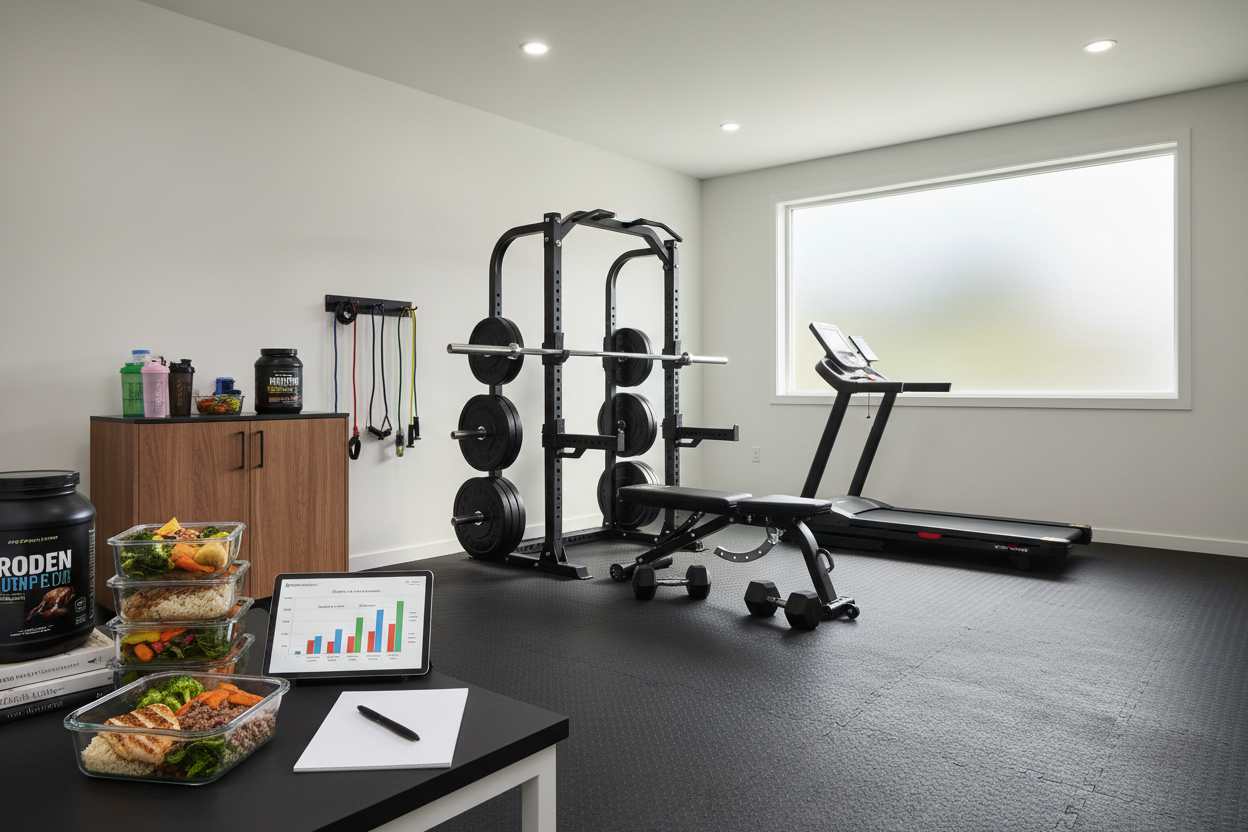
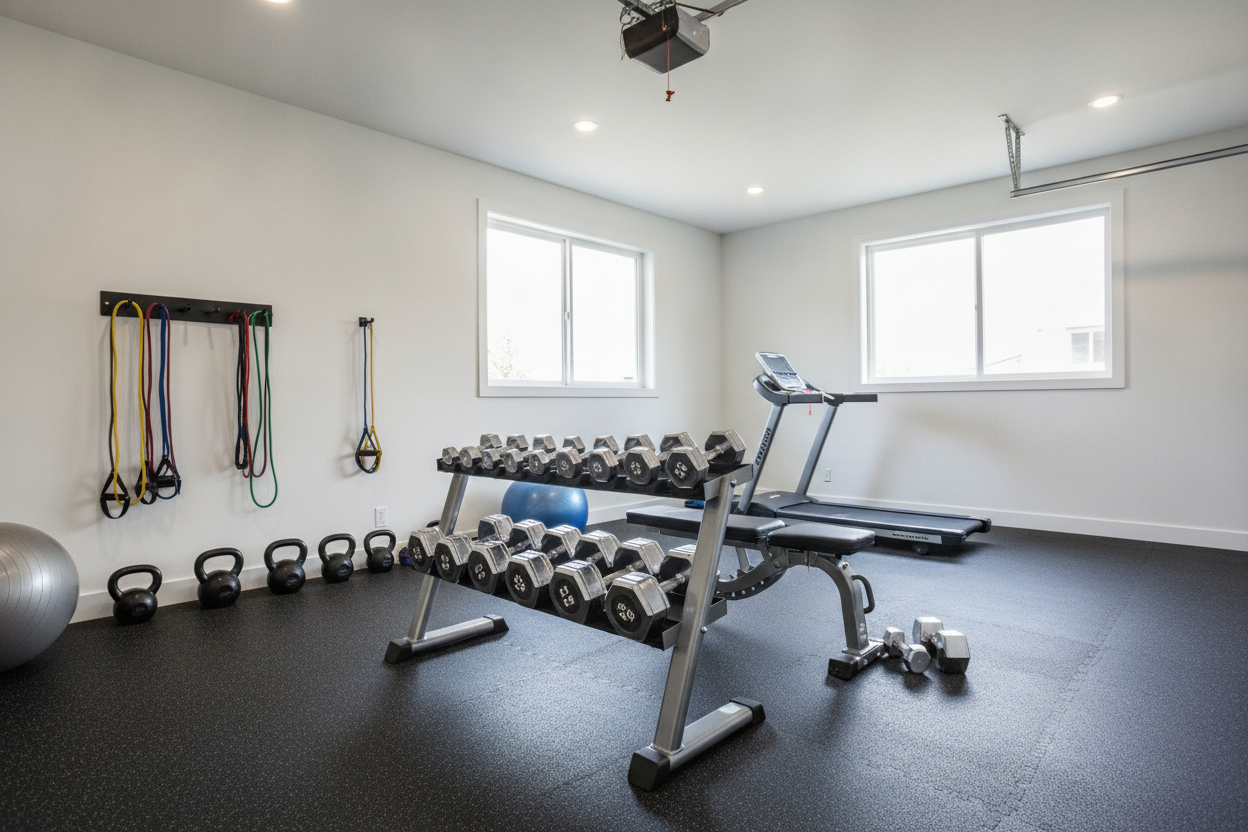
The first piece of gear I recommend is not a dumbbell—it is a dedicated space. Investing in a large exercise mat for home gym use gives you a high-traction 'anchor point.' It needs to be firm enough that it does not compress under a heavy load but grippy enough that your sneakers stay glued. Once you trust the floor, you can actually start to push your limits without the 'wobble factor.'
Building the 'Brakes': Why Leg Power Stops Falls
Most falls happen because people cannot 'brake.' You trip, your momentum carries you forward, and your legs are not strong enough to absorb that force and stop the descent. This is where eccentric strength—the lowering phase of an exercise—becomes a literal lifesaver. Progressive resistance training for seniors focuses on the controlled descent of a squat or a lunge to build these biological brakes.
I am a huge fan of using resistance training exercises for legs that emphasize 'time under tension.' Do not just drop into a chair; take three seconds to get there. Exercises like the Goblet Squat or the Romanian Deadlift teach your hamstrings and glutes to manage your center of gravity. When you have the leg power to halt your own body weight, a trip remains a stumble instead of a traumatic event.
Core Strength Is More Than Just Crunches
If your spine is a wet noodle, your legs cannot do their job. Resistance exercises for older adults often ignore the 'bracing' aspect of core work. We do not need more sit-ups; we need trunk rigidity. When you carry a heavy suitcase or a bag of groceries, your core is working to keep you upright. That is the kind of strength that prevents a fall from turning into a spinal injury.
Compound movements like the overhead press or the farmer's walk are the gold standard here. They force your midsection to stabilize against an external load. This 'anti-rotation' and 'anti-flexion' strength is what keeps you from folding when life throws a curveball at your balance. A strong core acts as a bridge, transferring power from your legs to your upper body, keeping you a cohesive unit rather than a collection of loose parts.
How to Ditch the 2-Pound Dumbbells and Load Up Safely
I am going to be blunt: those pink 2-pound dumbbells are doing nothing for your bone density. To fight osteopenia, you need mechanical tension. That means you have to lift things that feel heavy. Transitioning from ultra-light resistance training exercises for elderly folks to actual muscle-building loads is where the magic happens. You do not need a 500-lb deadlift, but you do need to challenge yourself.
Start by getting the right equipment for resistance training that allows for small, incremental weight jumps. Adjustable dumbbells are perfect for this. If 10 lbs feels easy, you should be able to move to 12.5 lbs, not jump straight to 20. This 'micro-loading' keeps the joints happy while forcing the muscles and bones to adapt. Remember, if it does not challenge you, it will not change you.
My Experience: The Trap Bar Epiphany
I started training my 68-year-old father three years ago. He was convinced he only needed 'stretching.' I put a 45-lb trap bar in front of him and he looked at me like I was insane. We started with the empty bar. Fast forward six months, and he was pulling 135 lbs for reps. The biggest change was not his physique; it was his confidence. He stopped 'shuffling' when he walked and started taking full, powerful strides. The downside? He now thinks he can help me move my 300-lb gun safe. Know your limits, Dad.
FAQ
Is lifting heavy weights dangerous for my joints?
Being weak is more dangerous. Proper form and slow progression actually strengthen the connective tissue around your joints. Start light, nail the technique, and add weight slowly.
How many days a week should I do resistance training?
Two to three days is the sweet spot. Your body needs more recovery time as you age, so do not try to train like a 20-year-old athlete. Consistency over intensity.
Can I do these exercises if I have arthritis?
Yes, and you should. Movement is medicine. Strengthening the muscles around an arthritic joint takes the pressure off the joint itself. Just avoid movements that cause sharp, stabbing pain.