How Heavy Should Resistance Training for Sarcopenia Actually Be?
My dad's doctor gave him the standard advice last year: 'Just stay active to keep your strength up.' He started walking three miles a day, but six months later, he still struggled to get out of a low armchair without a massive push-off. The reality is that resistance training for sarcopenia requires more than just movement; it requires a specific type of stress that a leisurely stroll simply cannot provide.
Quick Takeaways
- Walking and gardening are great for your heart, but they won't stop muscle wasting.
- Muscle fibers only grow when they are forced to overcome significant mechanical tension.
- You don't need a powerlifting rack, but you do need weights that actually feel heavy by the 10th rep.
- Stability is safety—don't train on slippery floors or thick, squishy carpet.
The 'Just Stay Active' Trap
We’ve been told for decades that 'movement is medicine.' While that's true for your cardiovascular system, your muscles are more demanding. Sarcopenia—the age-related loss of muscle mass and function—doesn't care if you hit 10,000 steps. It cares about whether you are challenging your Type II muscle fibers, the ones responsible for power and strength.
When you perform sarcopenia exercises that are too light, like lifting 2-lb pink dumbbells for 50 reps, you're essentially doing more cardio. To trigger muscle protein synthesis, you need mechanical tension. This means the weight has to be heavy enough that the last few reps of a set are genuinely difficult to finish with good form. Without that struggle, the muscle has no reason to adapt or stay.
What Aging Muscles Actually Respond To
The science is actually very optimistic: sarcopenia can be completely prevented with exercise if you dose it correctly. Research consistently shows that older adults respond best to a resistance exercise for sarcopenia that hits about 60% to 80% of their one-rep maximum. In plain English? If you can do 20 reps easily, the weight is too light.
You should be aiming for a 'weight' that you can lift for 8 to 12 reps before needing a break. This intensity level is the sweet spot for hypertrophy (muscle growth). It’s not about becoming a bodybuilder; it’s about maintaining the 'armor' of muscle that protects your joints and keeps your metabolism from cratering as you age.
A Realistic Sarcopenia Exercise Plan for the Living Room
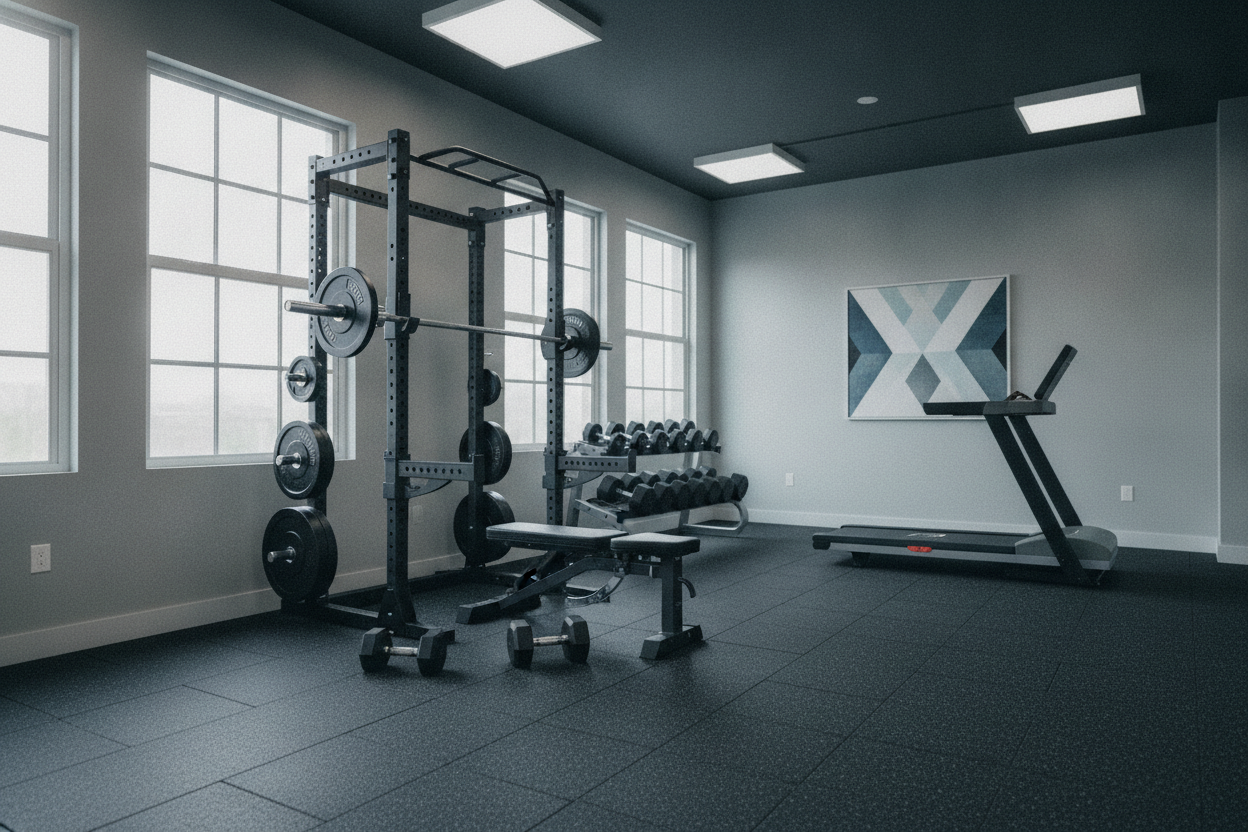
You don't need a $3,000 functional trainer to see results. A solid sarcopenia exercise plan focuses on the 'Big Three' movements: a squat pattern, a hinge pattern (like a deadlift), and a carry. Start with bodyweight squats to a chair. Once you can do 15, hold a gallon of water. Once that's easy, it's time for a real dumbbell.
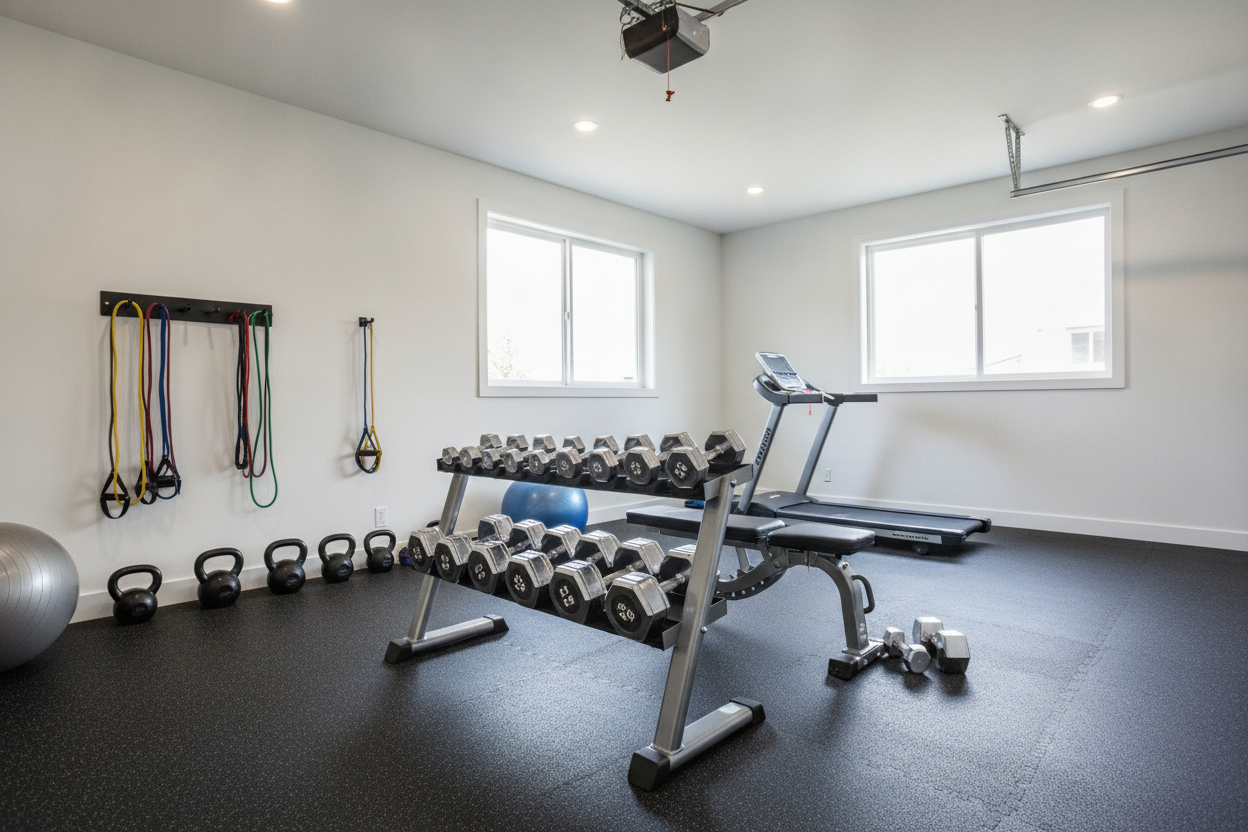
I often suggest an exercise routine for home gym setups that mixes heavy-duty resistance bands with a few key free weights. Bands are great because they provide 'accommodating resistance'—the move gets harder as you reach the strongest part of your lift. This keeps the tension high without putting excessive 'snap' on the joints at the bottom of the movement.
Creating a Space Where You Aren't Afraid to Push Hard
The biggest barrier to effective sarcopenia workout sessions at home is fear. If you're worried about slipping on a rug or cracking a floor tile, you won't lift with the intensity required to actually grow muscle. You need a foundation that feels like a real gym, not a slippery hallway.
Investing in a large exercise mat for home gym use is the first real step to taking this seriously. It creates a defined 'work zone' and provides the grip your sneakers need to drive through the floor during a squat. Specifically, a 6x8ft exercise mat is the ideal size for doing loaded carries or lunges. Having that extra real estate means you aren't constantly stepping off the mat and onto a different surface, which is when most trips and stumbles happen.
How to Know if Your Routine is Actually Working
Forget the scale. If you are doing exercise for sarcopenia correctly, your weight might stay the same while your body composition shifts. Look for functional wins instead. Can you carry all the groceries in one trip? Can you get up from the floor without using your hands? These are the metrics that matter.
Another great indicator is grip strength. If you find that opening jars or carrying a heavy laundry basket is getting easier, your sarcopenia and exercise program is hitting the mark. Strength is the lead domino—when it falls, everything else in your daily life gets easier to manage.
My Personal Experience with Intensity
I remember trying to get my mother-in-law to use resistance bands. She was terrified of them 'snapping' and hitting her. We started with the lightest tension possible, and she hated it—it felt like a toy. It wasn't until I bought her a pair of 10-lb rubber-coated dumbbells that she felt 'the work.' That tactile feedback of holding something heavy changed her mindset. She realized she wasn't fragile. The biggest mistake I made was starting her too light because I was overprotective. Once we bumped the weight up to something she actually had to focus on lifting, her balance improved almost overnight.
Sarcopenia Training FAQ
Is resistance training safe if I already have bone density issues?
Yes, but check with your doc first. Generally, resistance exercise is the best way to improve bone density because the muscle pulling on the bone signals the body to deposit more minerals there.
How many days a week should I do a sarcopenia workout?
Two to three days is the sweet spot. Your muscles don't grow while you're lifting; they grow while you're resting. Giving yourself 48 hours between sessions is key for recovery.
Do I need to eat more protein?
Almost certainly. Resistance training for sarcopenia only works if you provide the building blocks. Aim for a palm-sized portion of protein at every meal to support the work you're doing in your living room.