Why a Rigid Beginners Workout Schedule At Home Always Fails
I have seen it a thousand times: someone buys a set of adjustable dumbbells, prints out a glossy 12-week program, and swears they will be under the bar every Monday, Wednesday, and Friday at 6:00 AM sharp. By week three, the kid gets sick, the car won't start, or work runs late, and that beginners workout schedule at home goes straight into the recycling bin. You feel like you failed the program, but the truth is the program failed you by being too brittle.
Rigidity is the enemy of consistency. If your plan requires a perfect life to succeed, you are setting yourself up for a relapse into the couch-and-Netflix routine. I have spent a decade testing racks and plates in my own garage, and I can tell you that the most successful lifters are not the ones with the most discipline—they are the ones with the best backup plans.
- Ditch the fixed days; aim for a weekly volume goal instead.
- Keep your gear visible and ready to use at a moment's notice.
- Scale your intensity based on your actual energy levels, not a spreadsheet.
- Accept that a 15-minute session is infinitely better than a skipped session.
The Trap of the Perfect Monday-Wednesday-Friday Split
Most traditional bodybuilding splits were designed for people whose entire life revolves around the gym. When you are a busy adult, a missed Monday feels like a stain on the whole week. You tell yourself you will start fresh next Monday, which is just code for taking six days off and losing all your momentum.
I used to be a slave to the calendar. If I did not hit my heavy squats on Monday, I felt like the rest of the week was a wash. This all-or-nothing mindset is why most home gyms end up as expensive clothes hangers. You do not need a perfect schedule; you need a resilient one that survives a chaotic Tuesday when the dishwasher overflows.
The 'Floating' Workout Plan for Beginner at Home
The fix is simple: stop assigning workouts to specific days. Instead of saying I lift on Monday, tell yourself I will lift three times this week. This is the ultimate workout plan for beginner at home because it removes the guilt of a missed session. If Monday is a disaster, Tuesday becomes your Day 1. The goal is simply to complete three sessions within a 7-day window, regardless of which days they land on.
As you get more comfortable with this fluid style, you can look into an at home workout schedule for beginners that focuses on adding days only when your consistency is bulletproof. The goal is to stack wins, not to follow a script written by someone who does not know your life or your work schedule. This removes the pressure and accommodates real-life chaos.
Kill the Friction: Leaving Your Gear Out on Purpose
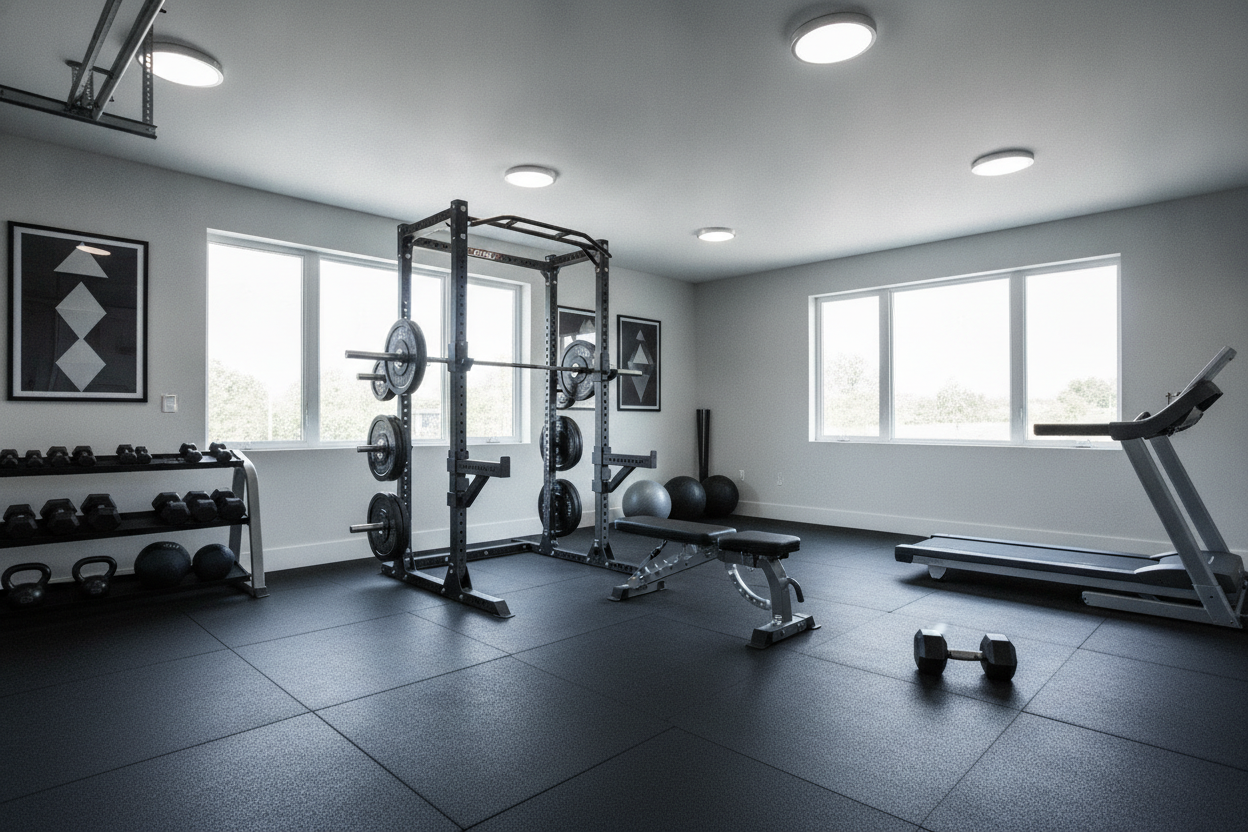
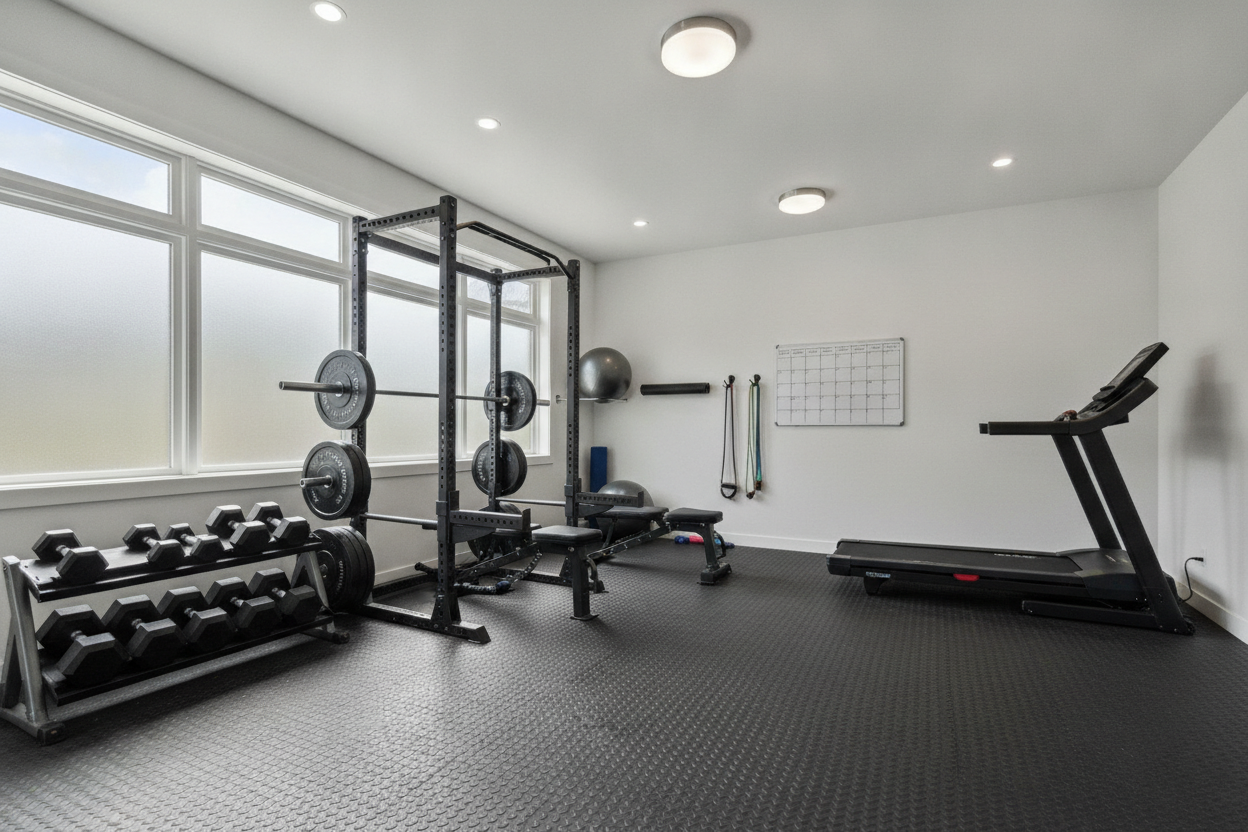
If you have to spend ten minutes clearing toys off the floor and unrolling a flimsy mat, you have already lost. Friction is a workout killer. I have found that the most effective way to ensure I actually train is to claim a permanent piece of real estate in the house. Even if it is just a corner of the basement, keep it set up.
Investing in a dedicated, large exercise mat for home gym use is a psychological trick. When that mat is always visible, it is a constant reminder that the gym is open. You can walk over, drop down, and start a set of pushups without a second of prep work. It turns your home from a place where you could work out into a place where you do work out. Claims that visual space and helps lock in the habit.
Adjusting on the Fly When You're Exhausted
Some days you wake up feeling like you have been hit by a truck. Maybe the baby did not sleep, or you are just drained from a 10-hour shift. Trying to hit a personal best on those days is a recipe for injury or burnout. Instead of skipping the day entirely, pivot to a low-energy version of your routine.
This is where you apply a flexible beginners workout schedule at home. Swap the heavy deadlifts for some light mobility work or a quick 15-minute circuit. You can learn more about matching your daily choices to your energy in our guide on the beginners workout schedule at home. The win is not the weight on the bar; it is the fact that you did not break the habit of showing up.
What This Actually Looks Like in a Normal, Messy Week
A perfect week is a myth. A real week looks like this: Monday is a wash because of a late meeting. Tuesday, you hit a full session. Wednesday, you are too tired, so you do 10 minutes of stretching. Thursday, you get your second full lift in. Friday is a family night. Saturday morning, you finish your third session while the coffee is brewing. Sunday is a bonus walk.
You hit your three-day goal, but it did not look anything like a standard gym flyer. By the end of the month, you have still logged 12 solid sessions. That is how you actually see progress. It is not about intensity in a single hour; it is about the total work done over months without quitting because you felt like a failure on a Tuesday.
My Biggest Mistake
When I first started my home gym, I bought a massive power rack that barely fit in my low-ceiling basement. I was so obsessed with having a pro setup that I did not leave room to actually move. I spent more time bumping my head on pull-up bars than actually training. I eventually sold it for a half-rack and realized that space and flow matter way more than having the biggest piece of iron in the neighborhood. Do not over-spec your space before you have built the habit of using it.
FAQ
What happens if I only get two workouts in a week?
Nothing. You just start the next 7-day window with the goal of getting three. Do not try to make up for it by doing six workouts the next week—that is a fast track to burnout and soreness that will stop you in your tracks.
Do I need expensive equipment to start?
No. A solid mat and one pair of adjustable dumbbells will take you further than a $3,000 treadmill you never use. Start small and only buy gear when you have earned it through consistency.
How long should a beginner session last?
Aim for 30 to 45 minutes. Anything longer and you will start looking for excuses to skip it. Efficiency is your best friend when you are training at home and trying to balance a life.