Why a Free Weight Home Gym System Beats Any Cable Machine
I remember staring at a three-thousand-dollar multi-station machine at a big-box store, thinking it was the ultimate solution for my garage. It had pulleys, a pec deck, and a leg extension attachment. Then I tried to do a heavy row and the whole unit nearly tipped over. That was the moment I realized a proper free weight home gym system isn't just about saving money—it is about building a foundation that actually handles real intensity without the mechanical friction of cheap pulleys.
If you are tired of waiting for the rack at a commercial gym or you are sick of equipment that feels like a toy, moving to iron is the move. You do not need a dozen stations; you need four pieces of gear that won't fail you when the weight gets heavy.
Quick Takeaways
- Modular free weights offer a 1:1 resistance ratio, unlike cable machines that use mechanical advantage to hide how weak they are.
- A power rack takes up less floor space than a multi-station and offers ten times the exercise variety.
- Resale value for iron plates and barbells stays high; nobody wants to buy your broken cable machine in five years.
- Free weights force you to stabilize the load, building the accessory muscles that machines ignore.
The Multi-Machine Illusion (And Why It Fails)
Most all-in-one machines are designed to look impressive in a showroom, but they fail the second you try to train like an athlete. The cables are often thin, the pulleys are plastic, and the range of motion is fixed. This means the machine dictates how you move, rather than your own anatomy. If your shoulder doesn't like the specific arc of a machine's chest press, you're out of luck.
I have found that home weight training equipment beats any commercial gym machine because it allows for natural movement patterns. In a commercial setting, those machines are built with thousand-pound frames to survive 24/7 abuse. Residential versions are usually flimsy by comparison. When you squat in a rack, you are in control. When you use a Smith machine or a cheap multi-press, you are fighting the friction of the rails as much as the weight itself.
Anatomy of a Complete Free Weight Home Gym
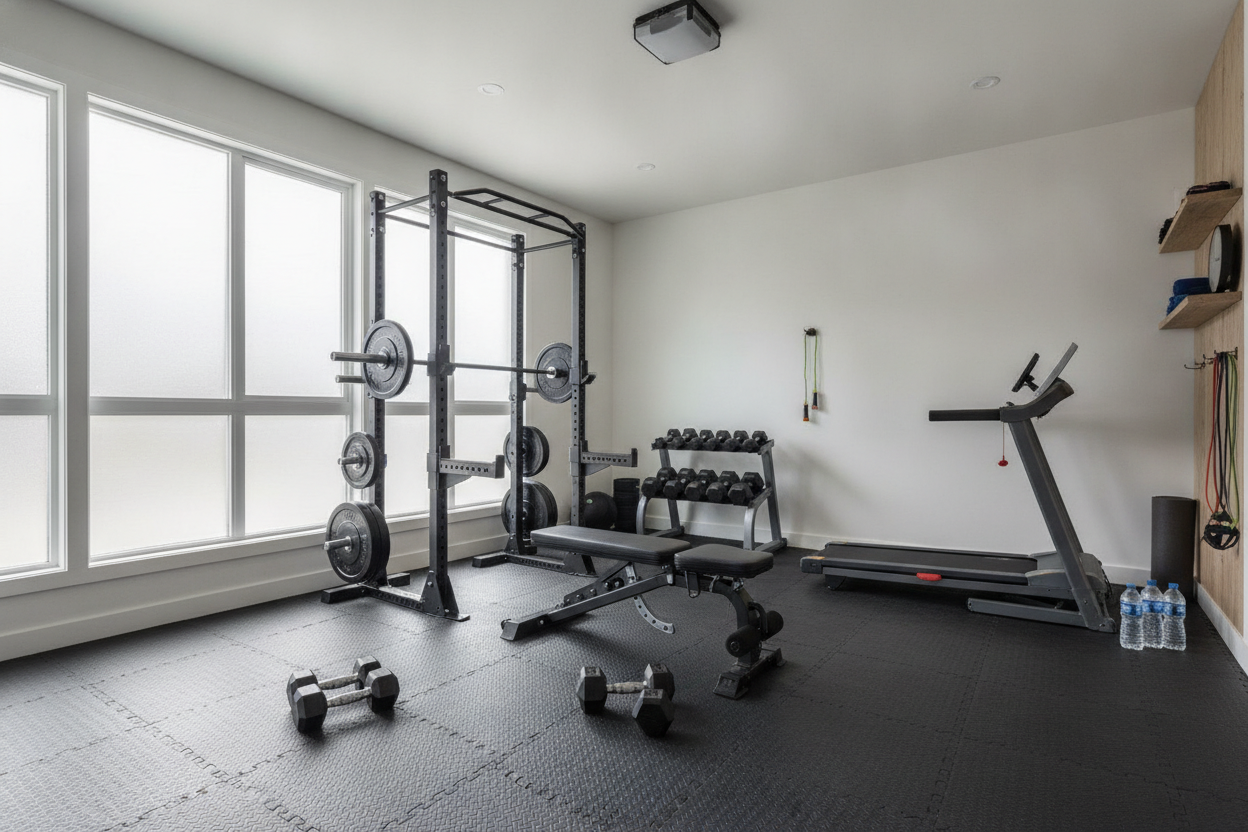
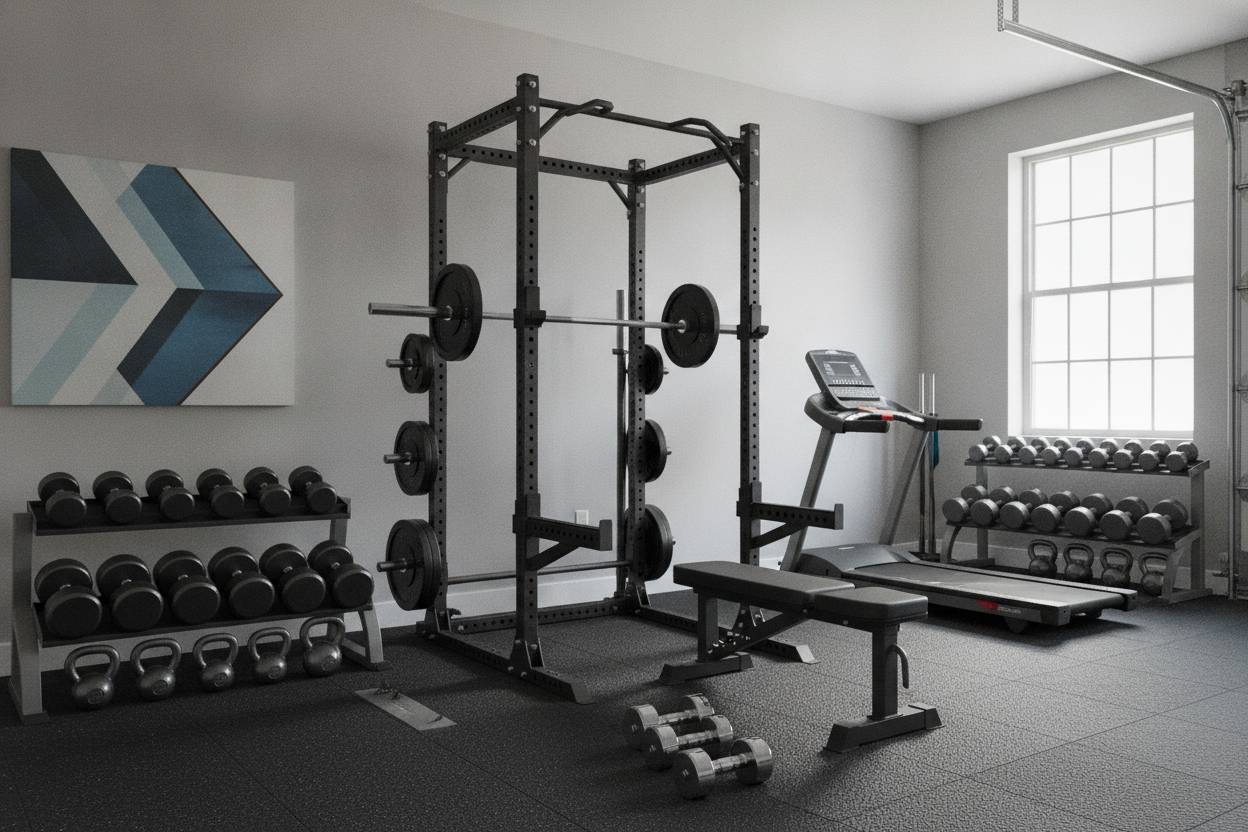
Building a complete free weight home gym does not require a massive budget, but it does require a focus on steel quality. You need a power rack—look for 11-gauge steel with 3x3 or 2x3 uprights. This is the skeleton of your gym. It is where you squat, press, and hang your pull-up bar.
Next is the barbell. Do not buy the $50 bar from the local sporting goods store. You want a 20kg Olympic bar with a decent tensile strength (at least 190,000 PSI) and a knurling that provides grip without drawing blood. Pair this with a set of iron plates or bumpers. If you plan on deadlifting or doing cleans, bumpers are a must to save your foundation. Finally, an adjustable bench that doesn't wobble is non-negotiable. If the bench has a 1,000-lb capacity, you know it won't creak when you're mid-set.
Finding the Best Free Weight Equipment for Your Space
Space is the biggest hurdle for most of us. A full power rack usually needs about a 4x4 foot footprint, but you need at least 7 feet of width to clear a standard Olympic barbell. If you are tight on space, look for a fold-back rack or a short-squat stand. I have tested the best weight equipment for home gym setups and the biggest mistake people make is buying 'compact' gear that is too light to be stable. If you can move the rack with one hand, it is not heavy-duty enough for a 300-pound squat.
Dumbbells vs. Barbells: Where Do You Start?
If you can only afford one, start with the barbell. It is the most efficient way to load the most weight. However, a home gym free weight system feels incomplete without dumbbells. For a home setup, adjustable dumbbells are the way to go. A pair that goes from 5 to 50 or 80 pounds replaces an entire wall of fixed weights and fits in the corner. Use the barbell for your heavy compounds and the dumbbells for your hypertrophy and accessory work.
How to Program Workouts Without Pulleys and Cables
People worry that ditching cables means losing their favorite exercises. It is a myth. You can replicate almost any cable movement with a barbell or dumbbell. Can't do lat pulldowns? Do weighted pull-ups or heavy bent-over rows. These movements actually recruit more muscle fibers because you have to stabilize your core and lower body while you pull.
Leg curls can be replaced with Romanian Deadlifts or floor-based Nordic curls. Instead of a cable crossover, use dumbbells for floor flies. The stimulus is often better because you cannot 'cheat' the weight using momentum as easily as you can on a pulley system. You'll find your grip strength and core stability improve drastically within the first month of switching to a 100% free weight approach.
Personal Experience: My $400 Mistake
When I started, I bought a cheap bolt-together bench and a 'standard' 1-inch barbell set. I thought I was being smart. Within three months, the bar had a permanent slight bend from 225-lb deadlifts, and the bench felt like it was going to collapse every time I tried to incline press. I ended up spending more money replacing the junk than I would have spent buying the right gear the first time. Buy once, cry once. Get the heavy-duty rack and the high-tensile bar. They will outlive you.
FAQ
How much space do I really need?
A 8x8 foot area is the sweet spot. This gives you room for a 7-foot barbell and enough space to move around the rack without hitting the walls. If you have a low ceiling, look for 'shorty' racks that stand around 72 inches tall.
Are bumper plates worth the extra cost?
If you are training in a garage or on a second floor, yes. They are quieter and protect your floor. If you are purely a powerlifter training on a platform, iron plates are thinner, allowing you to fit more weight on the bar.
Do I need a floor platform?
You need protection. At a minimum, get 3/4-inch horse stall mats. They are dense, cheap, and will stop your best free weight equipment from cracking your concrete or hardwood during heavy sets.