Why a 5-Week Exercise Plan Beats Your Standard 30-Day Challenge
I spent years falling for the '30-day shred' marketing trap. You know the one—day 1 you’re fired up, day 15 you’re limping, and by day 25 you’ve completely ghosted your dumbbells because your joints feel like they’re filled with glass. The reality is that a 5-week exercise plan is the smallest viable unit of real training progress. Thirty days is a marketing gimmick; thirty-five days is a training cycle.
Quick Takeaways
- 30-day challenges often ignore the physiological need for recovery.
- A 5-week structure allows for three weeks of building, one week of peaking, and one week of deloading.
- Consistency in a 5-week block builds habits that outlast temporary 'shreds.'
- Focusing on compound movements yields better results than high-rep 'burnout' circuits.
The Problem With the Fitness Industry's '30-Day' Obsession
The fitness industry loves the number 30 because it fits neatly on a calendar page. But your central nervous system doesn't care about the Gregorian calendar. Most beginners spend the first two weeks of any new routine just dealing with DOMS (delayed onset muscle soreness) and learning how to move. By the time you actually start moving well and moving heavy, the 'challenge' is over. A 5 week workout plan gives you that extra buffer to move past the 'everything hurts' phase and into the phase where you actually start seeing muscle adaptation.
Why Adding One Extra Week Changes the Entire Timeline
Think of training like a wave. You need to build momentum before you crash. In a five week workout plan, weeks 1 through 3 are for volume and skill acquisition. You’re teaching your brain how to squat without your knees caving in. Week 4 is where you push the intensity—heavy weights, fewer reps, and testing your limits. Then, Week 5 is your deload. If you skip that deload, you’re just surviving a 90-day home workout plan instead of thriving in one. That fifth week allows your connective tissue to catch up to your muscle growth, preventing the nagging tendonitis that kills most home gym progress.
The Blueprint: Structuring Your 5-Week Fitness Plan
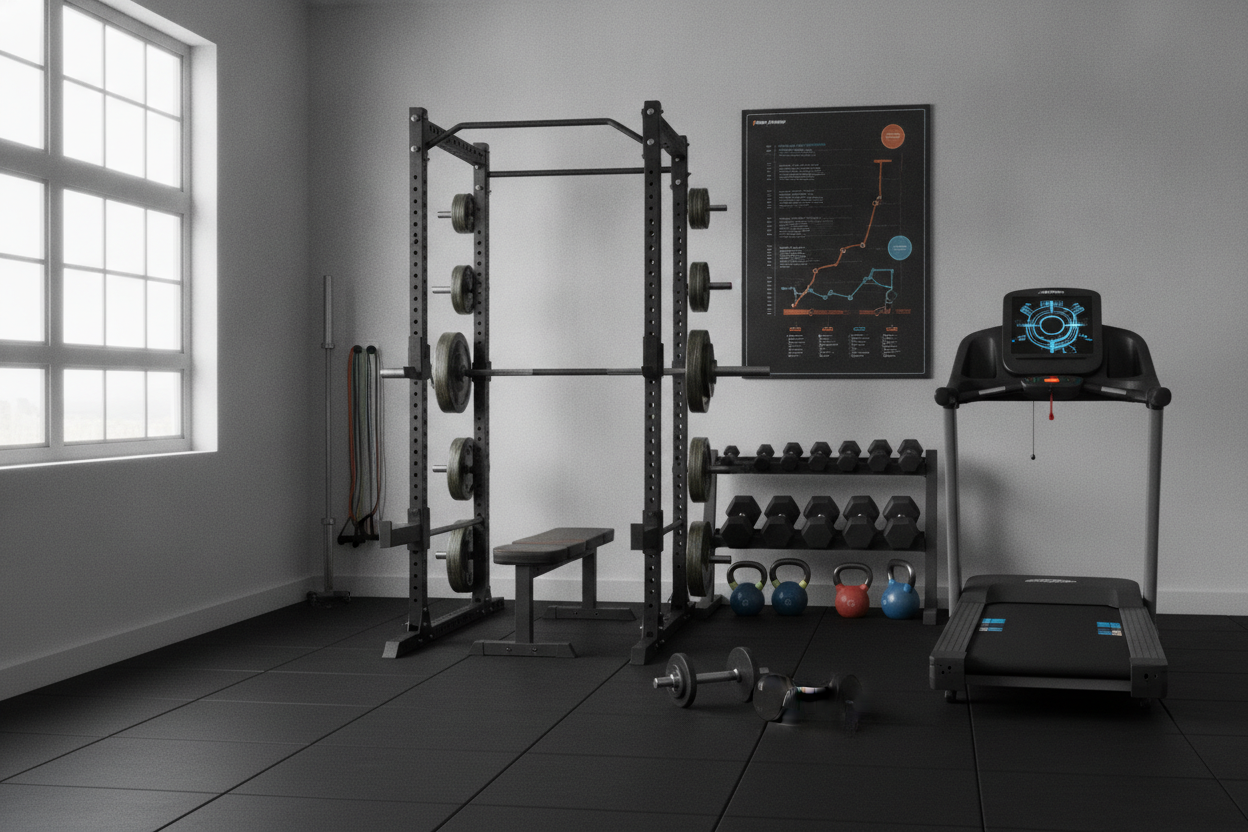
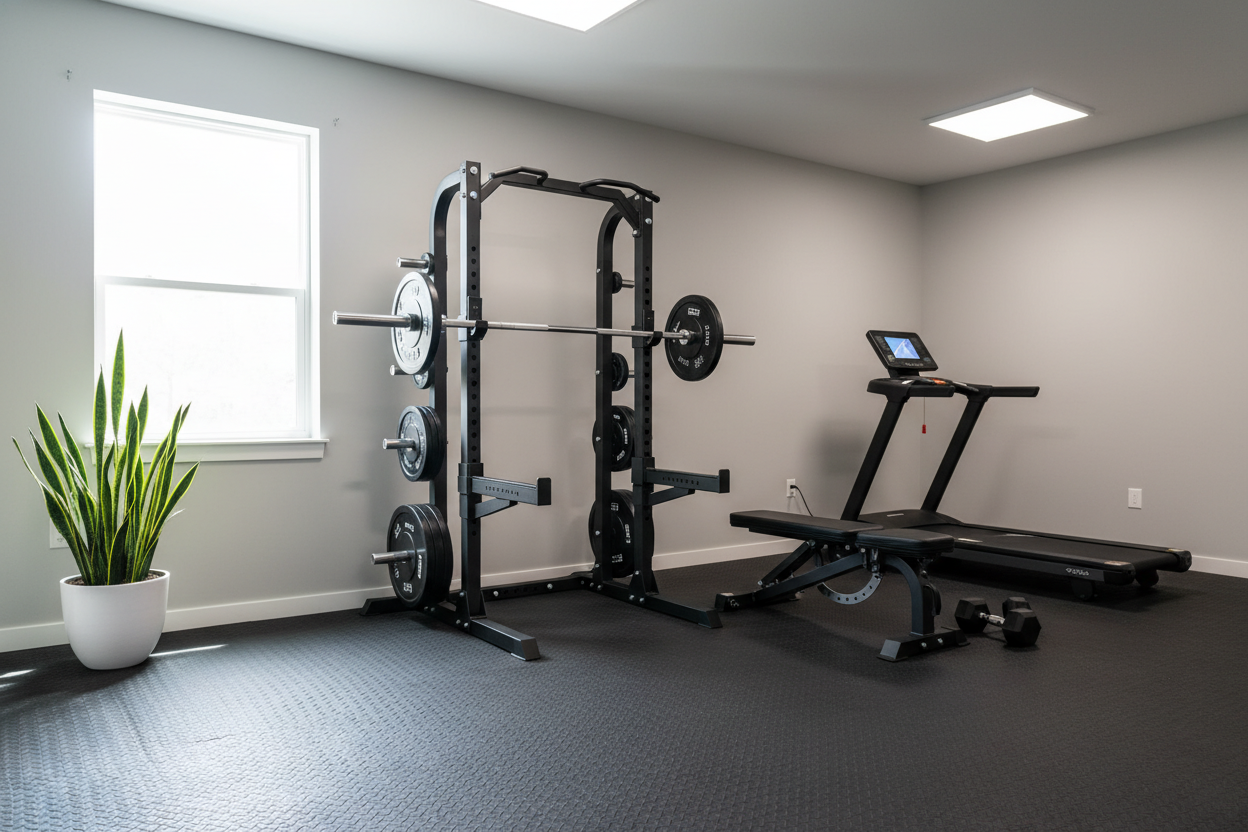
Stop trying to do 50 different exercises. Focus on the 'Big Three' or their variations: squats, hinges, and presses. For a solid 5-week workout program, I recommend a three-day split: Monday, Wednesday, and Friday. This gives you 48 hours of recovery between sessions. You should be tracking every set and rep in a notebook. If you did 10 reps at 100 lbs last week, aim for 11 reps or 105 lbs this week. You can find specific movement libraries and templates at the Workout Hub to swap out exercises based on what gear you actually have in your garage, whether it's a power rack or just a pair of adjustable dumbbells.
Setting Up Your Floor Space for Zero-Friction Workouts
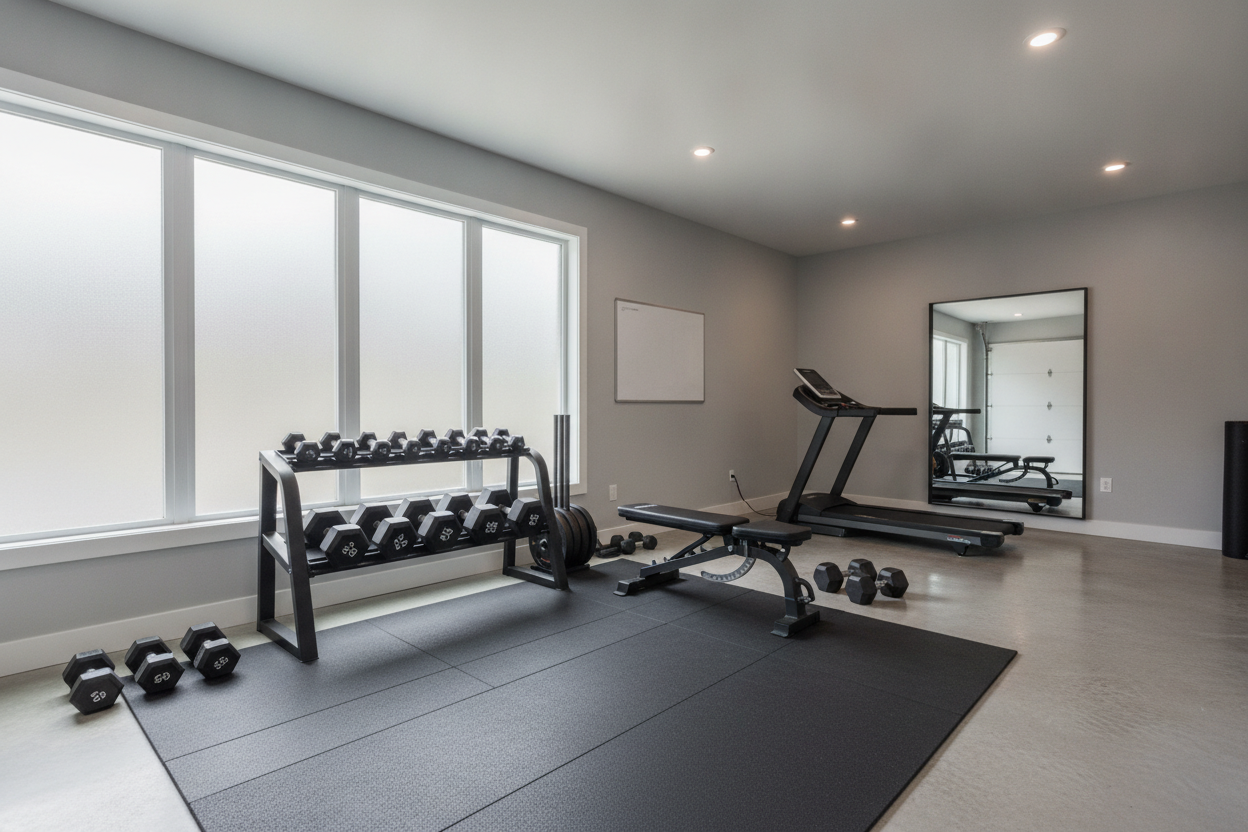
If you have to drag a heavy bench out from under a pile of laundry every time you want to lift, you’re going to quit by week three. I designate a permanent 'no-go zone' in my garage. Throwing down a 6X8Ft Exercise Mat is the easiest way to claim that territory. It’s thick enough to handle dropped 50-lb hex dumbbells and keeps your joints from screaming on the concrete during floor presses or planks. Once that mat is down, that space belongs to the iron—not the lawnmower.
Wait, Does This Mean I Have to Train 5 Days a Week?
Absolutely not. People often confuse the length of the program with the weekly frequency. A 5-week fitness plan doesn't mean you're in the gym 35 days straight. In fact, I’ve seen guys try a full body workout 5 days a week and their progress stalls by the end of the first month because they simply can't recover. Three or four days of focused, high-intensity lifting is the sweet spot for 90% of us. Use your off days for active recovery—walk the dog, do some light stretching, or just exist without being sore.
How to Measure Real Success After 35 Days
Forget the scale for a second. Did you add 5 lbs to your overhead press? Does the 35-lb kettlebell feel lighter than it did last month? Do you have more energy at 3 PM? Those are the real wins. By the end of day 35, your goal isn't just a lower number on the scale—it's a higher number in your training log and a psychological habit that doesn't feel like a chore anymore.
Personal Experience: The '30-Day' Burnout
I once tried a high-intensity '30-day Spartan' program that had me doing 100 burpees and 100 air squats every single day. By day 12, my wrists were shot, my knees were clicking like a Geiger counter, and I hated exercise. I pivoted to a 5-week cycle focusing on heavy carries and basic barbell work with a built-in deload. That extra week allowed me to back off when my joints felt 'crunchy,' which kept me in the game long enough to actually hit a deadlift PR. Sometimes, doing less per week but staying in the game longer is the only way to win.
FAQ
Do I need a full power rack for this?
No. While a rack is great, you can run a killer 5-week cycle with just a pair of dumbbells or a single heavy kettlebell. The 'progressive overload' part is what matters, not the specific tool.
What if I miss a workout in the middle?
Don't double up the next day. That’s a recipe for injury. Just pick up exactly where you left off. The 5-week timeline is a guide, not a prison sentence.
Why is the deload week (Week 5) so important?
It’s when the 'supercompensation' happens. You’ve stressed your body for four weeks; the fifth week is when your body actually repairs itself to be stronger than it was before you started.