Why a 45lb Weight Plate Hip Thrust Beats a 135lb Barbell
I spent twenty minutes yesterday just clearing a path in my garage to roll a barbell over to the bench. By the time I found my tattered bar pad and loaded two plates, my motivation was already halfway out the door. That is the moment I realized the weight plate hip thrust is the unsung hero of home gym efficiency. Sometimes, the best workout is the one that actually happens because you did not have to spend ten minutes moving equipment just to start your first set.
Quick Takeaways
- Setup time drops from five minutes to five seconds.
- Bumper plates offer built-in padding that iron bars lack.
- High-rep metabolic stress is often better for glute growth than heavy triples.
- Smaller footprint makes it ideal for cramped garage gyms.
The Barbell Setup Tax (And Why I Stopped Paying It)
Let's be honest: setting up a barbell for glute work is a logistical nightmare. You have to clear floor space, roll the bar into position, find a pad that isn't falling apart, and then navigate the awkward dance of sliding your legs under it without crushing your shins. In a home gym, where every square inch is a premium, this friction often leads to skipping the movement entirely. I have been there—staring at the rack, deciding that 'regular squats are enough' just because I did not want to deal with the bar.
The weight plate hip thrust removes every single one of those barriers. You grab one plate, sit on the floor, and you are working. There is no rolling bar to chase and no heavy plates to lug from the tree one by one. How to Load a Free Weight Hip Thrust Without the Bruises was a lesson I learned the hard way after months of trying to force barbell work in a space that just was not built for it. When you lower the 'entry fee' of your workout, you are much more likely to stay consistent.
The Anatomy of a Perfect Weight Plate Hip Thrust
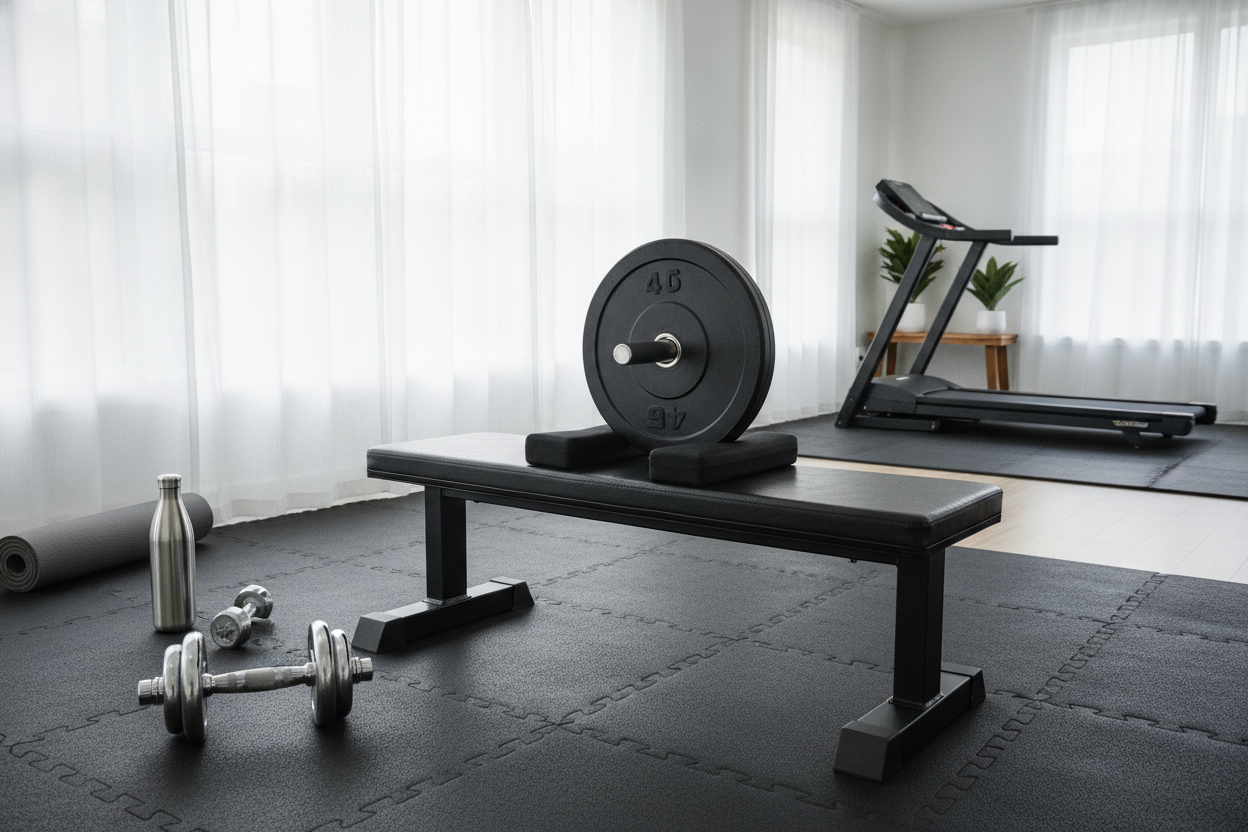
Not all plates are created equal when it comes to resting them on your pelvis. If you try this with a thin, sharp-edged cast iron plate, you are going to have a bad time. The narrow surface area focuses all that pressure onto a tiny strip of bone. Instead, you want something with a wider profile. The thick rubber bumper plates from the Gxmmat X6 Power Rack Weight Bench Barbell Bumper Plate Set 230Lbs Package are infinitely more comfortable on the hips than standard metal plates because they distribute the weight across a larger surface area.
To perform this correctly, sit on the floor with your back against a stable bench. Place the hip thrust weight plate flat across your lap. Unlike a barbell, which sits high, a plate can be tucked right into the crease of your hips. This lower center of gravity actually helps you feel the glute contraction better because the weight is not wobbling side-to-side. Keep your chin tucked and your ribs down; the goal is to hinge at the hips, not arch your lower back into oblivion.
But Is 45 Pounds Actually Enough to Grow Glutes?
I hear the ego-lifters already: '45 pounds? That is a warm-up.' Here is the reality of muscle hypertrophy: your glutes do not have eyes. They do not know if they are lifting a 400-pound barbell or a single 45-pound plate; they only know tension and metabolic stress. Most people performing heavy barbell thrusts are using 50% momentum and 50% lower back. When you switch to a single plate, you are forced to own the movement. The Internet Lied to You About a Good Hip Thrust Weight by making everyone believe that if you are not moving three plates, you are wasting your time.
Try this: instead of chasing a max weight, do 20 reps with a 45-pound plate. At the top of every single rep, hold the squeeze for three full seconds. By rep 12, your glutes will be screaming louder than they ever did during a heavy barbell set. This 'peak contraction' is much easier to achieve when you are not worried about a heavy bar rolling off your lap or bruising your hip bones. We are chasing the pump here, not a powerlifting total.
How to Stop the Plate From Sliding Down Your Legs
The most common complaint with a plate-loaded thrust is that the plate wants to slide toward your knees as you rise. This usually happens because your torso is moving too much or your feet are too far out. First, make sure you are using a bench that will not budge. I use the Gxmmat Adjustable Weight Bench because it has the grip and stability to stay put while I drive my heels into the floor. If your bench moves, your angle changes, and the plate starts to slide.
To lock the plate in, hook your thumbs through the center hole or grip the outer edges and pull the plate slightly toward your belly button. This active 'pull' keeps the weight anchored in the hip crease. Also, check your shin angle. At the top of the movement, your shins should be vertical. If your feet are too far away, you will feel it in your hamstrings and the plate will slide down. If they are too close, your knees will take the brunt of the force.
Programming the Plate Finisher Into Your Leg Day
This is not necessarily your primary heavy mover. Think of the plate-loaded thrust as the ultimate finisher. I love throwing these in at the end of a session when my central nervous system is fried from squats or deadlifts. I do not have the energy to load a bar, but I can definitely handle three sets of 25 reps with a single bumper plate. It is also a fantastic 'home office' workout—if you have five minutes between Zoom calls, you can get a massive glute pump without even changing your shoes.
Try supersetting these with bodyweight lunges. Do 20 plate thrusts, immediately drop the plate, and do 15 lunges per leg. The constant tension is brutal. It turns a simple 45-pound plate into a tool for serious growth without the headache of a professional gym setup.
Personal Experience
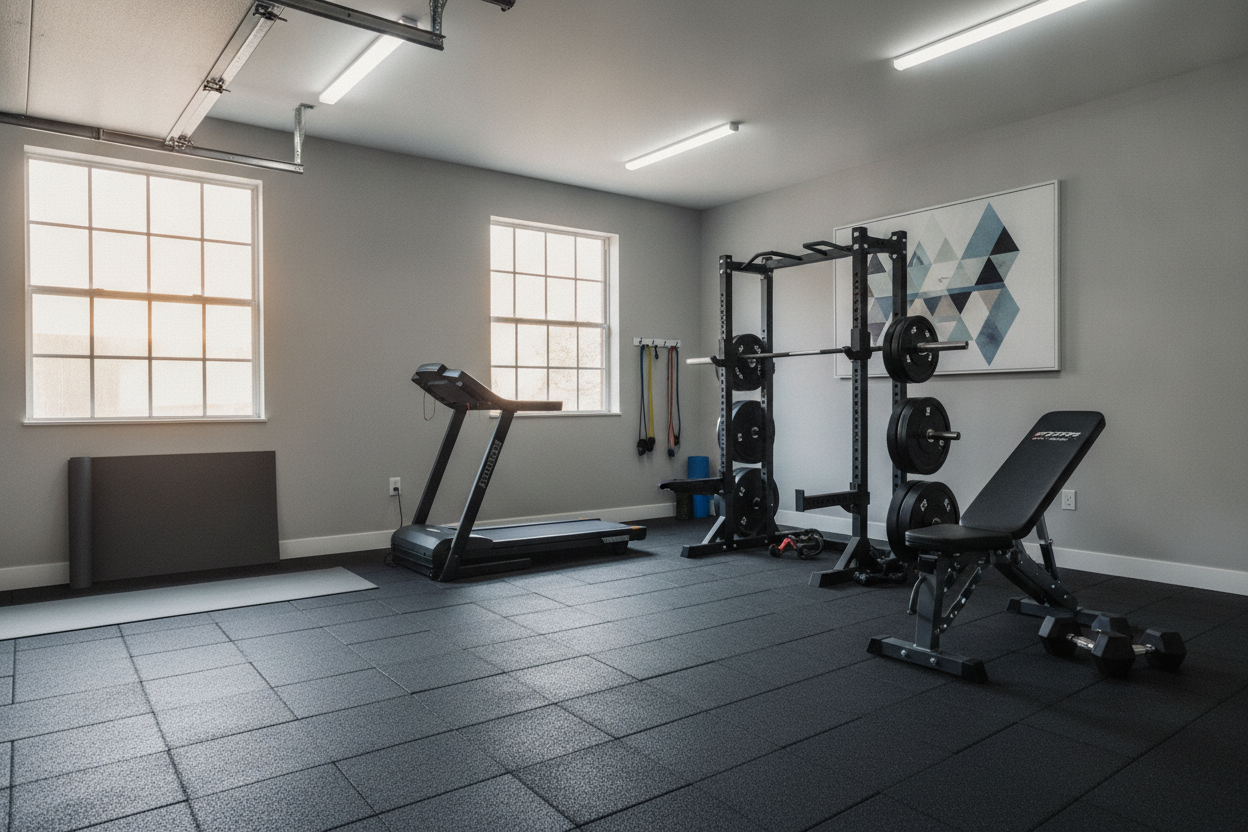
I used to be a barbell snob. I thought if I wasn't loading at least 225lbs, I was 'toning,' not building. Then I moved my gym into a one-car garage. Suddenly, the effort of dragging the bar out and finding my thick foam pad felt like a chore. One Tuesday, I just grabbed a bumper plate and did 100 reps in four sets of 25. The next day, I couldn't sit down. It was a wake-up call that intensity and volume matter way more than the equipment you use to get there. My only mistake was not switching to bumpers sooner; my hip bones still remember the 'iron plate' era with zero fondness.
FAQ
Do I need a pad for a weight plate hip thrust?
Usually, no. If you use a rubber-coated bumper plate, the rubber provides enough cushion. If you only have iron plates, you might want to fold a yoga mat over your lap first.
Can I stack two plates on my lap?
You can, but it gets precarious. If you need more than 45 or 55 pounds, it is usually time to transition to a barbell or use a heavy dumbbell held vertically.
Is this better than a glute bridge?
Yes. The hip thrust (off a bench) has a larger range of motion than a glute bridge (on the floor), which leads to better muscle fiber recruitment and a better stretch at the bottom.