
Why a 40 Degree Incline Treadmill Will Transform Your Home Gym
If you have ever felt like your home cardio routine has hit a brick wall, you are not alone. Many of us want to maximize calorie burn and build lower body strength without pounding our joints into the pavement. Enter the 40 degree incline treadmill. This beast of a machine promises to turn a standard walking session into a grueling, mountain-climbing workout.
But is making the leap to such an extreme angle right for your specific home gym setup? In this guide, we will break down the mechanics, space requirements, and real-world performance of high-incline trainers so you can decide if it is time to elevate your training.
Key Takeaways
- Massive Calorie Burn: Walking at a 40% incline can burn up to five times the calories of walking flat at the same speed.
- Posterior Chain Activation: Shifts the focus from your quads to your glutes, hamstrings, and calves.
- Low Impact: Delivers a high-intensity cardiovascular workout without the joint stress of running.
- Space Requirements: Requires significant ceiling clearance—often a minimum of 8 to 9 feet depending on user height.
Why Extreme Incline Training Works
The Science of the Climb
When you shift from a flat surface to a steep grade, your body is forced to work against gravity in a completely different way. A 40% grade mimics hiking up a steep mountain trail. This recruits more muscle fibers in your lower body, effectively turning a cardio session into a resistance workout.
Low Impact, High Reward
For athletes dealing with knee or hip issues, running is often off the table. Extreme incline walking elevates your heart rate into the vigorous zone while keeping one foot on the belt at all times, drastically reducing impact forces.
Comparing Incline Levels: Do You Need 40%?
Standard vs. Extreme Incline
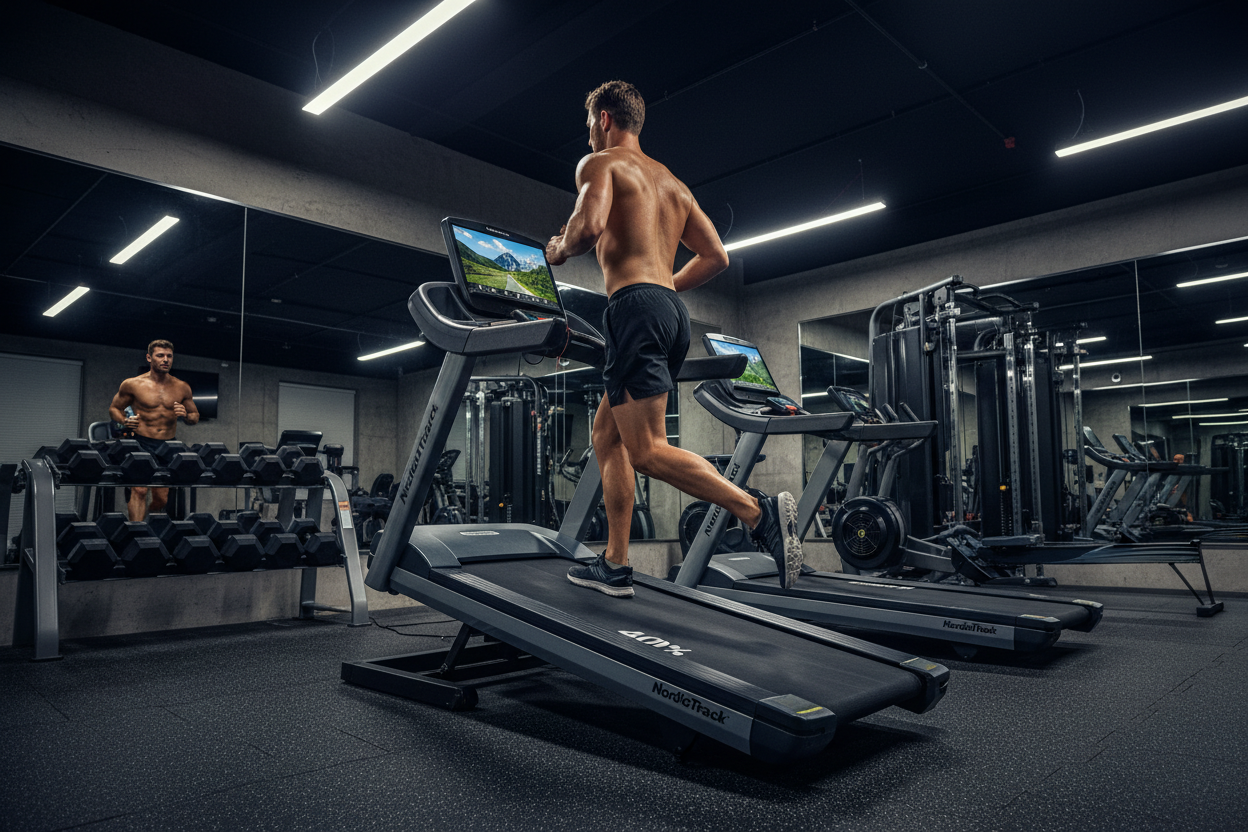
Most commercial and home treadmills top out at a 12% to 15% grade. For instance, a standard nordictrack treadmill 12 incline model is fantastic for steady-state cardio and moderate hill intervals. However, stepping up to a nordictrack 40 incline treadmill completely changes the stimulus. The 40% grade is less about traditional walking and more about functional climbing and intense posterior chain development.
Space Planning for High-Incline Machines
Ceiling Height Clearances
The biggest mistake buyers make is underestimating vertical space. At a 40% incline, the deck raises significantly. You need to calculate the maximum deck height plus your own height, and then add at least 12 to 15 inches for comfortable head clearance. Basements with 7-foot ceilings simply will not work for these machines.
Footprint and Weight
Because they need to remain stable at extreme angles, these treadmills feature massive, heavy bases. They are incredibly difficult to move once assembled, so you will want to dedicate a permanent spot in your garage or gym room.
From Our Gym: Honest Take
We have been testing a flagship 40% incline trainer in our facility for the past six months. The first thing I noticed? The calf and glute pump is absolutely unreal. Just 20 minutes at a 30-40% grade at 2.5 MPH had my heart rate matching my fastest 5K pace, with zero knee pain the next day.
However, I have to be honest about the footprint. At 6'1', I had to move the machine out of our basement and into the garage gym because my head was scraping the ceiling at max incline. Also, the heavy-duty lift motor makes a noticeable groaning noise when transitioning from 0 to 40 degrees. It is a phenomenal training tool, but you absolutely must measure your vertical space before ordering.
Frequently Asked Questions
Is a 40 degree incline treadmill worth the higher price tag?
If you are serious about low-impact, high-intensity training, hiking preparation, or maximizing calorie burn in a short time, yes. If you primarily want to jog or run, a standard treadmill is a better value.
Can you run at a 40% incline?
No. At 40 degrees, the angle is far too steep for a running stride. You will be performing a slow, deliberate climb. Most of these treadmills cap the speed at lower levels when the incline is maxed out for safety.
Is walking at a steep incline bad for your Achilles tendon?
It can be if you do not ease into it. Extreme inclines place a deep stretch and high load on the calves and Achilles. We recommend starting at a 10-15% grade and gradually working your way up to 40% over several weeks to allow your tendons to adapt.