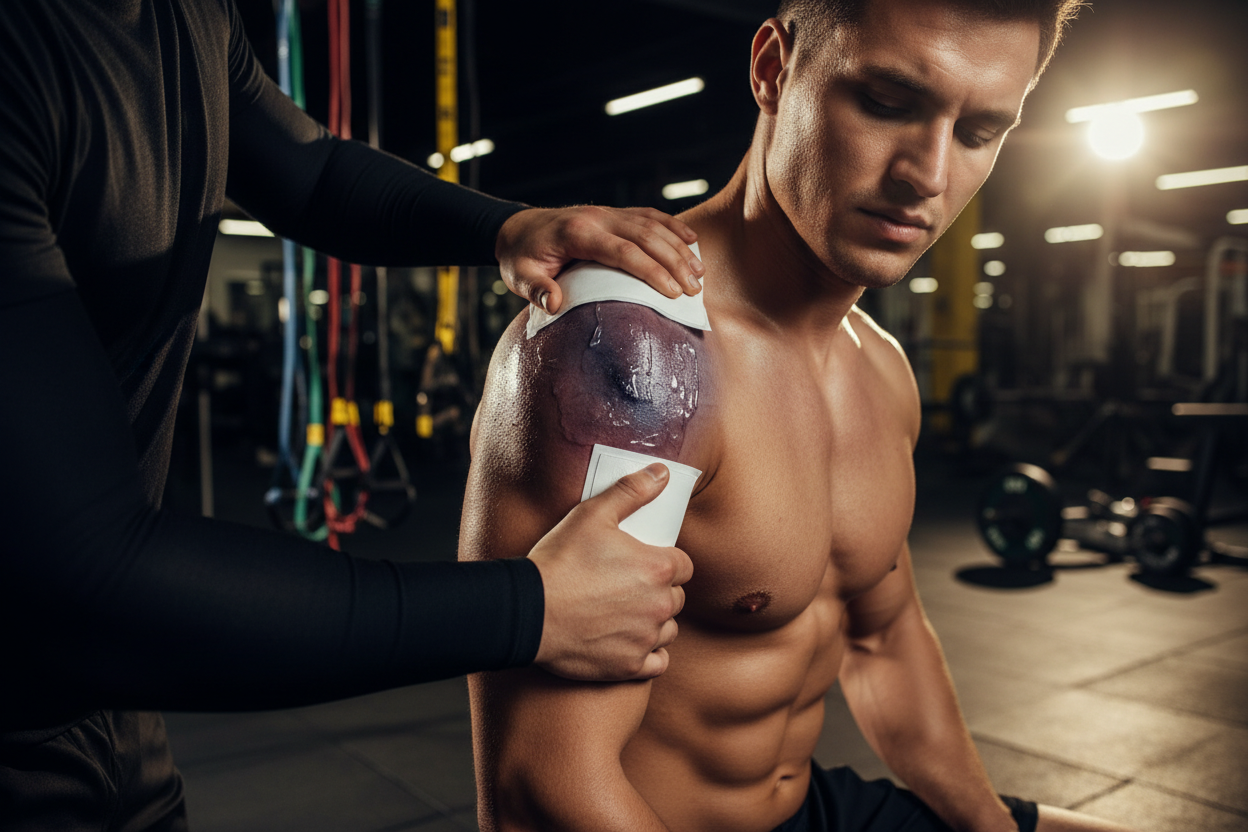
Shoulder Bruise Recovery: The Definitive Guide for Faster Healing
It usually happens in a split second. One moment you are moving through your day or pushing through a workout, and the next, you take a hard impact against a doorframe, the floor, or an opponent. A shoulder bruise is more than just an unsightly purple mark; it limits your range of motion and makes sleeping on your side a nightmare.
Whether you are dealing with a deep contusion from a fall or a mysterious spot that appeared overnight, understanding the physiology of the injury is the only way to speed up recovery.
Quick Summary: Immediate Care Protocol
If you are looking for the fastest way to heal a bruised shoulder, you need to act immediately to limit bleeding under the skin. Here is the core protocol:
- Immediate Cold Therapy: Apply ice for 20 minutes every hour for the first 48 hours to constrict blood vessels and limit the size of the shoulder hematoma.
- Compression: Use an elastic bandage to wrap the shoulder gently. This prevents fluid buildup (edema).
- Elevation: Keep the shoulder elevated above heart level when possible, especially while sleeping, to assist drainage.
- Topical Arnica: Apply Arnica Montana gel to accelerate the breakdown of blood cells causing the discoloration.
- Avoid Heat Initially: Do not apply heat packs for the first 3 days, as this increases bleeding and swelling.
Anatomy of the Injury: Contusion vs. Hematoma
Many people use the terms interchangeably, but there is a clinical difference. A standard shoulder bruise (ecchymosis) occurs when small capillaries near the skin's surface burst, leaking blood into the surrounding tissue. This results in the familiar black-and-blue discoloration.
A shoulder hematoma, however, involves a larger pool of blood collecting within the muscle tissue or beneath the skin. This often presents as a raised, palpable lump. If you have a severe right shoulder contusion or left shoulder contusion from a high-impact event, you are likely dealing with deep muscle trauma, not just surface damage.
Identifying Shoulder Contusion Symptoms
Beyond the visual discoloration, watch for these signs:
- Tenderness to touch: Even light pressure causes a sharp response.
- Limited Range of Motion: Difficulty lifting your arm above head height.
- Swelling: The shoulder cap looks rounded or puffy compared to the uninjured side.
- Bruised muscle shoulder pain: A dull ache that persists even when the arm is resting.
Common Causes: From Impact to Mystery Bruising
Traumatic Injury
The most common culprit is blunt force trauma. A shoulder bruise from fall incidents—whether tripping on a rug or crashing a bike—drives the humerus into the surrounding soft tissue. In contact sports, a direct blow to the acromion process often results in deep bruised shoulder pain that mimics a fracture.
Shoulder Bruising Without Injury
This is where things get tricky. If you notice shoulder bruising without injury, it requires a different level of attention. Spontaneous bruising can signal underlying health issues. This is particularly common in the demographic of a woman bruised shoulder scenarios, where hormonal fluctuations, thinner skin, or iron deficiencies can make capillaries more fragile.
Other non-traumatic causes include:
- Vitamin Deficiencies: Lack of Vitamin C or K.
- Medications: Blood thinners or excessive aspirin use.
- Strain: Severe weightlifting can cause microscopic tears in the muscle fibers, leading to a bruise on shoulder and pain without a direct impact.
How to Treat a Bruised Shoulder Effectively
Once the initial 48-hour window of icing has passed, your strategy must shift from limiting damage to promoting repair. Here is how to heal a bruised shoulder using advanced recovery tactics.
1. Contrast Hydrotherapy
After day three, alternate between hot and cold applications. The heat dilates blood vessels to bring fresh nutrients to the area, while the cold flushes out metabolic waste. This pumping action is often what is the fastest way to heal a bruised shoulder regarding mobility restoration.
2. Gentle Isometrics
Don't immobilize the joint completely unless a doctor orders it. Perform gentle isometric exercises—pushing your hand against a wall without moving the shoulder joint—to activate the muscle without straining the healing tissue. This prevents the stiffness often associated with shoulder pain and bruising.
3. Nutrition for Tissue Repair
Your body needs raw materials to repair the bruised muscle shoulder tissue. Increase your intake of:
- Bromelain: An enzyme found in pineapple that reduces swelling.
- Bioflavonoids: Found in citrus fruits, these strengthen capillary walls to prevent future bruising.
- Protein: Essential for rebuilding damaged muscle fibers.
My Personal Experience with Shoulder Bruise
I learned about deep tissue contusions the hard way. A few years ago, during a heavy clean-and-jerk session, I racked the bar poorly. Instead of landing on my front deltoids, the knurling of the barbell crashed directly onto my clavicle and the surrounding muscle belly.
The pain was immediate, sickening, and sharp. But the real lesson came three days later. I made the mistake of trying to "stretch out" the stiffness too early. The bruise, which started as a dark purple spot, bloomed into a massive yellow-green patch that slid down my bicep due to gravity. I couldn't sleep on my side for two weeks.
What actually worked wasn't just the ice—it was the compression. I used a thick neoprene shoulder sleeve during the day. The sensation of the sleeve holding the tissue tight provided a level of proprioceptive security that reduced the throbbing significantly. If you are dealing with a shoulder bruise from fall or impact, do not underestimate the relief of physical compression gear.
When to See a Doctor
While most shoulder contusion treatment can happen at home, certain symptoms demand professional eyes. If the swelling is rapid and the skin feels tight or shiny, you could be developing compartment syndrome (though rare in shoulders, it is possible). Furthermore, if the bruised shoulder symptoms include numbness in your fingers or an inability to move the arm at all, you need to rule out a fracture or rotator cuff tear.
Frequently Asked Questions
What is the fastest way to heal a bruised shoulder?
The fastest way involves the R.I.C.E method (Rest, Ice, Compression, Elevation) for the first 48 hours, followed by applying Arnica gel and introducing gentle movement to clear the blood pooled in the tissue.
Why do I have a bruised shoulder without any injury?
Bruising without trauma can be caused by vitamin deficiencies (C, K, or B12), blood-thinning medications, or underlying medical conditions affecting blood clotting. It can also result from intense strain during exercise that tears muscle fibers.
How long does shoulder contusion pain last?
A minor surface bruise typically heals in 1-2 weeks. However, a deep muscle contusion or hematoma can cause pain and tenderness for 4 to 6 weeks depending on the severity of the impact.