Full Body Weight Training Exercises: Ultimate Home Gym Guide
If you are juggling a busy schedule and trying to squeeze workouts into a cramped garage or basement gym, the traditional five-day body part split probably isn't cutting it. You need efficiency. That is where mastering full body weight training exercises changes the game.
By hitting multiple muscle groups in a single session, you maximize your time under tension and accelerate your results. In this guide, we will break down how to structure your routine, what equipment actually matters, and how to execute a flawless strength training total body workout from the comfort of your own home.
Key Takeaways
- Focus on heavy compound movements (squats, deadlifts, presses) to trigger maximum muscle growth and save time.
- A barbell, adjustable bench, and a sturdy power rack are the holy trinity for full-body home routines.
- Aim for 3 to 4 sessions per week to allow adequate central nervous system recovery.
- Track your volume and progressively overload to avoid home gym strength plateaus.
Equipment Essentials for Total Body Workouts
The Holy Trinity: Rack, Bar, and Bench
To perform a proper strength training total body workout, you don't need a commercial facility packed with single-station machines. A heavy-duty power rack, a 20kg Olympic barbell, and a flat or adjustable bench are all you need. Look for a rack with a weight capacity of at least 1,000 lbs and 3x3-inch steel uprights if you plan on lifting heavy over the years.
Space Planning for Compound Lifts
When mapping out your basement or garage gym, remember that a standard Olympic barbell is 7.2 feet long. You need at least 10 feet of horizontal width to comfortably load plates without smashing your knuckles into drywall. For overhead presses, ensure your ceiling clearance is at least 84 to 90 inches, depending on your height and rack dimensions.
Structuring Your Routine
The Core Movements
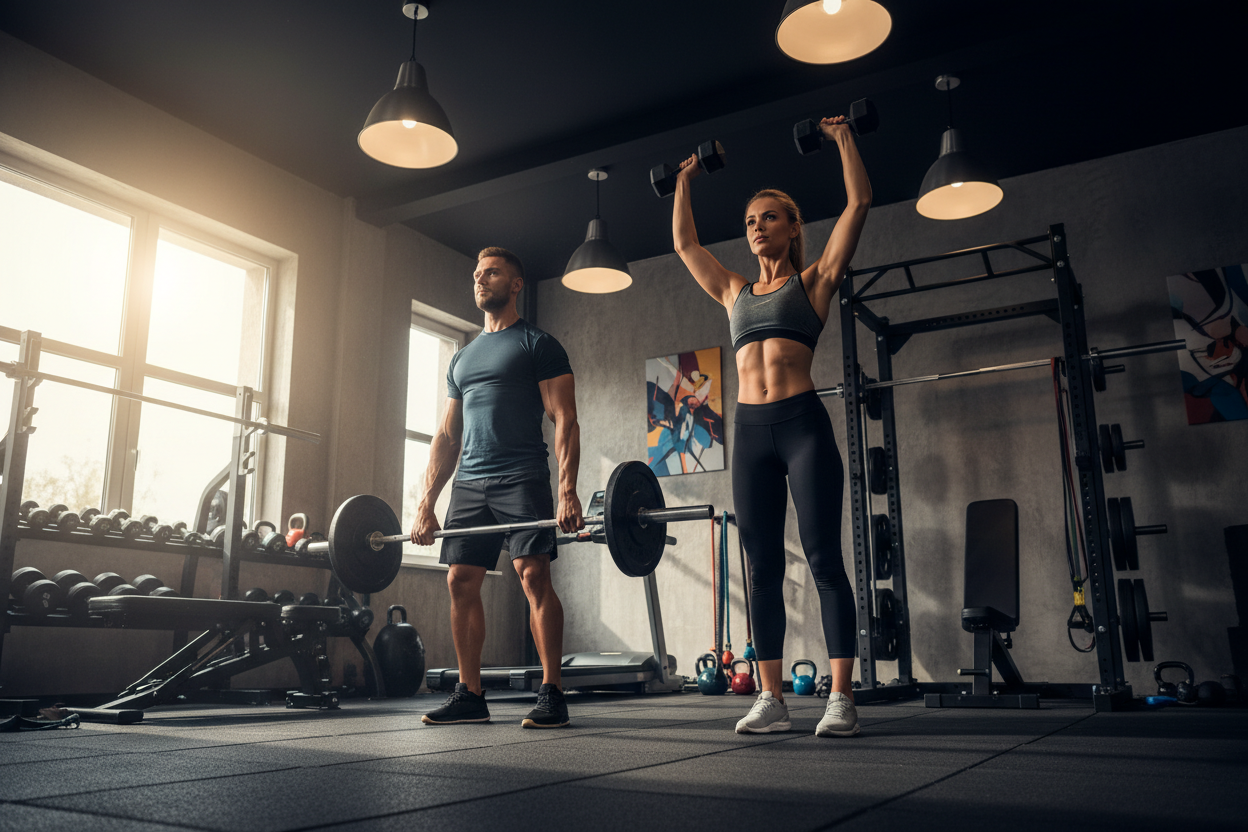
Every session should anchor around primary movement patterns: a squat, a hinge, a horizontal press, a vertical press, and a pull. For example, pairing barbell back squats with overhead presses and bent-over rows creates a highly efficient training loop that targets the entire body in under an hour.
Progressive Overload at Home
It is easy to get comfortable when nobody is watching. To keep growing, you must force adaptation. Add micro-plates (1.25 lbs to 2.5 lbs) to your barbell each week, or slow down your eccentric tempos if you are currently maxed out on your available home weight plates.
From Our Gym: Honest Take
I spent years running isolated body part splits before transitioning exclusively to full-body routines in my garage gym. The shift was jarring at first. When I started doing heavy squats and bench presses in the same session, my central nervous system was fried. But here is the honest truth: my overall strength skyrocketed.
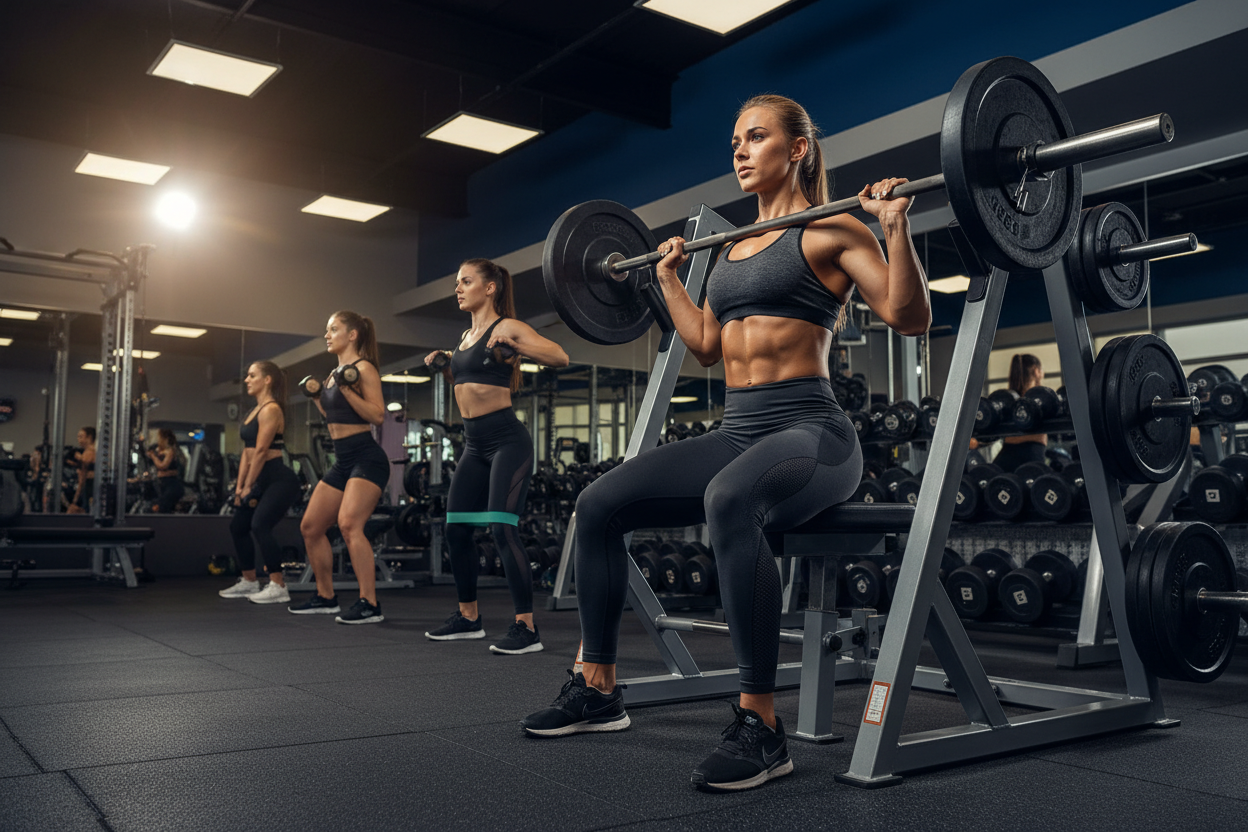
One piece of practical advice? Invest in a barbell with dual knurl marks and a passive center knurl. During high-volume front squats, an aggressive center knurl will absolutely tear up your collarbone. I learned that the hard way. Also, don't skimp on a good set of adjustable dumbbells to fill in the gaps for unilateral accessory work.
Frequently Asked Questions
Are full body weight training exercises good for building muscle?
Absolutely. They allow you to hit each muscle group two to three times a week, which is optimal for muscle protein synthesis compared to hitting a muscle just once a week on a traditional split.
What equipment do I need for a strength training total body workout?
At a minimum, a pair of adjustable dumbbells and a bench can get you started. For maximum long-term results and heavier loads, you should eventually invest in a power rack, an Olympic barbell, and bumper or iron plates.
How long should a full-body workout take?
A well-programmed session should take between 45 and 60 minutes. If you are resting properly between heavy compound sets (typically 2 to 3 minutes), your workout might stretch to 75 minutes.