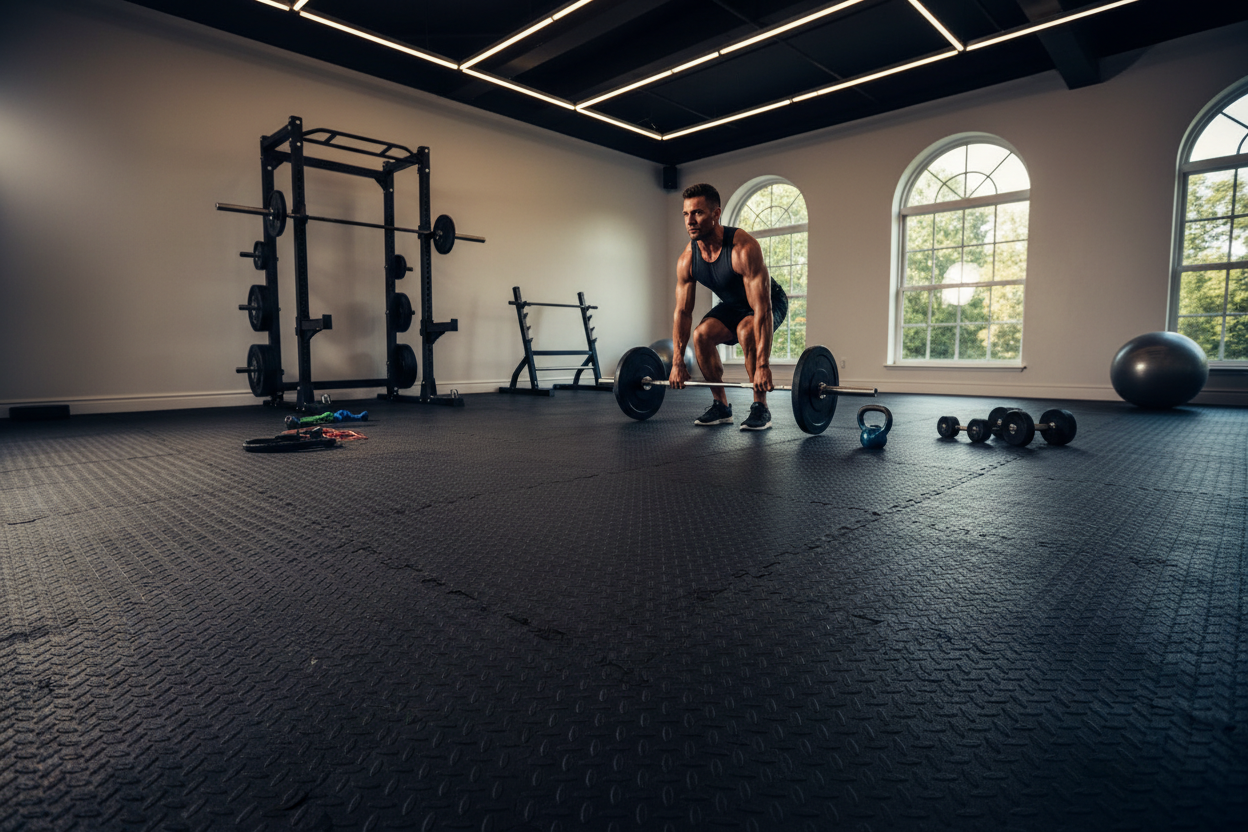
Why a 10 x 10 Gym Mat Is The Only Flooring Upgrade You Need
You can buy the best barbell in the world, but if you are slipping on concrete or sinking into plush carpet, your lift is compromised. The foundation of any serious home gym isn't the rack; it's the floor. Specifically, the coverage provided by a **10 x 10 gym mat** area.
Most people make the mistake of buying small, individual yoga mats or trying to piece together random scraps of flooring. That leaves you constantly stepping off the edge during lunges or deadlifts. A dedicated 100-square-foot area changes the dynamic of your training completely. It defines your workout zone and protects your subfloor (and your joints) from impact.
Key Takeaways: The 10x10 Advantage
- Coverage Efficiency: A 10x10 area provides exactly 100 square feet, enough for a power rack, a bench, and deadlift space without feeling cramped.
- Material Matters: For heavy lifting, stick to vulcanized rubber. For grappling or HIIT, high-density foam is acceptable.
- Installation Types: You will rarely find a single 10x10 roll due to shipping weight; most setups are two 5x10 rolls or interlocking tiles.
- Thickness Rules: Aim for at least 8mm (approx 3/8 inch) for general protection, or 3/4 inch for heavy Olympic lifting.
Why 100 Square Feet is the Magic Number
When planning a garage or basement gym, space efficiency is critical. A standard 10x10 exercise mat setup offers the perfect balance between footprint and functionality.
Think about a standard barbell. It is roughly 7 feet long. If you are working on a 4x6 mat, you have almost no room for error if you step back or drop the weight slightly off-center. A 10x10 footprint gives you ample clearance on all sides.
This size allows you to perform dynamic movements—like lateral lunges, burpees, or plyometrics—without the mental distraction of looking down to see if you are about to trip over the edge of the mat.
Choosing the Right Material: Rubber vs. Foam
Not all mats are created equal. The term "10x10 gym mat" often conflates two very different products. You need to know the difference before you drop cash.
1. Vulcanized Rubber (The Lifter's Choice)
If you are moving iron, you need rubber. Specifically, recycled crumb rubber or vulcanized rubber. This material is dense. It doesn't compress easily under the weight of a heavy squat rack.
A rubber 10x10 setup usually comes as interlocking tiles or two large 5x10 rolls taped together. It provides traction and prevents heavy equipment from damaging the concrete below.
2. EVA Foam (The HIIT & MMA Choice)
If your training involves wrestling, tumbling, or strictly bodyweight HIIT, you might be looking for a 10x10 exercise mat made of EVA foam. These are softer and offer more cushion.
However, be warned: If you place a heavy treadmill or squat rack on foam, it will leave permanent indentations and likely destabilize the equipment. Foam is for bodies, rubber is for machines and weights.
Thickness and Density: The Science of Impact
Thickness is often misunderstood. A thicker mat isn't always better; density is the real variable.
For a 10x10 gym mat intended for weightlifting, 8mm (roughly 3/8 inch) is the industry standard for home gyms. It is heavy enough to lay flat but thin enough to provide a stable surface for balance.
If you go too thick with a soft material (like a plush 1-inch foam mat), you introduce instability. When you squat heavy, you want energy transfer into the floor, not energy absorbed by squishy foam. That squish can cause your knees to cave or your ankles to roll.
My Personal Experience with 10 x 10 Gym Mat Setups
I want to be real about the logistics of this setup because I’ve made the mistakes so you don’t have to.
A few years ago, I decided to outfit my garage. I ordered what was marketed as a "10x10 coverage" pack of interlocking puzzle tiles because they were cheaper than the heavy rolls. In photos, they looked seamless.
Here is what the product description didn't tell me: The Thermal Expansion Gap.
I installed the mats in the winter. When summer hit and the garage heated up, the cheap foam expanded and buckled, creating little tripping hazards at every seam. Worse, during heavy deadlifts, the tiles under my feet would actually pull apart as I drove my legs into the ground. There is nothing more distracting than feeling the floor separate beneath you while holding 300+ pounds.
I eventually switched to two heavy-duty 4x6 horse stall mats combined with a filler strip to create that 10x10 area. The difference was night and day. The smell of off-gassing rubber lingered for about two weeks—it smells like a tire shop—but the stability was worth it. If you buy rubber, expect that smell. Leave the garage door open. Don't mask it; ventilate it.
Conclusion
Upgrading to a 10x10 gym mat area is the single best investment for defining your workout space. It stops your gear from sliding, protects your foundation, and gives you the mental clarity to move freely. Whether you choose interlocking tiles for light work or heavy rubber rolls for lifting, ensure you prioritize density over thickness.
Frequently Asked Questions
Can I park my car on a 10x10 rubber gym mat?
Generally, yes, if the mat is made of vulcanized rubber. However, the turning of tires can tear up softer recycled rubber over time. If you must park on it, ensure the mat is fully adhered to the floor to prevent it from bunching up under the wheels.
How do I clean a large 10x10 exercise mat surface?
Avoid harsh chemicals or bleach, as they can break down the rubber compounds. Use a pH-neutral cleaner or a simple mix of mild dish soap and warm water. A damp mop is best; never flood the mats, as water can get trapped underneath and cause mold.
Is a 10x10 mat one single piece?
Almost never. A single 10x10 sheet of rubber would be incredibly heavy and impossible to ship via standard carriers. Most 10x10 solutions are sold as multiple rolls (e.g., two 5x10s) or a pack of interlocking tiles that you assemble on-site.