Where to Start With the Weights at the Gym When You're Totally Lost
I remember walking into my first big-box gym. I had my brand-new sneakers on, a gallon of water I didn't need, and absolutely zero idea what to do with the weights at the gym. I spent twenty minutes on a treadmill just watching the 'scary' section, trying to figure out if there was some secret handshake I was missing. It felt like everyone else had a manual I never received.
The truth is, that section is just a collection of metal and people trying to not look stupid themselves. You don't need a PhD in biomechanics to pick things up and put them down. You just need a plan so you aren't wandering around like a lost tourist in Times Square. Let's get you off the cardio equipment and into the rack.
- Nobody is watching you; they're too busy staring at their own pump in the mirror.
- Dumbbells are your best friend for building initial coordination and strength.
- Machines are a valid tool, not a 'cheat' for beginners.
- Put your weights back where you found them, or suffer the eternal wrath of the gym staff.
The Free Weight Section Doesn't Care About You (And That's Good)
There is a psychological phenomenon called the 'spotlight effect' where we think everyone is hyper-focused on our every move. In the gym, this is 100% false. Most of the guys you see with 400 lbs on their back are currently wondering if they left the stove on or if they have enough chicken breast for dinner. They aren't grading your squat depth.
I’ve been lifting for fifteen years, and the only time I notice a beginner is if they’re about to accidentally drop a plate on their toe. Otherwise, you’re just part of the background noise. This is liberating. It means you can fail a rep, look a little awkward, and move on without anyone documenting it for the internet. Everyone started with the empty bar at some point.
Where to Start Weight Training When You Have Zero Clue
If you're wondering where to start weight training, head straight for the dumbbell rack. It's the most versatile area in the building. You don't have to wait for a massive power rack to open up, and you don't have to worry about getting pinned under a heavy barbell if your strength gives out. Dumbbells allow for a natural range of motion that bars sometimes restrict.
Grab a pair of 10s or 15s and find a bench. Start with basic movements: a press, a row, and a goblet squat. This builds the foundational stability that machines don't provide. Most commercial gyms have racks that go from 5 lbs up to 100 lbs or more. Stay in the low-middle range until your form stops feeling like a baby giraffe walking for the first time. Focus on the squeeze, not the ego.
Why Weight Machines Aren't Actually the Enemy
There’s a weird elitism in some circles that says if you aren't using a barbell, you aren't training. That's nonsense. High-quality selectorized weight lifting machines are incredible for isolating muscles without needing a spotter. They have a fixed path, which means you can't really mess up the 'line' of the movement while you're still learning.
If the free weight area is packed, don't just stand there feeling awkward. You can absolutely build real muscle using weight machines while you wait for a bench to clear. Use them to get used to the feeling of muscle failure. Once you know what it feels like to actually push yourself, transitioning to unsupported free weights becomes much easier and safer.
Unspoken Rules: How to Lift at the Gym Without Being 'That Guy'
Learning how to lift at the gym involves more than just reps; it’s about the culture. Rule number one: Re-rack your weights. Nothing brands you as a 'newbie' faster than leaving a pair of 50s on the floor for someone else to trip over. Match the numbers on the rack to the numbers on the dumbbell. It is basic human decency.
Also, watch your space. Don't stand six inches in front of the dumbbell rack while you do your set—you're blocking everyone else from grabbing their gear. Back up about three feet. And for the love of all things holy, do not do bicep curls in the squat rack. Those racks are for heavy compound movements that require safety bars. Curls can be done literally anywhere else in the building.
The Ultimate Introvert Solution: Just Train at Home
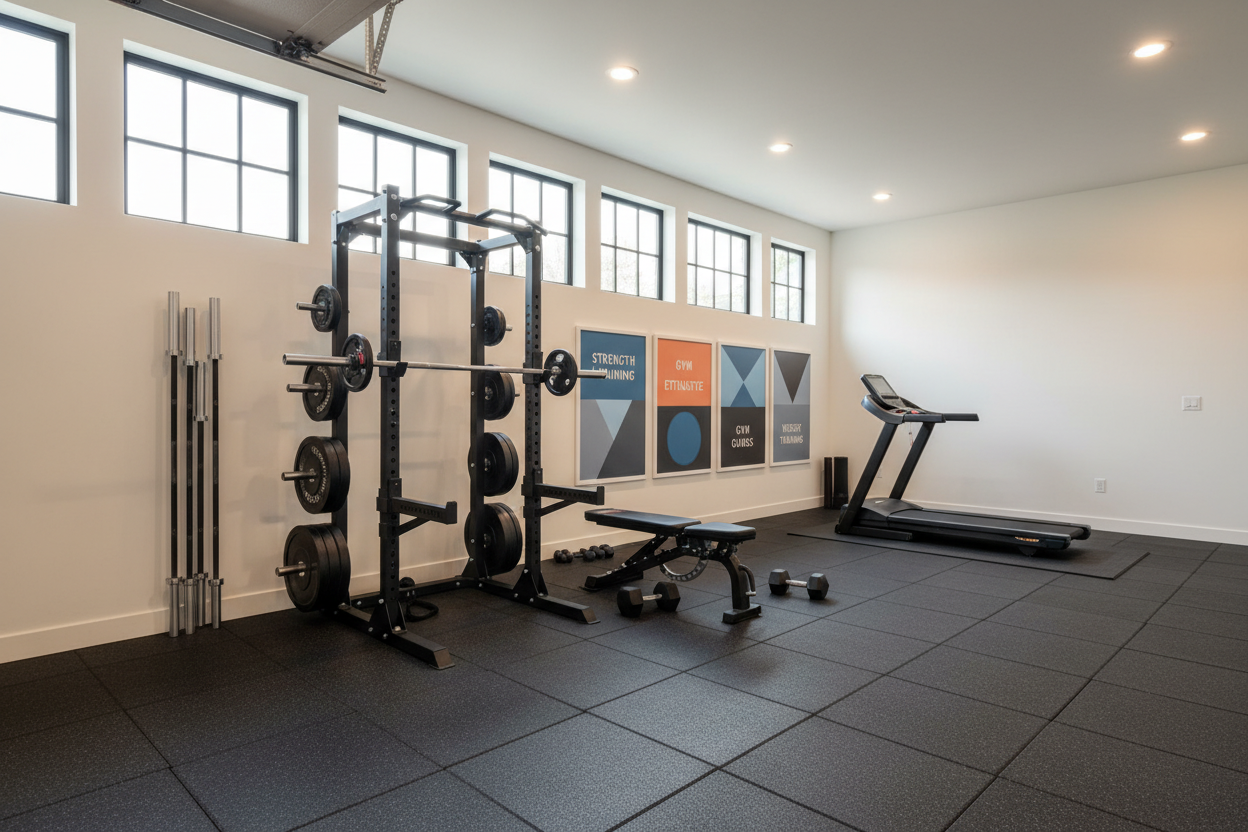
Look, some days the commute and the crowds just aren't worth it. If the 'gym-timidation' is stopping you from starting altogether, skip the commercial floor. I eventually moved my training to my garage because I got tired of waiting for the only decent power rack in town and dealing with the 5 PM rush. It changed my consistency overnight.
Focus on choosing weight training equipment that actually works rather than buying every shiny gadget you see on Instagram. A solid bench and a set of adjustable dumbbells can replace 90% of what you'd do at a commercial gym. It’s a one-time investment that pays off in saved time and zero social anxiety. Plus, you can blast whatever music you want.
My Biggest Rookie Mistake
When I first started, I thought I had to use the heaviest weights possible to get respect. I tried to bench 135 lbs before I could even do ten clean pushups. I ended up dropping the bar on my chest and had to do the 'roll of shame' while a group of high schoolers watched. It was embarrassing, but it taught me that the weight on the bar matters way less than the quality of the rep. Now, I’ll gladly pick up the 'small' weights if it means my joints don't scream at me the next day. Leave the ego at the door.
FAQ
How heavy should I start?
Start with a weight you can move for 10-12 reps with perfect form. If the last two reps don't feel significantly harder than the first two, go slightly heavier during your next set.
Is it okay to ask for a spot?
Yes. Most people are happy to help for 30 seconds. Just ask, 'Hey, can you keep an eye on this set?' Don't ask someone who is currently mid-set or wearing giant noise-canceling headphones.
What should I wear?
Anything you can move in. You don't need $150 lifting shoes. Flat-soled shoes like Chuck Taylors or even Vans are actually better for lifting than squishy running shoes because they provide a stable base for your heels.