What Nobody Tells You About Setting Up a Heavy Hip Thrust
I remember the first time I tried to push past 315 lbs on a heavy hip thrust in my garage. I spent ten minutes shimmying the bar into place, five minutes trying to keep my bench from flying backward, and about thirty seconds actually lifting. It was a total circus. If you have ever felt like the setup was harder than the actual set, you are not alone.
The hip thrust is unparalleled for glute development, but it is also the most annoying lift to set up solo. Between the sliding benches, the crushing weight on your pelvis, and the awkward roll-in, most people quit before they ever see real progress. I have spent years testing different setups to figure out how to make this lift feel like a workout rather than a construction project.
- Anchor your bench: Use a wall or heavy sandbags to prevent horizontal sliding.
- Invest in density: Cheap foam pads are useless once you go over two plates.
- Master the roll: Use bumper plates to give yourself enough clearance to slide under the bar.
- Know when to pivot: If the setup takes longer than the workout, it is time for a machine.
The Logistics of Loading Serious Weight Alone
When you are doing glute workouts without a hip thrust machine, the difficulty curve is not linear. Moving from 135 to 225 lbs is easy. Once you hit 315 and beyond, the weight becomes a logistical nightmare. You aren't just fighting gravity; you are fighting the sheer volume of iron sitting on your lap.
Loading a barbell on the floor while sitting on the ground is an Olympic sport in itself. I highly recommend using a mini deadlift jack or even just rolling the first plate onto a 1.25-lb change plate to create enough space to slide the next ones on. Without that gap, you'll burn half your energy just wrestling with the collars before your first rep.
Why Your Bench Keeps Sliding (And How to Fix It)
Physics is a jerk. When you thrust, you aren't just pushing the bar up; you are pushing your body and the bench backward. If you are on stall mats with a standard flat bench, that bench is going for a ride. I have seen people try to use dumbbells to weigh down the bench legs, but it rarely works once the weight gets serious.
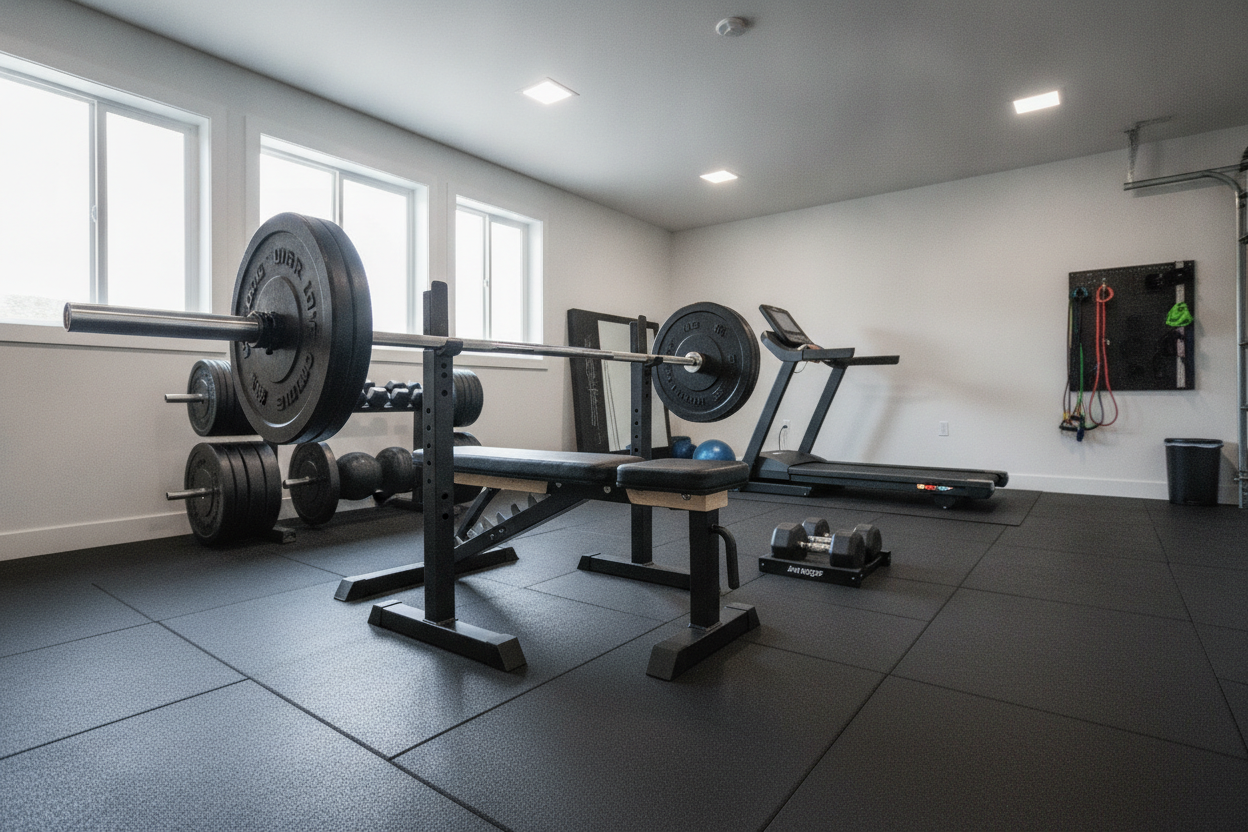
The best fix is to wedge your bench against a power rack or a solid wall. If your gym layout doesn't allow that, look into a dedicated hip thrust bench. These are designed with a lower center of gravity and non-slip feet that actually bite into the floor. A standard utility bench is built for vertical force, not the horizontal sheer of a 400-lb thrust.
Protecting Your Pelvis When the Bar Gets Stupid Heavy
Let’s be real: those colorful foam pads you see at the big-box gyms are trash. Once you put significant weight on them, they compress until you're basically just resting a steel bar on your hip bones. That bruising isn't a badge of honor; it's a sign your equipment is failing you.
I have found that a thick, high-density balance pad (the kind used for physical therapy) works significantly better than a standard bar wrap. If you're budget-conscious, a tightly folded, dense yoga mat can work in a pinch, but for anything over 300 lbs, you need something with structural integrity. If the pad feels 'squishy,' it’s going to bottom out. You want something that feels firm to the touch.
The 'Roll-In' Method for Surviving Your Setup
The biggest mistake I see is people trying to sit down and then pull a loaded bar onto their laps. Don't do this. Use full-sized bumper plates, even for your lighter sets. The 450mm diameter of a standard bumper plate provides just enough clearance for most people to roll the bar over their thighs while sitting on the floor.
Sit with your back against the bench first, then roll the bar toward you until it’s right in the crease of your hips. Center the pad, plant your feet, and only then should you drive your upper back into the bench. If you try to adjust the bar after you’ve already started the movement, you’re asking for a pinched nerve or a nasty skin tear.
When Is It Time to Ditch the Free Barbell?
There is a point of diminishing returns with the barbell. If you find yourself spending 15 minutes setting up for three sets of work, the efficiency is gone. Ego says stay with the bar, but progress says find a more stable stimulus. Stability equals more force production.
If your garage gym setup is becoming more of a headache than a help, consider using a Smith machine for hip thrusts. It eliminates the balance issue and the sliding bench problem in one shot. You lose the stabilizers, sure, but you gain the ability to actually reach true muscular failure without worrying about the bar rolling down your shins.
Personal Experience: The Day the Bench Tipped
I once tried to hip thrust 405 lbs using a lightweight adjustable bench that wasn't bolted down or braced. On the third rep, the bench didn't just slide—it tipped backward because I had positioned my shoulder blades too high. I ended up on the floor with a loaded barbell pinned to my gut and a bench upside down behind me. It was a humbling lesson in center-of-gravity. Now, I never lift without checking that my back support is anchored to something that weighs more than I do.
FAQ
How high should my bench be for hip thrusts?
Most standard benches are 17 inches, which is actually a bit high for many people. Ideally, you want something around 12 to 15 inches. If your bench is too high, you'll end up arching your lower back instead of hinging at the hips.
Should I wear a lifting belt for hip thrusts?
You can, but it's usually for comfort rather than stability. A belt can help hold the padding in place and protect your hips from the bar's knurling, but it won't do much for your glute engagement.
Why do my hamstrings hurt more than my glutes?
Your feet are likely too far out. Move your feet closer to your butt so that your shins are vertical at the top of the movement. If your feet are too far away, the hamstrings take over; too close, and the quads do the work.