What Nobody Tells You About a Beginners Weight Lifting Workout
I still remember the first time I walked into my garage to start a 'real' lifting program. I had a pair of cheap, hexagonal dumbbells and enough misplaced confidence to fill a stadium. Ten minutes in, I realized I didn't look like the guys in the fitness magazines; I looked like a baby deer trying to navigate a frozen pond. My arms were shaking, my form was garbage, and I couldn't figure out how to breathe. That is the unvarnished reality of a beginners weight lifting workout.
- Expect your first two weeks to feel like you're learning a new language with your muscles.
- Consistency is the only metric that matters in the first 30 days.
- You don't need a $5,000 commercial setup to get stronger than 90% of the population.
- Focus on movement patterns first, and the 'pump' second.
The 'First Day' Delusion on Fitness YouTube
You’ve seen the videos. Some guy with a professional lighting crew and a $200 tank top talks about how his first session was a spiritual awakening. He makes a weightlifting workout for beginners look like a choreographed dance. In the real world, your first day is humbling, sweaty, and probably a little embarrassing. You will spend more time adjusting your grip and Googling 'how to squat' than you will actually moving heavy iron.
The truth is, your garage gym doesn't care about your aesthetic. It’s a place of trial and error. I spent my first month just trying not to drop a 10-pound plate on my toes. If you walk out of your workout without an injury and a vague understanding of where your lats are, you've won. Don't let the 'fitspo' crowd make you feel like you're failing because you aren't hitting a PR on day one. You're there to build a habit, not a highlight reel.
The Awkward Reality of a Beginners Weight Lifting Workout
When you start lifting, your muscles aren't actually the bottleneck—your nervous system is. Your brain is literally trying to figure out how to fire muscle fibers in the right sequence. This is why a 20-pound dumbbell feels like it's trying to vibrate out of your hand. This neurological adaptation is a massive part of a basic weight training routine for beginners. You're not weak; your brain just hasn't installed the 'lifting' software yet.
This is where home gym life gets interesting. In a commercial setting, you might be tempted to hide on the weight lifting machines because they guide your movement on a fixed path. While they have their place, they don't teach you stability. When you move to free weights in your own space, you have to stabilize the load yourself. It feels wobbly and weird because it is. Embrace the wobble; it means your stabilizer muscles are finally being forced to do their job instead of letting a machine do it for them.
A Basic Weight Training Routine for Beginners You Won't Hate
Forget the six-day 'pro' splits you see online. You need a simple, 3-day full-body routine. Think Monday, Wednesday, Friday. Focus on the 'Big Three' patterns: Squat, Push, and Pull. You are practicing a skill right now, not just 'working out.' If you can master a goblet squat, a floor press, and a row, you have the foundation for a lifetime of strength. Keep your sets around 3 and your reps around 8 to 12. This gives you enough volume to learn the movement without burning out your central nervous system.
I often get asked are barbells actually required for this to be effective? Honestly, no. You can run this entire template with a decent set of dumbbells and see incredible progress for the first six months. Barbells are great for loading heavy, but they can be intimidating and take up a lot of room. Starting with dumbbells allows for a more natural range of motion and helps you identify muscle imbalances before you move under a heavy bar.
The Bare Minimum Gear to Survive Month One
You do not need a garage full of shiny steel to get strong. If you’re starting at home, the cornerstone of your setup should be a high-quality adjustable weight bench. Look for something with a 600-lb to 800-lb weight capacity. You want a bench that feels like a rock, not a see-saw. If it wobbles when you sit on it, it’s going to be terrifying when you’re holding weights over your face. A 17-inch height is standard for powerlifting, which helps you keep your feet flat on the floor for better leverage.
Pair that bench with some adjustable dumbbells and a thick rubber mat to protect your floor. You can do 80% of any weightlifting workout for beginners in a 6x8 foot space. I’ve seen guys build more muscle in a cramped corner of their basement than people with $100/month memberships at the local luxury gym. Keep your footprint small and focus on gear that actually serves multiple purposes. A bench that goes from flat to incline opens up hundreds of exercise variations instantly.
When Should You Actually Upgrade Your Home Gym?
The 'Gear Acquisition Syndrome' is a trap. You’ll want to buy every attachment and specialty bar you see on Instagram. Don't do it. You earn your upgrades with consistency. Once you’ve stuck to your basic weight training routine for beginners for at least 90 days without skipping a session, then you can talk about the heavy hitters. You’ll know you’re ready when your current weights feel like toys or you're starting to feel limited by your safety options.
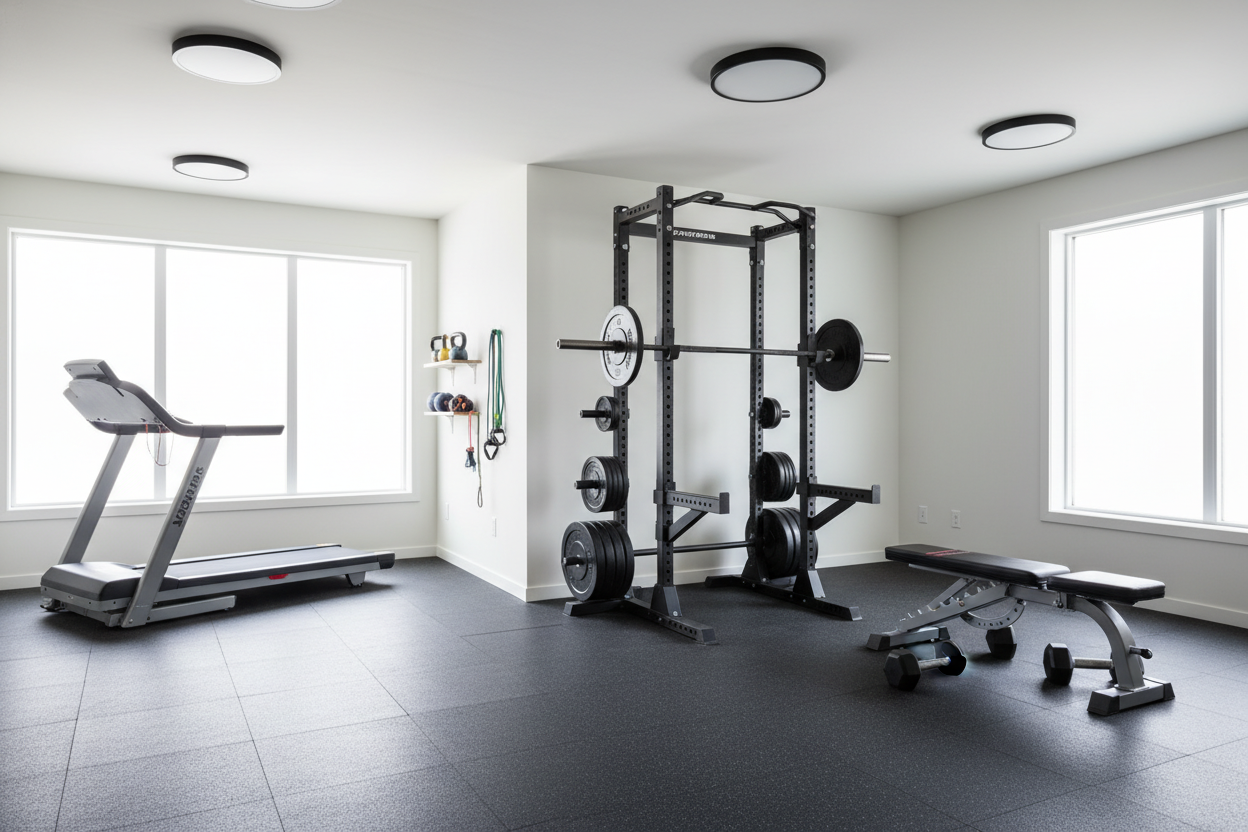
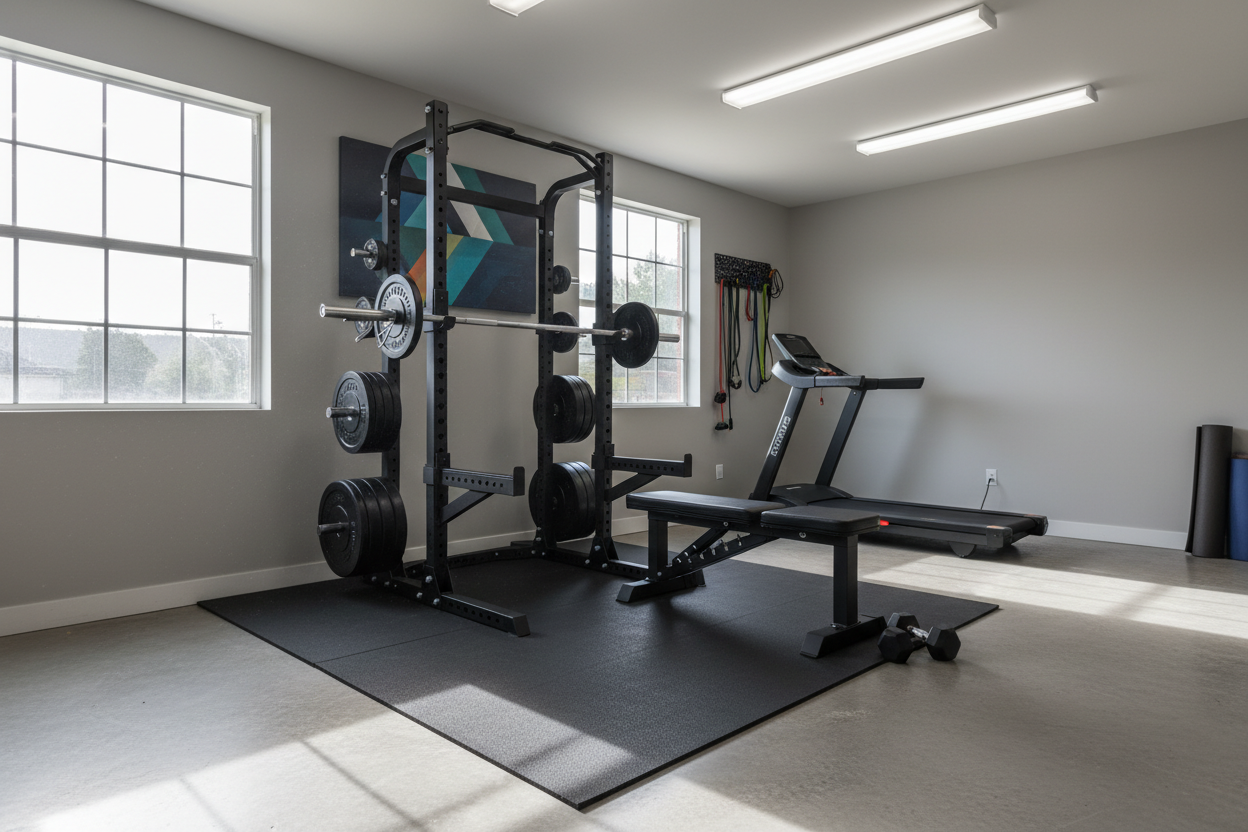
That is the time to invest in a full power rack weight bench package. A rack allows you to squat and press heavy loads with safety spotters, which is non-negotiable if you’re training alone in a garage. By the time you buy this, you aren't a 'beginner' anymore—you’re a lifter. You've proven to yourself that the equipment won't just sit there collecting dust. You're investing in a habit you've already built, which is the only way to avoid 'buyer's remorse' in the home gym world.
My Honest Mistake: The Ego Trap
Years ago, I bought the cheapest, flimsiest bench I could find on a clearance rack. I thought 'steel is steel.' I was wrong. One afternoon, while trying to bench press a weight that was probably too heavy for me anyway, the backrest adjustment pin sheared off. I ended up pinned under the bar with a bench that had collapsed into a decline. It was terrifying, loud, and totally avoidable. I learned the hard way: buy gear that is rated for 200 lbs more than you think you'll ever lift. Your safety is worth the extra investment.
FAQ
How long should a beginner workout last?
Keep it under 45 minutes. If you’re doing it right, you don’t need two hours. Focus on quality reps and keeping your rest periods between 60 and 90 seconds. If you have time to check your email, you aren't working hard enough.
Is it okay to lift every day?
No. Your muscles grow while you rest, not while you're in the garage. For a beginner, 3 to 4 days a week is the sweet spot. Use the off days for a long walk or some light mobility work to help with the inevitable soreness.
What if I don't know if my form is right?
Record yourself. Set your phone up on a water bottle and film your sets from the side. Compare your video to reputable coaches online. It’s the best way to catch 'butt wink' in your squat or rounded backs in your rows before they become injuries.