At Home Exercise Ideas: Unlocking Primal Flow
I remember standing in my cramped 10x12 spare bedroom, staring at the same pair of adjustable 50-pound dumbbells, feeling entirely unmotivated. I had done the standard presses, rows, and curls hundreds of times. The environment felt stale, and my joints were stiff from repetitive, single-plane motions. That was the day I pushed the bench aside, got down on the floor, and started experimenting with ground-based movement. If you are searching for fresh at home exercise ideas, stepping away from traditional sets and reps to explore primal flow might be exactly what your body needs.
Primal movement completely changes how you interact with your training space. Instead of isolating muscles, you integrate them. You move like an animal, linking crawls, transitions, and deep squats into a continuous, heart-pumping sequence.
Quick Takeaways: Primal Flow Basics
- Primal flow connects bodyweight exercises into continuous, multi-directional sequences.
- It simultaneously improves mobility, core stability, and cardiovascular endurance.
- You need minimal equipment—just open floor space and a supportive surface.
- Workouts can be scaled from 5-minute joint prep routines to intense 20-minute conditioning blocks.
Breaking Free from the Treadmill Rut
Standard home workouts often lead to boredom. As a personal trainer, I see clients hit a massive motivational wall around week four of a new program. When your routine consists exclusively of 3 sets of 10 bicep curls or 30 minutes jogging on a treadmill while staring at a blank wall, your brain checks out. Your body adapts quickly to these rigid, linear movement patterns, and the physical results begin to plateau just as fast as your enthusiasm.
Shifting to movement-based training reignites that lost motivation. Primal flows demand absolute focus. You simply cannot zone out when you are balancing your entire body weight on one hand and shifting your hips through a narrow gap to transition into a new posture. This high level of neurological engagement makes the time fly by.
Moreover, replacing rigid sets with continuous movement introduces a cardiovascular element that traditional weightlifting often lacks. Your heart rate spikes as you transition from the floor to a standing position and back down again. If you are looking for home exercise ideas that challenge both your mind and your muscles, breaking free from the linear rut is your first step.
What Are Primal Movement Flows?
At its core, primal flow is the practice of linking bodyweight exercises into continuous, fluid sequences. Think of it as a hybrid between martial arts, breakdancing, and dynamic yoga. Instead of doing a set of pushups and resting for a minute, you perform a pushup, immediately transition your hips under your body into a crab position, and then sweep your leg through into a deep squat.
This style of training generates some of the most effective fitness ideas at home because it forces you to move in 360 degrees. Most traditional exercises—like squats, deadlifts, and bench presses—only move in the sagittal plane (forward and backward). Primal flows force you to move laterally and rotationally, which bulletproofs your joints and builds functional strength that translates to real-world activities.
To do this correctly, you need to prepare your space. You cannot execute a proper flow on a slippery hardwood floor or a thin, cheap yoga mat that bunches up under your feet. Setting up a large exercise mat for home gym use is the ideal foundational setup required to safely perform expansive, multi-directional ground movements without constantly repositioning yourself.
Essential Ground-Based Patterns to Master
Before you can link movements together into a seamless flow, you have to master the foundational building blocks. These base positions are inspired by animal locomotion and require significant core control.
The Bear Crawl Variations
The bear crawl is the cornerstone of primal movement. To set up, get on all fours with your hands under your shoulders and knees under your hips. Now, lift your knees exactly two inches off the floor. Keep your back completely flat, like a table. From here, practice moving forward, backward, and side-to-side.
This is not the sloppy, high-hip crawl you did in middle school gym class. Keeping the knees low forces your deep core stabilizers to work overtime and builds immense shoulder endurance. Try holding the static bear position for 60 seconds, and you will quickly realize how demanding it is.
The Ape Reach and Lateral Shifts
The ape position starts in a deep, flat-footed squat. Your arms rest between your knees. From this resting position, you reach forward, plant your hands on the ground, and shift your weight onto your shoulders while opening your hips.
Lateral shifting from the ape position improves hip mobility and ankle flexibility. You plant your hands to the side and hop your feet over to meet them, landing softly back in the deep squat. This lateral movement is fantastic for opening up tight groins and improving lower-body elasticity.
Crab Walks and Posterior Chain Activation
Most of us spend our days hunched over steering wheels or keyboards. The crab position counters this anterior-dominant posture. Sit on the floor, plant your hands behind your back with fingers pointing away from you, and press your hips up toward the ceiling.
Inverted crawling in the crab position heavily targets the glutes, triceps, and upper back. It forces your shoulders into extension, opening up your chest. Mastering the transition between the forward-facing bear and the upward-facing crab is the key to unlocking continuous flow.
Creating a Safe Environment for Flow
When you transition to ground-based movement, your hands and wrists essentially become your second set of feet. Joint protection becomes incredibly important. If your floor is too hard, the repetitive impact of dropping into deep crawls will quickly inflame your wrists and bruise your knees.
Conversely, if your floor is too soft—like thick carpet or squishy puzzle mats—your wrists will sink, causing extreme hyperextension and instability. You need a surface that offers firm grip and just enough dense cushioning to absorb impact without compromising your balance.
You also need adequate square footage. I recommend clearing an area of at least 6 by 6 feet, though larger is always better. When I train clients in their living rooms, I typically recommend laying down a 6x8ft exercise mat gym flooring. This expansive surface area prevents slipping and provides the perfect density to cushion the wrists and knees during deep, lateral crawls.
Structuring Your First Flow Session
Jumping straight into a high-speed flow without a warmup is a recipe for a pulled muscle. Your joints need to be lubricated, especially your wrists, hips, and ankles.
Start with 3 to 5 minutes of targeted joint rotations. Roll your wrists in circles, perform some gentle spinal waves, and incorporate at home hip mobility exercises to prime the pelvis and lower body before attempting deep primal squats.
Once you are warm, pick three movements to link together. A great beginner sequence is: Forward Bear Crawl (4 steps) -> Lateral Ape Shift (2 shifts left) -> Transition to Crab -> Backward Crab Walk (4 steps) -> Transition back to Bear.
Instead of counting reps, work for time. Set a timer for 40 seconds of continuous movement followed by 20 seconds of rest. Repeat this for 15 minutes. Focus entirely on the fluidity of your transitions. The goal is not speed; the goal is control. If you feel yourself losing balance or your hips shooting too high in the bear crawl, slow down and reset your form.
Progressing to Advanced Hybrid Workouts
Once you master the basic 15-minute conditioning block, you can increase the difficulty. The simplest progression is removing the pauses. Instead of stopping in the bear position to plan your next move, make the transition instantaneous. You can also add explosive elements, like popping from a deep ape squat directly into a vertical jump.
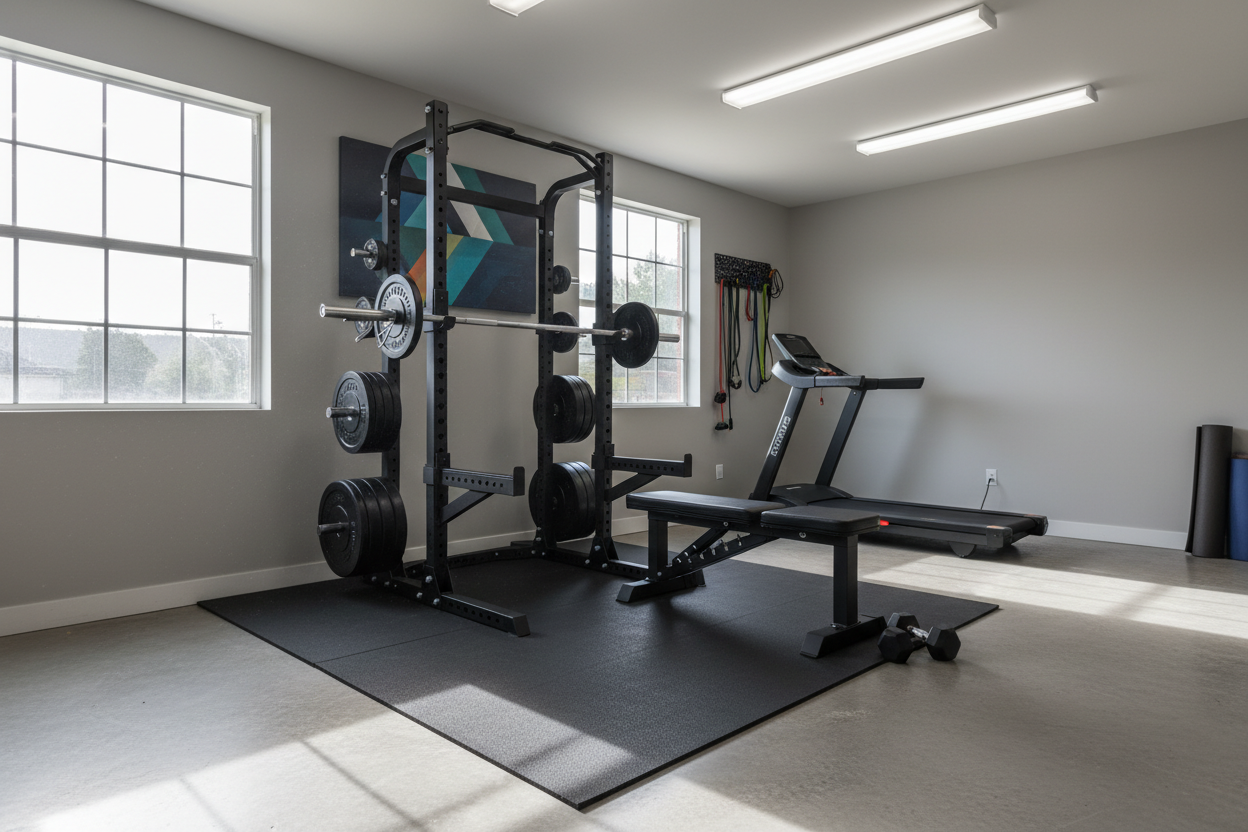
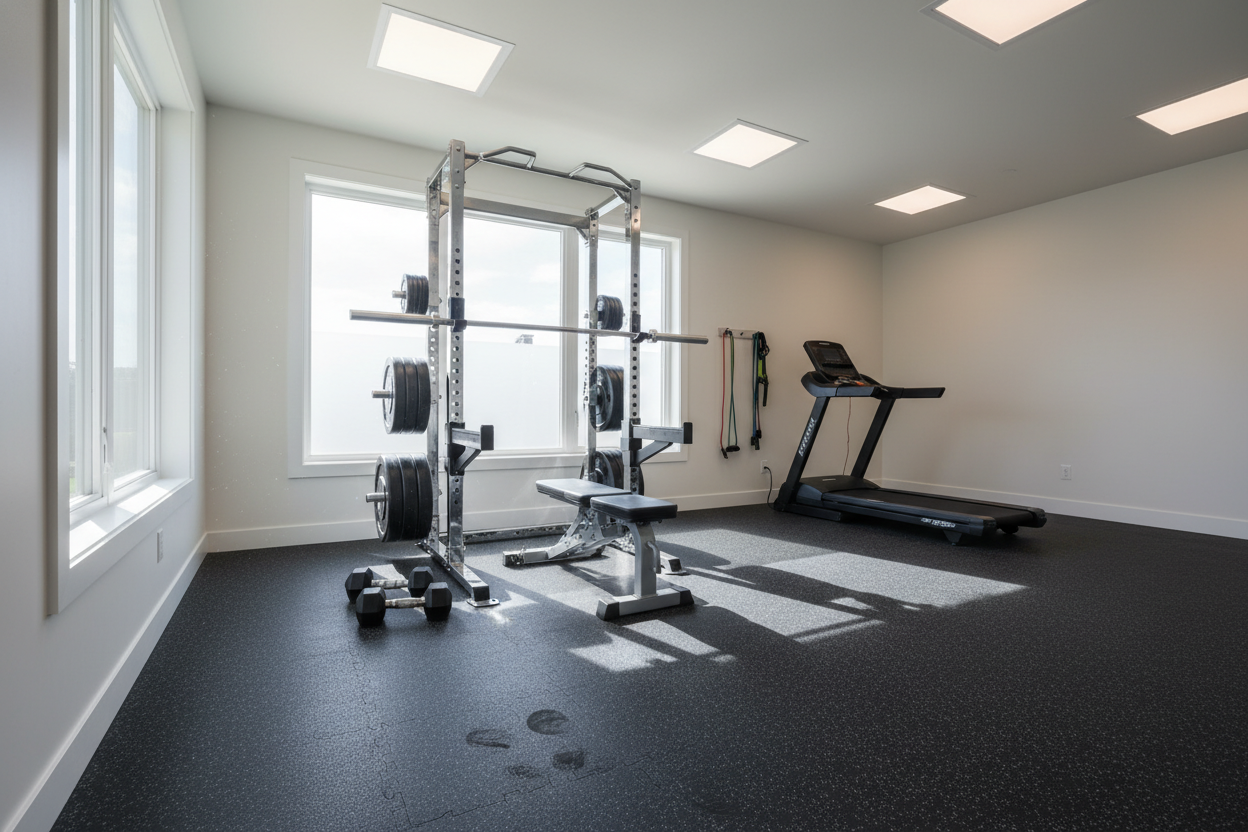
For a comprehensive program, I love pairing primal flows with traditional resistance training. You do not have to abandon your weights. Instead, use flows as active recovery or supersets. If you have a garage setup with the best at home exercise machines, try doing a heavy set of squats or pull-downs, then immediately drop to the floor for 60 seconds of animal flow. This hybrid approach builds absolute strength while maintaining elite-level mobility.
Trainer Experience: The Reality of Ground Training
Over the last three years, I have programmed primal flows for dozens of clients ranging from 25-year-old athletes to 60-year-old retirees. I personally test every sequence in my own garage gym before prescribing it. When I first committed to ground-based movement, I used a high-density 7mm mat, which provided the exact friction needed for pivoting on one hand without tearing up my palms.
I will share one honest downside: wrist fatigue is very real in the beginning. Most humans are not used to bearing 40% to 60% of their body weight on their hands for extended periods. During the first two weeks, your wrists will ache. This is normal tendon adaptation. I always tell my clients to scale back the duration initially and spend extra time stretching their forearms. Once your wrists adapt, the strength gains in your upper body are phenomenal.
Frequently Asked Questions
Do I need to be flexible to start primal flows?
No. Primal flow is actually a tool to build flexibility. You only move within your current active range of motion. Over time, the deep squats and reaches will naturally open up tight hips and shoulders.
How many days a week should I do this?
If you are using it as your primary workout, 2 to 3 days a week for 20-30 minutes is excellent. Alternatively, you can do 5 to 10 minutes every single day as a dynamic warmup before lifting weights or running.
Will bodyweight flows build muscle?
They are incredible for building muscular endurance, core stability, and shoulder strength. However, if your primary goal is maximal muscle hypertrophy (bodybuilding), you will still need to incorporate heavy external resistance training alongside your flow practice.