What Makes a Home Gym Exercise Bodybuilder Approved?
I remember the first time I tried to hit a heavy set of Bulgarian split squats on a cheap, vinyl-covered ottoman because I hadn't bought a real bench yet. Halfway through the second rep, the ottoman slid, my back foot slipped, and I nearly put a 50-lb dumbbell through my drywall. That's the moment I realized that being a home-based exercise bodybuilder isn't just about having the will to train; it's about the gear that allows you to actually reach failure without fearing for your life. If your equipment is distracting you from the contraction, you aren't building muscle—you're just practicing a circus act.
Quick Takeaways
- Mechanical tension is the primary driver of growth, not just total weight moved.
- Stability allows you to recruit more motor units in the target muscle.
- Free weights offer a superior stretch-mediated hypertrophy compared to most budget machines.
- A non-slip floor is the most underrated piece of bodybuilding equipment.
The Difference Between Moving Weight and Building Muscle
In a garage gym, it is incredibly easy to fall into the powerlifting trap. You see the barbell, you see the plates, and you want to see that bar move from point A to point B by any means necessary. But for bodybuilding exercises, the path from A to B is actually less important than how the muscle feels during the journey. When we talk about bodybuilding workout exercises, we are talking about internal torque and mechanical tension. If you're doing a barbell row and using your hips to jerk the weight up, you're moving weight, but you're failing at the exercise for bodybuilding goals.
To truly train like a bodybuilder, you have to embrace the 'eccentric'—that lowering phase where the muscle is being stretched under load. Most home lifters drop the weight too fast because they want to get to the next rep. I've found that slowing down to a three-second eccentric on my bodybuilding lifts transformed my back thickness more than adding another 45-lb plate ever did. You want to feel the fibers pulling apart. If you're just clanking iron, you're a weightlifter. If you're controlling the iron to destroy the fiber, you're a bodybuilder.
This is why the best bodybuilding exercises often feel 'harder' with less weight. I’ve seen guys who can bench 315 lbs struggle with 60-lb dumbbells when they actually focus on the squeeze at the top and the deep stretch at the bottom. In your home setup, don't worry about the total number on the bar. Worry about whether that weight is actually being carried by the muscle you're trying to grow. That is the secret to the best bodybuilding exercise: intentionality over ego.
Stability is Everything (Why You Need a Solid Base)
You cannot fire a cannon from a canoe. This is an old saying in the strength world, and it applies double to bodybuilding. If your feet are sliding during a heavy overhead press or your bench is wobbling during a chest fly, your brain will subconsciously 'cut power' to your primary movers to prevent you from falling over. This is called neural inhibition, and it is the enemy of growth. To get the most out of your bodybuilding workout list, you need to feel like you are bolted to the floor.
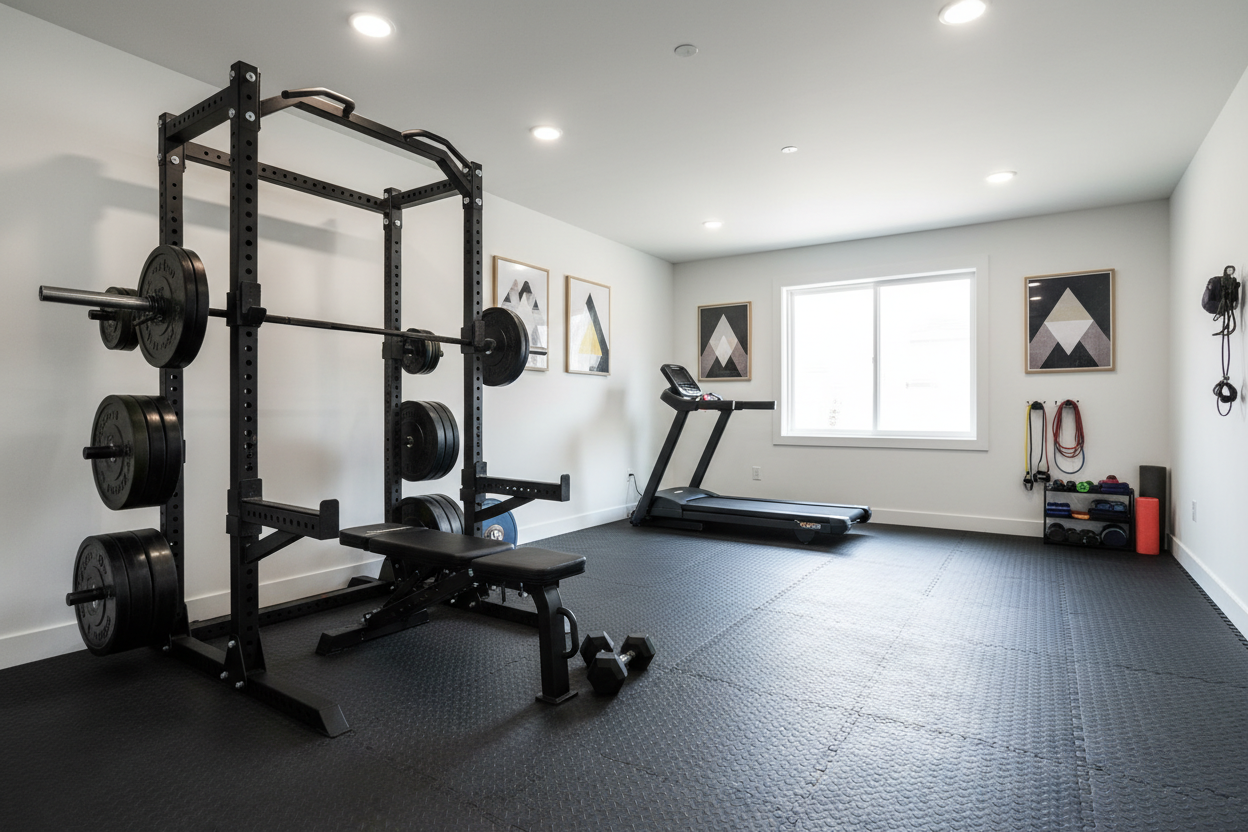
This starts with your foundation. I spent years lifting on bare concrete before I finally invested in a real flooring solution. Having the best large exercise mat isn't just about protecting your subfloor; it's about friction. When I can dig my heels into a high-density rubber surface, I can generate significantly more leg drive on my bench press and more stability on my lunges. It’s the difference between a shaky rep and a locked-in, high-intensity set.
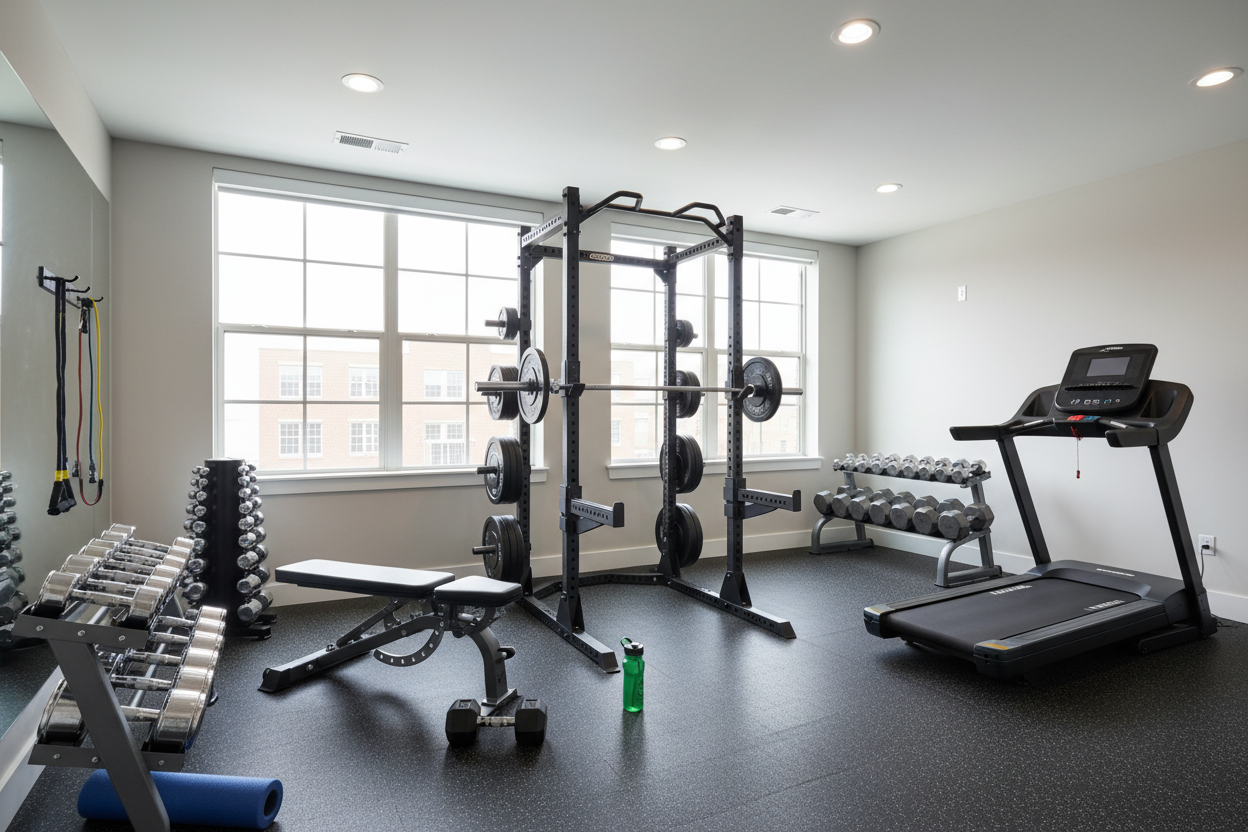
The same goes for your rack and bench. If you’re using a 14-gauge steel rack that sways when you re-rack a squat, you’re going to be hesitant to push to true failure. I always recommend 11-gauge steel for anyone serious about hypertrophy. You need to know that if you have to dump the bar on the safeties, the rack isn't going to fold like a lawn chair. Stability creates the confidence required to reach that 'deep' failure where the real growth happens.
The Ultimate Exercise List Bodybuilding Purists Trust
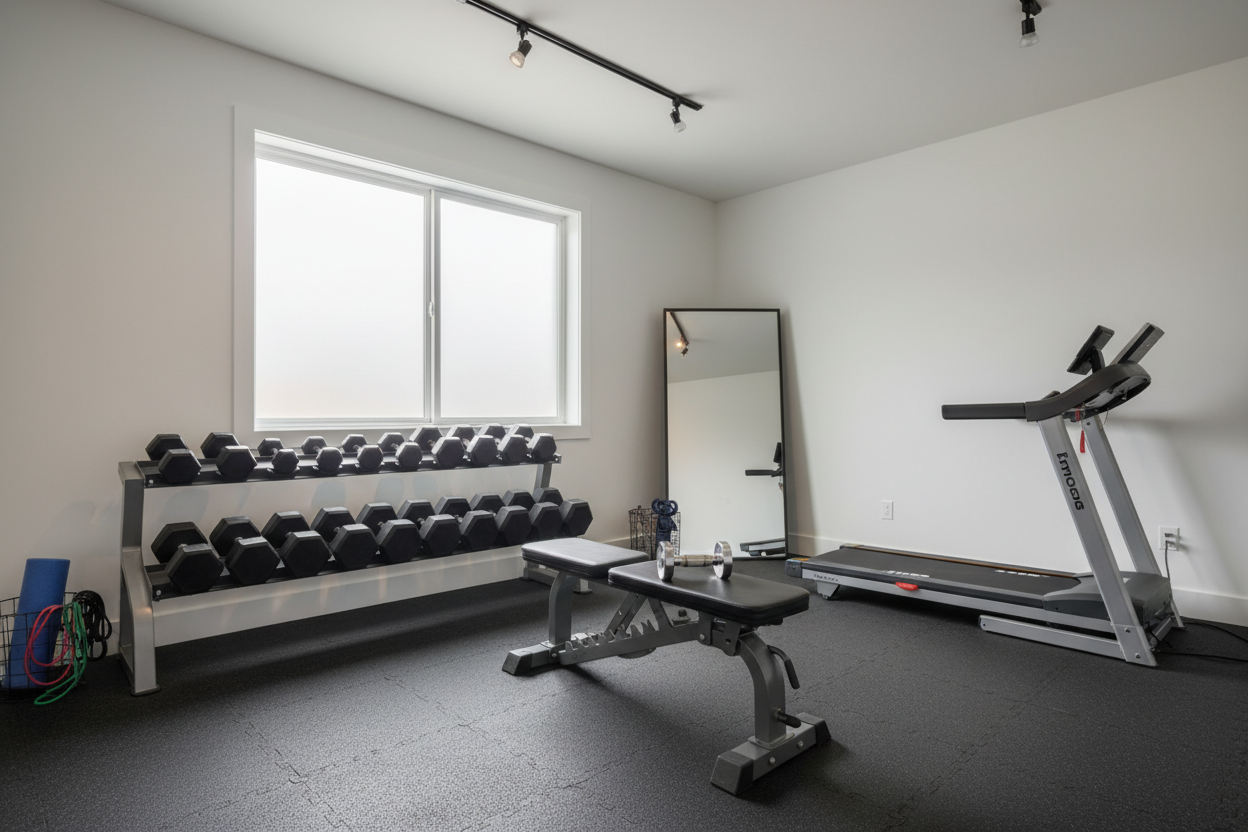
When you're working with a limited list of bodybuilding exercises in a home gym, you have to pick the movements that offer the most bang for your buck. You don't need 50 different machines; you need a few high-quality tools and the right exercise list bodybuilding experts have used for decades. For me, the king of the home gym is the adjustable dumbbell. It allows for a range of motion that barbells simply can't match, especially for chest and shoulder growth.
My top picks for a home-based bodybuilding workout list include:
- Deficit Deadlifts: For that insane posterior chain stretch.
- Incline Dumbbell Press: Set your bench to 30 degrees to target the upper pecs without destroying your shoulders.
- Weighted Dips: The 'squat of the upper body.' If your rack has a dip attachment, use it.
- Barbell Shrugs: Simple, brutal, and effective for upper trap thickness.
- Meadows Rows: Using a landmine attachment to get a unique angle on the lats.
The best exercises for bodybuilding are the ones that allow for a progressive overload over months and years. I'm a huge fan of the Romanian Deadlift (RDL) because the tension on the hamstrings is constant. Unlike a standard deadlift where the weight rests on the floor, the RDL keeps the muscle under load the entire time. That is a hallmark of a great bodybuilding movement. If you can find five or six of these 'high-tension' lifts and get incredibly strong at them, you'll look better than the guy doing 20 different machines at the commercial gym down the street.
Building the Lower Body Without Commercial Machines
The biggest hurdle for the home-based bodybuilder is leg day. In a commercial gym, you have leg presses, hack squats, and leg extension machines. In a garage, you usually have a rack and some iron. But don't think for a second you can't build massive wheels with just a barbell. In fact, some of the most effective leg bodybuilding exercises are the ones that require the most balance and core engagement.
The Bulgarian Split Squat is my go-to. It’s miserable, it’s painful, and it works. Because it’s a unilateral movement, you don’t need 500 lbs to stimulate the muscle. You can get a massive quad pump with just a pair of 50-lb dumbbells. Another staple is the 'Sissy Squat.' You don't even need a machine for this—just hold onto your power rack for balance and lean back, putting all the tension on your quads. It burns like nothing else.
For hamstrings, if you don't have a leg curl machine, try floor glute-ham raises or stiff-leg deadlifts. I’ve found that high-rep goblet squats with a heavy dumbbell can also mimic the constant tension of a leg press if you stay in the bottom two-thirds of the movement. You don't need a $3,000 leg press to get big legs; you just need to be willing to embrace the discomfort of high-rep, high-stability free weight movements.
Piecing Together Your Weekly Split
Once you have your exercise list, you need a way to organize it. You can't just walk into the garage and do whatever feels good that day. You need a plan that manages fatigue. If you hit your back on Monday and your biceps are fried, your Tuesday 'pull' session is going to suffer. I’ve experimented with everything from 'Bro Splits' to Upper/Lower splits, but for the home lifter, I think a rotating frequency works best.
I personally spent three months following a full body workout bodybuilding plan that allowed me to hit every muscle group three times a week. The key was varying the intensity. Monday might be heavy barbell work, Wednesday is moderate-weight dumbbell work, and Friday is high-rep 'pump' work. This variety keeps the joints feeling good while ensuring the muscles are never fully recovered for too long. In a home gym, you are the head coach and the athlete—you have to listen to your body.
Don't be afraid to pivot. If your elbows are feeling cranky from too many heavy skull crushers, swap them out for overhead dumbbell extensions. The beauty of the home gym is that you aren't waiting for a machine. You can move from one exercise to the next with zero downtime, which is great for keeping your heart rate up and maintaining that muscle pump. Just make sure you're logging your lifts. If you aren't tracking your reps and sets, you're just exercising—you aren't bodybuilding.
My Personal Experience: The 'Budget' Mistake
Early in my journey, I tried to save money by buying a standard 1-inch hole plate set instead of Olympic 2-inch plates. I thought 'weight is weight.' I was wrong. The bars were thin, they flexed dangerously at 200 lbs, and the plates rattled like crazy. I couldn't focus on the muscle because I was worried the bar was going to snap. I eventually sold it all for a loss and bought a proper 20kg Olympic bar and bumper plates. My advice? Buy the 'forever' gear first. It’s cheaper than buying the cheap stuff twice.
Frequently Asked Questions
Can I build a pro-level physique with just dumbbells?
Absolutely. Dumbbells offer a greater range of motion and better isolation than barbells. If you have a heavy enough set (or high-quality adjustables), you can hit every major muscle group effectively. The only downside is the grip strength requirement on heavy leg days.
How many days a week should a bodybuilder train at home?
For most people, 4 to 5 days is the sweet spot. This allows for enough volume to trigger growth while providing 2 to 3 days of full recovery. Remember, you grow while you sleep, not while you're lifting.
Do I need a power rack for bodybuilding?
While not strictly 'mandatory' for every exercise, a rack is the centerpiece of safety. It allows you to do heavy squats, presses, and pull-ups. If you're training alone, the safety arms on a rack are your only insurance policy.