What Is the Walk Machine Name? The Definitive Guide for 2024
You walk into a fitness center, ready to start your cardio session. You point toward the most popular piece of equipment in the room, but your mind goes blank. You know what it does, but you can't recall the specific technical term. Asking the front desk staff for the "thing you walk on" feels embarrassing.
You are looking for the correct walk machine name so you can buy one for your home or simply sound like you know what you're doing. While the answer seems simple, the fitness industry has evolved. Depending on the mechanics, that machine could be one of three very different devices.
Quick Summary: Naming the Equipment
If you are in a rush, here is the breakdown of the equipment names based on how they function:
- Treadmill: The standard machine with a moving conveyor belt for walking or running.
- Elliptical (Cross-Trainer): A low-impact machine with floating pedals and moving handles; mimics walking without joint impact.
- Manual / Curved Treadmill: A non-motorized running machine often found in CrossFit boxes or athlete-focused gyms.
- Stair Climber (Stepmill): A machine that mimics walking up an endless flight of stairs.
The Standard Answer: The Treadmill
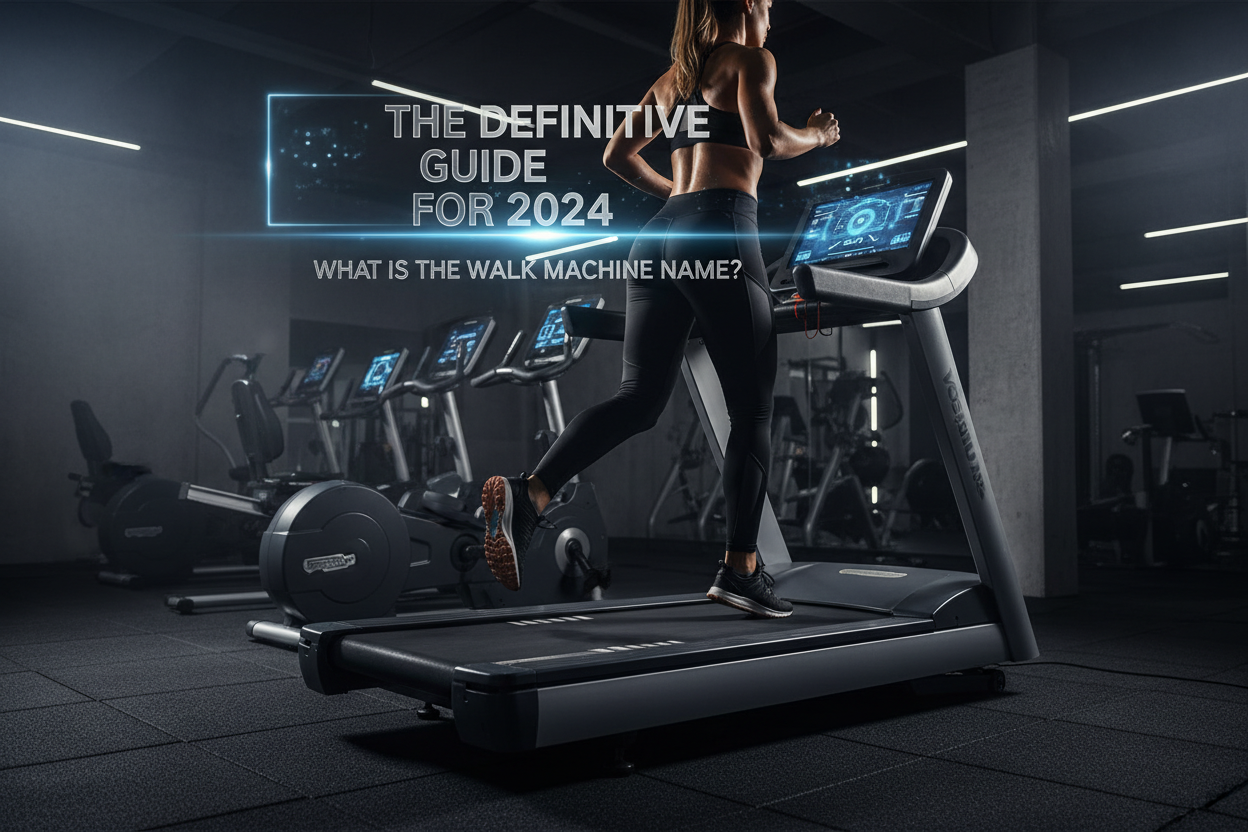
In 99% of cases, when someone asks for the name of the walking machine, they are referring to a treadmill. This is the staple of both home gyms and commercial fitness centers.
Historically, a "treadmill" was actually a device used for punishment in prisons or for grinding grain. Fortunately, the modern iteration is strictly for fitness. It consists of a motorized belt that moves beneath your feet, forcing you to keep up with the speed you set on the console.
Why It's Sometimes Called a Running Machine
You will often hear this device referred to as a running machine name. There is no structural difference between a walking machine and a running machine in a commercial setting. The difference lies entirely in the motor's horsepower (CHP) and the length of the deck.
If you are buying one for home use, be careful. Some budget manufacturers sell "walking pads" that max out at 4mph. These cannot handle running. However, the gym running machine name usually implies a heavy-duty treadmill capable of speeds upwards of 12-14mph.
The "Gliding" Alternative: The Elliptical
Sometimes, people search for the walking machine name but are picturing a device where their feet never leave the pedals. This is not a treadmill; it is an Elliptical Trainer or Cross-Trainer.
This machine mimics the gait of walking or running but removes the "thud" of impact. If the machine you are thinking of has tall handles that move back and forth in sync with your legs, this is it. It is technically a "walking simulator" rather than a walking machine.
The Athlete's Choice: Curved Manual Treadmills
If you have seen a running machine name in gym environments that looks like a banana—curved at the front and back—and has no buttons or motor, you are looking at a Curved Manual Treadmill (popular brands include Woodway or Assault AirRunner).
These are unique. The belt only moves when you walk or run on it. If you stop, it stops. They are significantly harder to use than standard motorized versions because your hamstrings and glutes have to do all the work to propel the belt. They are excellent for correcting walking posture but can be humbling for beginners.
My Training Log: Real Talk
I’ve spent years testing different cardio equipment, from high-end club models to budget home setups. There is a massive difference that specs on a website won't tell you.
I remember testing a budget "walking pad" (under-desk treadmill) last year. The specs said it could handle 220 lbs. I weigh 185. Every time my foot landed with a solid heel strike, I could feel the belt "stutter" or slip momentarily against the deck. It’s a jarring sensation, like slipping on ice for a millisecond.
Contrast that with the commercial gym running machine name brands like Life Fitness or Precor. The deck feels dead—in a good way. It absorbs the shock without bouncing you off. When I use a manual curved treadmill, the experience is totally different. The first time I hopped on one, I nearly face-planted because I leaned too far forward, and the belt accelerated instantly. It requires a level of balance and core engagement that a motorized belt just doesn't demand.
Conclusion
Whether you call it a treadmill, a running deck, or simply the "walk machine," the goal remains the same: getting your steps in and your heart rate up. Don't get too hung up on the terminology. If you are looking to buy, focus on the motor power (look for 2.5 CHP or higher) and belt length. If you are just trying to find it at the gym, look for the row of machines with the moving belts.
Frequently Asked Questions
What is the proper name for the gym walking machine?
The technical name is a Treadmill. This applies to both the motorized versions found in most gyms and the fold-away versions used in homes.
Is a running machine the same as a walking machine?
Yes. The running machine name is synonymous with treadmill. However, machines specifically marketed as "walking treadmills" often have weaker motors and shorter decks that are unsafe for running speeds.
What is the machine called where you walk but don't move forward?
If you are walking on a belt, it is a treadmill. If your feet are on pedals that glide in an oval motion, it is called an Elliptical.