What Is The Best At Home Workout Program? A Phase-Based Approach
I sat across from a client last week who was incredibly frustrated with his basement gym. He had a solid 10x10 foot training space, a rack of adjustable 5-52.5 lb dumbbells, and absolutely zero motivation. He kept asking me what is the best at home workout program because he had quit three different routines in the last six months. He assumed he just hadn't found the magic routine yet.
My answer surprised him. I told him the perfect, year-round routine does not exist. Your body and your central nervous system are not designed to do the exact same style of training 365 days a year. Instead of looking for a permanent fix, you need to identify your current fitness lifecycle phase.
Here are your quick takeaways for building a phase-based home routine:
- Assess your current life season before picking a program length.
- Cycle between Rebuilding, Specialization, and Maintenance phases.
- Keep phases strictly between 8 and 12 weeks to prevent mental burnout.
- Match your home gym equipment to the specific demands of your current phase.
Stop Searching for a 'Forever' Fitness Routine
Most people fail at home fitness because they try to sustain peak intensity indefinitely. You buy a highly aggressive 6-day-a-week split, run it for a month, get exhausted, and quit. The fitness industry sells the idea of a single, flawless program that will carry you through the next five years. That is a massive setup for failure.
Muscles adapt to stress. Once you expose your body to the same 3x10 rep scheme for a few months, the adaptation stops. More importantly, your central nervous system fatigues. Pushing for personal records every single week in your garage gym will eventually lead to joint pain and severe motivational drops.
I teach my clients the Lifecycle Phase Transition method. You break your year into distinct 8 to 12-week blocks. Each block has a singular focus. When the block ends, you intentionally shift gears. This keeps your training highly effective and prevents the sheer boredom of staring at the same drywall doing the exact same exercises every Monday.
By categorizing your training into Rebuilding, Specialization, and Maintenance, you give yourself permission to train differently based on how much sleep you are getting, your work schedule, and your current physical health.
Phase 1: The Rebuilding and Foundation Phase
You enter the Rebuilding phase when you are coming off an injury, returning from a long vacation, or starting fresh after months of inactivity. The goal here is not to hit a one-rep max. The goal is to build basic work capacity and condition your tendons and ligaments for future heavy lifting.
During this 8-week block, I program full-body routines three days a week. We stick to moderate rep ranges, usually 12 to 15 reps per set, resting 90 seconds between exercises. You want to focus on movement quality rather than weight on the bar. This phase requires versatile gear that allows for a wide range of motion without forcing you into heavy, fixed planes.
You cannot rebuild effectively without the best at home full body workout equipment to support those foundational movements. A reliable pair of adjustable dumbbells and a sturdy bench are usually enough. However, I have tested dozens of cheap, fold-away benches, and my biggest warning is to watch the weight capacity. A flimsy bench that wobbles during a basic step-up will ruin your confidence and stall your progress.
Keep your Rebuilding workouts under 45 minutes. Leave a few reps in the tank on every set. You should finish these workouts feeling energized, not destroyed. This phase primes your body so that when you finally do transition to heavy lifting, your joints are ready to handle the load.
Phase 2: The Specialization and Peaking Phase
Once you have a solid foundation, it is time to push the intensity. The Specialization phase lasts 8 to 12 weeks and zeroes in on a specific goal. This is where you pick a program designed to break a plateau, build a specific muscle group, or significantly increase your cardiovascular threshold.
During this phase, training volume and intensity spike. If you decide to focus on leg hypertrophy, you will drop the rep ranges down to 5 to 8 reps for compound movements like Bulgarian split squats and Romanian deadlifts. You will push close to muscular failure. The mental demand is high, which is exactly why you only run this phase for a short, predetermined timeframe.
If you want to pack mass onto your lower body, a generic full-body circuit will not provide enough stimulus. You would need a highly targeted best at home thigh workout guide to force that specific adaptation. You will spend more time resting between sets—up to three minutes—to ensure your central nervous system recovers enough to move heavy weight.
I always warn clients that Specialization phases require serious recovery. You need to dial in your sleep and protein intake. Because you are pushing so hard, you might experience more delayed onset muscle soreness (DOMS) than usual. Plan your training days so you have a full 48 hours of rest before hitting the same muscle group again.
Phase 3: The Maintenance and Longevity Phase
Life gets busy. You might have a newborn, a massive project at work, or you are simply feeling burned out from a heavy Specialization block. This is when you transition into the Maintenance phase. People constantly ask me how to choose the best workout from home programs when they are working 60-hour weeks. The answer is to drop your volume drastically.
It takes significantly less volume to maintain muscle than it does to build it. You can retain your strength and muscle mass by lifting just two days a week for 30 minutes a session. The goal during this phase shifts entirely to sustaining tissue, promoting blood flow, and protecting joint health.
Maintenance routines usually involve a lot of bodyweight movements, mobility flows, and core stability work. Because you will be spending more time on the floor stretching and doing low-impact exercises, a large exercise mat for home gym spaces becomes critical. Training on bare concrete or thin carpet will wreck your knees and lower back during extended mobility sessions.
Do not view the Maintenance phase as a failure or a step backward. It is a strategic deload. By giving your joints and your mind a break for 8 weeks, you set yourself up for massive success when you eventually cycle back into a Rebuilding or Specialization phase.
Adapting Your Physical Space to Your Current Phase
Your physical environment dictates your workout quality. If your space is cluttered, you will skip your sessions. As a trainer who has consulted on dozens of garage and spare bedroom setups, I always tell clients to clearly define their workout footprint.
You do not need an entire two-car garage to get an elite workout. A dedicated 48-square-foot area is plenty of room for heavy dumbbell work, kettlebell swings, and mobility drills. Laying down a 6x8ft exercise mat gives you exactly that footprint while providing 7mm of high-density shock absorption.
Floor protection matters more than most people realize. Dropping a 50 lb dumbbell on an unprotected concrete floor will chip the foundation and damage the weight. More importantly, high-density PVC flooring absorbs the impact of plyometric movements, saving your ankles during intense Specialization phases.
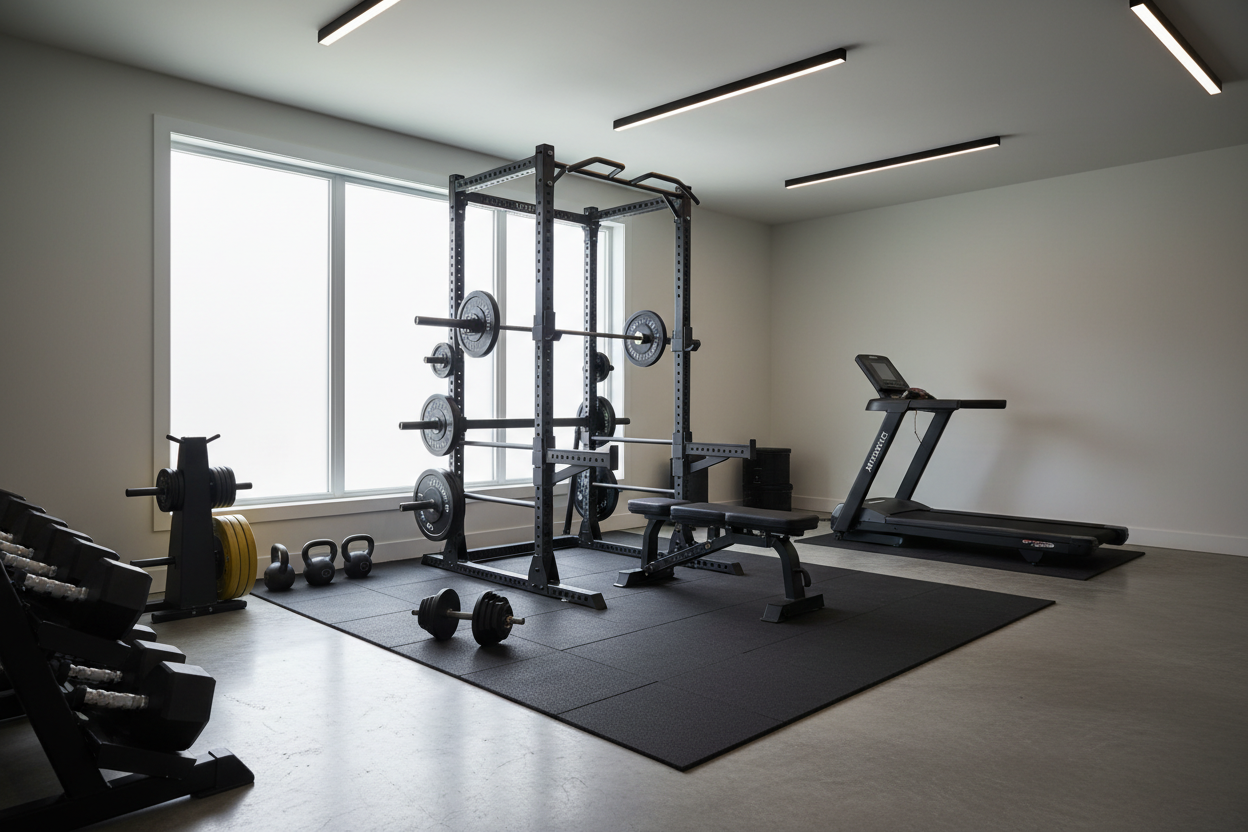
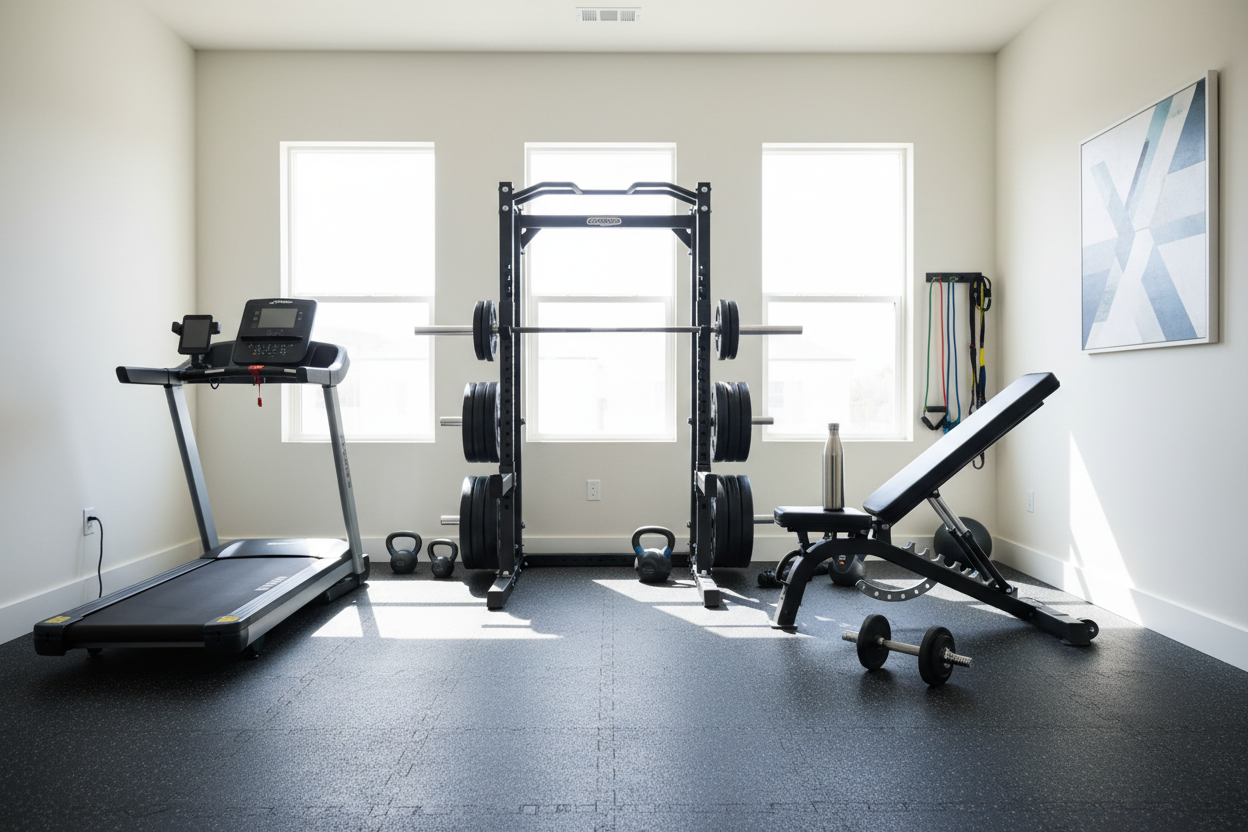
Keep your layout modular. Put your heavier weights on a small rack in the corner so they are accessible but out of the way. When you are in a Maintenance phase focused on yoga and stretching, you want an open, clean mat. When you shift to a Rebuilding phase, you can easily pull your bench into the center of the mat for your heavy pressing movements.
Conclusion: Building Your Best At Home Workout Guide
Stop trying to find a routine you can do for the rest of your life. It is a guaranteed path to frustration and plateaus. Instead, take a hard look at your current stress levels, your schedule, and your physical health.
If you are coming off a long break, commit to 8 weeks of Rebuilding. If you have the time and energy to push hard, run a 12-week Specialization block. If life is chaotic, drop down to a 2-day-a-week Maintenance phase. Creating your personal best at home workout guide is simply about matching your training style to the current season of your life.
Frequently Asked Questions
How long should a training phase last?
I recommend keeping phases between 8 and 12 weeks. Anything shorter does not give your body enough time to adapt. Anything longer usually leads to mental burnout and physical plateaus.
Do I need a power rack for the Specialization phase?
No. While a power rack is great for heavy barbell squats, you can achieve incredible intensity using adjustable dumbbells, Bulgarian split squats, and weighted vests. You just need to push close to muscular failure.
Will I lose muscle during a Maintenance phase?
As long as you are training with high effort 2 days a week and eating adequate protein, you will not lose muscle tissue. Maintenance volume is surprisingly low, allowing you to focus on recovery without losing your hard-earned gains.