Percentage Workouts: Stop Guessing and Start Building Strength
I remember freezing in my garage gym at 5 AM, staring at my barbell. I had a rough idea of what I lifted last week, but I was basically guessing which iron plates to slide onto the sleeves. That guesswork led straight to a six-month plateau where my squat barely moved. Once I stopped lifting blindly and started using math to dictate my loads, everything changed. If you are tired of stalling out on your major lifts, it is time to embrace percentage workouts.
A well-structured program removes emotion from your early morning sessions. You do not need to rely on how you feel; you just look at the numbers and execute.
Quick Takeaways
- Calculate your 1RM safely using rep-max formulas instead of risking a dangerous failed lift alone.
- Map your rep ranges and percentages to match your specific goals, whether that is pure strength or muscle size.
- Structure a percentage based workout program in 4-to-8-week blocks to manage fatigue.
- Trust the math on light days to allow your central nervous system to recover for heavy pulls.
What Are Percentage Workouts?
At its core, percentage-based training removes emotion from your lifting sessions. Instead of asking yourself how strong you feel today, you look at a spreadsheet. You take your absolute one-rep max (1RM)—the maximum weight you can lift for a single repetition—and lift a specific fraction of it. If your max squat is 315 pounds and the percentage training calls for 75%, you load roughly 235 pounds. It is that simple.
A well-designed percentage strength training program is highly personalized. Because the load is tied directly to your individual capability, a beginner and an elite lifter can run the exact same program architecture. You are just plugging in different baseline numbers. This method prevents you from going too heavy on days meant for volume, and ensures you push hard enough when it is time to peak.
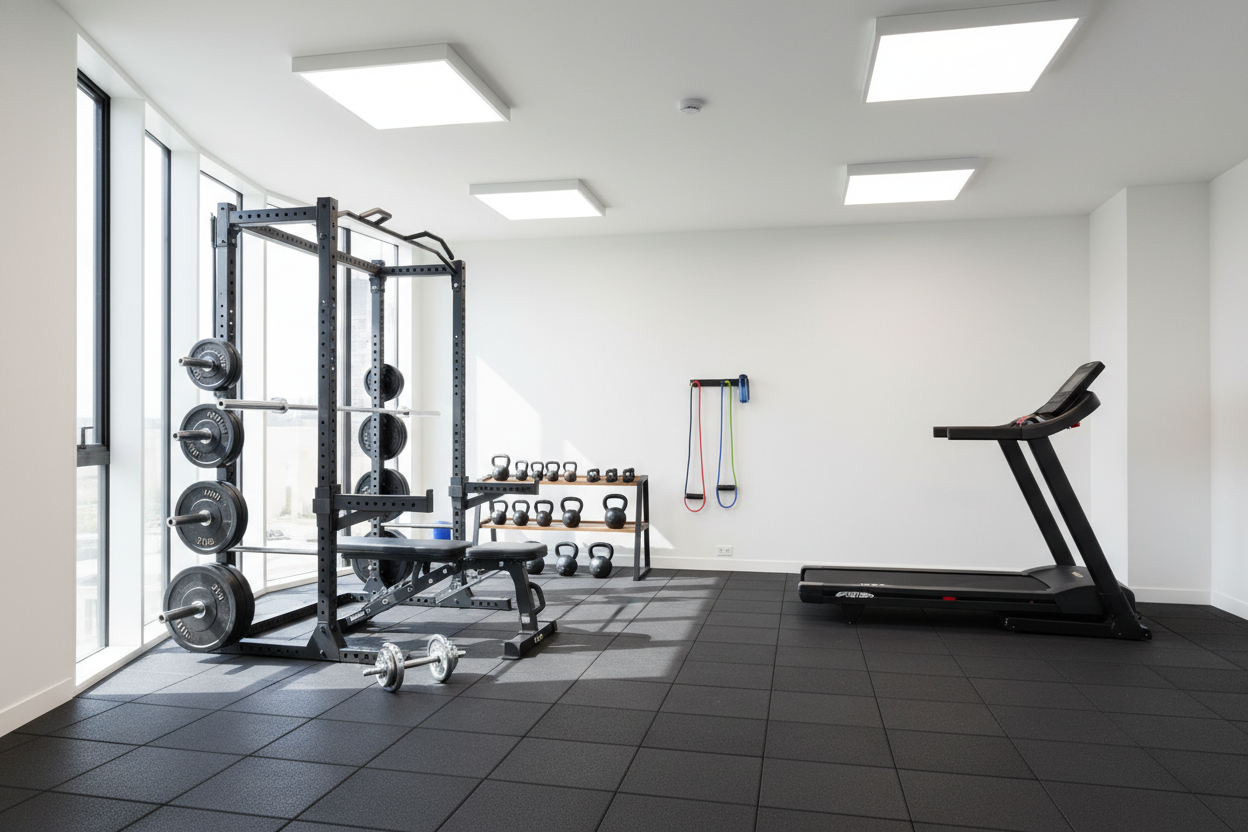
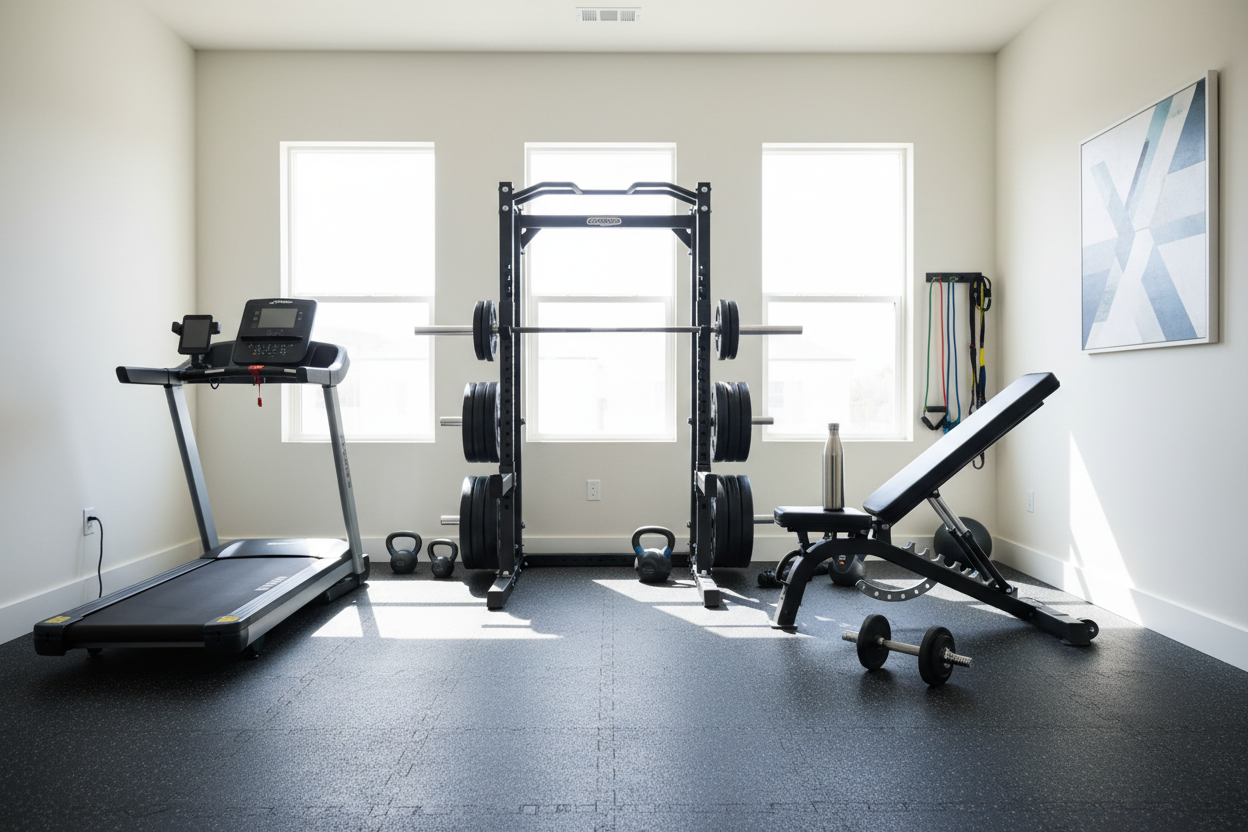
Over the years, I have built dozens of home gym setups for clients, ranging from cramped spare bedrooms to massive two-car garage facilities. The one constant I teach every client is that a weight lifting percentage system scales perfectly to any environment. You do not need fancy machines; you just need a barbell, some plates, and basic arithmetic.
The Science Behind Percentage Based Strength Training
Many lifters rely on Rate of Perceived Exertion (RPE), judging a set by how many reps they feel they have left in the tank. While RPE has its place, it is notoriously unreliable for newer lifters. You might feel terrible after a poor night of sleep, leading you to lift significantly less than you actually can. Percentage based strength training relies on objective data instead of feelings.
The magic happens in your central nervous system (CNS). When you constantly max out or train to failure, your CNS gets fried. This leads to missed lifts, poor form, and eventually, injury. A structured percentage based strength training program manages this fatigue by undulating the intensity. You might have a heavy week at 85%, followed by a volume week at 70%, and a deload week at 50%.
This structured progressive overload ensures you are actually forcing adaptation. Your muscles and nervous system recover during the lighter percentage workouts, so when the 90% days roll around, you are primed to execute. I have tested this on myself relentlessly. During one testing phase in my own basement gym, I strictly followed a percentage model for 12 weeks using my power rack. I added 30 pounds to my deadlift. The only honest downside I experienced was the sheer monotony of doing math during my 5 AM warm-ups, but the actual strength gains were undeniable.
How to Safely Calculate Your One-Rep Max at Home
If you train alone in a home gym without a spotter, attempting a true 1RM is a terrible idea. Getting pinned under a 250-pound bench press with no safety pins or training partner is a scenario you must avoid. Thankfully, you do not need to risk your life to find your training percentages.
Instead, use a rep-max calculator. Load a moderately heavy weight that you can safely lift for 3 to 5 reps with perfect form. Take that set to technical failure—the point where your form breaks down, not absolute muscle failure. Let's say you squat 225 pounds for 5 reps.
You can plug this into a standard formula: (Weight x Reps x 0.0333) + Weight = Estimated 1RM. In this case, (225 x 5 x 0.0333) + 225 gives you an estimated max of roughly 262 pounds. This estimated max becomes the anchor for your weight lifting percentage calculations. It is safe, repeatable, and requires zero spotters. Recalculate this number at the end of every training block to keep your numbers accurate.
Mapping Rep Ranges and Percentages to Your Goals
Not all percentages are created equal. The load you choose dictates the physiological response in your body. Understanding the relationship between rep ranges and percentages is critical for programming your home workouts effectively.
If you load up 90% of your max and try to hit 10 reps, you will fail miserably. Conversely, doing sets of 3 reps at 60% will not stimulate much muscle growth unless you move the bar with explosive speed. You have to match the math to the mission.
Strength Training Percentages for Powerlifting
When your primary goal is moving massive weight, you need a percentage based powerlifting program. This style of training lives in the heavier load spectrum, typically between 80% and 95% of your 1RM.
At these strength training percentages, you are keeping the rep counts low. Think sets of 1 to 5 reps. The focus here is on neurological adaptation—teaching your brain to recruit maximum muscle fibers instantly. You will take longer rest periods (3 to 5 minutes) between sets. The total volume is lower, but the intensity is incredibly high.
Hypertrophy and RPM Weightlifting
If your goal is building muscle mass—hypertrophy—you will shift into the moderate load spectrum. This usually falls between 65% and 80% of your 1RM.
In this zone, sometimes associated with rpm weightlifting (reps per minute pacing), you are aiming for 8 to 12 reps per set. The rest periods are shorter, usually 60 to 90 seconds. This creates metabolic stress and muscle damage, the two primary drivers of muscle growth. You are not lifting the heaviest weight possible, but the cumulative volume forces your muscles to grow larger.
Structuring Your Percentage Based Workout Program
A random collection of percentages will not get you far. You need to organize your percentage workout program into distinct blocks, usually lasting 4 to 8 weeks. This structure is called periodization.
A standard 4-week block might look like this: Week 1 serves as an introduction, hitting your main lifts at 70% for moderate volume. Week 2 ramps up the intensity to 77.5%. Week 3 pushes you to the brink, hitting heavy triples at 85%. Week 4 is your deload, dropping the weight back down to 50-60% to let your joints and CNS recover.
Always include your warm-up sets in your percentage math. Do not just jump to 80%. A proper warm-up progression might be the empty 45-pound bar, then 40%, 50%, and 60% before you start your working sets.
Example: The Bench Percentage Workout
Let's look at a practical bench percentage workout progression for a 4-week block. Assume your estimated 1RM is 200 pounds.
In Week 1, you will perform 4 sets of 8 reps at 65% (130 lbs). Week 2 shifts to 4 sets of 6 reps at 72.5% (145 lbs). Week 3 gets heavy with 5 sets of 3 reps at 82.5% (165 lbs). Finally, Week 4 is a deload with 3 sets of 5 reps at 55% (110 lbs).
By strictly following these training percentages, you guarantee progressive overload without burning out your triceps and pecs.
Adapting Percentage Training for Minimalist Home Gyms
Running a percentage based strength training program in a home gym can be tricky if you have limited equipment. If your math calls for 132.5 pounds, but you only have 10-pound and 25-pound bumper plates, you cannot hit that exact number.
The solution is simple: round to the nearest available weight. If the math says 132.5, load 130 or 135 depending on how you feel that day. Do not stress over 2.5 pounds. The key is the overall trend of the intensity, not absolute microscopic precision.
If you find yourself severely limited by weight—say your max is 300 pounds but you only own 200 pounds of plates—strict barbell percentage training becomes difficult. In these cases, you might need to pivot. You could look into modern alternatives for home gyms that rely on higher rep ranges, tempo manipulation, or circuit styles to create intensity without requiring a massive stack of iron.
Final Thoughts on Trusting the Math
The hardest part of a percentage workout program isn't the heavy days; it is the light days. When your spreadsheet tells you to lift 65% for 5 reps, the bar is going to feel like a toy.
Your ego will scream at you to add more weight. Ignore it. Trust the math. Those lighter sessions are purposefully designed to build speed and allow for recovery. If you overshoot your strength training percentages on a light day, you will fail your heavy lifts later in the week. Stick to the plan, execute the lifts, and watch your home gym PRs shatter.
Can beginners use percentage based training?
Absolutely. Beginners can use a percentage based workout program safely by estimating their 1RM with a 5-rep max test. It actually helps prevent new lifters from going too heavy too soon.
How often should I recalculate my 1RM?
You should recalculate your max at the end of every training block, typically every 4 to 8 weeks. Do not test it every week, as this leads to unnecessary fatigue.
What if I miss a rep on a percentage workout?
If you fail a rep, do not panic. Reduce the weight by 5-10% for your remaining sets. If you consistently miss reps over multiple weeks, your estimated 1RM is likely set too high and needs to be adjusted downward.