What Actually Counts as a Weight Bearing Exercise for Women Over 50?
I remember talking to my mom about her 'strength routine.' She was proud of her three-mile walks and her Saturday morning swim. It felt like she was doing everything right, but a DEXA scan showed her bone density was still dipping. The hard truth is that most 'active' hobbies don't actually count as a weight bearing exercise for women over 50.
I’ve spent the last decade in a garage gym surrounded by cast iron and chalk, and I’ve seen this confusion everywhere. You think you’re checking the box because you’re tired after a workout, but your skeleton might not even know you’re training. To save your bones, you have to stop thinking about 'movement' and start thinking about 'loading.'
Quick Takeaways
- If you are sitting or floating, you aren't building bone density.
- Walking is better than nothing, but it's the bare minimum for skeletal health.
- True weight-bearing requires working against gravity or external resistance.
- Progression is non-negotiable; doing the same 5-lb dumbbells for years won't work.
Wait, Doesn't Cycling Count as Weight-Bearing?
I love a good bike ride for my heart, but your skeleton couldn't care less about your Peloton stats. This is the biggest myth in the gym. People assume that because their legs are burning, their bones are getting stronger. They aren't. To build bone, you need impact or heavy resistance that works against gravity. When you're on a bike, the saddle supports your weight. When you're in a pool, the water takes the load off your joints. That’s great for recovery, but it’s useless for osteogenesis.
Even some gym equipment fails this test. If you're using standard weight lifting machines where you sit down to push a lever, you're often bypassing the very structural loading your spine and hips need. If your butt is on a padded seat, your skeleton isn't doing the heavy lifting—the machine is. I’ve seen women spend 45 minutes on a seated leg press and wonder why their hip density hasn't budged. You need your feet on the ground and the weight on your frame.
Think of your bones like a bank account. Gravity and resistance are the deposits. If you're floating or sitting, you're just maintaining the balance at best, and at worst, you're slowly withdrawing. You need to stand up and fight the earth's pull. That is the only way to signal your body that it needs to reinforce its internal architecture.
The Uncomfortable Truth About Menopause and Your Bones
Let’s get real about biology. During your fifties, the drop in estrogen isn't just about hot flashes; it’s a direct hit to your skeletal integrity. Estrogen helps regulate the balance between bone-building cells (osteoblasts) and bone-dissolving cells (osteoclasts). When estrogen leaves the building, the 'dissolving' side starts winning. This is why weight-bearing exercises for women over 50 are a medical necessity, not a hobby.
The only way to tip the scales back in your favor is through mechanical stress. When you lift something heavy, you aren't just building a bicep; you are creating microscopic 'damage' to the bone tissue that signals the osteoblasts to wake up and get to work. It’s called Wolff’s Law: bone in a healthy person or animal will adapt to the loads under which it is placed. If you don't load it, your body decides it doesn't need to spend the energy keeping it dense.
I’ve coached women who were terrified of 'getting bulky' or 'hurting their back.' But the real danger is having bones that shatter during a minor fall because they were never challenged. You have to force your body to stay strong. It won’t do it by accident. It requires a deliberate, mechanical demand that screams to your nervous system: 'We need more structure here!'
3 Real-World Movements That Actually Build Bone Density
If you want to stop guessing, focus on these three structural movements. First, the Goblet Squat. Hold a weight at your chest and sit back like you're hitting a chair. This loads the femurs and the hips—the most common sites for osteoporotic fractures. Unlike a seated machine, your entire core has to stabilize that weight, which means your spine is getting the message to stay dense too.
Second, the Overhead Press. Standing up and pushing a weight over your head is the ultimate test of structural integrity. It forces your spine to stack and support the load from the wrists all the way down to the heels. If you only do seated curls, you’re missing the chance to strengthen the vertebrae. Standing presses are non-negotiable for upper-body bone health.
Third, carrying heavy weights is a total game-changer. I’m talking about Farmer’s Walks. Grab the heaviest pair of dumbbells you can safely hold and walk for 40 yards. This creates a massive amount of 'axial loading.' Your bones feel that weight with every step. It’s simple, it’s safe, and it’s incredibly effective for building a resilient skeleton. I’ve seen this single movement do more for a woman’s confidence and bone density than a year of 'toning' classes.
Upgrading From Bodyweight: The Gear You Actually Need
Bodyweight squats are a great starting point, but they have a shelf life. Once you can do 20 of them, your bones have already adapted. They aren't getting stronger anymore. You need to introduce external load. I usually tell people to start with a solid set of adjustable dumbbells, but eventually, you need a place to sit and press that won't wobble or collapse under you.
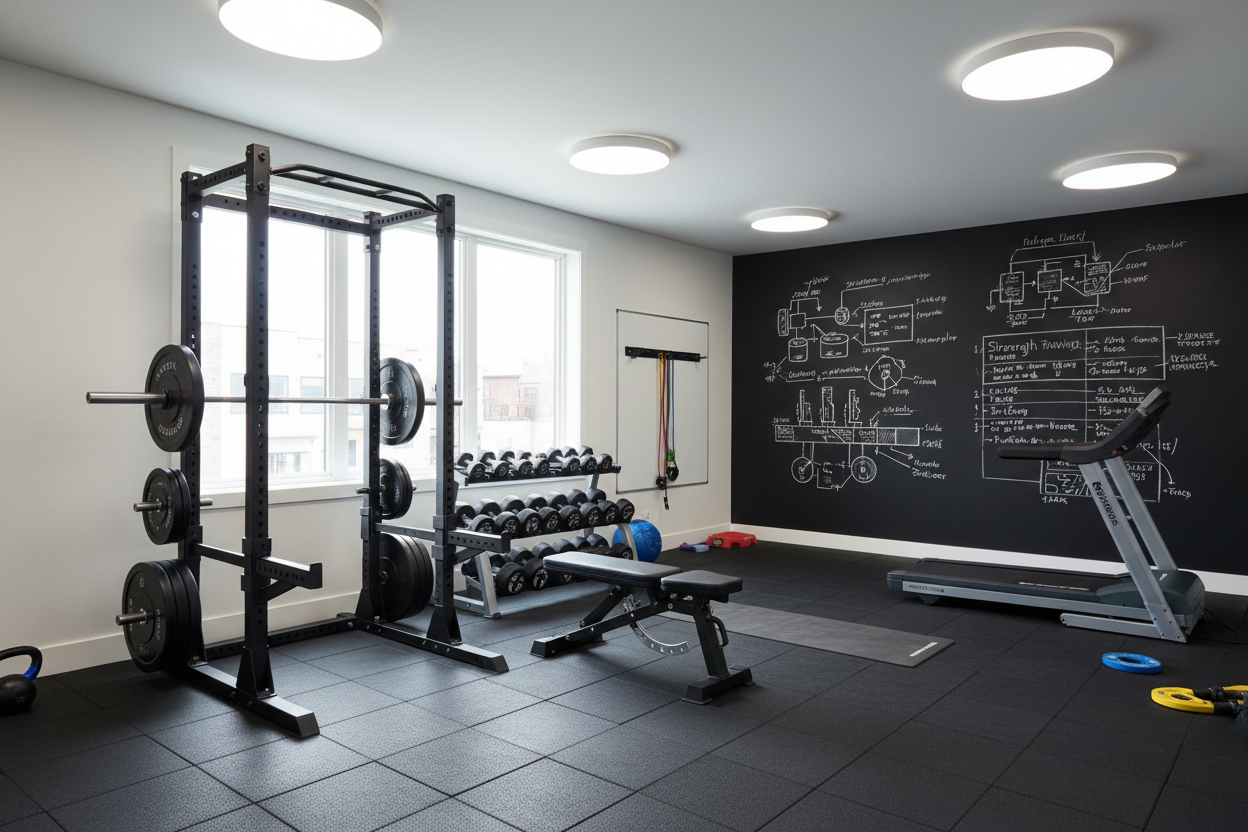
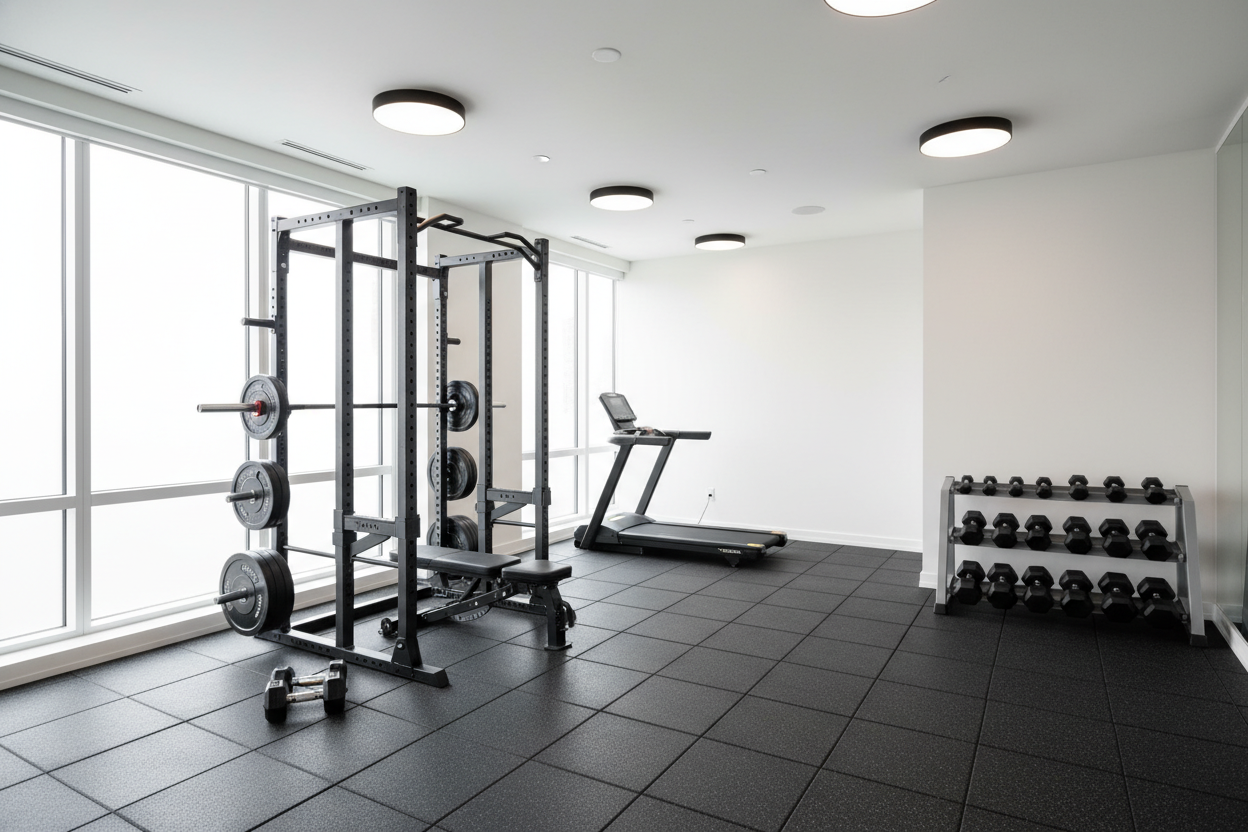
A supportive adjustable weight bench is your first real 'big' purchase. It allows you to do seated presses (if you must) or supported rows with enough stability to actually go heavy. But if you're serious about long-term bone health, you’ll eventually want a full power rack package. Having a rack means you can safely perform heavy squats and presses with a barbell, using safety bars to catch the weight if you get stuck. It’s the ultimate insurance policy for training alone at home.
Don't fall for the 'pink dumbbell' trap. Those 2-lb weights are fine for a warm-up, but they won't change your bone scan results. You need gear that allows for progressive overload—the ability to add 2.5 or 5 lbs every few weeks. That is how you build a skeleton that lasts another 50 years.
How to Stop Overthinking and Just Start Lifting
Most fitness influencers make this look like rocket science. It’s not. You don’t need a 6-day split or a 'shred' program. You need to show up three times a week and move something heavy enough that the last few reps feel genuinely difficult. If you can do 15 reps while holding a conversation, the weight is too light. Period.
I recommend following proven beginner weight training protocols that focus on the big movements: squat, hinge, push, and pull. Don't worry about 'muscle confusion.' Your bones love consistency. They respond to the same movements being performed with slightly more weight over time. Keep a notebook, track your numbers, and celebrate when you pick up a weight that used to feel impossible.
My Personal Experience
When I first started coaching my wife in our garage, she was convinced that her daily 5-mile runs were enough. She was lean and 'fit,' but her joints always ached. We started a basic lifting program, and the first time she tried to overhead press a 15-lb dumbbell, it was a struggle. I made the mistake of pushing her into a barbell too fast, and she got discouraged because the 45-lb bar was just too heavy to move with good form. We had to swallow our pride, go back to dumbbells, and work our way up. Six months later, her joint pain was gone, and she was deadlifting 135 lbs. The 'cardio-only' mindset is a hard one to break, but the results speak for themselves.
FAQ
Is walking considered a weight-bearing exercise?
Yes, but it's the bare minimum. While walking is better than sitting, it doesn't provide enough 'strain' to significantly increase bone density in women who are already active. You need to add resistance or higher impact to see real changes.
Can I just use resistance bands?
Bands are great for mobility and accessory work, but they are difficult to measure for progressive overload. For bone density, cast iron or steel is king because the weight is constant and easily trackable.
How many days a week should I lift for bone health?
Two to three days of dedicated strength training is the sweet spot. Your bones and muscles need 48 hours of recovery between heavy sessions to actually rebuild and get stronger.