Virgin Rubber Gym Flooring: Is It Worth The Extra Cost?
If you have ever walked into a garage gym and been hit by that overwhelming, headache-inducing tire smell, you already know the biggest pain point of budget gym mats. Upgrading your training space means investing in the ground up, and that is exactly where virgin rubber gym flooring comes into the conversation.
Unlike the standard recycled crumb rubber found in commercial big-box gyms, this premium alternative promises a clean, odorless, and high-performance foundation. But is it actually worth the steeper price tag? Let us break down everything you need to know before laying down your hard-earned cash.
Key Takeaways
- Zero Odor: True virgin rubber flooring lacks the toxic tire smell associated with cheap recycled mats.
- Higher Density: Offers superior shock absorption and a smoother, non-porous finish.
- Color Stability: Color permeates the entire tile, meaning it will not wear off or fade over time.
- Investment Piece: Costs more upfront but delivers a lifetime of durability for premium home gyms.
What Makes Virgin Rubber Different?
Recycled vs. Virgin Rubber Flooring
Most standard gym mats are made from recycled car tires. While eco-friendly and budget-conscious, they release volatile organic compounds (VOCs) that cause that notorious gym stench. Virgin rubber, on the other hand, is manufactured directly from tree sap or synthetic rubber polymers without any previous lifecycle. This creates a denser, cleaner, and completely odorless product.
Planning Your Home Gym Space
Choosing the Right Thickness
When planning a garage or basement setup, thickness dictates performance. For general fitness and machine use, a 3/8-inch (8mm to 10mm) virgin rubber tile is more than sufficient. However, if you are dropping heavy barbells or performing Olympic lifts, you will want to step up to 1/2-inch or even 3/4-inch tiles to protect your concrete subfloor and extend the life of your bumper plates.
Durability & Maintenance
Keeping Your Floor Pristine
One of the hidden benefits of virgin rubber is its non-porous surface. Unlike crumb rubber, which traps chalk, sweat, and dust in its crevices, virgin rubber flooring wipes clean with a simple damp mop and mild soap. It is highly resistant to water, meaning you will not have to worry about mold or mildew in a humid basement gym.
From Our Gym: Honest Take
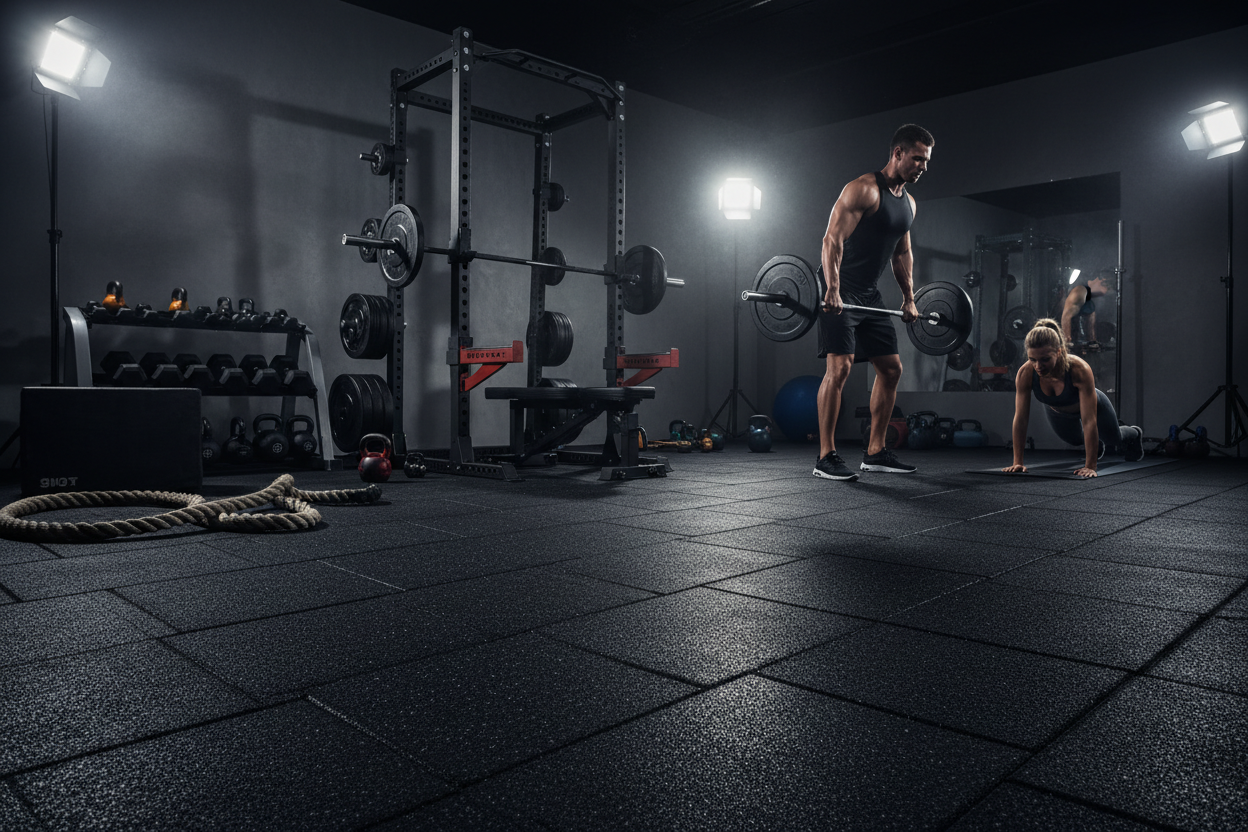
We recently outfitted a 400-square-foot basement gym with 3/8-inch virgin rubber interlocking tiles, and the difference was immediate. The biggest standout? The absolute lack of smell. In an enclosed basement with poor ventilation, recycled mats would have made the space unusable for weeks.
The surface texture is also noticeably superior. During heavy barefoot deadlifts, my feet felt completely planted without the abrasive, sandpaper-like feel of crumb rubber. The only caveat? The interlocking seams on virgin rubber can be slightly more visible than straight-edge heavy stall mats, and the upfront cost was roughly double. But for an indoor space where air quality and aesthetics matter, I would not hesitate to make the same choice again.
Frequently Asked Questions
Is virgin rubber gym flooring safe for indoor use?
Yes, it is arguably the safest option for enclosed indoor spaces. Because it does not off-gas VOCs like recycled tire rubber, it is ideal for basement gyms, spare bedrooms, or any area with limited ventilation.
How do you install virgin rubber flooring?
Most options come in precision-cut interlocking tiles or straight-edge square tiles. Interlocking tiles can be laid loose over concrete or wood without adhesive, making them incredibly DIY-friendly. Straight-edge tiles may require double-sided carpet tape to prevent shifting under heavy traffic.
Does virgin rubber expand and contract?
Like all rubber products, it can expand and contract slightly with extreme temperature fluctuations. If you are installing it in a non-climate-controlled garage, it is best to leave a small 1/4-inch expansion gap around the perimeter of the room.