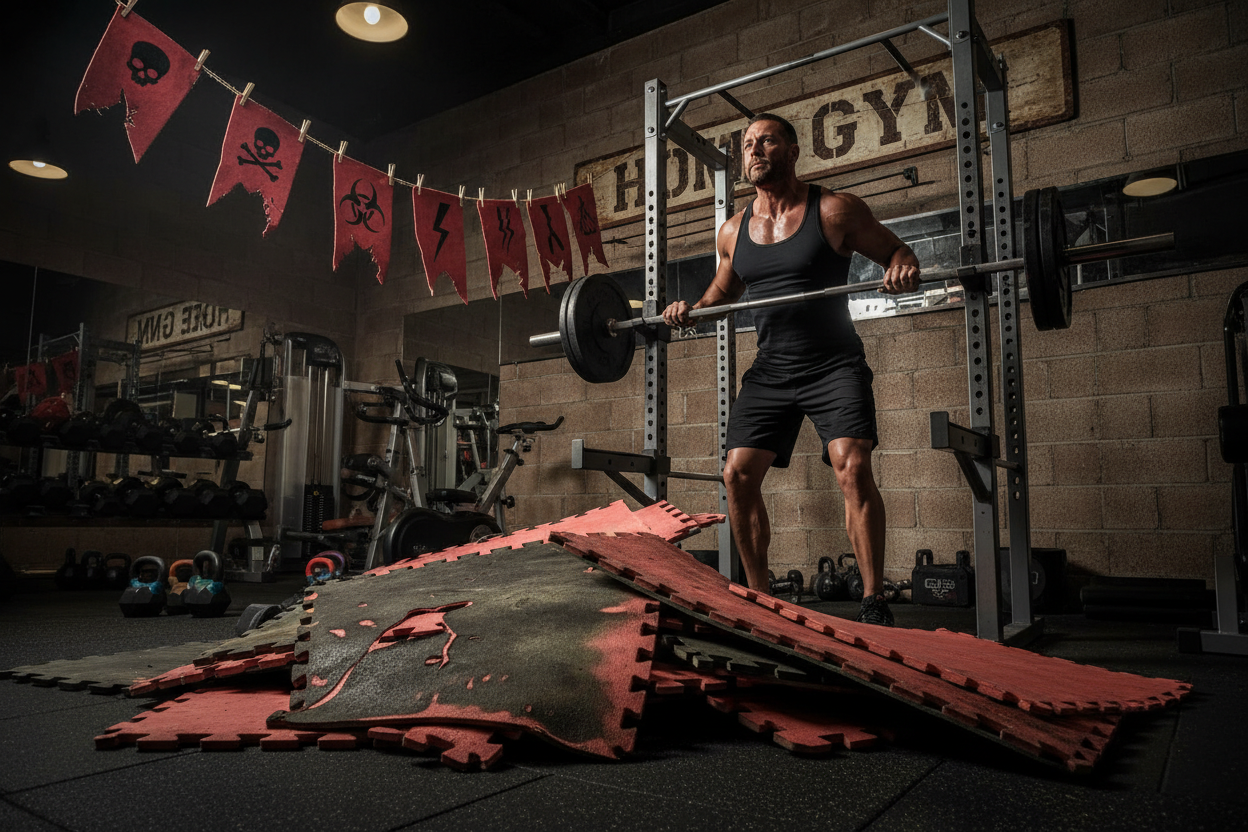
Used Gym Mat Red Flags: What to Know Before You Buy
Outfitting a home gym is an expensive endeavor, and flooring is often the hidden budget-killer. You want to protect your foundation from heavy deadlifts and dropped dumbbells, but dropping hundreds of dollars on brand-new rubber isn't always feasible. That's exactly why scoring a high-quality used gym mat can feel like winning the lottery.
However, buying second-hand flooring isn't as simple as loading it into your truck and rolling it out. From hidden moisture damage to compressed foam that no longer absorbs shock, the wrong purchase can leave your joints aching and your concrete cracked. In this guide, we'll break down exactly what to look for so you can build a bulletproof foundation without breaking the bank.
Key Takeaways
- Material matters most: Vulcanized rubber holds up significantly better over time than EVA foam or PVC.
- Check for compression: Press firmly into the center of the mat; if it doesn't spring back, the shock absorption is compromised.
- Beware of biological hazards: Sweat, chalk, and moisture can breed bacteria in porous mats. Proper sanitization is non-negotiable.
- Thickness dictates function: You need at least 3/4-inch thickness for dropping heavy barbells safely.
How to Evaluate Used Gym Floor Mats for Sale
Spotting Hidden Wear and Tear
When you find used gym floor mats for sale, your first step is a physical inspection. Don't just look at the surface. Flip the mat over. The underside often reveals the true story of its previous life. Look for crumbling edges, deep gouges, or a white powdery residue, which can indicate water damage or severe dry rot. If the edges are curling upward, the mat has likely lost its structural integrity and will create a tripping hazard in your garage gym.
Rubber vs. Foam: The Longevity Test
Commercial facilities use heavy-duty rubber, while many budget home gyms start with interlocking EVA foam. If you are browsing a local gym mats used sale, prioritize rubber. Foam compresses permanently under heavy power racks and treadmills. Rubber, particularly 3/4-inch vulcanized stall mats or commercial rolls, can withstand decades of abuse. Give the mat the "pinch test"—if you can easily pinch the material together with your fingers, it's too soft for serious barbell training.
Planning Your Space and Installation
Dealing with Uneven Edges
One major caveat of buying second-hand is that mats often come from custom-cut spaces. You might find a stack of used gym mats for sale that were trimmed to fit around pillars or power racks. Bring a tape measure and a utility knife. You will likely need to re-square the edges using a straight edge and a fresh box cutter blade to ensure a seamless fit in your own basement or garage.
Sanitizing and Restoring Your Mats
Let's address the elephant in the room: other people's sweat. Used flooring requires a deep clean before it ever enters your home. Avoid harsh bleach, which can degrade rubber compounds. Instead, use a mixture of warm water, a few drops of dish soap, and a cup of white vinegar. Scrub aggressively with a stiff-bristled deck brush, rinse with a hose, and let them bake in the sun for a full afternoon. The UV rays act as a natural disinfectant and help eliminate that lingering, stale gym odor.
From Our Gym: Honest Take
When we expanded our testing facility last year, I decided to save some budget by sourcing pre-owned flooring. I picked up ten 4x6 horse stall mats from a local CrossFit box that was closing down. The knurling on dropping barbells had definitely scarred the surface, and they smelled faintly of chalk and old sweat.
Here is what most product pages won't tell you: moving these things is a nightmare. At nearly 100 pounds each, they are floppy, awkward, and covered in a fine layer of gym dust that gets everywhere. I highly recommend bringing a pair of heavy-duty locking pliers (like Vise-Grips) to use as handles when carrying them. After a heavy scrub with a degreaser and a wire brush, they looked nearly brand new. Eight months of daily heavy deadlifts later, they perform exactly like a brand-new commercial mat, but I paid a fraction of the cost. The sweat equity was 100% worth the investment.
Frequently Asked Questions
Are used gym mats safe to use?
Yes, provided they are made of non-porous rubber and have been properly sanitized. Ensure there are no deep tears or curling edges, as these can easily catch a toe during dynamic movements or heavy lifts.
How do I get the smell out of used rubber gym mats?
A thorough scrub with a vinegar and water solution, followed by a few days of off-gassing in direct sunlight, is usually enough. For stubborn odors, an enzymatic cleaner designed for pet stains works wonders on breaking down organic sweat compounds.
What is a fair price for second-hand gym flooring?
Generally, you should aim to pay 40% to 60% of the retail price. For a standard 3/4-inch thick 4x6 rubber mat that retails for $60-$80, paying $30-$40 is a solid deal depending on its condition.