Used Assisted Pull-Up Machine: Is It Worth the Investment?
Mastering the strict pull-up is a holy grail of fitness, but getting there can be incredibly frustrating. If you are stuck in the awkward middle ground—too strong for light resistance bands but not quite ready for unassisted reps—you have probably considered upgrading your home gym. That is where a used assisted pull-up machine comes into play.
These commercial-grade behemoths are popping up on secondhand marketplaces everywhere, offering a chance to bring health club-level back development into your garage. But before you rent a U-Haul and hand over your cash, let us break down exactly what you need to look for, how much space you will actually need, and whether it is truly worth the investment.
Key Takeaways
- Commercial Quality: Buying a used commercial unit often provides better stability and longevity than buying a cheap, new residential model.
- Space Requirements: These machines are notoriously tall; you will need at least 85 to 90 inches of ceiling clearance.
- Inspection Points: Always check the cables, guide rods, and the knee pad folding mechanism for smooth operation before buying.
- Transport: They are extremely heavy and usually require partial disassembly to fit through standard residential doorways.
Will It Fit Your Home Gym?
Vertical Clearance and Footprint
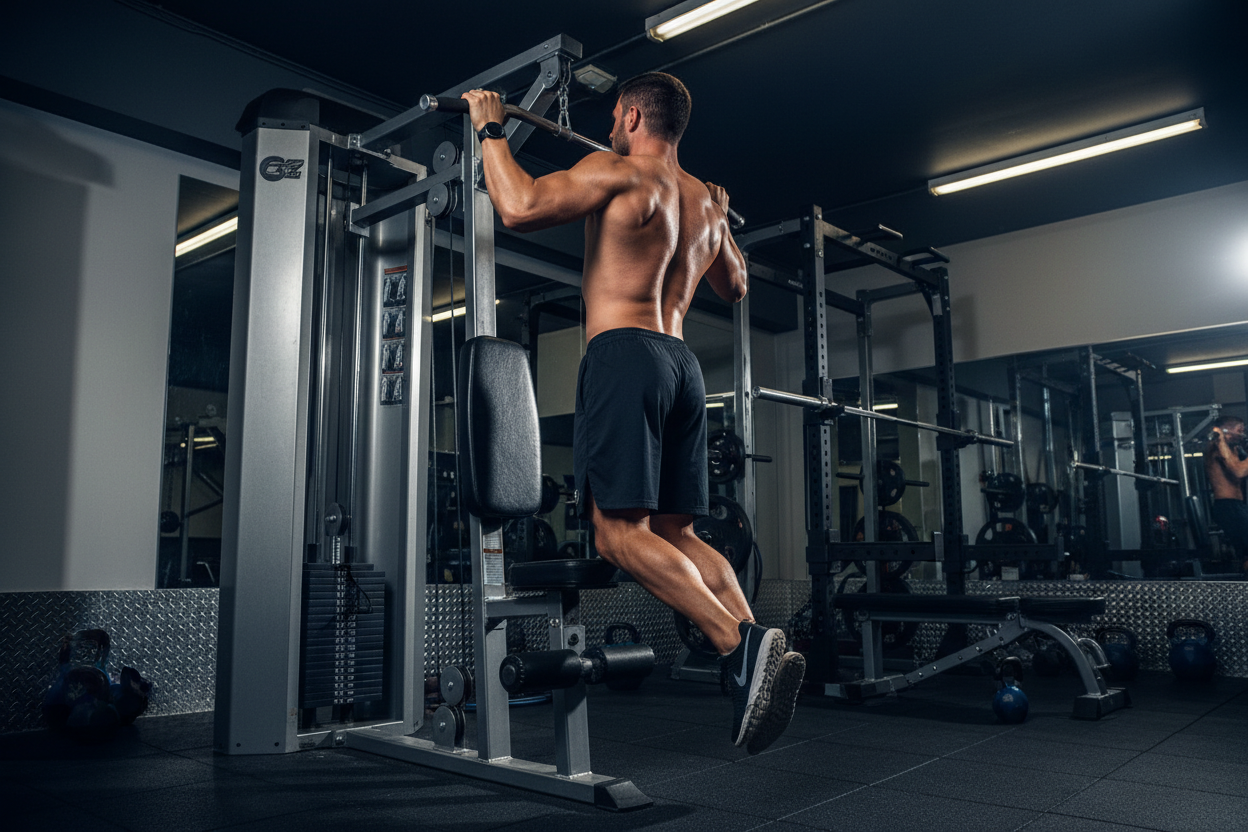
The biggest mistake buyers make is underestimating the sheer size of an assisted pull-up and dip station. Most commercial units were designed for warehouse-style ceilings. You need to measure your ceiling height carefully. An average machine stands about 85 inches tall, but you also need to account for your head clearance when you are at the top of the pull-up movement. If you have a standard 8-foot (96-inch) basement ceiling, you might find yourself bumping your head. Garage gyms with open rafters are usually the best homes for these machines.
What to Inspect Before Handing Over Cash
Cables, Pulleys, and Guide Rods
When evaluating a used machine, the weight stack is the heart of the unit. Inspect the cables for any fraying or stripped rubber coating. Run the knee pad up and down a few times; it should glide smoothly without catching. If the movement feels gritty, the guide rods likely just need a good cleaning and some silicone-based lubricant, but deeply scored or rusted rods are a red flag that could require expensive replacement parts.
Upholstery and Knee Pad Mechanisms
Check the upholstery on the knee pad and dip handles. While a small tear in the vinyl is an easy DIY fix and a great bargaining chip to lower the price, a broken hinge on the folding knee pad is a bigger issue. Ensure the mechanism locks securely into place so you can safely transition between assisted and unassisted exercises.
Price vs. Performance: New vs. Used
You might be tempted to buy a brand-new, budget-friendly assisted pull-up tower on Amazon for $300. However, those lightweight tubular steel frames often wobble under heavy loads. A used commercial machine from brands like Life Fitness, Cybex, or Matrix might cost you between $500 and $1,200 secondhand, but you are getting a machine built from 11-gauge steel with a 200+ pound cast iron weight stack. The value retention on commercial gear is phenomenal; if you ever decide to sell it, you will likely get your money back.
From Our Gym: Honest Take
When we brought a refurbished Cybex assisted pull-up machine into our main garage testing facility, I was initially skeptical about giving up that much floor space. At 6'2", I had to place it perfectly between the ceiling joists to ensure I didn't smash my head on a muscle-up transition.
That said, the build quality is night and day compared to residential towers. The 200lb weight stack glides effortlessly. When we bought it off Facebook Marketplace, the guide rods had some surface rust, but a quick scrub with a brass brush and a coat of 3-IN-ONE oil brought them back to life. The only real downside? Getting it off the trailer and through the side door required disassembling the top pull-up bar assembly and recruiting three strong friends. It is a beast to move, but once it is planted, it feels as solid as a concrete pillar.
Frequently Asked Questions
How much does a used assisted pull-up machine usually cost?
Depending on the brand, age, and condition, expect to pay anywhere from $400 for an older, heavily used model to $1,500 for a fully refurbished, late-model commercial unit. Always factor in the cost of transportation or a moving truck.
Can I disassemble it to move it into my basement?
Yes, most machines can be partially disassembled. You can usually remove the weight stack (plate by plate), the top pull-up bar, and the dip handles. However, the main frame is often welded and remains quite bulky, so measure your stairwells and doorways before attempting a basement move.
Is it better to use resistance bands or an assisted machine?
Resistance bands are great for budget and space constraints, but they provide uneven assistance (more help at the bottom, less at the top). An assisted machine provides a constant, measurable counterbalance throughout the entire range of motion, making it much easier to track your progressive overload.