US Fitness Equipment: Is Buying Domestic Actually Worth It?
If you have ever outfitted a garage gym or basement training space, you know the frustration. You order a budget-friendly power rack online, wait weeks for delivery, and during your first heavy squat session, the entire frame wobbles. In a market flooded with cheap, mass-produced imports, investing in authentic US fitness equipment has become a major talking point among serious strength enthusiasts.
But with domestic manufacturing often comes a premium price tag. Are you paying for superior craftsmanship and safety, or just a patriotic sticker? In this guide, we will break down exactly what separates American-made strength gear from the rest, helping you decide where to invest your hard-earned money and where it is safe to cut corners.
Key Takeaways
- Superior Materials: Domestic equipment typically utilizes true 3x3-inch, 11-gauge American steel, offering unmatched stability for heavy lifters.
- Warranties That Matter: Most high-end US manufacturers back their structural welds with lifetime warranties.
- Higher Resale Value: Premium domestic gear retains up to 80% of its retail value on the secondhand market.
- Customization Options: Buying locally often allows for custom powder-coating colors and modular attachments.
- Lead Times Vary: Be prepared for longer shipping times, as many domestic pieces are made-to-order.
Decoding the Domestic Difference
American Steel vs. Imported Alternatives
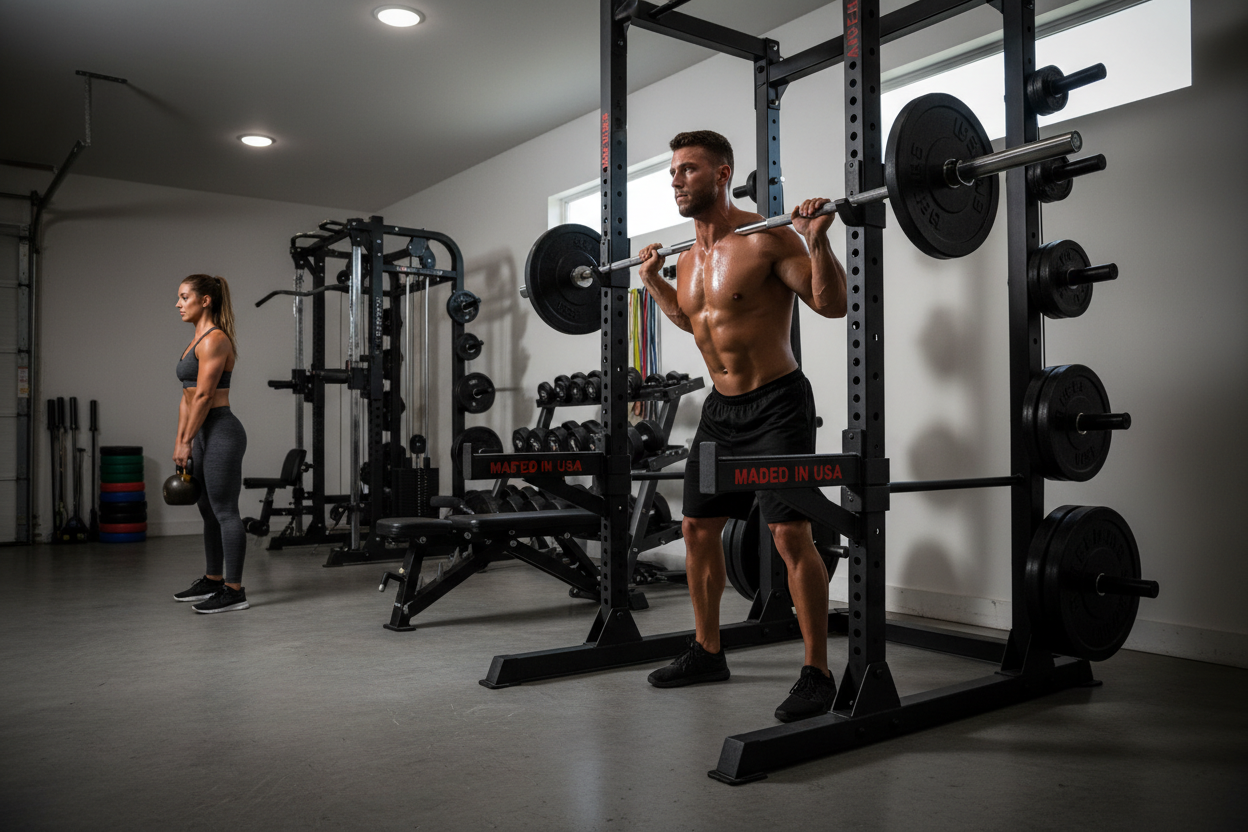
The backbone of any home gym is the power rack, and this is where material quality becomes glaringly obvious. US fitness equipment brands typically source local 11-gauge steel. While some imported racks claim to use 11-gauge steel, the actual thickness and quality control can vary wildly. Domestic steel is subject to stricter manufacturing tolerances, meaning your uprights will not bow or warp over years of racking heavy barbells.
Warranties and Long-Term Support
When you buy a piece of heavy-duty gym equipment, you are making a decade-long commitment. One of the hidden benefits of buying from North American brands is customer service accessibility. If a J-cup arrives with a chipped weld or a pulley system loses tension, reaching a domestic support team for a replacement part takes days, not months. Furthermore, lifetime structural warranties are the standard, not the exception, for premium US-made gear.
Planning Your Space for Heavy-Duty Gear
Garage Gyms vs. Basement Setups
American-made equipment is famously overbuilt. While this is great for durability, it requires careful spatial planning. A standard commercial-grade power rack with a 43-inch depth and 90-inch height fits perfectly in a two-car garage, but basement gym owners need to be cautious. Always measure your floor-to-joist clearance. Many domestic brands offer custom upright heights (like 80-inch options) specifically designed for low-ceiling North American basements. Do not forget to account for the extra footprint required for weight plate storage horns, which can add up to 20 inches of necessary lateral clearance.
The Budget Reality: Price vs. Lifetime Value
When to Splurge and When to Save
Outfitting a complete home gym with top-tier domestic gear can easily cross the five-figure mark. The smart approach is strategic spending. Splurge on the items that carry your body weight or heavy loads: your power rack, your primary barbell, and your adjustable bench. These are high-risk failure points where US manufacturing shines. Save your budget on accessories like cast-iron weight plates, dumbbells, and resistance bands, where the manufacturing origin has a negligible impact on your actual workout experience.
From Our Gym: Honest Take
Over the last five years of outfitting our testing facility, we have built rigs from almost every major manufacturer. The difference in a US-made rack is something you feel rather than just see. During a recent testing cycle with a domestic 3x3-inch rack, the aggressive knurling on the pull-up bar and the flawless, textured powder coat provided a chalked grip that imported racks simply could not match. Even with 500 pounds loaded for rack pulls, lateral sway was practically non-existent.
However, I will be completely honest about the drawbacks: the lead times can be brutal. We waited nearly six weeks for a custom-colored flat bench last spring. If you are the type of buyer who wants rapid shipping speeds, the custom-built nature of premium US equipment might test your patience. But once it is bolted to your platform, you will never want to train on anything else.
Frequently Asked Questions
Is US fitness equipment significantly more expensive?
Yes, the initial purchase price is generally 20% to 40% higher than imported alternatives. However, when you factor in the lifetime warranty, lack of replacement costs, and high resale value, the total cost of ownership over ten years is often lower.
How do I know if a brand actually manufactures in the US?
Look for transparent sourcing language on the product page. Phrases like "Made in the USA from globally sourced materials" mean the final assembly happens domestically, while "100% US Sourced" means the steel and labor are entirely domestic. Always check the company's manufacturing facility details.
Does American-made gear hold its resale value better?
Absolutely. High-quality domestic barbells and racks are highly sought after on local marketplaces. It is common to see well-maintained US-made power racks sell for 75% to 80% of their original retail price, whereas budget imports often sell for pennies on the dollar.