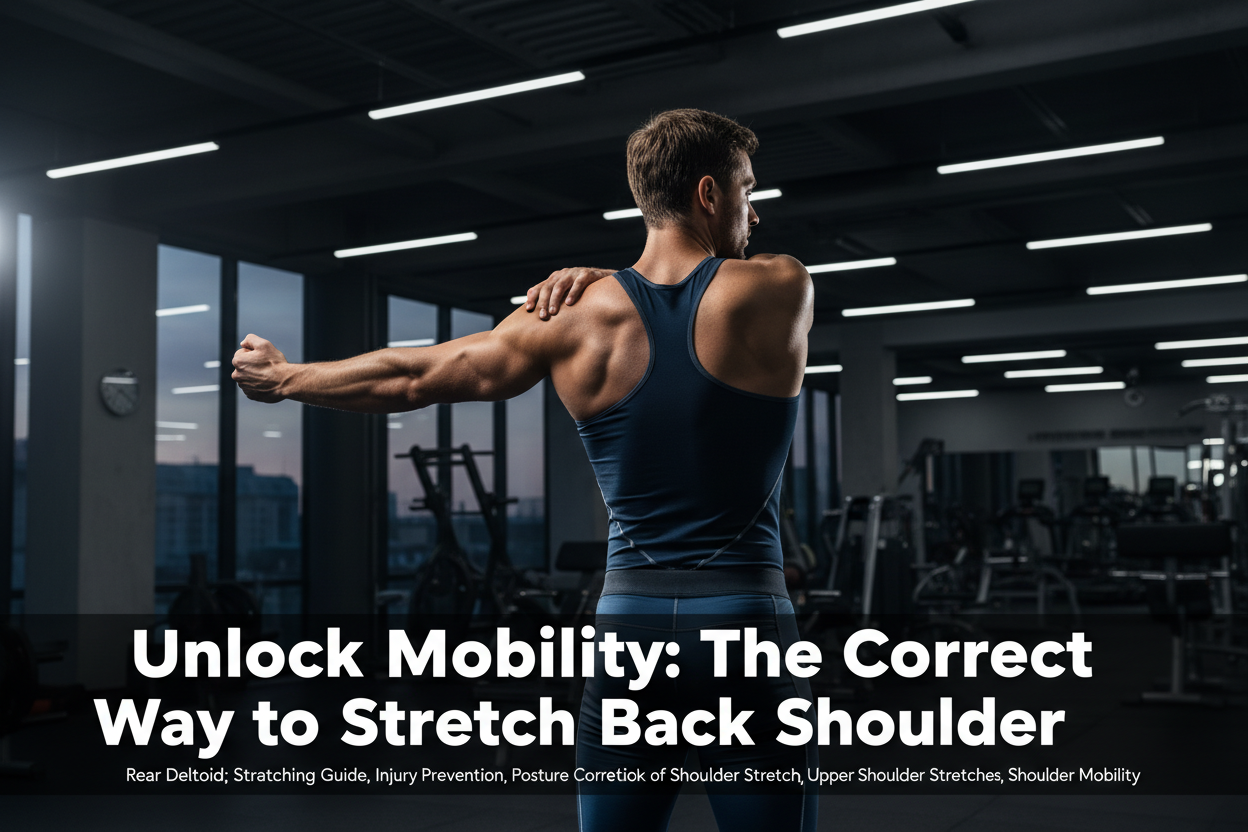
Unlock Mobility: The Correct Way to Stretch Back Shoulder
If you spend your days hunched over a keyboard or driving for long hours, you know the specific, nagging ache that settles behind your armpit and near your shoulder blade. That tightness isn't just annoying; it's a mobility killer. Most people try to fix this by yanking their arm across their chest, but simply pulling harder isn't the answer. To truly find relief, you need to understand how to stretch back shoulder muscles without compromising the joint capsule.
Key Takeaways
- Scapular Position is King: You cannot effectively stretch the rear deltoid if your shoulder blade is winging or elevated.
- Duration Matters: Micro-stretches don't work on dense fascia. Hold positions for at least 45-60 seconds.
- Angle Adjustment: A slight change in the angle of your arm targets different fibers of the posterior cuff.
- Avoid Impingement: If you feel a pinch on top of the shoulder, you are compressing the joint, not stretching the muscle.
Why the "Classic" Stretch Often Fails
We have all seen it in gym class: the standard cross-body arm pull. While this is the most common method for a back of shoulder stretch, 90% of people do it wrong. When you pull your arm across your chest, your shoulder blade naturally wants to slide forward and around your ribcage.
If the shoulder blade moves with the arm, you aren't actually lengthening the rear deltoid or the rotator cuff muscles underneath. You are just moving your shoulder blade away from your spine. To get a true stretch, you have to anchor the scapula.
How to Stretch Back of Shoulder Correctly
Let's fix your mechanics. Instead of mindless pulling, we are going to use leverage and anatomy to target the posterior capsule.
1. The Scapula-Retracted Cross Body
This is the gold standard for how to stretch back shoulder tissue safely.
- Stand with your back flat against a wall. This provides tactile feedback to ensure your spine stays neutral.
- Retract your shoulder blades (pinch them together slightly) and keep them depressed (down away from your ears).
- Bring one arm across your chest. Use your other arm to apply gentle pressure at the elbow.
- The Critical Detail: Do not let the shoulder of the stretching arm rise up. If it shrugs, the stretch is gone.
2. The "Eagle Arms" Variation
For those asking how to stretch upper shoulder areas, specifically the rhomboids and upper traps alongside the rear delt, this yoga-derived move is superior.
Extend your arms forward, cross the right arm under the left, and bend your elbows to wrap the forearms until palms (or backs of hands) touch. Lift your elbows to shoulder height while pushing your hands away from your face. You should feel a deep opening between the shoulder blades and the back of the deltoids.
Advanced: How to Stretch Back Shoulder Using a Doorframe
Sometimes you need an external anchor to get deep enough. This is my go-to recommendation for athletes with significant muscle mass that makes the cross-body stretch difficult.
Stand in a doorway. Raise your arm to shoulder height and hook your elbow or tricep against the doorframe. Rotate your body into the arm. By using your torso rotation rather than pulling with your other hand, you generate more torque with less effort. This effectively answers how to stretch back of shoulder tissue that has become fibrotic or exceptionally tight.
Common Mistakes to Avoid
When looking for upper shoulder stretches, avoid the "Sleeper Stretch" unless a physical therapist prescribed it. Lying on your side and cranking your internal rotation can easily grind the rotator cuff tendons if your mechanics aren't perfect.
Also, stop pulsing. Ballistic bouncing triggers the stretch reflex, causing the muscle to contract to protect itself—the exact opposite of what you want.
My Personal Experience with stretch back shoulder
I learned the hard way that "feeling the burn" isn't always good. Years ago, during a heavy bench press cycle, my rear delts were glued tight. I tried to force the standard cross-body stretch. I remember vividly the sensation—not of a muscle stretching, but of a sharp, closing-angle pinch right at the front of my AC joint.
I ignored it and kept pulling. The result wasn't better mobility; it was a nagging inflammation that hurt every time I reached for a seatbelt. It wasn't until I started using a lacrosse ball against a wall—digging into that nasty trigger point right where the rear delt meets the armpit—that I felt a release. The nausea-inducing feeling of that trigger point releasing was unpleasant, but the instant drop in tension was undeniable. Now, I never stretch without depressing the scapula first. If I feel that front-shoulder pinch, I stop immediately.
Conclusion
Shoulder health is a game of millimeters. A slight adjustment in your scapular position turns a useless movement into a therapeutic release. Incorporate these refined techniques into your cooldown routine, hold them for time, and listen to your joint capsule. Your posture will thank you.
Frequently Asked Questions
How often should I stretch the back of my shoulder?
If you have a desk job or lift heavy weights, daily maintenance is ideal. Performing one or two sets of 60-second holds post-workout or after a long work shift can prevent chronic tightness from setting in.
Why do I feel pain in the front when I stretch the back?
This is usually a sign of impingement. You are likely letting your shoulder roll forward and up, jamming the head of the humerus into the socket. Reset your shoulders, pull them back and down, and try again gently.
Can stretching the back shoulder help with neck pain?
Absolutely. The muscles of the upper back and rear shoulder are connected to the neck via the trapezius and levator scapulae. Releasing tension in the rear delts often reduces the downward drag on the neck muscles.