Stop Buying Home Fitness Gyms Without Reading This Guide
You want the results, but you are done with the commute, the waiting for equipment, and the monthly fees. Building a dedicated workout space is the logical next step. However, the market for home fitness gyms is flooded with flashy marketing and subpar gear that ends up serving as an expensive clothes rack.
Choosing the right equipment isn't just about price; it's about biomechanics, footprint, and longevity. Whether you are looking for a single fitness machine for home use or a complete garage setup, the goal is to replicate the intensity of a commercial facility within your four walls. Let’s break down exactly how to do that without wasting money.
Key Takeaways: Choosing Your Setup
- Assess Your Footprint: Measure your floor space and ceiling height before browsing indoor fitness machines.
- Define Your Training Style: Bodybuilding requires different machines for working out than functional fitness or HIIT.
- Check the Resistance Profile: Decide between weight stacks (convenience), plate-loaded (feel), or rod-based resistance (safety).
- Verify Expandability: The best home exercise apparatus allows you to add attachments as you get stronger.
- Budget for Flooring: Never place a heavy workout machine directly on hardwood or carpet without proper mats.
Analyzing the Space: More Than Just Dimensions
Before you buy a single machine to workout, you need to understand the constraints of your environment. A common mistake is buying a fitness trainer machine that fits the room physically but doesn't leave clearance for the actual movement.
For example, an indoor gym machine like a functional trainer requires space not just for the unit, but for the cable travel and your body fully extended. If you are looking at residential exercise equipment, always add two feet of buffer zone around the perimeter. If you are tight on space, look for foldable workout machines at home or wall-mounted racks, but be aware that stability can sometimes be compromised with ultra-compact designs.
Selecting the Right Machine Type
The All-In-One Systems
If you want an all purpose exercise machine, you are likely looking at a multi-station gym. These are excellent for isolation work. The benefit of an all exercise machine is safety; you can push to failure without a spotter. Look for gym fitness systems that offer a 2:1 cable ratio, which provides a smoother pull and more versatility for functional movements compared to the rigid path of older machines for exercise at home.
Free Weight & Hybrid Setups
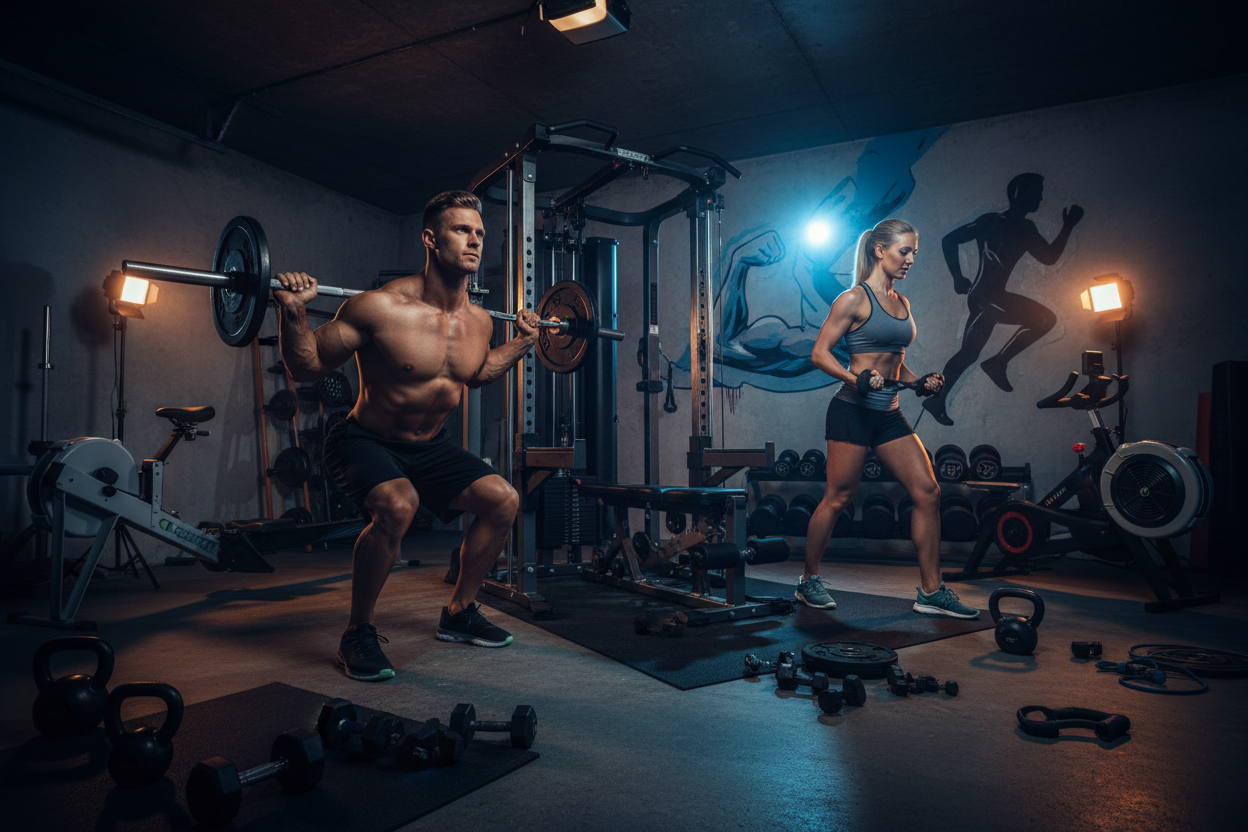
For those prioritizing strength, a fitness machine at home might actually mean a power rack with a cable attachment. This is the gold standard for gym equipment home use. It allows for compound movements (squats, bench press) while the pulley system handles the accessory work. This is often superior to a standalone exercise home gym machine because it mimics the natural movement patterns of the human body.
Smart Buying: Quality vs. Cost
When browsing home gym companies or an online exercise machine retailer, pay attention to the gauge of the steel. Commercial gyms use 11-gauge steel. If you see a workout machine home unit made with 14-gauge or higher (which means thinner steel), it may wobble under heavy loads.
Also, consider the "feel." Automatic exercise machines or smart gyms use digital resistance. While space-saving, they lack the eccentric loading (the lowering phase) feel of iron. If you are a purist, a standard exercise machine for home use with physical weights is usually the better long-term investment.
My Personal Experience with home fitness gyms
I’ve spent years training in commercial facilities, but when I built my first garage setup, I learned a hard lesson about "specs" versus reality. I bought a mid-range, plate-loaded workout machine at home—specifically a lat pulldown/low row combo.
On paper, it looked perfect. But the first time I loaded it up with 180 lbs, I realized the difference between cheap nylon pulleys and commercial-grade aluminum ones. There was a distinct "grit" or friction in the pull, a stuttering sensation that killed the mind-muscle connection. Furthermore, the thigh pad wasn't adjustable enough, so every time I pulled down, my knees would lift, and I'd have to fight to stay in the seat.
It taught me that stability and smoothness are invisible specs. Now, when I recommend an in home workout machine, I tell people to look at the pulley material and the weight of the frame itself. If the machine doesn't weigh enough, it will move when you move, and that's the fastest way to kill a workout.
Conclusion
Building a home gym is an investment in your health and your time. Don't settle for a flimsy sport machine for home just because it's on sale. Whether you choose a high-tech indoor workout machine or a gritty iron setup, ensure it fits your biomechanics and your space. The best machines to exercise are the ones that feel good enough to use every single day.
Frequently Asked Questions
What is the minimum ceiling height for a home gym?
For most indoor home exercise machines, especially those with pull-up bars or overhead press stations, you ideally want a ceiling height of at least 8 feet (96 inches). If you have lower ceilings, look for "short" variations of power racks or seated fitness machines for home use.
Are all-in-one home gyms worth the money?
Yes, if space is your primary constraint. An all purpose exercise machine saves square footage by combining multiple stations. However, ensure the weight stack is heavy enough for your progression, as many machines at home top out at 150-200 lbs.
Do I need to bolt my equipment to the floor?
While many workout machines home are freestanding, bolting them down is safer, especially for power racks used for kipping movements or heavy band work. Some gym at home machine brands offer stabilizing feet extensions if drilling into concrete isn't an option.