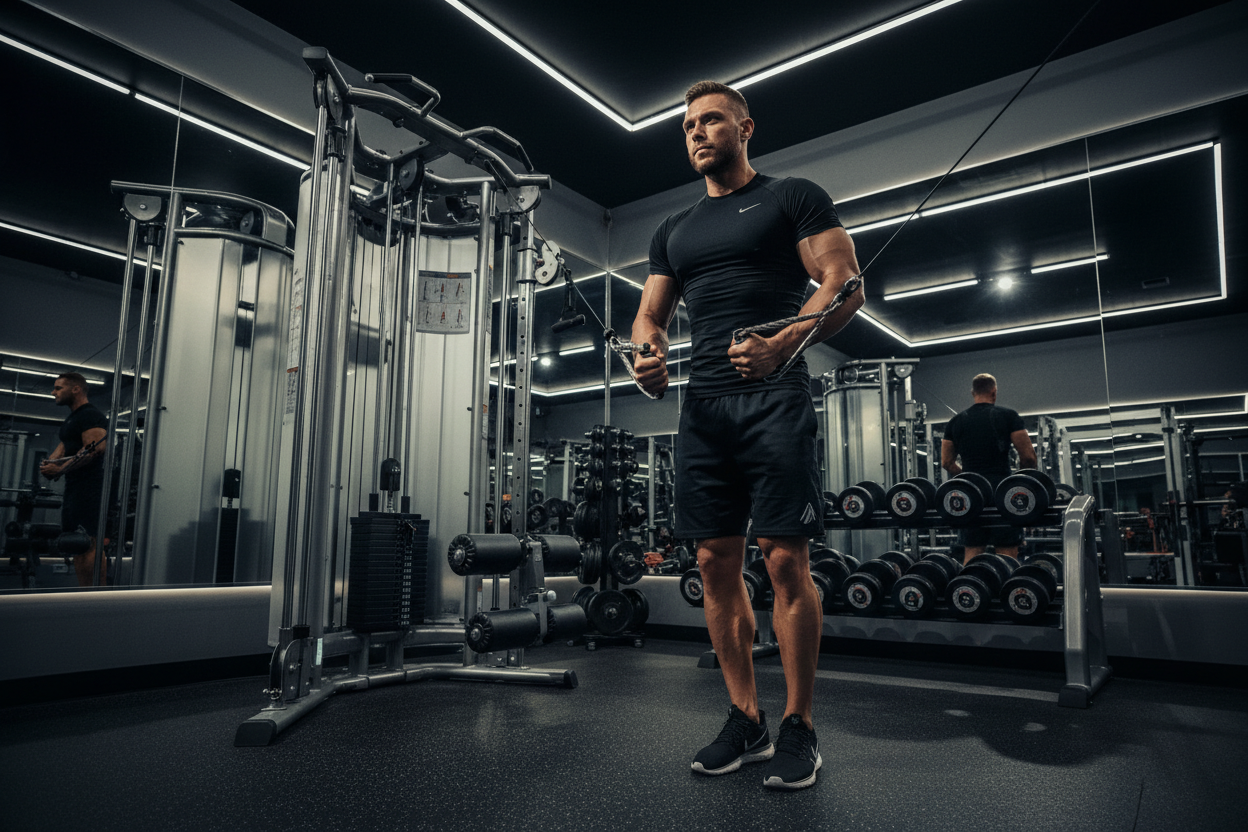
Universal Machine Exercises: Maximize Your Home Workouts
If you are trying to build serious muscle but only have a spare bedroom or a tight corner in the basement, you know the struggle of gym clutter. Buying separate racks, benches, and dumbbells quickly eats up square footage. That is exactly why mastering universal machine exercises is a game-changer for home gym owners.
By leveraging a single multi-station setup, you can replicate commercial gym programming without sacrificing your garage parking spot. In this guide, we will walk through how to structure your training, plan your space, and decide if this all-in-one equipment is the right fit for your fitness goals.
Key Takeaways
- A single universal machine supports dozens of compound and isolation movements for full-body development.
- Ideal for spaces as small as 8x10 feet, provided you account for cable extension clearance.
- Weight stacks offer safer training environments for solo lifters compared to heavy free weights.
- A structured universal machine workout can easily replace 4 to 5 standalone pieces of equipment.
Structuring Your Training Routine
The beauty of a multi-gym lies in its versatility. You do not need to bounce between five different machines to get a complete pump.
Upper Body Power
For your chest and back, focus on lat pulldowns, seated cable rows, and chest presses. Because the weight stack provides constant tension, these movements are incredibly effective for hypertrophy. Transitioning between exercises often takes seconds—just pull and move the pin.
Lower Body and Core
Leg days are often neglected on home setups, but a solid universal machine workout includes leg extensions, hamstring curls, and cable pull-throughs. Add in standing cable crunches, and your core gets a heavy-duty stimulus that standard sit-ups simply cannot match.
Fitting a Multi-Gym in Your Space
Before you invest, you need to measure twice. While the footprint of the machine itself might only be 4x6 feet, the functional footprint is much larger.
Clearance and Layout Tips
Always leave at least three feet of clearance around the machine's functional zones. If you are doing cable crossovers or standing rows, you need room to step back. Additionally, check your ceiling height; many premium setups with high pulleys require a minimum ceiling clearance of 84 inches.
From Our Gym: Honest Take
We recently set up a dual-stack universal system in our 200-square-foot testing garage. I will be completely honest: adjusting to the fixed motion paths took a couple of sessions after years of barbell-only training. However, the constant tension on the cables absolutely lit up my lats during straight-arm pulldowns.
One specific detail to watch out for is the weight ratio. On our test model, the 2:1 cable ratio meant the 200-pound stack actually felt like 100 pounds of resistance. At 6 feet 2 inches tall, I also found that I had to sit slightly forward on the seat to get a full stretch on the lat pulldown. It is an amazing piece of equipment for isolation and safe solo training, but heavy powerlifters might still miss the raw load of a barbell.
Frequently Asked Questions
Can you build muscle with just a universal machine?
Absolutely. Muscle growth requires progressive overload and mechanical tension. As long as you are consistently increasing the weight or reps on your machine, your muscles will adapt and grow.
How much space do I really need?
For a standard single-stack machine, a dedicated 8x10 foot area is the sweet spot. This accounts for the machine's footprint plus the necessary room for your body to move during cable extensions and leg exercises.
Are universal machines safe for beginners?
Yes, they are arguably safer than free weights. The fixed movement paths help guide beginners through proper form, and the pin-loaded weight stacks eliminate the risk of dropping a heavy barbell on yourself during a failed rep.