Undo Your Desk Job: A Realistic At Home Workout for Beginners
I’ve spent the last decade testing $3,000 power racks and calibrated steel plates, but lately, the questions hitting my inbox aren’t about barbell knurling. They’re from people who haven't moved intentionally in years, staring at a screen for eight hours a day, wondering why their lower back screams when they try to pick up a grocery bag. If that’s you, an at home workout for beginners shouldn't start with high-intensity intervals or heavy weights.
Most people fail because they try to jump from 'sedentary' to 'athlete' overnight. I’ve made that mistake myself, buying a bunch of gear I wasn't ready for, only to let it collect dust. You don't need a home gym to start; you just need a plan that doesn't treat your stiff joints like they belong to a twenty-year-old gymnast.
Quick Takeaways
- Focus on mobility first to fix 'desk posture' before adding intensity.
- You only need enough space for a mat—no expensive machines required.
- Consistency beats intensity; three days a week is the sweet spot for starting.
- Regression is your friend—use furniture for support until you build baseline strength.
Why Your Office Chair Makes Most Beginner Routines Miserable
Sitting in a chair for eight hours a day effectively 'turns off' your glutes and tightens your hip flexors into iron cables. When you search for a generic beginner exercise routine at home, you often find programs full of mountain climbers or burpees. For a desk worker, those moves are a recipe for shoulder impingement and lower back pain.
Your body has adapted to the shape of your chair. Throwing it into a high-impact workout beginner at home without addressing that stiffness is why so many people quit after week one. We need to focus on opening the hips and waking up the muscles in your upper back that have gone soft from slouching over a laptop. A basic workout routine for beginners at home should be about restoration as much as it is about sweat.
The 'Undo the Chair' Living Room Warm-Up
Before you get into the meat of the session, you need to tell your nervous system that it’s okay to move. These easy simple exercises aren't just fluff; they are the foundation. I personally start every session with a Cat-Cow stretch and a Bird-Dog to get my spine moving. It’s simple workouts like these that prevent the 'tweak' that sends you to the chiropractor.
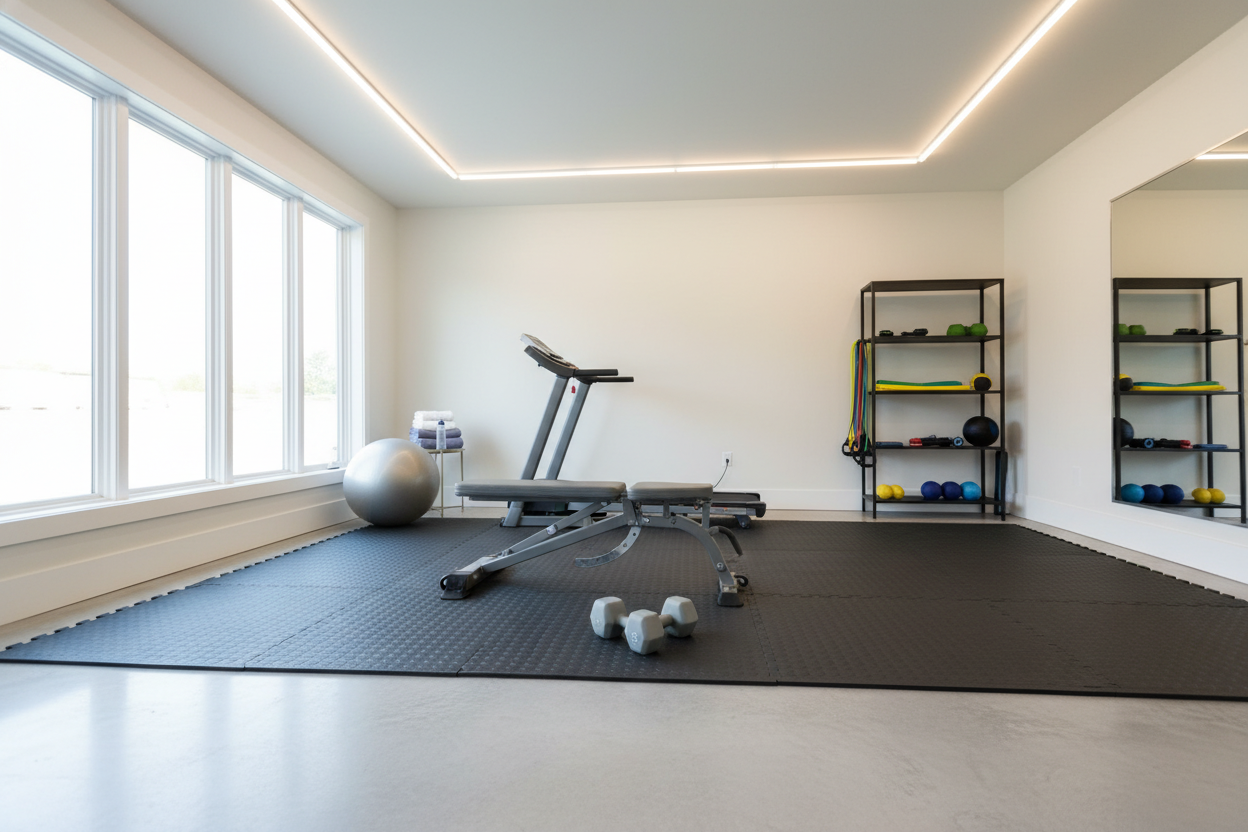
You don't need much room, but I highly recommend a 6x4ft exercise mat. I’ve tried doing these on hardwood floors, and my knees regretted it immediately. A thick, supportive mat gives you a designated 'zone' and keeps your spine cushioned during floor work. Spend five minutes here—if you can’t move well, you shouldn’t move fast.
The 3-Move At Home Workout for Beginners
This is the core of the routine. We are targeting the three areas desk workers lose first: glute strength, pushing power, and single-leg stability. This is the ultimate basic home workout for beginners because it requires zero equipment—just your body and a piece of furniture.
1. Glute Bridges: Lie on your back, feet flat, and drive your hips toward the ceiling. This wakes up the hamstrings and glutes that have been dormant all day. 2. Incline Push-Ups: Don't do these on the floor yet. Use your couch or a sturdy kitchen counter. It’s an easy beginner workout at home variation that protects your shoulders while building chest strength. 3. Wall-Supported Lunges: Lunges are great, but balance is often the limiting factor for beginners. Put one hand on the wall for stability. This allows you to focus on the leg muscles rather than wobbling around. If you find these movements a bit challenging, check out A Workout Routine at Home for Beginners That Actually Feels Good for more ways to scale these exercises to your current level.
Stop Trying to Work Out Every Single Day
The biggest lie in fitness is that you need a daily exercise routine at home for beginners to see results. I’ve seen more people burn out by Wednesday than I can count. Your muscles don't grow while you're working out; they grow while you're resting. A simple beginner workout at home done Monday, Wednesday, and Friday is infinitely better than a daily plan you abandon after four days.
Start with 15 minutes. That’s it. If you try to do an hour-long indoor exercise for beginners right out of the gate, your brain will find every excuse to skip it. Make it so easy that you can’t say no. Simple home exercises for beginners work because they are sustainable. Once you’ve hit three days a week for a month, then we can talk about adding more.
When to Progress to Longer Training Sessions
How do you know when you've outgrown this? It’s not about being 'tired.' It’s about mastery. When you can breeze through three sets of 15 glute bridges and incline push-ups without your form breaking down, you’ve built the baseline. You’ll notice your posture feels 'taller' and that nagging ache in your lower back starts to fade.
At that point, you’re ready to increase the volume. You might move from the couch to the floor for push-ups, or add a fourth day of training. Eventually, you’ll want to graduate to a more structured 45 minute workout routine for beginners at home. But don't rush it. The goal is to stay in the game for years, not just for a few weeks in January.
Personal Experience: The 'Too Much Too Soon' Trap
A few years back, after a long injury layoff, I tried to jump back into my old powerlifting routine. I felt 'fine' during the workout, but 48 hours later, I could barely walk down the stairs. I had the ego of an athlete but the joints of a desk worker. I had to swallow my pride and go back to these exact basic exercise for beginners at home. It took me six weeks of 'boring' movements to earn the right to lift heavy again. Don't let your ego dictate your training—listen to your joints.
FAQ
Do I need weights for a beginner workout home?
No. Your body weight provides plenty of resistance when you're starting out. Focus on the quality of the movement before you worry about adding external load.
What if my knees hurt during lunges?
Shorten the range of motion. You don't have to touch your knee to the floor. Even a shallow lunge builds strength. Also, make sure you're keeping your weight in your front heel, not your toes.
Is 15 minutes really enough for an easy home workout for beginners?
Yes, especially if you're coming from zero. Consistency is the most important variable. Fifteen minutes of focused movement is better than an hour of 'junk' volume that leaves you too sore to move the next day.