Master Your 45 Minute Workout Routine for Beginners At Home
Finding the time and energy to start a fitness journey can feel overwhelming, especially when you are staring down an hour-plus of complex exercises. If you are dealing with a busy schedule, a 45 minute workout routine for beginners is the absolute sweet spot. It provides enough volume to stimulate muscle growth and burn calories, without keeping you trapped in your garage gym or basement setup all evening.
In this guide, we will break down exactly how to structure your session, what equipment actually matters, and how to avoid the common pitfalls that derail new lifters. Whether you are building out your first home gym or just trying to establish a consistent habit, this blueprint will help you maximize every minute.
Key Takeaways
- Time Efficiency: A 45-minute window forces you to prioritize compound movements over isolation exercises.
- Equipment Needs: You can execute this entire routine with just a reliable pair of adjustable dumbbells and a sturdy flat bench.
- Rest Periods Matter: Keeping rest strictly to 60-90 seconds is crucial for staying within the time limit while maintaining intensity.
- Progressive Overload: Focus on perfecting form before adding weight to ensure long-term, injury-free progress.
Structuring Your Time for Maximum Results
When you only have three-quarters of an hour, you cannot afford to waste time wandering between machines or scrolling on your phone. A successful session requires a clear, segmented approach.
The 5-Minute Mobility Warm-Up
Never skip the warm-up. Spend the first five minutes doing dynamic stretches like arm circles, bodyweight squats, and lunges. This primes your nervous system and lubricates your joints, which is especially important if you are lifting in a chilly garage gym.
The 30-Minute Strength Block
This is the meat of your routine. Focus on three to four compound movements. For example, pair goblet squats with dumbbell floor presses, followed by bent-over rows. By utilizing supersets (doing two exercises back-to-back with minimal rest), you keep your heart rate up and cut down on total workout time.
Essential Equipment for Your Home Setup
You do not need a massive commercial rig to get a highly effective workout. In fact, keeping it simple is often better for beginners.
What You Actually Need
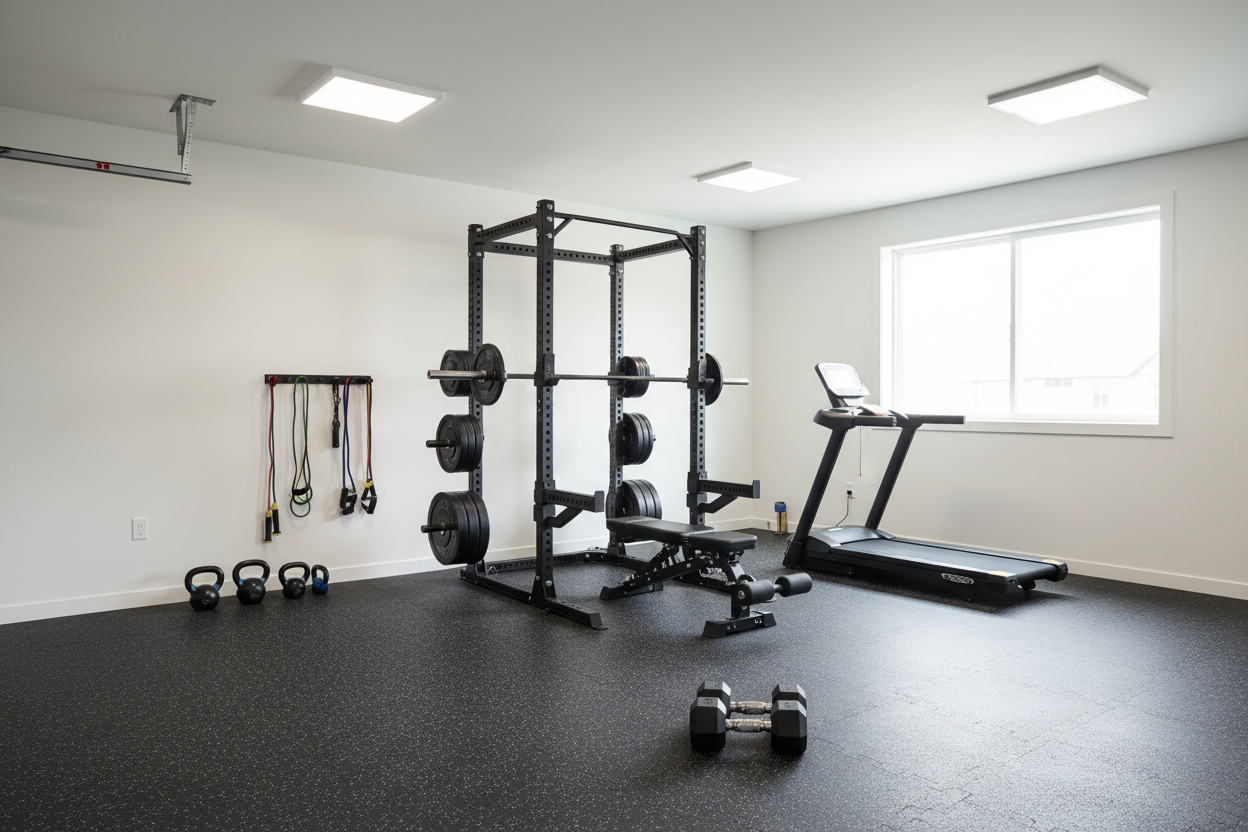
For a highly effective 45 minute gym workout for beginners, a minimalist home setup works wonders. An adjustable bench and a set of adjustable dumbbells (ranging from 5 to 50 lbs) are your best investments. They take up less than a 4x4 foot footprint, making them perfect for apartment corners or shared home office spaces.
From Our Gym: Honest Take
When I first started testing beginner programming in my own garage gym, I realized that time management is the hardest part. During this exact 45-minute routine, I found myself resting too long between sets of dumbbell rows. I started using a basic digital timer set to 90 seconds, and it completely changed the intensity of the workout. One minor caveat: if you are using traditional spin-lock dumbbells rather than quick-adjust ones, changing weights between supersets will eat into your rest time. If your budget allows, upgrading to a selectorized dumbbell set will save you precious minutes and keep your heart rate elevated.
Frequently Asked Questions
Is a 45 minute gym workout for beginners enough to see results?
Absolutely. For beginners, 45 minutes of focused, consistent resistance training 3 to 4 times a week is more than enough volume to build foundational strength, improve bone density, and change your body composition.
How many days a week should I do this routine?
Aim for three days a week on non-consecutive days (e.g., Monday, Wednesday, Friday). This allows your muscles 48 hours to recover, which is when the actual growth and adaptation occur.
What if I don't have heavy weights at home?
If your dumbbells max out early, you can increase the difficulty by slowing down the tempo of your reps, adding a pause at the bottom of the movement, or increasing your total repetitions per set.