Trendy Exercise Fads: Adapting Viral Routines for Home Gyms
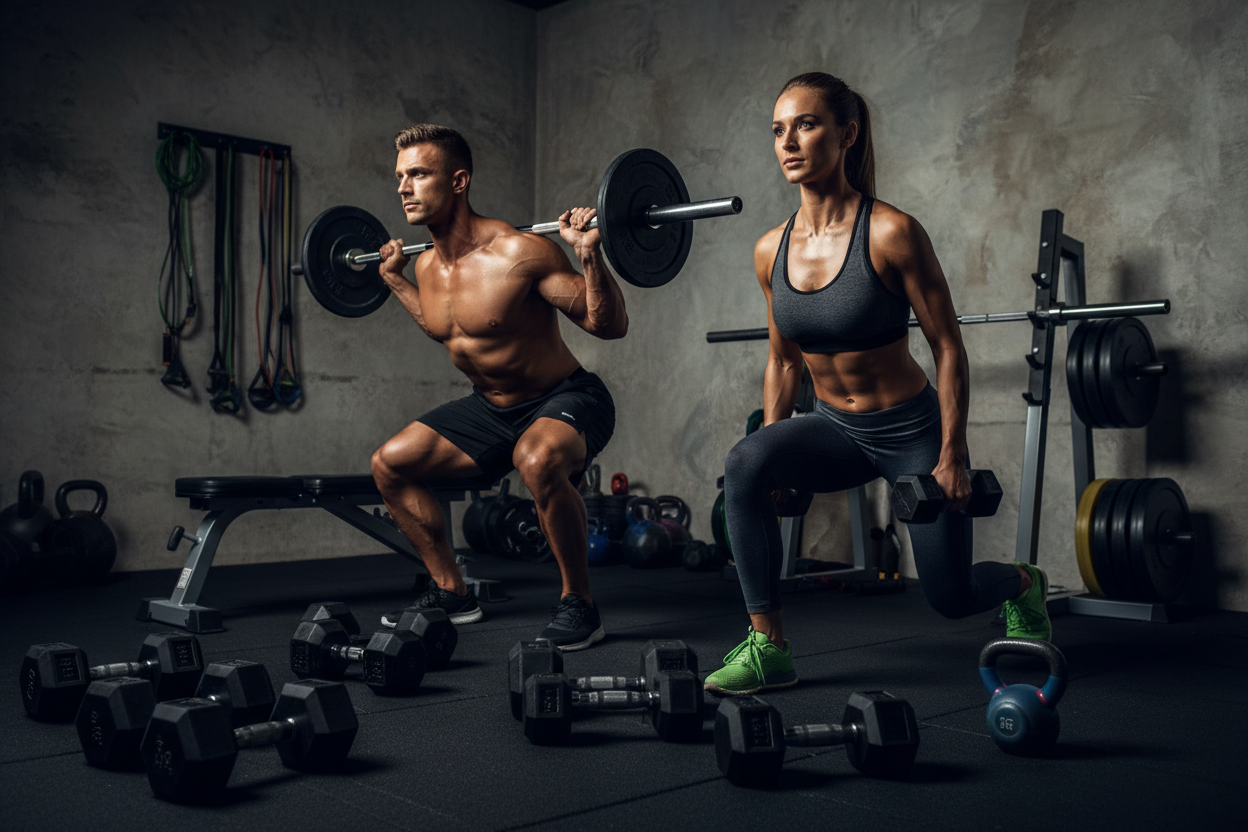
You are sitting in your cramped garage gym at 11 PM, resting between sets of squats, when a video pops up on your feed. Someone with eight-pack abs is performing a backflip into a single-leg pistol squat while balancing on a kettlebell. Instantly, you wonder if you are missing out. As a certified personal trainer who has designed and tested dozens of home gym spaces, I get frantic texts from clients weekly asking if they need to buy a $200 contraption to try the latest trendy exercise. The fear of missing out on muscle gains is real, but your living room floor is not the place for circus tricks.
Social media algorithms prioritize visual spectacle over biomechanical efficiency. What looks amazing on a screen often translates to a high injury risk and zero actual muscle stimulation in reality. You do not need to turn your garage into a stunt studio to get strong. Let's filter out the noise and figure out which of these viral movements are actually worth your sweat.
Quick Takeaways
- Most viral fitness movements prioritize visual engagement over actual muscle hypertrophy or strength gains.
- You can recreate the stimulus of complex machine-based fads using standard 5-52.5 lb adjustable dumbbells and resistance bands.
- Always evaluate the risk-to-reward ratio; if an exercise compromises your stability, it limits your force output.
- Reserve 80 percent of your workout for proven compound lifts, leaving 20 percent for experimenting with new movements.
The Social Media Fitness Trap
Home gym owners are uniquely vulnerable to the social media fitness trap. When you train alone in a 6x6 foot spare bedroom, it is easy to feel isolated from the broader fitness community. You see influencers doing wild, complex movements and assume your basic barbell routine is somehow inadequate. This insecurity drives a massive market for algorithm-driven fitness fads.
The financial risks of chasing these trendy workouts are substantial. I have seen clients drop hundreds of dollars on specialized balance boards, quirky resistance bows, and hyper-specific attachments that end up collecting dust in the corner. When space is your most valuable commodity, every piece of equipment needs to earn its footprint. A bulky gadget that only allows you to perform one highly specific, viral core twist is a terrible investment.
Beyond the wallet, there is a physical cost. Viral movements often combine multiple exercises into one chaotic sequence—like a bicep curl combined with a lunge and a shoulder press. These combination moves limit your weight capacity to your weakest muscle group. You might be able to lunge 100 pounds, but if you combine it with a curl, you are suddenly limited to 30 pounds, effectively shortchanging your leg development just to look dynamic on camera.
How to Evaluate a Trendy Exercise
Before you clear out your living room to attempt a movement you saw online, run it through a basic biomechanical checklist. First, identify the target muscle. Does this movement actually stretch and contract that specific muscle through a full range of motion? If a creator claims a twisting kettlebell swing is targeting the lower lats, but your lower back is taking all the load, the exercise fails the test.
Second, evaluate the stability. Muscle growth requires high force output, and your nervous system will not allow you to produce maximum force if you are wobbling. If an exercise requires you to balance on a BOSU ball while pressing dumbbells, it is a balance challenge, not a muscle-building exercise. You are better off planting your feet firmly on the floor and pressing heavier weight.
Third, look at the risk-to-reward ratio. I once tried a viral "smart" resistance board that flooded my feed. The marketing promised a full-body transformation using digital resistance. The honest downside? The max resistance capped out at 100 pounds, making it absolutely useless for my heavy deadlifts, and the Bluetooth app crashed three times during a 45-minute session. It was a frustrating, expensive lesson in evaluating gear. If a movement or tool puts your joints in a compromised position for a marginal aesthetic benefit, swipe past it.
Spotting Gimmick Equipment Requirements
Marketers know that a flashy video is the best way to sell cheap plastic fitness gadgets. You will often see a viral routine built entirely around a single-use piece of equipment. Think back to the ab-rockers of the 90s or the vibrating platforms of the 2000s; today's equivalents are just heavily filtered and set to trending audio.
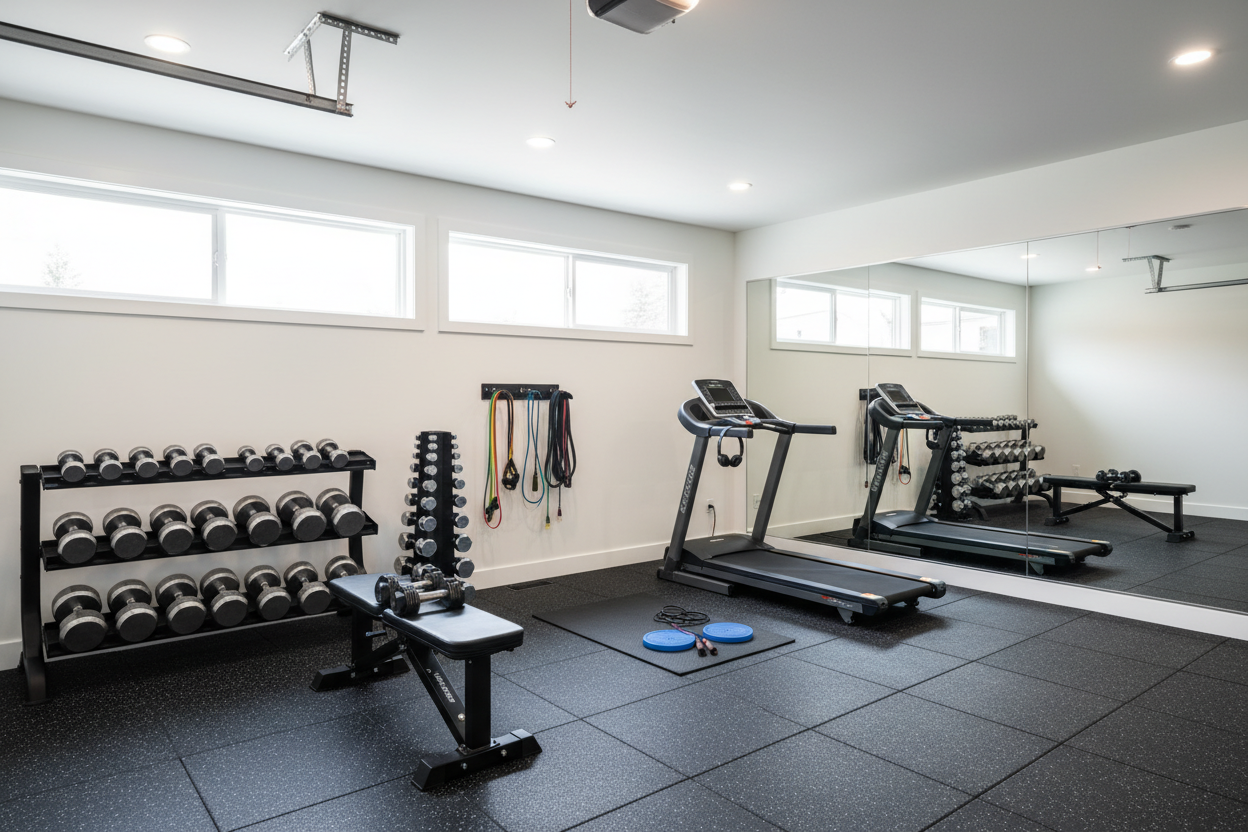
If a routine aggressively pushes a promo code for a highly specific gadget, be skeptical. True physiological adaptations—strength, endurance, hypertrophy—do not require proprietary plastic. A solid pair of adjustable dumbbells, a sturdy flat bench rated for at least 500 pounds, and a set of loop resistance bands can replicate 99 percent of the resistance curves these gimmicks claim to invent.
Modifying Viral Movements for Basic Home Setups
You do not need a commercial cable tower to mimic the stimulus of a popular online movement. The secret lies in understanding the line of force. Let's say you see a fitness model doing a viral glute kickback on a $5,000 functional trainer. You can easily modify this for your garage. Anchor a heavy resistance band to the leg of your power rack, loop the other end around your ankle, and step back until there is tension. You get the exact same muscle activation without the massive price tag.
Another common fad is the pendulum squat, which requires a massive, expensive machine. To get that same deep quad stretch at home, grab a 35-pound dumbbell, elevate your heels on a pair of 10-pound weight plates, and perform slow, controlled goblet squats. The heel elevation shifts your center of gravity, perfectly mimicking the mechanics of the expensive machine.
The trick is learning to decode complex exercise instructions shouted at you in 30-second clips. When a video tells you to "blast your core with this twisting matrix," translate that into practical terms. What they really mean is "challenge your obliques with rotational resistance." You can do that safely at home by attaching a band to a door anchor and performing slow, controlled Pallof presses. Keep your rep ranges between 10 and 15, control the eccentric (lowering) portion of the movement, and focus on the muscle squeeze rather than the visual flair.
Actually Worthwhile Exercises to Try at Home
Not everything on the internet is garbage. Some recent exercises to try have gained massive popularity because they actually work and require minimal gear. The "B-Stance" Romanian Deadlift (RDL) is a perfect example. It blew up online recently, and for good reason. By staggering your stance and resting the toes of your back foot on the ground for balance, you can heavily target one hamstring and glute at a time without the extreme balance demands of a true single-leg RDL. All you need is a single heavy dumbbell or kettlebell.
Another great import from internet fitness culture is the Copenhagen plank. This targets the adductors (inner thighs), an area notoriously hard to train without a commercial gym machine. You simply place your top foot on your weight bench, support your upper body on your forearm, and lift your hips into a side plank, squeezing your inner thigh to hold you up. It is brutal, highly effective, and costs nothing.
Reverse Nordics have also made a well-deserved comeback. Kneeling on a soft pad and leaning your torso back while keeping your hips extended provides an incredible stretch and contraction for the quads. It requires zero equipment—just your body weight and a yoga mat. Before you start throwing these into your daily rotation, ensure you have a foundational beginner home blueprint in place. These movements are great accessories, but they should not replace your standard squats and presses.
Integrating the New with the Tried-and-True
Keeping your workouts fresh is important for long-term adherence. If trying a new movement gets you excited to walk into your cold garage gym at 5 AM, then it has value. I recommend using the 80/20 rule for programming. Dedicate 80 percent of your session to the tried-and-true basics: bench presses, rows, squats, deadlifts, and overhead presses. These compound lifts are the undeniable drivers of muscle and strength.
Use the remaining 20 percent of your workout time to play. Throw in that weird kettlebell drag you saw on Instagram or try the heel-elevated quad sweeps. Put them at the end of your workout when your heavy, dangerous lifting is already done. This satisfies your curiosity and gives you a fun mental break without derailing your progressive overload. Fitness is a long-term commitment, and there is nothing wrong with having a little fun along the way, as long as you keep your primary goals in focus.
Frequently Asked Questions
Are viral ab workouts effective for losing belly fat?
No. Spot reduction is a myth. While complex ab routines can build core muscle endurance, revealing those muscles requires a caloric deficit to reduce overall body fat. Stick to basic crunches, leg raises, and a dialed-in diet.
How do I know if an online trainer is credible?
Look for certifications (like NASM, ACE, or NSCA) rather than just follower counts. Credible trainers explain the "why" behind a movement, discuss proper biomechanics, and offer modifications for different fitness levels instead of just showing off their physique.
Can I build a good physique with just basic equipment?
Absolutely. A set of adjustable dumbbells, a bench, and a pull-up bar are all you need to build a highly impressive physique. Progressive overload—lifting slightly more weight or doing more reps over time—matters far more than having access to exotic machines.