Treadmills Gym Edition: Building the Ultimate Home Cardio Setup
It happens to the best of us: you are motivated to run, but a blizzard, pouring rain, or an overly packed commercial facility kills your vibe. If you are finally looking to bring that commercial-grade cardio experience home, navigating the world of treadmills gym setups can feel overwhelming.
Whether you are building out a dedicated garage space or transforming a spare bedroom, choosing the right machine dictates whether it becomes a daily driver or an expensive clothing rack. In this guide, we break down exactly what separates flimsy entry-level models from true gym-quality machines, helping you make the smartest investment for your space.
Key Takeaways
- Motor Size Matters: Look for at least a 3.0 CHP (Continuous Horsepower) motor if you plan on regular running.
- Belt Dimensions: A 60-inch long by 22-inch wide running surface is the gold standard for taller runners.
- Weight & Stability: True gym treadmills often weigh over 250 lbs, providing the necessary stability for high-speed sprints.
- Ceiling Clearance: Always factor in your height plus the treadmill deck height (often 8-12 inches) when measuring your room.
Decoding Commercial vs. Home Specs
Not all cardio machines are created equal. When sourcing a treadmill for gym environments, manufacturers prioritize continuous use. For your home gym, you want to mimic that durability without overpaying for unnecessary commercial software.
Motor Power and Belt Size
The heart of any fitness equipment treadmill is its motor. Cheaper models use peak horsepower (PHP), which drops off during a workout. You want Continuous Horsepower (CHP). A 3.0 to 4.0 CHP motor ensures smooth belt movement even under heavy footfalls. Pair this with a 2-ply commercial belt, and you have a machine built for the long haul.
Cushioning and Deck Quality
One major reason people love professional gym equipment treadmill models is the deck cushioning. A solid 1-inch thick MDF deck with variable response cushioning reduces joint impact by up to 30% compared to road running. This is crucial if you are logging high weekly mileage.
Space Planning: Will It Actually Fit?
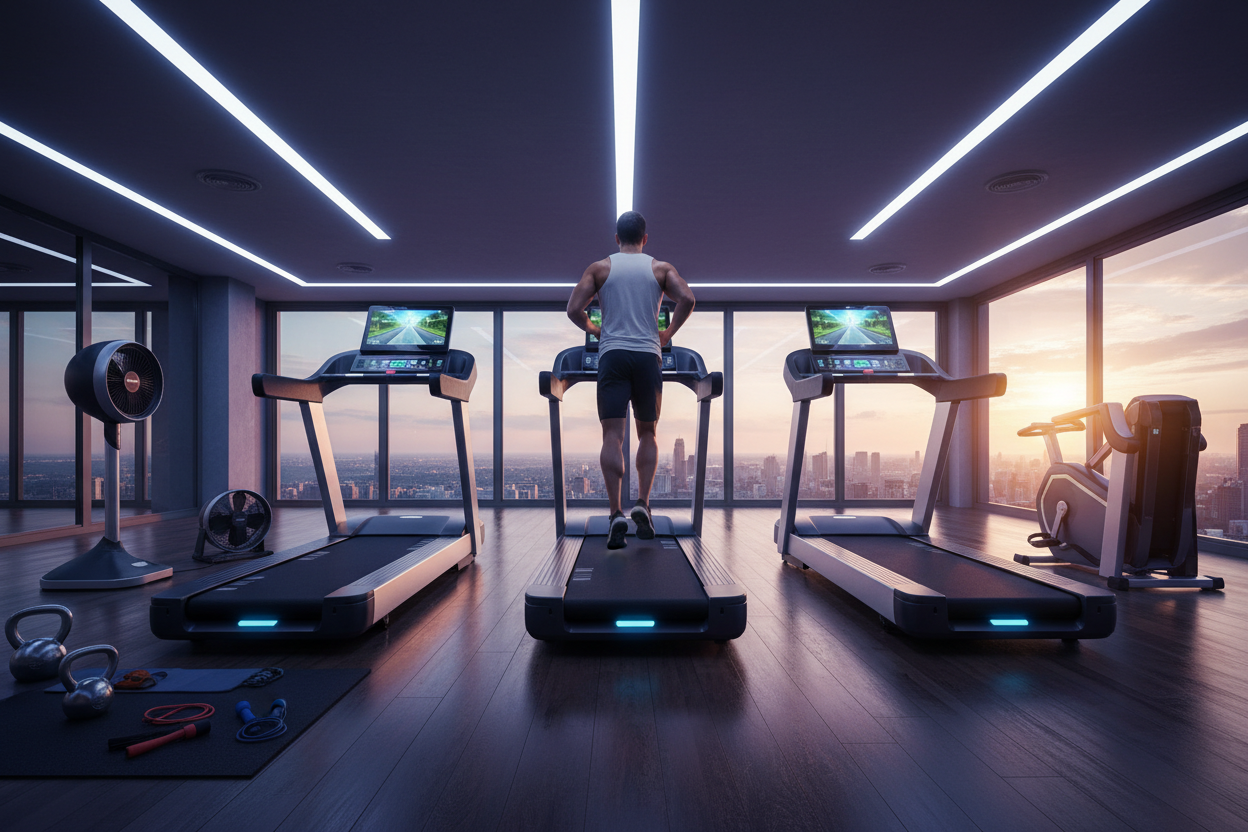
A premium treadmill and gym equipment setup requires serious floor space. Most heavy-duty treadmills do not fold flat. You should plan for a footprint of roughly 7 feet long by 3 feet wide, plus a minimum of 6 feet of clear clearance behind the machine for safety.
Pro Tip: Measure your ceiling height. If you are 6 feet tall and the deck sits 10 inches off the floor, you need at least an 8-foot ceiling to run comfortably, especially if you plan on utilizing high incline features.
From Our Gym: Honest Take
Over the last year, we have tested over a dozen models in our uninsulated warehouse gym. The biggest lesson? Weight equals stability. I recently logged a 10-mile tempo run on a 300-pound commercial-grade unit, and the console did not shake once—even at 10 mph. My water bottle actually stayed in the cup holder.
However, the honest caveat is the installation. Moving a true workout equipment treadmill into a basement requires at least three strong people. The heavy steel frames are incredibly awkward to maneuver around tight corners. If you are buying a premium machine, pay the extra $150 for white-glove delivery and assembly. Trust me, your lower back will thank you.
Frequently Asked Questions
Is a commercial treadmill worth it for a home gym?
Yes, if you are a serious runner or have multiple users in the household. The upgraded motors and sturdier frames of gym treadmills prevent the motor burnout and deck cracking common in cheaper models.
How much maintenance does a treadmill exercise equipment require?
Surprisingly little if you buy quality. You will need to vacuum around the motor housing every few months to prevent dust buildup and lubricate the running belt every 3-6 months, depending on your usage volume.
Can I put a heavy treadmill on a second floor?
Generally, yes, modern home construction can handle the weight. However, we highly recommend placing a high-density rubber equipment mat underneath to dampen vibrations and protect your flooring from the heavy footprint.