
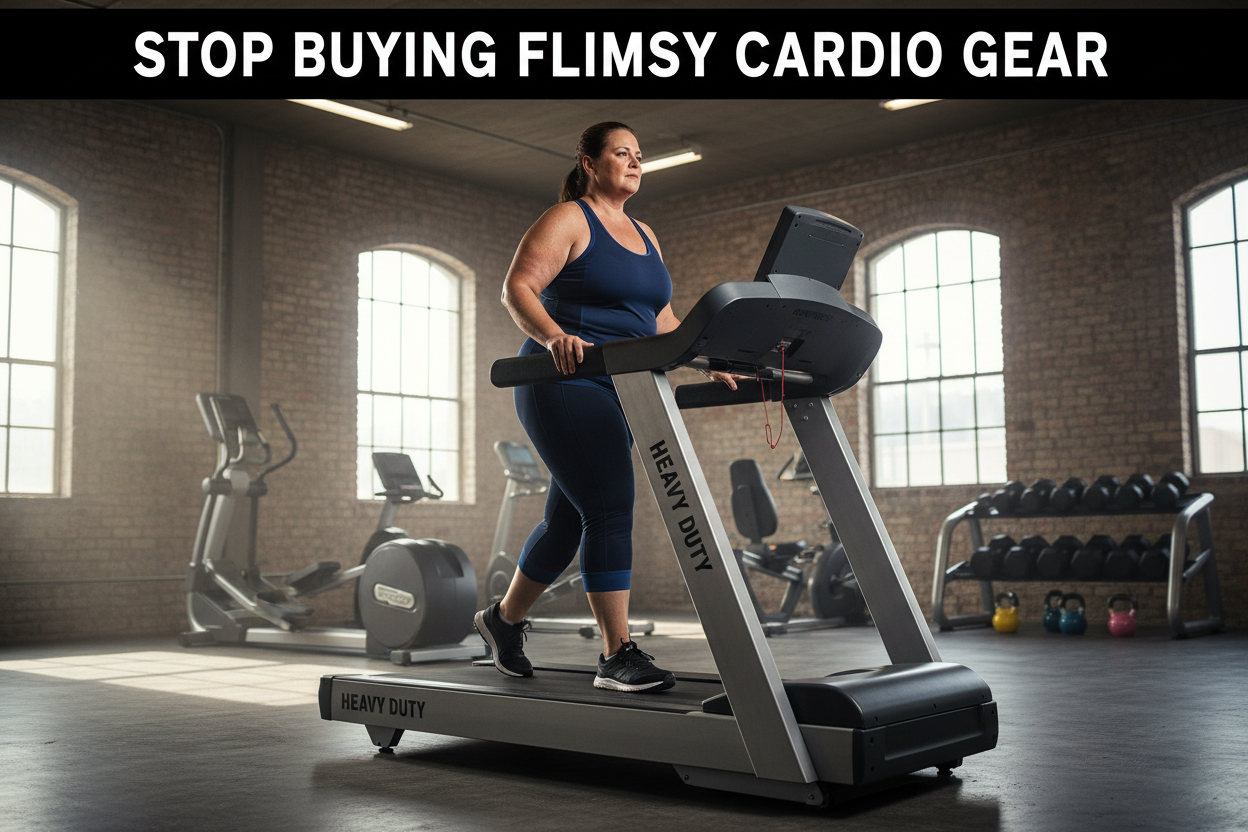
Treadmill for Fat Person: Stop Buying Flimsy Cardio Gear
Starting a cardio routine is tough enough without feeling like your equipment is going to snap under your feet. If you have ever stepped onto a standard big-box store machine and felt the deck bow or heard the motor whine, you know exactly what I mean. Finding a reliable treadmill for fat person or larger-framed athlete requires looking past the flashy touchscreens and focusing entirely on raw build quality.
Most consumer fitness equipment is built for a very specific, lightweight demographic. But building a home gym shouldn't exclude anyone. In this guide, we will break down the exact specifications you need to look for so you can invest in a machine that supports your fitness journey safely, comfortably, and for the long haul.
Key Takeaways
- Look for a true weight capacity of at least 350 to 400 lbs to ensure structural safety.
- Prioritize a motor with a minimum of 3.0 Continuous Horsepower (CHP) to prevent overheating.
- Ensure the running belt is at least 22 inches wide for comfortable, unrestricted striding.
- Opt for heavy-duty steel frames over lightweight aluminum, and look for roller sizes above 2.5 inches.
What Makes a Treadmill Safe and Sturdy?
When shopping for a treadmill for heavy person, the spec sheet is your best friend. Ignore the built-in fans and Bluetooth speakers until you have verified the foundation of the machine.
Motor Power and Continuous Horsepower (CHP)
The motor is the beating heart of your treadmill. Many cheap treadmills advertise 'Peak Horsepower,' which is a misleading metric. You need to look at Continuous Horsepower (CHP), which measures what the motor can sustain over a long workout. For heavier users, a motor working constantly to pull the belt under a higher weight load will burn out if it is underpowered. Aim for a minimum of 3.0 CHP, though 3.5 to 4.0 CHP is ideal for long-term durability.
Deck Thickness and Cushioning
The deck is the board you are actually stepping on. Standard treadmills use half-inch composite boards that will crack under heavy impact. A proper treadmill for obese people should feature at least a 1-inch thick phenolic deck. Paired with high-quality elastomer cushioning, this not only prevents the board from snapping but also aggressively protects your knees and lower back from impact stress.
Space Planning for Larger Frames
High-capacity machines take up significantly more real estate than their budget counterparts. You cannot cheat physics; a stronger machine requires a larger, heavier footprint.
Clearance and Footprint Realities
If you are looking for a treadmill for big and tall users, you need a longer and wider belt. A 20-inch width is standard, but 22 inches provides the lateral space needed so you aren't constantly worried about stepping on the side rails. Length-wise, aim for a 60-inch belt. Remember to leave at least 6 feet of clear space behind the treadmill for safety, and ensure your ceiling height can accommodate your height plus the 8 to 10-inch step-up height of the deck.
Durability and Maintenance Realities
Even the best treadmills for heavy people require basic upkeep to ensure they last. The heavier the user, the more friction is generated between the walking belt and the deck.
Belt Care and Roller Size
Friction is the enemy of treadmill motors. To mitigate this, look for a machine with large rollers (2.5 to 3 inches in diameter). Larger rollers grip the belt better, reducing tension and wear. Additionally, whether you buy a standard heavy-duty model or a specialized bariatric treadmill, you must lubricate the deck every three to six months with 100% silicone lubricant to keep the motor from overworking.
From Our Gym: Honest Take
When we brought in a commercial-grade, high-capacity unit to test alongside a popular $500 budget model, the difference was night and day. At 285 lbs myself, I have actually cracked a cheap treadmill deck before during a light jog—it is a terrifying experience that ruins your confidence.
Testing a proper heavy-duty model, the 1-inch deck barely flexed during my jogging intervals, and the 4.0 CHP motor didn't lag or stutter when my foot struck the belt. However, I will note a significant caveat: these machines are incredibly heavy. We needed three strong guys just to get the base up a half-flight of stairs into our testing studio. Do not expect to easily fold and roll a true high-capacity treadmill into a closet; they are semi-permanent fixtures in your home gym.
Frequently Asked Questions
What is the standard weight limit on a treadmill?
Most budget treadmills cap out around 220 to 250 lbs. For larger athletes, you need to actively seek out heavy-duty models that officially support 350 to 400+ lbs to ensure structural integrity and motor longevity.
Is walking or running better for weight loss on a treadmill?
Brisk walking on an incline is highly effective and significantly reduces the impact on your joints compared to running. It also puts less peak mechanical stress on the treadmill deck, making it a great starting point.
Do I need a special outlet for a heavy-duty treadmill?
While most home models run on a standard 120V outlet, high-CHP motors draw a lot of amps, especially under heavy loads. We highly recommend plugging your treadmill into a dedicated 15 or 20-amp circuit to prevent tripped breakers during intense workouts.

