
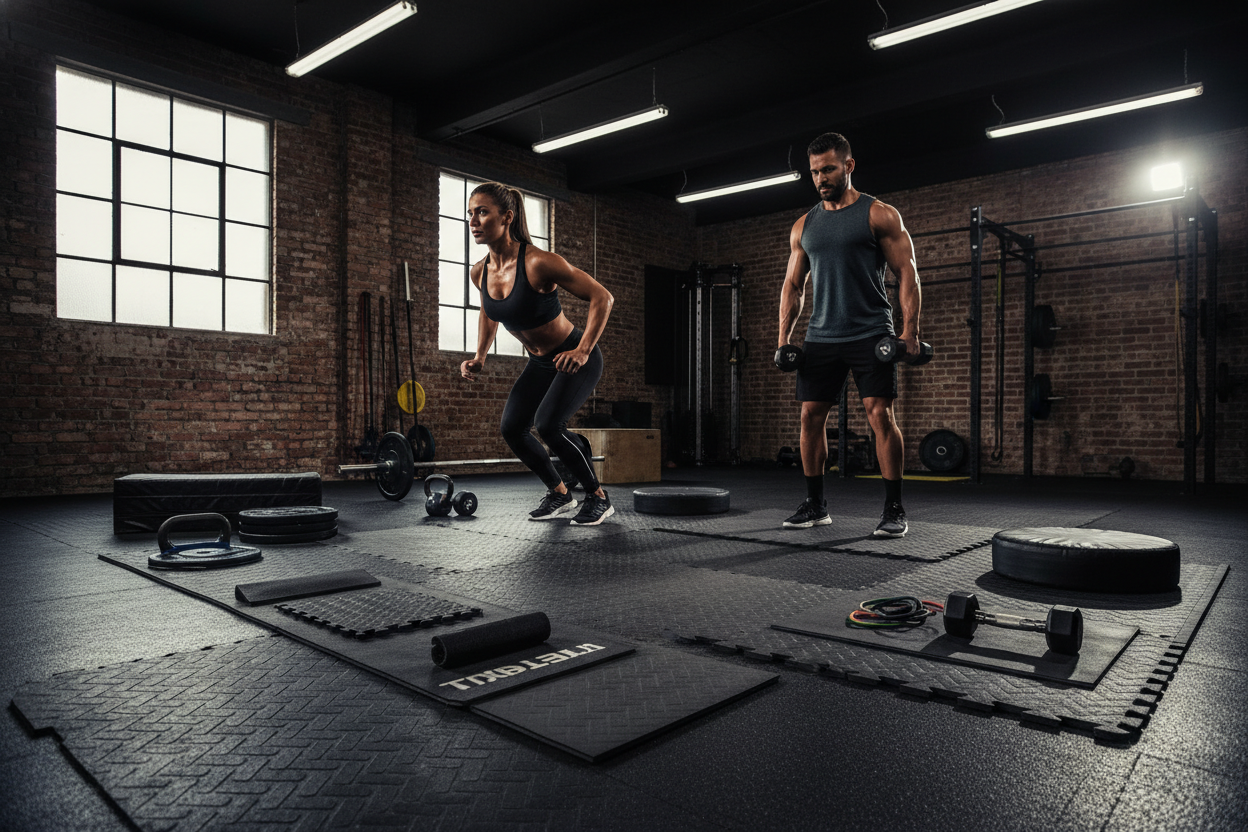
Training Mats For Gym Spaces: The Complete Buyer's Guide
Building a home gym is exhilarating right up until you drop a 45-pound bumper plate and hear the sickening sound of cracking concrete. Whether you are setting up in a two-car garage, an unfinished basement, or converting a spare bedroom, your flooring is the literal foundation of your workout. Choosing the right training mats for gym use is often an afterthought, but it is the single most important investment you can make to protect your property, your equipment, and your joints.
In this guide, we will break down exactly what you need to know to select the perfect flooring, from heavy-duty deadlift zones to dedicated stretching areas, ensuring you buy right the first time.
Key Takeaways
- Thickness dictates function: Use 8mm for general fitness and at least 3/4-inch for heavy barbell drops.
- Material matters: Vulcanized rubber is king for durability, while EVA foam is strictly for light bodyweight work.
- Format options: Choose between rolled rubber for large spaces, interlocking tiles for odd shapes, or standalone pt mats for targeted mobility.
- Odor control: High-quality rubber mats require a brief off-gassing period in a well-ventilated space.
Decoding Mat Materials and Thickness
Not all training mats gym enthusiasts rave about online are created equal. Buying the wrong material is a fast track to torn flooring and compromised safety during your lifts.
Rubber vs. EVA Foam
EVA foam interlocking tiles are cheap and widely available, but they compress under heavy loads. If you plan to squat or deadlift, a loaded barbell will permanently indent foam. For serious strength training, high-density vulcanized rubber is non-negotiable. It absorbs shock, reduces noise, and provides the necessary grip for heavy lifts.
Nailing the Right Thickness
If your home gym sits on a concrete garage floor, a 3/8-inch rubber mat is the minimum for general dumbbells and kettlebells. However, if you are dropping heavy barbells, you need 3/4-inch stall mats or dedicated drop pads to prevent subfloor damage.
Space Planning for North American Homes
Most garage gyms in North America deal with sloping floors, humidity, and temperature swings. When laying out your space, consider rolled rubber for a seamless look, which prevents sweat and chalk from seeping into cracks. If you are in a basement or apartment, interlocking rubber tiles are much easier to carry down narrow stairs and assemble without professional help.
Integrating PT Mats
You don't need heavy rubber wall-to-wall. Many athletes create a hybrid space, using thick rubber under the power rack and keeping a few high-quality pt mats rolled up nearby for mobility work, physical therapy exercises, and core routines. This saves money while optimizing your floor plan for multiple training modalities.
From Our Gym: Honest Take
When we first built out our testing facility, we tried to cut costs by using 1/2-inch EVA foam tiles across the entire floor. Within three months, the area under our power rack was shredded, and the tiles were separating during dynamic movements like burpees. We ripped it all out and installed 3/4-inch vulcanized rubber stall mats.
The difference was night and day. My chalked lifters actually gripped the floor securely during heavy squats, and the noise reduction was immediate. One caveat: new rubber mats have a strong smell. We had to leave our garage doors open with fans running for about two weeks before the off-gassing odor faded. It's a minor annoyance, but absolutely worth the lifetime durability.
Frequently Asked Questions
Are foam mats safe for weightlifting?
No. Foam mats are too soft and unstable for heavy weightlifting. They compress under load, which can compromise your footing and lead to injury. Save foam for stretching, yoga, and light plyometrics.
How do I clean heavy-duty rubber gym mats?
Keep it simple. Sweep or vacuum loose chalk and dirt regularly. For a deeper clean, mop with a mixture of warm water and a few drops of mild dish soap or a pH-neutral floor cleaner. Avoid harsh chemicals like bleach, which can degrade the rubber over time.
Do I need to glue down my gym flooring?
For most home gym setups, gravity is enough. Heavy 3/4-inch rubber mats weigh around 100 pounds each and will not shift under normal use. If you are using lighter interlocking tiles in a high-traffic area, double-sided carpet tape is usually sufficient to secure the edges.


