Torn Rotator Cuff PT: The Recovery Roadmap You Actually Need
You reached for something in the back seat of your car, or perhaps you felt a sharp snap during an overhead press. Now, putting on a jacket feels like a monumental task, and sleeping on your side is out of the question. If you have been diagnosed with a tear, your immediate fear is likely surgery. But for many, especially those with partial tears, the operating room isn't the only destination.
Effective torn rotator cuff pt (physical therapy) is often the first line of defense, and frankly, it is usually the most effective route for long-term joint health. It isn’t just about moving your arm again; it’s about retraining the complex mechanics of your shoulder girdle so the injury doesn't return.
Key Takeaways
- Conservative Management First: Most partial tears respond exceptionally well to physical therapy, often eliminating the need for surgery.
- Scapular Stability is King: You cannot fix the rotator cuff without addressing the movement of your shoulder blade.
- Pain vs. Discomfort: Understanding the difference between 'good' rehab tension and 'bad' injury pain is crucial for progress.
- Consistency Over Intensity: Low-load, high-repetition exercises yield better results for tendon health than heavy lifting.
The Science Behind Healing Without Surgery
When we talk about partial rotator cuff tear physical therapy, we aren't necessarily talking about the tendon knitting itself back together like a cut on your skin. Tendons have a poor blood supply, which makes regeneration difficult.
Instead, physical therapy aims to make the remaining intact tendon fibers stronger and thicker. Simultaneously, we train the surrounding muscles—the deltoids, trapezius, and rhomboids—to take up the slack. This restores function and eliminates pain, even if the MRI still shows a structural defect. The goal is a functional shoulder, not necessarily a cosmetically perfect one on a scan.
Phase 1: Calming the Angry Shoulder
Before we can strengthen anything, we have to respect the biology of the injury. In the initial stages of physical therapy for rotator cuff partial tear, the objective is inflammation control and passive range of motion.
Many patients make the mistake of pushing through the pain too early. If your shoulder is inflamed, aggressive movement shuts down the rotator cuff muscles reflexively. We use pendulum exercises and passive stretching (where your good arm moves the bad one) to keep the joint lubricated without aggravating the tear.
Phase 2: The Scapular Foundation
This is where the real work begins. The rotator cuff muscles attach to the scapula (shoulder blade). If your scapula is unstable or tilted forward (common in desk workers), the rotator cuff gets pinched every time you raise your arm.
We focus on retraction and depression of the shoulder blade. Simple movements like 'Isometric Rows' or 'Scapular Squeezes' teach your body to set the foundation before moving the arm. You cannot fire a cannon from a canoe; you need a stable base.
Phase 3: Progressive Loading
Once the base is stable, we introduce direct loading. This is the core of physical therapy for partial rotator cuff tear rehab. We typically start with isometric holds—pushing against a wall without moving the joint. This stimulates tendon remodeling without the shearing force of movement.
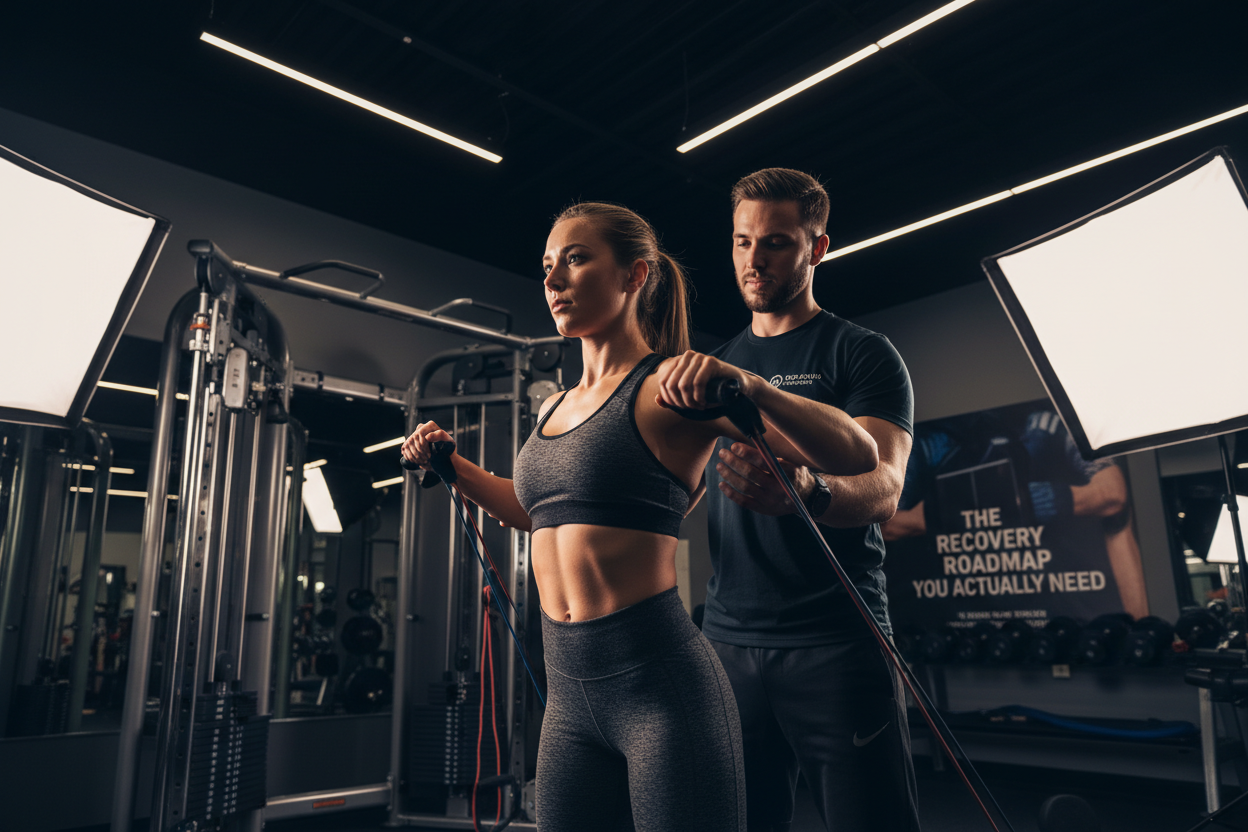
From there, we graduate to external and internal rotations using resistance bands. The key here is the 'elbow tuck.' Keeping a rolled-up towel between your elbow and ribs during these exercises ensures you are isolating the cuff and not cheating with your larger deltoid muscles.
My Personal Experience with torn rotator cuff pt
I want to be real with you about the mental side of this rehab. I remember staring at a thin, yellow TheraBand—the lightest resistance available—thinking it was a joke. I was used to moving heavy iron. But after 15 reps of external rotations with my elbow pinned to my side, I was humbled.
It wasn't the burning sensation you get from a bicep curl. It was this deep, nauseating ache inside the joint, and my hand started shaking uncontrollably. The hardest part wasn't the pain; it was the boredom and the ego check. Doing 'wall slides' while everyone else in the gym is deadlifting feels ridiculous. But I remember the specific moment the rehab paid off: about six weeks in, I reached for a seatbelt across my body and realized, for the first time in months, I didn't wince. That specific freedom of movement is worth every boring repetition.
Conclusion
Recovering from a shoulder injury is a marathon, not a sprint. Whether you are dealing with a fraying tendon or a diagnosed partial tear, the protocol remains consistent: reduce inflammation, stabilize the scapula, and progressively load the tissue. Trust the process, respect your pain thresholds, and don't skip the small, boring exercises—they are the ones that save your shoulder.
Frequently Asked Questions
Can physical therapy fully heal a torn rotator cuff?
For partial tears, PT can restore 100% of function and eliminate pain, though the tendon itself may heal with scar tissue rather than original tissue. For massive full-thickness tears, PT can improve function, but surgery is often required to physically reattach the tendon.
How long does physical therapy take for a rotator cuff tear?
A typical protocol for a partial tear lasts between 6 to 12 weeks. However, continued maintenance exercises are recommended for months afterward to prevent re-injury.
Is it normal to feel pain during these exercises?
Mild discomfort or a 'stretch' sensation is acceptable and expected. However, sharp, stabbing pain is a red flag. If your pain level exceeds a 3 out of 10 during exercise, you are likely overloading the tissue and should regress to an easier movement.