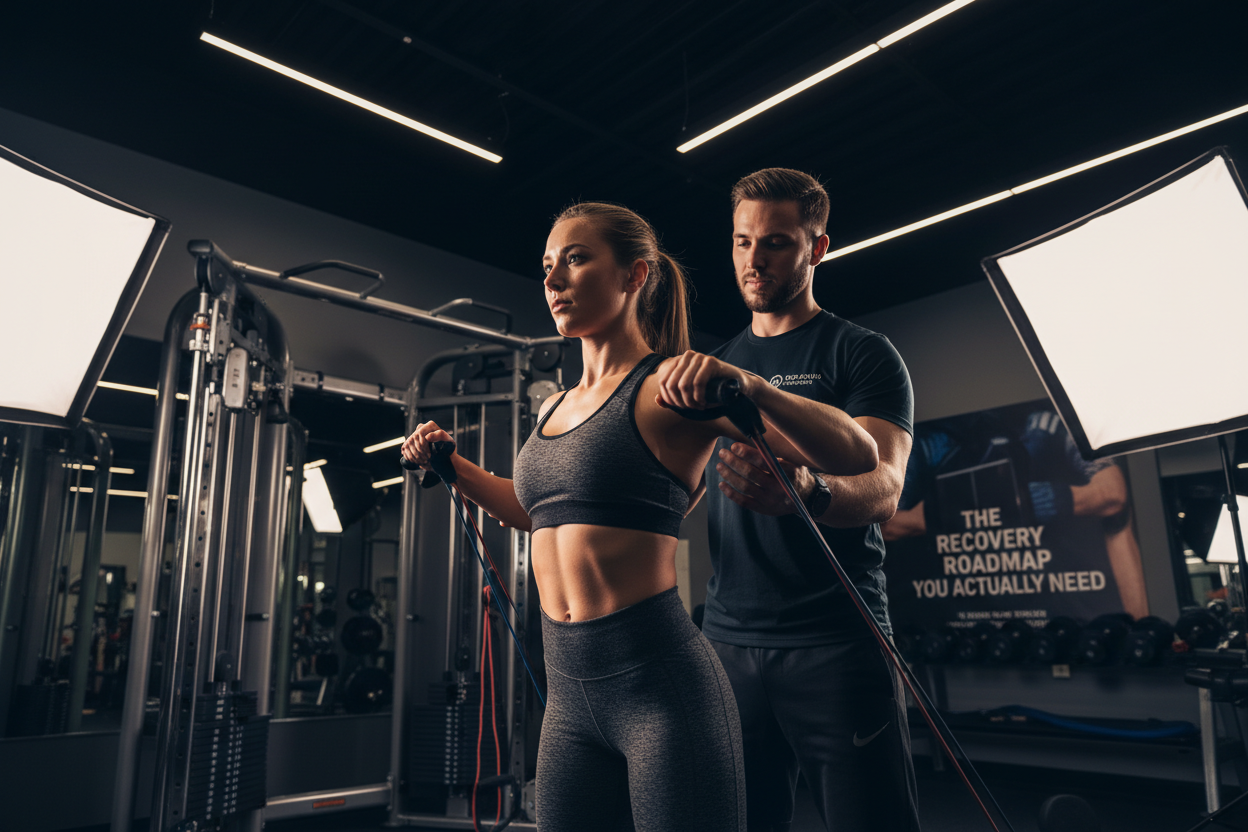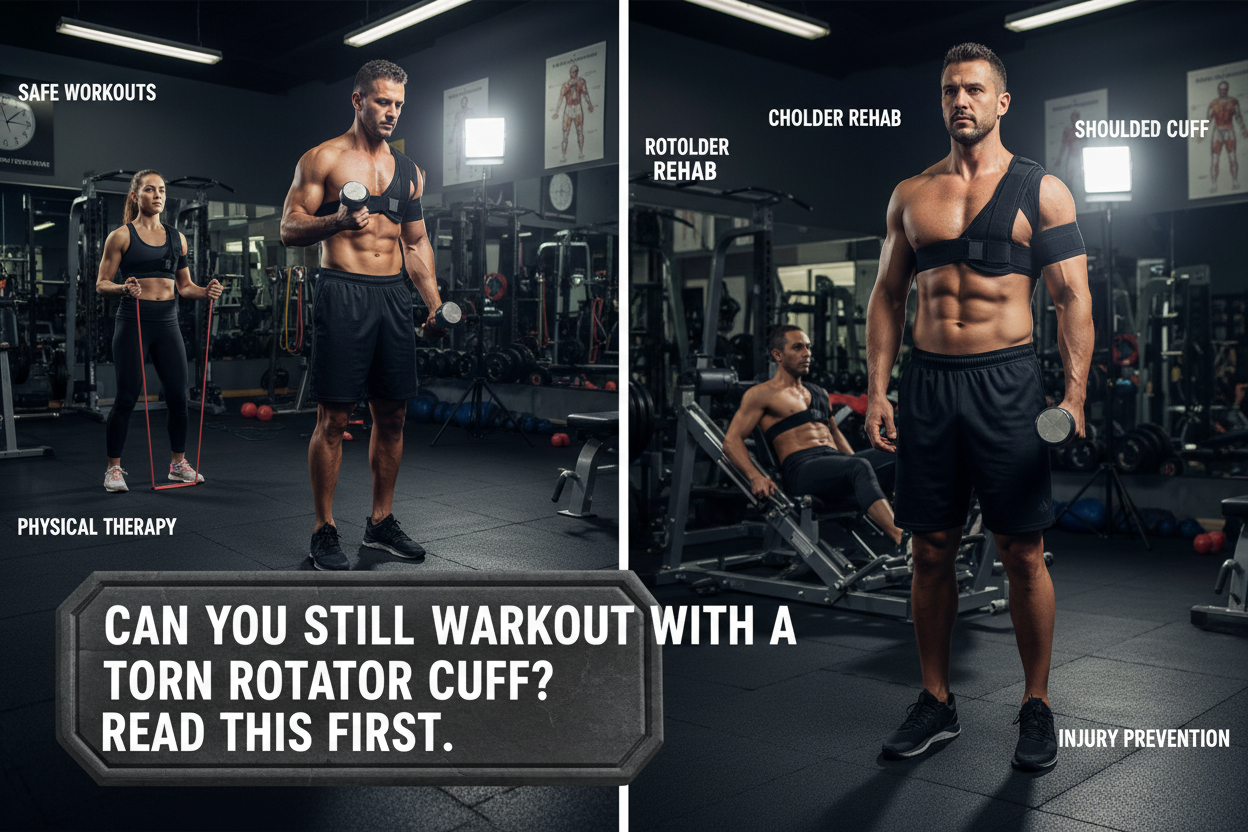
Can You Still Workout With a Torn Rotator Cuff? Read This First
There is nothing more frustrating than momentum hitting a brick wall. You’ve been consistent, your numbers are going up, and then—snap, crackle, pop—your shoulder decides to clock out. Now you are stuck wondering, can you still workout with a torn rotator cuff without making the injury catastrophic?
The short answer is usually yes, but the "how" matters more than the "if." Training through a structural failure in the shoulder isn't about pushing through pain; it's about navigating around it. If you ignore the biomechanics of a tear, you risk turning a rehab situation into a surgical one.
Key Takeaways: Quick Summary
- Consultation is Non-Negotiable: Before lifting, determine if the tear is partial or full-thickness via an MRI. Full tears often require surgery, while partial tears can often be rehabbed.
- Avoid "The Danger Zone": Movements that involve internal rotation combined with abduction (like upright rows) or heavy overhead pressing are generally off-limits.
- Pain is a Stop Sign: "No pain, no gain" does not apply here. Any sharp pain or clicking means the movement is damaging the tissue further.
- Focus on Scapular Stability: Often, the rotator cuff tears because the shoulder blade (scapula) isn't moving correctly. Training the upper back is safer and more effective than isolating the shoulder.
- The Cross-Education Effect: Training your non-injured arm can actually help maintain strength in the injured arm via neural pathways.
Understanding the Risk: The Mechanics of the Tear
To understand if can you workout with a torn rotator cuff safely, you have to understand what actually broke. The rotator cuff is a group of four small muscles (SITS) that suck the arm bone into the shoulder socket. When one tears, that suction seal is broken.
If you try to press heavy weights overhead with a tear, the larger deltoid muscle pulls the arm bone upward, crashing it into the acromion bone because the rotator cuff isn't there to hold it down. This causes impingement. You aren't just "working out"; you are actively grinding bone against tendon.
The Difference Between Discomfort and Damage
You need to learn the difference between muscle soreness and structural pain. If you feel a dull ache in the muscle belly, that is generally acceptable. However, if you feel a sharp pinch deep inside the joint, or a sensation that travels down the arm, stop immediately. That is the sound of the tear expanding.
How to Modify Your Training
You don't have to become a couch potato, but your ego needs to stay at the door. Here is how to adjust your split.
1. Change Your Grip
Pronated (palms down) grips on pressing movements internally rotate the shoulder, closing the space where the rotator cuff lives. Switch to a neutral grip (palms facing each other) for dumbbell presses or cable work. This opens up the subacromial space and reduces grinding.
2. Limit Range of Motion (ROM)
Full ROM is usually the gold standard, but not with a tear. The bottom portion of a bench press or the top portion of an overhead press places maximum shear force on the cuff. Floor presses are an excellent alternative because the floor physically prevents your elbows from traveling too far back, protecting the joint capsule.
3. Isometric Training
If moving the joint hurts, don't move it. Isometrics involve pushing against an immovable object. You can build strength and tendon stiffness without the grinding friction of dynamic reps. Pushing your arm outward against a wall (with proper posture) can stimulate the muscle without aggravating the tear.
The "Do Not Touch" List
While recovering, some exercises are simply not worth the risk-to-reward ratio. Remove these from your program immediately:
- Behind-the-Neck Presses: This places the shoulder in extreme external rotation and abduction. It’s a tear waiting to happen even for healthy shoulders.
- Upright Rows: This movement forces the shoulder into internal rotation while raising it, essentially pinching the rotator cuff tendon between bones.
- Deep Dips: The bottom position of a dip shears the anterior capsule of the shoulder.
My Training Log: Real Talk
I want to step away from the science for a second and talk to you about what this actually feels like in the gym. I dealt with a partial supraspinatus tear a few years back, and the hardest part wasn't the pain—it was the mental game.
I remember walking up to the dumbbell rack to grab 80s for a flat press, a weight I could normally warm up with. As soon as I went to kick the weight up with my knee, I felt this sickening "catch" deep in the front of my shoulder. It wasn't a scream-out-loud pain; it was a mechanical failure. My arm just gave out. The specific detail that haunts me isn't the lifting, though—it was the sleeping. I’d roll onto that shoulder at 2 AM and wake up with a throb that felt like a toothache in my delt.
I had to drop my pride. I spent three months doing nothing but band pull-aparts, floor presses with a neutral grip, and hammering my legs. I learned that the "click" sound represents friction. If I heard the click, I changed the angle. If I couldn't stop the click, I didn't do the lift. It took six months to get back to heavy pressing, but because I didn't push through the "catch," I didn't need surgery.
Conclusion
So, can you still workout with a torn rotator cuff? Yes, but your definition of "workout" must evolve. You are no longer training for a PR; you are training for preservation. Focus on your lower body, core, and controlled movements that stabilize the scapula. The gym will still be there when you heal, provided you don't destroy your shoulder trying to prove a point today.
Frequently Asked Questions
1. Can I do pushups with a torn rotator cuff?
Standard pushups can be risky due to the internal rotation of the hands. However, many people find relief by doing pushups on handles or dumbbells with a neutral grip (palms facing each other) or performing wall pushups to reduce the load.
2. Will working out make a rotator cuff tear worse?
If you perform overhead movements or exercises that cause impingement, yes, you can turn a partial tear into a full rupture. However, correct strengthening of the surrounding muscles (deltoids, trapezius, rhomboids) can actually stabilize the joint and prevent the tear from worsening.
3. How do I know if my rotator cuff tear is serious?
If you cannot lift your arm to the side, if you have pain at night that wakes you up, or if you experience significant weakness (the arm just drops), these are signs of a significant tear that requires immediate medical attention, not a gym workaround.