Throw Away Your Wall Poster: A Better Exercise Chart for Beginner Lifters
I remember standing in my first garage gym setup, staring at a massive, laminated poster I bought for twenty bucks on Amazon. It had 50 different exercises, grouped by muscle group, with tiny anatomical diagrams that looked like they were ripped from a 1980s medical textbook. I spent more time squinting at the 'Dumbbell Incline Fly' illustration than I did actually moving weight. It was a mess. If you are looking for an exercise chart for beginner lifters, the last thing you need is a 50-movement grid that makes your workout feel like a trip to the DMV.
- Grids cause analysis paralysis; flowcharts drive action.
- Focus on movement patterns (Push, Pull, Legs) instead of isolated muscles.
- A physical, hand-drawn chart prevents phone-induced distractions.
- Simplicity beats variety every single time for the first six months.
Why That Laminated Anatomy Poster is Sabotaging You
The standard exercise poster is a lie. It’s designed to look comprehensive so you feel like you got your money’s worth, but it’s functionally useless for a novice. When you see 12 different ways to hit your triceps, you naturally think you need to do all of them. You end up doing three sets of this, two sets of that, and by the time you're halfway through the poster, your form is trashed and you haven't actually built any meaningful strength. I’ve seen guys spend forty minutes doing five different types of curls because the poster told them to, while their squat rack gathered dust.
These grids lack hierarchy. They treat a wrist curl with the same importance as a deadlift. For a beginner, that is a recipe for wasted effort. You don't have the work capacity yet to handle high-volume variety. You need to master the basics—the big, boring movements that actually move the needle. When you have too many options, you pick the ones that are easiest, not the ones that work. I’ve been there, choosing the 'seated row' over the 'barbell row' simply because the picture looked less intimidating. That’s not a plan; that’s a distraction.
Swap the Grid for a Simple 'If/Then' Flowchart
Instead of a static list, your training needs a decision tree. A flowchart handles the reality of a busy gym or a limited home setup. If the power rack is open, you squat. If it’s taken, you do goblet squats. It’s that simple. This approach removes the mental load of 'deciding' what to do next. When you are tired and the gym is hot, your brain is your own worst enemy. A flowchart makes the decisions for you before you even lace up your shoes.
This logic is the backbone of any effective beginner exercise plan for men or women. You aren't just looking at a menu; you’re following a path. If you have 45 minutes, you follow Path A. If you only have 20, you follow Path B. This ensures you never skip the most important work just because you’re short on time. I’ve found that when I give a client a flowchart, their consistency skyrockets because the 'what if' factor is gone.
The Three-Branch Decision Tree
To keep things manageable, I divide my charts into three branches: Push, Pull, and Legs. You don't need to overcomplicate this. Pick one movement from each branch per session. If you’re feeling fresh, you go for the heavy barbell version. If your back is feeling a bit cranky from a long day at the desk, you pivot to the dumbbell or bodyweight alternative. This built-in flexibility is what keeps you training long-term without burning out.
At the end of these three branches, you can add a 'Finisher' block. This is where you can slot in specific goals, like a beginner exercise for flat stomach or some extra arm work. The key is that the finisher is optional. The Push, Pull, and Legs are the non-negotiables. By categorizing your movements this way, you ensure your body stays balanced. You won't end up with the 'gym bro' posture—hunched shoulders from too much benching and zero rowing—because the chart literally won't let you proceed until you've hit your 'Pull' movement.
How to Draw Your Own Exercise Chart for Beginner Sessions
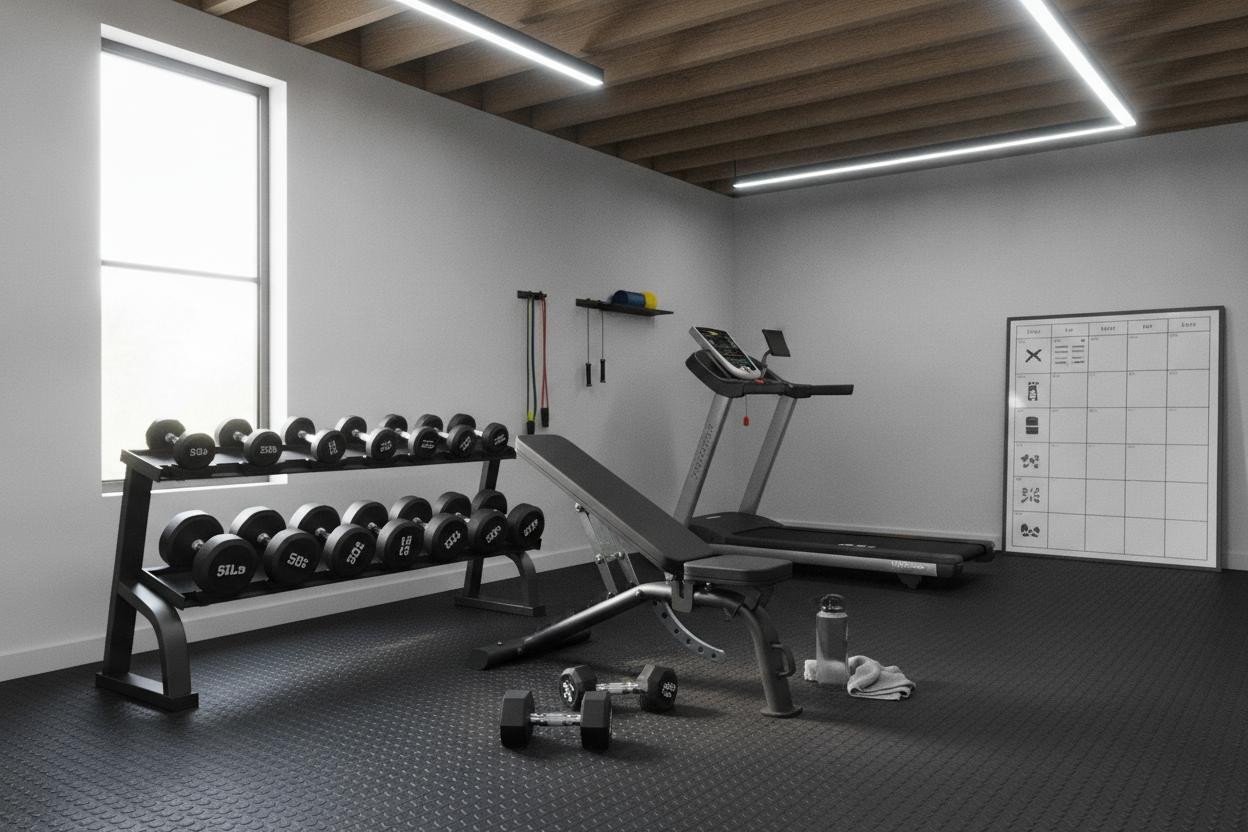
Forget the professional printing. Get a piece of cardboard, a Sharpie, or a whiteboard. You want to map out 4 to 6 foundational movements. For me, that’s the Squat, Deadlift, Overhead Press, Row, and Bench Press. Everything else is just noise. Draw a box for your primary lift. Draw an arrow from that box to your secondary lift. If you finish both, you earn the right to do 'accessory' work like curls or planks.
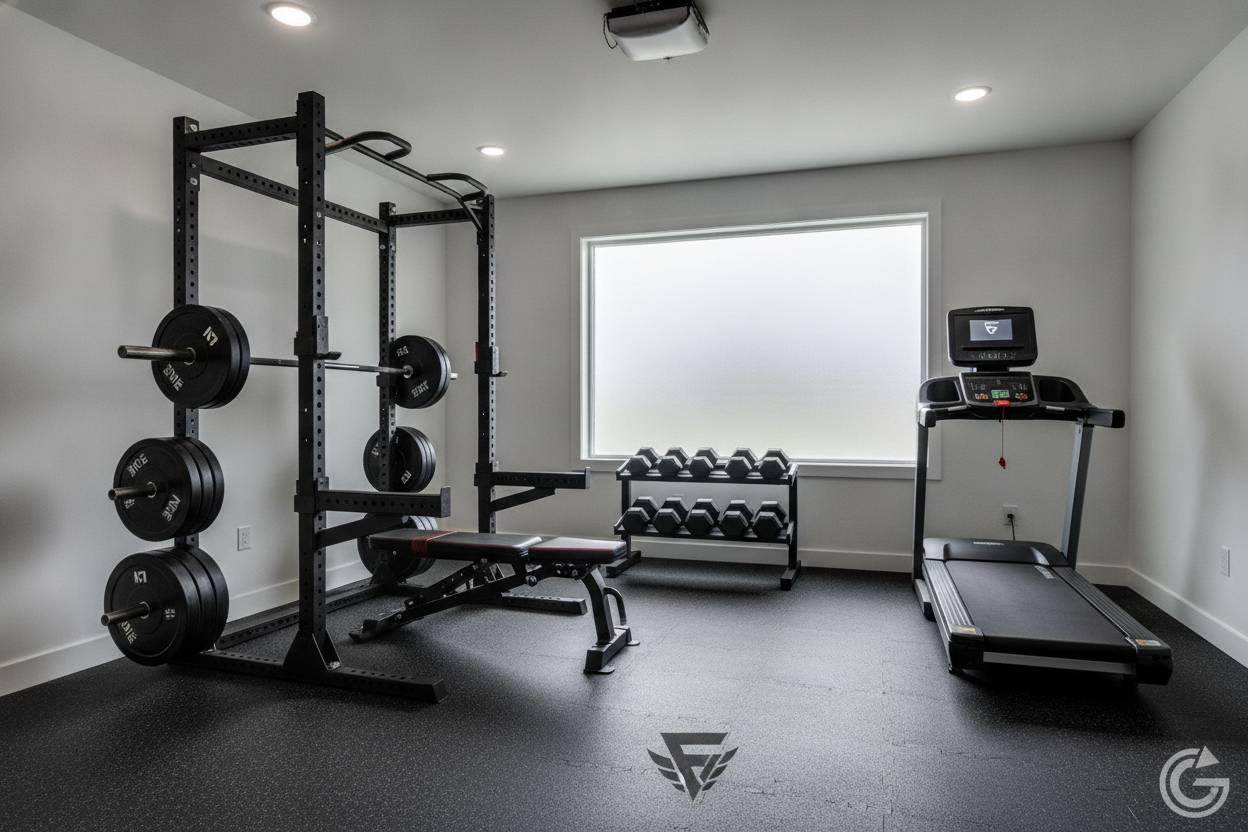
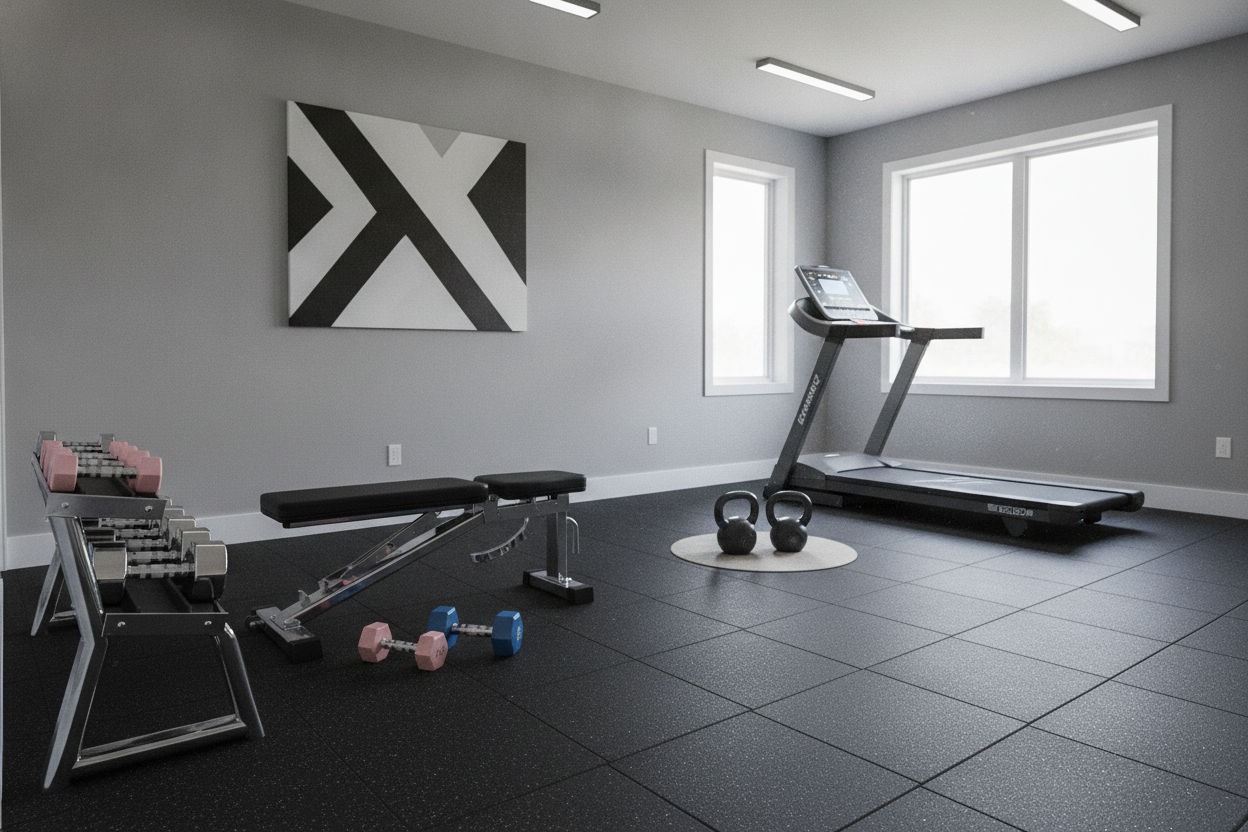
When you draw this out, think about your space. If you’re working in a tight spot, your chart should reflect that. I usually recommend a clear 6x8ft exercise mat area as your 'command center.' If an exercise requires more room than that or a piece of gear you don't own, leave it off the chart. There’s no point in having 'Cable Crossovers' on your wall if you only own a pair of 25-lb dumbbells. Your chart should be a reflection of your reality, not an idealized version of a commercial gym.
Keep your chart 'low-res.' Use big letters. You should be able to read it from across the room while sweat is dripping into your eyes. I’ve seen people try to make these intricate, color-coded spreadsheets. Don't do that. You’ll spend more time updating the spreadsheet than lifting. A piece of masking tape on the wall with 'SQUAT / PRESS / PULL' written on it is more effective than the most expensive digital app if it actually gets you to move the weight.
Tape It to the Wall (And Leave Your Phone Inside)
The biggest benefit of a physical chart is that it allows you to leave your phone in another room. Digital apps are the ultimate focus killers. You open the app to log your set of squats, and suddenly you’re three minutes deep into a thread about why some celebrity’s deadlift form is 'problematic.' A physical chart on the wall doesn't have notifications. It doesn't have an algorithm. It just sits there, judging you until you finish your sets.
Setting up a dedicated space with a large exercise mat for home gym use and a physical chart creates a psychological 'work zone.' When you step onto that mat and look at that paper, your brain knows it’s time to train. I’ve found that my best sessions happen when I have a simple plan taped to my power rack. It’s a contract you make with yourself. You don't leave the mat until the boxes on that paper are checked off. It’s primitive, it’s old school, and it works better than any 'smart' fitness solution I’ve tested in the last decade.
Personal Experience: The 'Poster' Mistake
Early in my lifting career, I was obsessed with variety. I had a poster that featured 20 different abdominal exercises. I thought that to get a six-pack, I had to do all 20. I’d spend 30 minutes doing 'dead bugs' and 'Russian twists' while ignoring the fact that I couldn't even do five strict pull-ups. I was majoring in the minors. I eventually ripped that poster down in a fit of frustration and replaced it with a single index card that said: 'SQUAT, PUSH, PULL.' My strength exploded over the next three months. I learned the hard way that a beginner doesn't need more options; they need more intensity on fewer movements.
Exercise Chart FAQ
How many exercises should be on my beginner chart?
Keep it to 5 or 6 max. You want big, compound movements like squats, rows, and presses. Adding more just dilutes your energy and slows down your progress on the lifts that actually matter.
Should I change my chart every week?
No. Stick to the same chart for at least 8 to 12 weeks. You need that time to actually get good at the movements. If you're constantly swapping exercises, you're just 'exercising,' not 'training' for a specific result.
What if I don't have a barbell?
Just swap the barbell movements for dumbbell or bodyweight versions on your flowchart. A 'Push' can be a barbell bench press, a dumbbell floor press, or a push-up. The movement pattern is what matters, not the specific handle you're holding.