There Is No Magic Lifting Weights Exercise (So Stop Looking For It)
I spent three hours last Tuesday night looking at a specialized Bulgarian split squat stand that cost $250. I already have a bench. I already have a rack. But for some reason, my brain convinced me that this one specific tool was the missing link to my leg development. We've all been there—scrolling through social media, watching a pro bodybuilder do a cable crossover at a 32-degree angle, and thinking that's the secret. We're looking for that one lifting weights exercise that will finally unlock the gains we've been promised.
Quick Takeaways
- Consistency beats novelty every single time.
- Progressive overload is the only 'magic' that exists in strength training.
- Mastering four basic movement patterns is enough for 99% of lifters.
- Your equipment needs to be stable enough to handle heavy loads safely.
The Shiny Object Syndrome of Modern Lifting
Social media has ruined the way we look at a barbell. Every time you open an app, you're bombarded with 'hacks' and 'secret variations' designed to get clicks, not results. This creates a 'Shiny Object Syndrome' where lifters abandon their weight training lifts the moment they stop seeing a new PR every session. You see someone doing a landmine press with three bands and a kettlebell hanging off the end, and suddenly your standard overhead press feels 'outdated.'
The reality is that your muscles don't have eyes. They don't know if you're using a fancy custom-machined handle or a rusty old pipe. They only know tension and load. When you jump aimlessly between free weights and various Weight Lifting Machines without a solid plan, you're just burning calories. You aren't building a foundation. You're constantly in a 'learning phase' with new movements, which means you never stay with one long enough to actually push the intensity to the point of growth.
I've seen guys spend six months rotating through twenty different 'optimal' exercises and look exactly the same at the end of it. Meanwhile, the guy in the corner doing the same five movements for three years has added two inches to his arms. Stop looking for the trick. The trick is that there is no trick.
Why Boring Lifts Actually Build the Most Muscle
If you want to grow, you have to get comfortable with being bored. A successful lifting weights routine isn't supposed to be an entertainment product. It's supposed to be a repeatable process of mechanical stress. The concept of 'muscle confusion' is one of the biggest lies ever sold in the fitness industry. Your muscles don't need to be 'confused'; they need to be forced to adapt to a stimulus they haven't encountered before. That stimulus is weight.
Progressive overload is the engine of every successful program. If you did 225 lbs for 5 reps last week, and you do 230 lbs for 5 reps this week, you won't care if the movement was 'boring.' You're stronger. That 5-pound jump is the magic you're looking for. When you constantly swap exercises, you lose the ability to track this progress accurately. Is that new chest press better, or are you just using a machine with better leverage? You don't know, so you can't measure growth.
Stick to a handful of movements. Track every set, every rep, and every pound. When the weight feels light, add more. When it feels heavy, fight through it. This is how weight training lifts actually work. It’s not about finding a new angle; it’s about mastering the ones you already have. Your lifting workouts should look almost identical from week to week, with the only variable being the intensity or the volume.
4 Movements You Should Actually Be Focusing On
You don't need a 40-page manual to get strong. You need to master four basic patterns: a squat, a hip hinge, a horizontal press, and a vertical pull. Everything else is just accessory work. These are the weight train exercises that have built every legendary physique from the Silver Era to now. If you can't squat your body weight for reps, you have no business worrying about the 'peak contraction' of a cable fly.
First, the squat. Whether it's a high-bar back squat or a front squat, you need a knee-dominant movement that torches your quads. Second, the hip hinge. This is your deadlift or RDL. It builds the posterior chain—the engine room of your body. Third, the horizontal press. This is your bench press or weighted dip. Finally, the vertical pull. Pull-ups or heavy rows. If you're a beginner, you should get these weight lifting moves names explained build your routine foundations sorted before you even think about adding isolation work.
When you do these weight train exercises with high intensity, you don't need twelve different movements per body part. You need focus. A heavy set of five on the deadlift creates more systemic growth than ten sets of leg curls. It’s about economy of effort. Focus your energy where it yields the highest return. If you want to see how these fit into a broader context, check out this guide to get Weight Lifting Moves Names Explained Build Your Routine so you can stop guessing and start pulling.
Building a Garage Setup That Supports Heavy Work
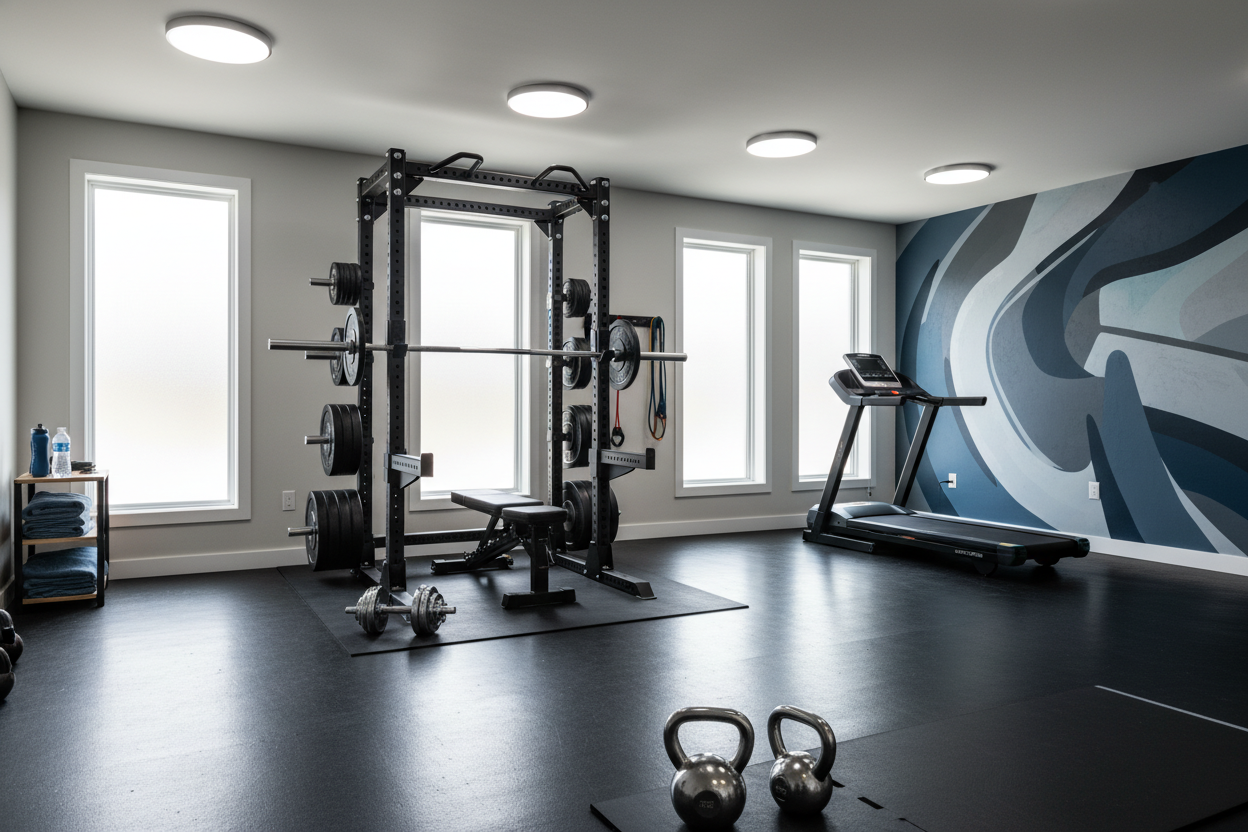
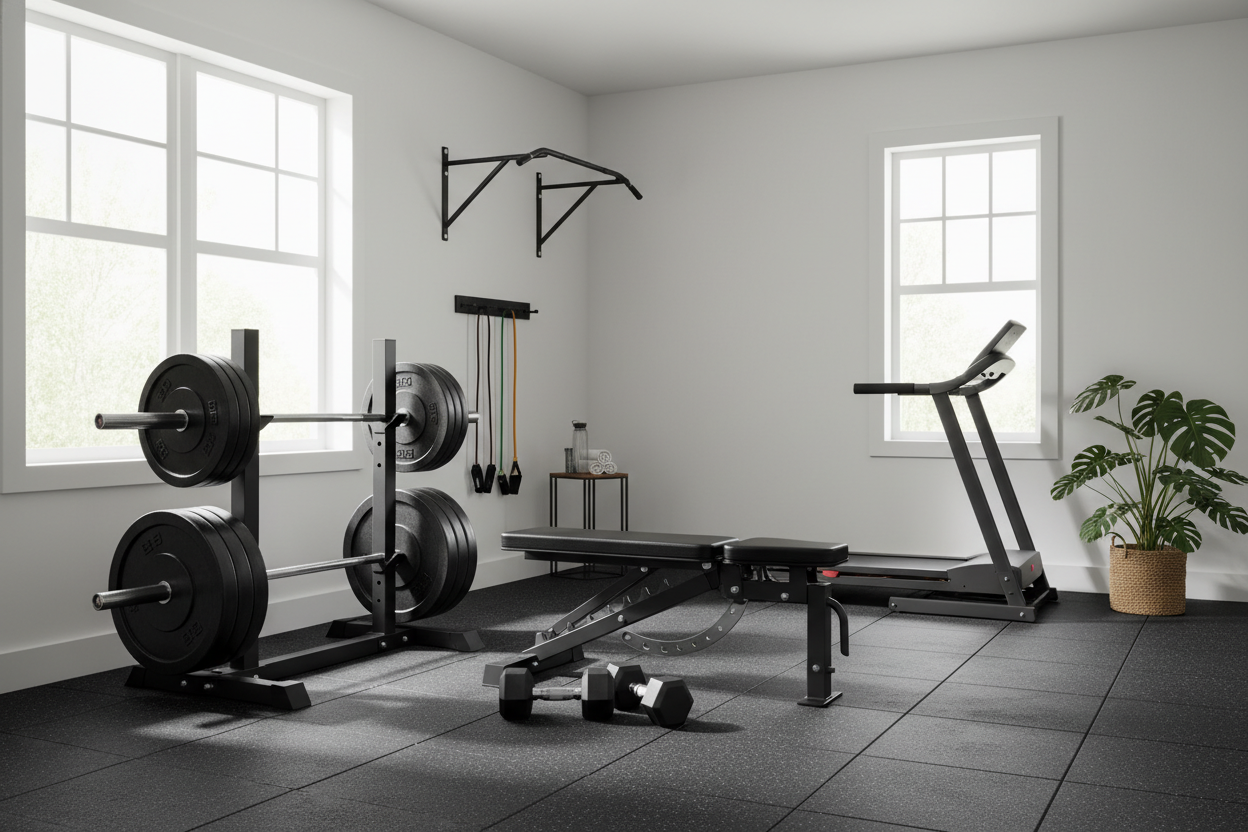
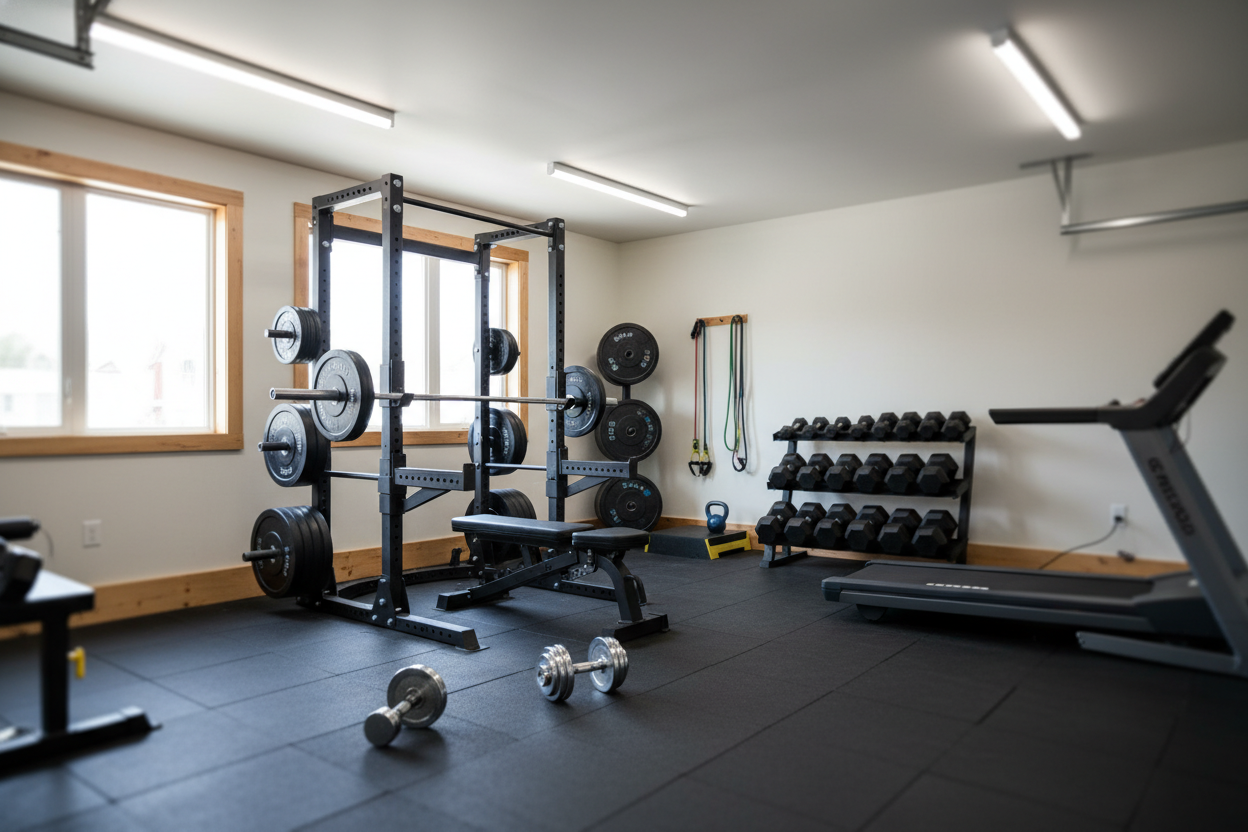
You can't build a 500-lb squat on a rack that wobbles when you rack 135. If you're training at home, your gear is your insurance policy. I've tested racks that felt like they were made of soda cans, and I can tell you there is nothing more terrifying than feeling a bench shift while you're mid-press. When you're assessing your space, you need to be realistic about your budget and your goals. Take a look at Choosing The Best Strength And Weight Training Equipment For Your Goals to see how to prioritize your spending.
The centerpiece of any heavy weight training workout is the bench. You need something that won't slip and has a high enough weight capacity to grow with you. I’ve spent a lot of time on the Gxmmat Adjustable Weight Bench, and it’s a solid choice for a home setup. It’s rated for 1,000 lbs, which is more than most of us will ever move, and the 2.5-inch padding actually holds its shape under load. No one wants to feel the plywood base digging into their shoulder blades during a PR attempt.
Remember, the goal is to move heavy weight safely. Invest in 11-gauge steel. Look for bolt-down options if you're doing dynamic movements. Get a barbell with decent knurling that won't slip out of your hands when you sweat. At the end of the day, weight moves weight, and your equipment needs to stay out of the way so you can focus on the lift.
How to Structure Your Next 12 Weeks
I challenge you to do something 'boring' for the next three months. Pick one squat, one hinge, one press, and one pull. Perform this weight training workout three times a week. Monday is heavy, Wednesday is light/technique-focused, and Friday is medium volume. Don't add any new exercises. Don't 'test' your max every week. Just add 2.5 to 5 pounds to the bar every time you successfully hit your rep targets.
This stripped-down approach forces you to confront the actual difficulty of lifting workouts. Without the distraction of new movements, you have to face the bar. You'll find that your technique improves drastically when you're doing the same thing 150 times a month. You'll start to feel exactly where your sticking points are. You'll learn how to breathe, how to brace, and how to grind. That is where the growth happens.
After 12 weeks, look at your logbook. I guarantee you'll see more progress than you did during the last year of 'muscle confusion.' Stop searching for the magic. You are the magic. The bar is just the tool. Now go put some weight on it.
Personal Experience: My $400 Mistake
A few years ago, I convinced myself that my quads weren't growing because I didn't have a sissy squat machine. I spent $400 on a heavy-duty one that took up a 4x4 foot patch of my garage. I used it for three weeks, realized it hurt my knees, and went back to standard high-bar squats. My quads grew more in the next two months just by adding 20 lbs to my squat than they ever did on that specialized machine. I ended up selling it for $100 on Craigslist. Lesson learned: the basics work, and the 'missing piece' is usually just more effort on the movements you already know.
FAQ
How many exercises do I really need per workout?
For most people, 3 to 5 compound movements is plenty. If you're doing more than 8, you're likely not training with enough intensity on the first few.
Can I build muscle with just free weights?
Absolutely. Barbells and dumbbells are the gold standard. Machines are great for isolation and safety at failure, but you can build a world-class physique in a garage with just a rack and a bar.
How long should I stay on one routine?
At least 12 weeks. It takes time for your nervous system to adapt before your muscles even start the real hypertrophy process. Stop hopping programs every fortnight.