The Uncomfortable Truth About Training for Female Hypertrophy
I remember watching a trainer at a big-box gym tell a client that lifting anything over ten pounds would 'bulk' her up, then proceeded to have her do 50 reps of air squats. It was painful to watch. I’ve spent a decade testing racks, breaking cheap barbells, and programming for people who actually want results, and I can tell you that 'toning' is a marketing lie designed to sell light weights and expensive leggings. If you want the athletic, defined look you see on professional athletes, you are looking for female hypertrophy.
Quick Takeaways
- Muscle growth requires mechanical tension, not just 'feeling the burn.'
- You cannot build a physique in a permanent 1,200-calorie deficit.
- Compound movements are the most efficient way to trigger growth.
- Recovery is just as important as the workout itself.
The 'Toning' Lie We Need to Kill Right Now
The fitness industry has spent decades gaslighting women into believing that high reps and low weights are the secret to a 'lean' look. Physiologically, there is no such thing as toning. You either build muscle or you lose fat. Usually, the look women want—defined shoulders, a firm core, and shaped legs—comes from doing both. This requires a female hypertrophy program that treats you like an athlete, not a cardio bunny.
When you use those little pink dumbbells for 30 reps, you aren't creating enough mechanical tension to force your body to adapt. Hypertrophy women need to realize that muscle is metabolically expensive; your body won't build it unless you give it a very good reason to. That reason is heavy resistance. You have to move away from the idea that sweat equals progress and start focusing on the weight on the bar.
The Physics of a Hypertrophy Workout for Women
Mechanical tension is the primary driver of growth. This means you need to pick up weights that actually challenge you. If you can finish a set of 12 and feel like you could have done 20, you didn't do a hypertrophy set—you did a warm-up. Hypertrophy for women follows the exact same biological rules as it does for men: you need to get within one or two reps of technical failure.
Focus on compound lifts like squats, deadlifts, and presses. These movements recruit the most muscle fibers and create the biggest systemic demand. For example, when building bigger legs for women, a heavy barbell back squat will always outperform fifty repetitions of a glute kickback with a resistance band. You need the load to create the change.
Why You Have to Eat to Fuel Muscle Growth
You can't build a house without bricks, and you can't build muscle without calories. I see so many hypertrophy training for woman lifters stall out because they are terrified of the scale. If you are constantly in a deficit, your body will prioritize survival over building new muscle tissue. A real female hypertrophy program requires at least maintenance calories, if not a slight surplus.
Stop looking at food as the enemy and start looking at it as the fuel that makes your 5:00 AM squats possible. If your lifts aren't going up over time, and you feel like a zombie, you aren't eating enough. It’s that simple.
How to Build a Real Female Hypertrophy Program
You don't need a complicated 6-day 'bro split' where you hit chest on Monday and back on Tuesday. Most people training in a home gym will see better results with an upper/lower split or a full-body routine three to four times a week. You should probably ditch the bro-split in your strength training program for muscle growth to ensure you are hitting each muscle group at least twice a week.
Consistency beats intensity every time. If your program is so grueling that you miss every third workout, it's a bad program. Hypertrophy training women should focus on 3-4 sets of 6-12 reps for most movements, ensuring that the last rep of every set is a genuine struggle.
Gearing Up Your Space for Heavy Resistance
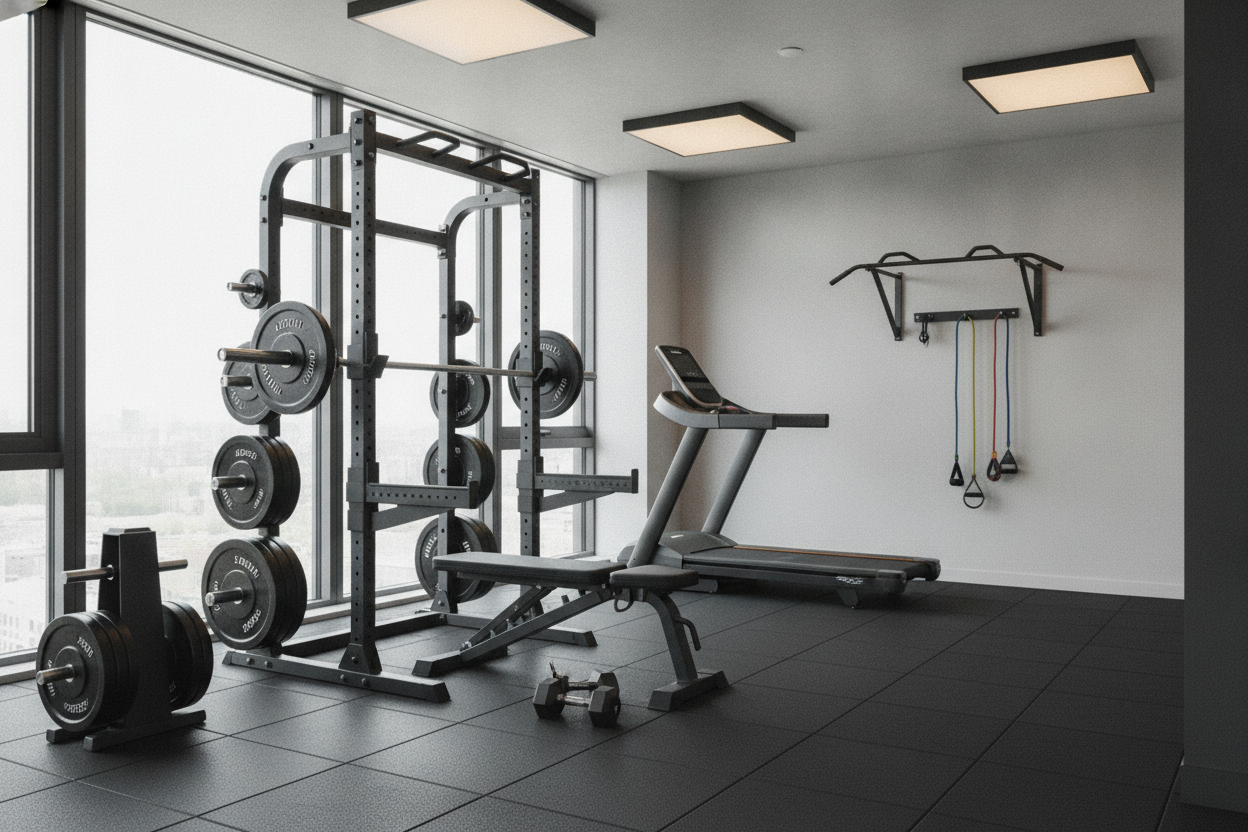
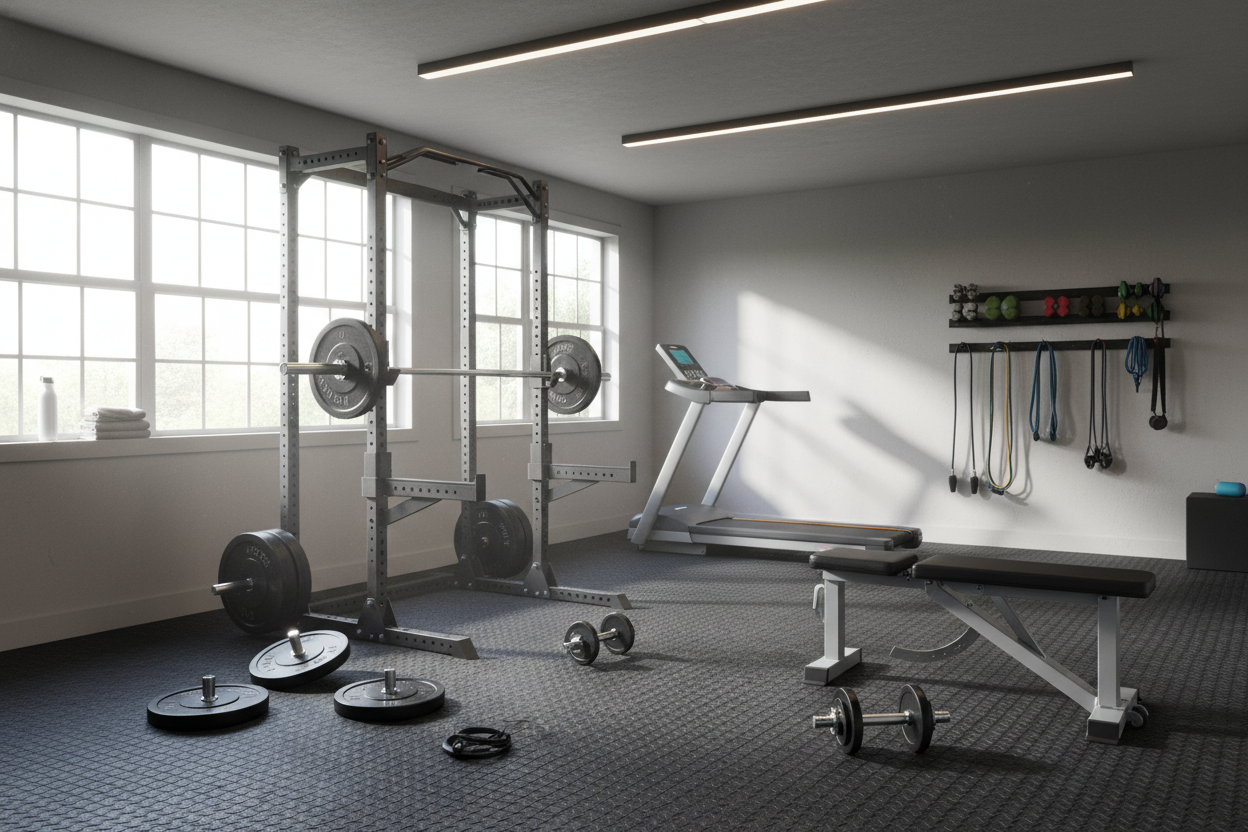
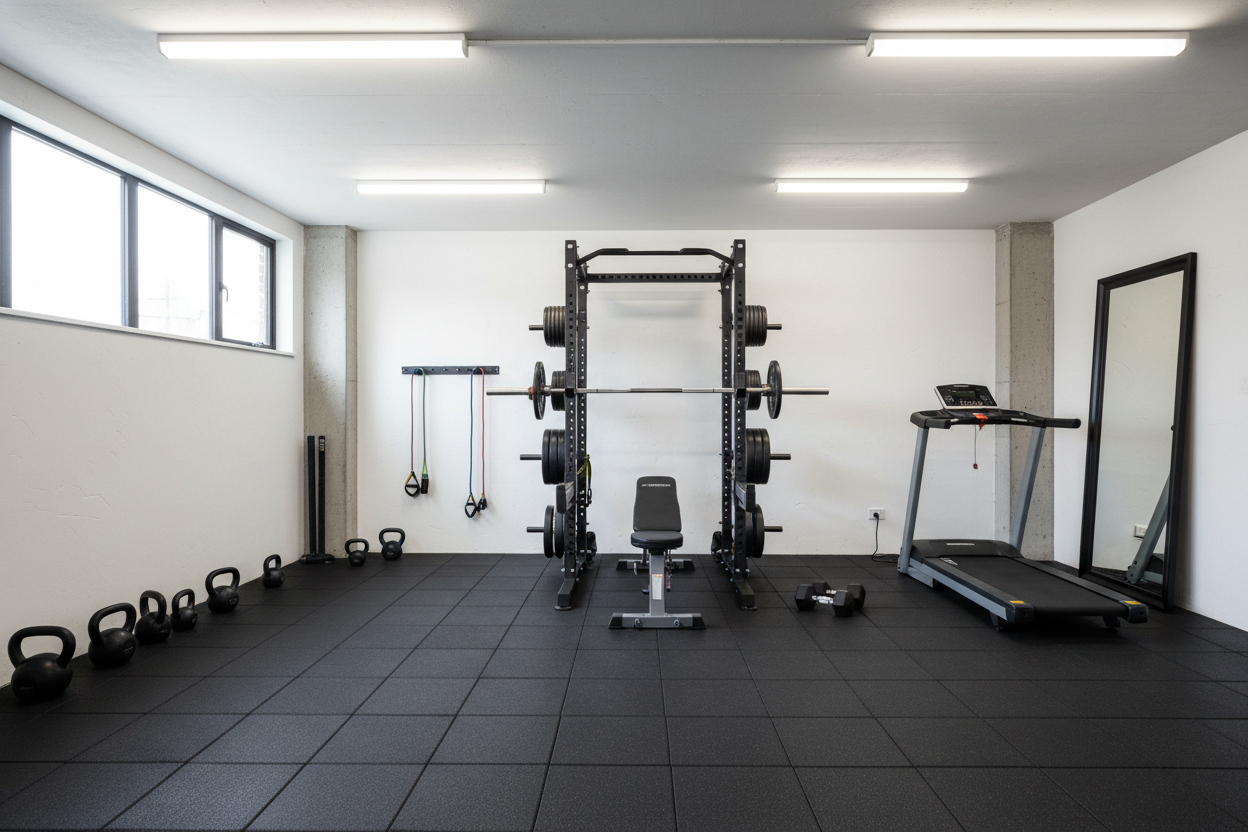
If you're training at home, your equipment needs to be up to the task. You can't safely push to failure if you're worried about your feet slipping on a hardwood floor or your rack wobbling. A high-quality large gym flooring mat is non-negotiable for stability during heavy squats. It provides the traction you need to drive through your heels without sliding.
As you get stronger, your grip might become a bottleneck, especially on deadlifts or rows. Don't let your small hand muscles stop you from taxing your large back muscles. Invest in some strength training accessories like lifting straps or liquid chalk. These tools allow you to keep pushing the weight even when your grip starts to fade, which is essential for hypertrophy training for women.
What Real Progress Actually Looks Like
Hypertrophy training for women is a marathon, not a sprint. You aren't going to wake up with 'bulky' arms overnight. In fact, most women struggle to put on even half a pound of lean muscle a month. Real progress looks like adding five pounds to your bench press, seeing a new vein in your forearm, or noticing that your clothes fit differently even though the scale hasn't moved much.
Stop obsessing over the mirror every morning. Take progress photos once a month and track your lifts in a notebook. If the numbers in the notebook are going up, the muscle is growing. That is the only metric that matters in the long run.
My Honest Take
I once spent six months doing 'bodyweight burn' circuits because I was told heavy weights would make me 'blocky.' I lost weight, sure, but I looked like a smaller version of my soft self. It wasn't until I started squatting 1.5x my body weight and eating actual meals that my physique changed. The downside? I had to buy all new jeans because my glutes grew. It’s a trade-off I’d make every single time.
FAQ
Will hypertrophy training make me look like a man?
No. Women don't have the natural testosterone levels to build massive amounts of muscle without extreme 'supplementation.' You’ll just look like a stronger, more defined version of yourself.
How long until I see results?
Consistent hypertrophy training for women usually shows visible results in 8 to 12 weeks, provided your nutrition and sleep are on point.
Can I do cardio while on a hypertrophy program?
Yes, but keep it moderate. Too much high-intensity cardio can interfere with your recovery and make it harder to maintain the caloric surplus needed for growth.