The Truth About Sculpting Legs: Why Squats Alone Aren't Giving You That Look
You have been hitting the squat rack consistently, your legs feel stronger, but when you look in the mirror, you aren't seeing the separation you want. This is the most common frustration among gym-goers aiming for an athletic aesthetic. The reality of achieving defined leg muscles is that it requires a specific combination of two competing physiological processes: building muscle tissue and reducing body fat.
Most people assume that high-repetition exercises with light weights will "tone" the muscle, creating those desirable cuts. This is a myth that refuses to die. To see the teardrop in your quadriceps or the separation in your hamstrings, you must first build enough muscle mass to push against the skin, and then strip away the fat layer obscuring that hard work. Without significant muscle size, lowering your body fat will just leave you looking thin rather than sculpted.
The "Toning" Trap: My Personal realization
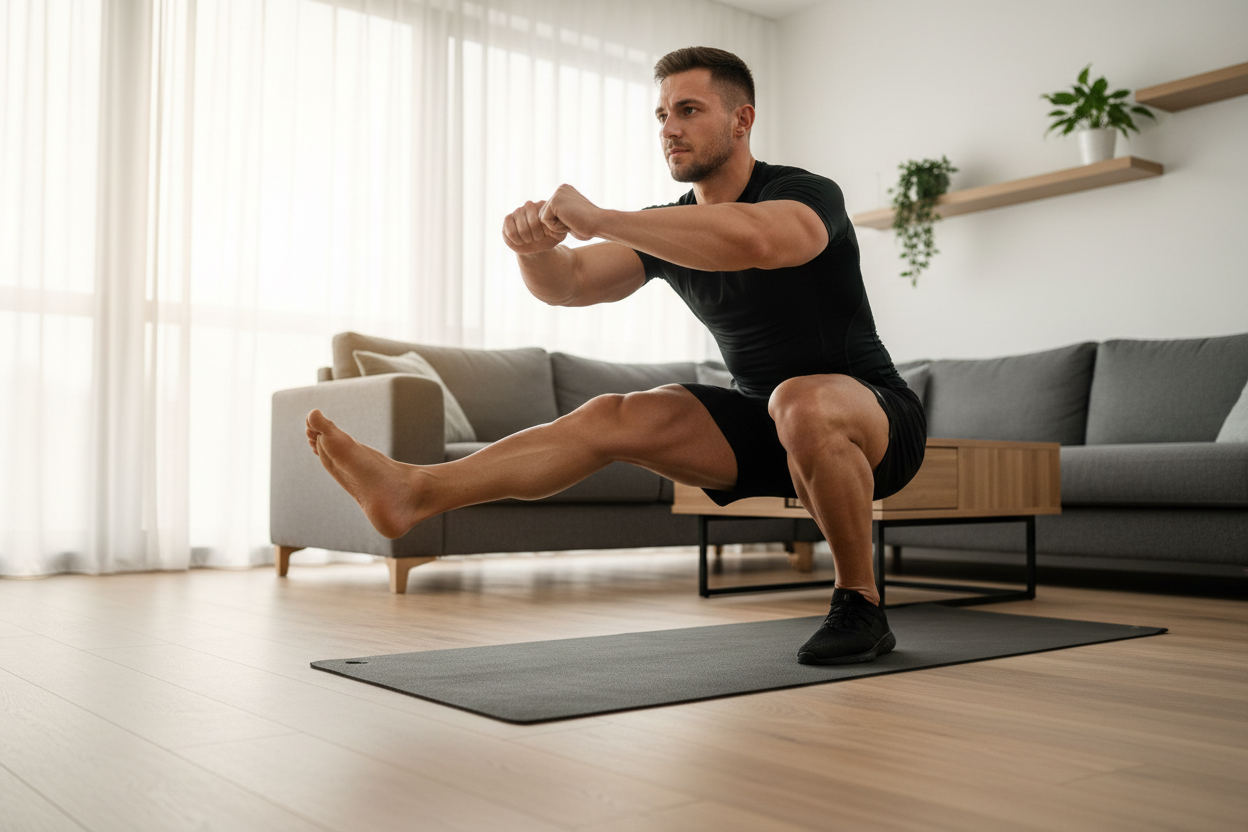
I spent the early years of my fitness journey chasing the "burn." I believed that if my legs were burning during a set of 30 leg extensions, I was carving out detail. I would spend hours doing bodyweight lunges and high-rep machines, terrified that lifting heavy would make my legs look bulky. The result? My legs stayed the exact same size, just slightly squishier. It wasn't until I completely flipped my approach—dropping the reps to the 8-12 range and focusing on increasing the weight every week—that the shape of my legs actually changed. I had to build the clay before I could sculpt it. Once I combined that heavy lifting with a slight caloric deficit, the leg muscle definition I had been chasing for years appeared in about three months.
The Anatomy of a Defined Leg
Understanding what you are actually trying to build helps visualize your training. Your upper leg isn't just one block of meat; it is a complex arrangement of muscles that need to be developed individually to create a 3D look. The quadriceps are made of four muscles, with the vastus lateralis (the outer sweep) and the vastus medialis (the teardrop above the knee) contributing most to that wide, athletic look.
On the back of the leg, the hamstrings provide the side profile thickness. Many lifters neglect hamstrings, leading to legs that look impressive from the front but disappear from the side. Achieving true definition requires a balanced attack on the anterior (front) and posterior (back) chain. If one area lags, the overall aesthetic suffers.
Compound vs. Isolation Movements
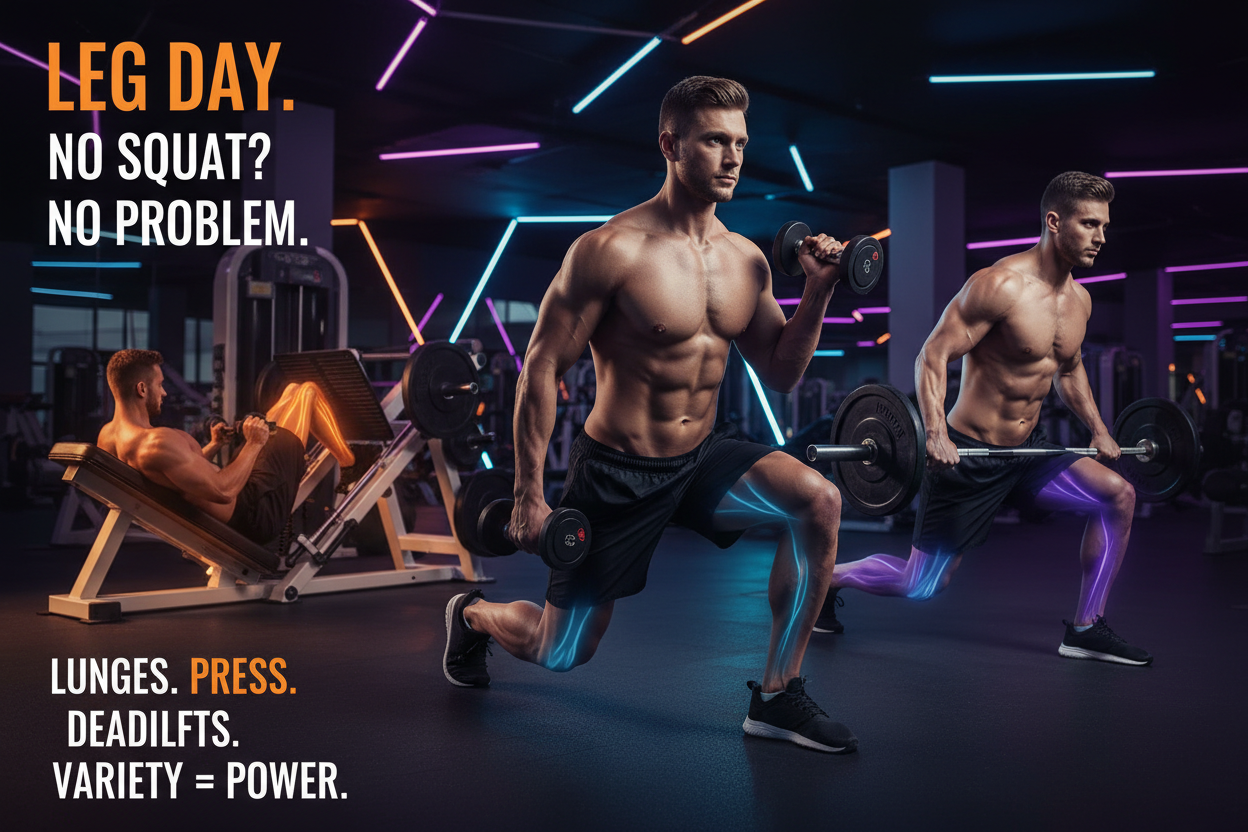
To build the necessary mass for definition, compound movements are non-negotiable. Squats, lunges, and deadlifts recruit the maximum amount of muscle fibers and trigger a hormonal response that aids growth. However, compound movements alone sometimes aren't enough for maximum detail. This is where isolation exercises come in.
Leg extensions target the quads without hamstring involvement, helping to etch out the details of the knee area. Lying leg curls isolate the hamstrings, allowing you to focus purely on the contraction without your lower back taking over. A mix of 70% compound lifting and 30% isolation work is usually the sweet spot for hypertrophy.
The Kitchen Factor: Revealing the Work
You can have the most muscular legs in the world, but if they are covered by a layer of adipose tissue, no one will know. This is where the concept of leg muscle definition shifts from the gym to the kitchen. We all store fat differently based on genetics. For many, the legs and glutes are the primary storage sites for stubborn body fat.
To reveal the muscle, you need to be in a caloric deficit. This means consuming fewer calories than your body burns daily. However, the deficit must be moderate. If you cut calories too aggressively, your body might break down muscle tissue for energy, leaving you with less shape when the fat is gone. Aim for a high-protein diet—roughly 0.8 to 1 gram of protein per pound of body weight—to protect your hard-earned muscle while the fat melts off.
Water Retention and Definition
Sometimes, what looks like fat is actually water retention. High sodium intake, stress, and lack of sleep can cause your body to hold water subcutaneously (under the skin). This blurs the lines between muscle groups. Drinking more water actually helps flush out excess retained fluids, sharpening your physique. If you feel "puffy" despite a good diet, examine your salt intake and hydration levels.
Progressive Overload is King
If you are doing the same workout with the same weights that you did six months ago, your legs have no reason to change. The principle of progressive overload is the driver of adaptation. You must consistently challenge your muscles to do more over time. This doesn't always mean adding more weight to the bar. You can add another rep, slow down the tempo (eccentric phase), or reduce rest times.
For defined leg muscles, changing the tempo is particularly effective. Try lowering the weight for 3 seconds on a squat and exploding up for 1 second. This increases "time under tension," causing more micro-tears in the muscle fiber, which repair larger and stronger. This density is what creates that hard, granite-like look rather than a soft, puffy appearance.
Cardio: Friend or Foe?
Cardio is a tool for fat loss, but the type of cardio matters. Excessive steady-state running can sometimes be counterproductive for leg aesthetics. Long-distance running involves thousands of low-impact collisions that can lead to muscle catabolism (breakdown) if recovery isn't perfect. Look at the legs of a marathon runner versus a sprinter. The sprinter has massive, defined legs; the marathon runner has very slim legs.
Incorporating High-Intensity Interval Training (HIIT) or incline walking is generally better for preserving leg mass while burning fat. Sprints, specifically, act as an anabolic signal for the legs, building muscle and burning fat simultaneously. Walking on an incline recruits the glutes and hamstrings without the high impact stress of pounding pavement.
Consistency and Patience
Legs are stubborn. Because they are large muscle groups that carry us around all day, they require significant stimulus to change. You might see changes in your arms or shoulders weeks before you notice significant difference in your legs. This is normal. Do not jump from program to program expecting a miracle.
Stick to a hypertrophy-based program for at least 12 weeks. Take progress photos rather than relying solely on the scale or the mirror. Lighting can play tricks on your eyes, but a photo record will show the gradual emergence of shadows and lines that indicate your body fat is dropping and your muscle is popping.
Frequently Asked Questions
How long does it take to see leg definition?
If you are consistent with nutrition and training, most people begin to see noticeable changes in 8 to 12 weeks. However, achieving deep separation and vascularity can take years of building muscle maturity and cycling through building and cutting phases.
Can I spot-reduce fat from my inner thighs?
No, spot reduction is a physiological impossibility. Your body loses fat systemically in an order determined by your genetics. You must lower your overall body fat percentage through a caloric deficit, and eventually, the fat will leave the inner thighs.
Should I do high reps for definition and low reps for bulk?
Not necessarily. While higher reps (15-20) increase metabolic stress, heavy lifting (6-12 reps) builds the dense muscle tissue required for the defined look. A combination of both rep ranges is ideal, but relying solely on high reps often leads to minimal muscle growth.