The Tonnage Trick: How to Build Muscle Volume Without Burnout
I remember staring at my garage gym floor after a grueling session of 'random sets to failure.' I was drenched in sweat, my heart was hammering, and I felt like I’d put in the work. But three months later, my shirts fit exactly the same. That’s the trap. If you want to know how to build muscle volume, you have to stop training like an angry teenager and start training like an accountant.
Quick Takeaways
- Tonnage is the ultimate metric: Weight x Reps x Sets.
- Chasing failure on every set actually reduces your total weekly volume.
- The 20% rule prevents your central nervous system from redlining.
- Joint health is the primary bottleneck for high-volume training cycles.
The Difference Between Getting Tired and Getting Bigger
Most people think a workout is successful if they can’t lift their arms to wash their hair afterward. That is ego talking, not hypertrophy. When you push every single set to absolute failure, you create massive amounts of neurological fatigue. By the time you get to your third or fourth exercise, your performance falls off a cliff. You might feel 'destroyed,' but your total work capacity has plummeted.
To maximize how to train for muscle size, you need to stay 1-2 reps away from failure on your early sets. This allows you to maintain your strength across the entire session. It’s about accumulating high-quality reps rather than grinding out one ugly, shaky rep that leaves you gassed for the next twenty minutes. Growth is a mathematical byproduct of work, not a reward for suffering.
What Does Weekly Tonnage Actually Mean?
Tonnage is the total weight moved in a given timeframe. It is the most objective way to measure progressive overload. If you squat 225 lbs for 3 sets of 10, your tonnage for that movement is 6,750 lbs. If you do that same weight for 5 sets of 8, your tonnage jumps to 9,000 lbs. Even though the sets of 8 felt 'easier' than the sets of 10, you moved an extra 2,250 lbs.
By tracking this number weekly, you guarantee that you are actually doing more work over time. It removes the guesswork. You don't have to wonder if you're getting better; you can see the total poundage climbing on your spreadsheet. This systematic approach is how you force muscle tissue to adapt without your nervous system throwing a tantrum and demanding a week on the couch.
The Simple Formula for Calculating Your Workload
Let’s look at the math in action. Option A: 3 sets of 10 reps at 200 lbs equals 6,000 lbs of volume. Option B: 5 sets of 7 reps at 200 lbs equals 7,000 lbs of volume. Option B actually provides more stimulus for growth despite each individual set feeling more manageable. Spreading the work across more sets allows for better technique and higher total tonnage. It is a more sustainable way to rack up the numbers without the high injury risk of grinding to failure.
How to Train for Muscle Size Using the 20% Rule
The biggest mistake I see in home gyms is the 'hero' mentality. Someone decides they need more volume and doubles their sets overnight. That is a fast track to tendonitis and burnout. I follow a strict 20% rule: never increase your total weekly tonnage by more than 20% for any specific muscle group. This allows your soft tissue—tendons and ligaments—to catch up to the demands you're placing on your muscles.
If your chest volume was 10,000 lbs last week, aim for 11,500 to 12,000 lbs this week. You can achieve this by adding a single set to each exercise or by adding 5-10 lbs to the bar while keeping reps the same. This incremental approach builds a massive foundation of volume over a 12-week macrocycle. It’s boring, but it’s the only way to stay in the game long enough to see real tissue changes.
Protecting Your Joints During High-Volume Blocks
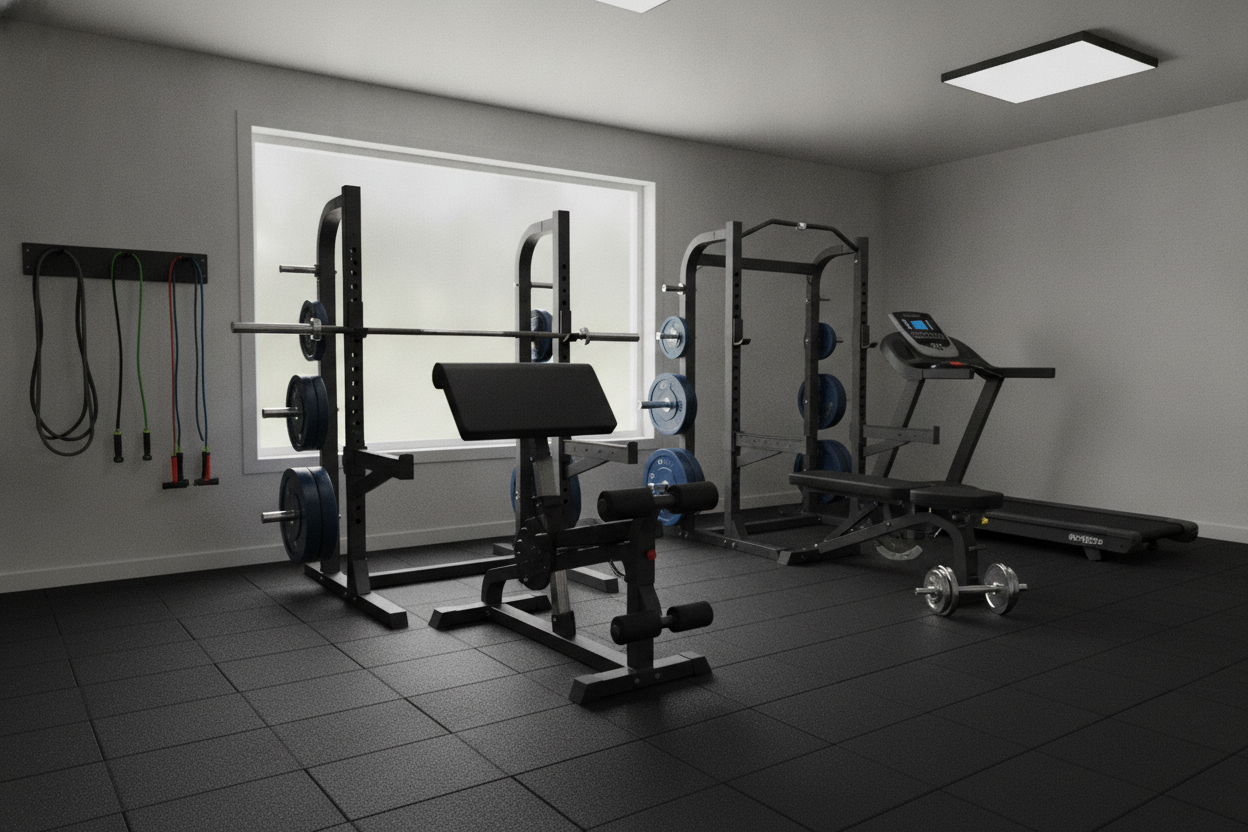
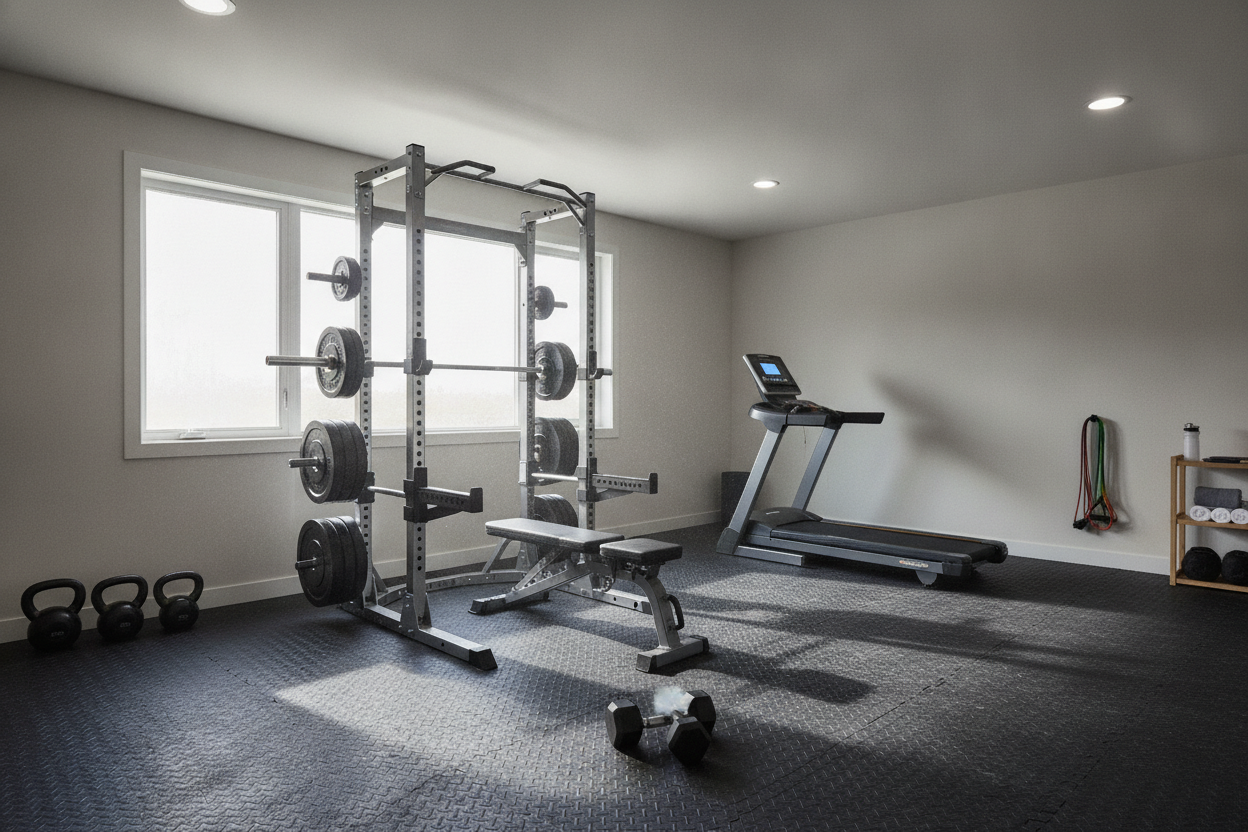
High-volume training is a grind on the body. While your muscles recover quickly, your joints bear the brunt of those thousands of cumulative pounds. I learned this the hard way training on bare concrete in my first garage setup. My knees and elbows started feeling like they were filled with crushed glass after just six weeks of high-tonnage work. You cannot ignore the environment you're training in.
If you’re serious about racking up massive volume, you need to dampen the impact. Investing in a large exercise mat for home gym use is the best move you can make for your longevity. It provides the necessary shock absorption for your joints during heavy squats and deadlifts. When the floor has some give, your connective tissue doesn't have to absorb 100% of the force, allowing you to push those volume blocks further into the year.
A Sample Lower Body Tonnage Progression
To see this in practice, let’s look at a 4-week progression for a leg day. You don't need fancy machines; you just need the best leg exercise equipment for home—usually a solid rack and a barbell. In Week 1, you might do Squats for 3x10 at 185 lbs (5,550 lbs). In Week 2, you move to 4x10 at 185 lbs (7,400 lbs). In Week 3, you stick with 4x10 but bump the weight to 195 lbs (7,800 lbs). Week 4 is a deload where you cut the tonnage in half to let fatigue dissipate.
This linear progression of tonnage ensures you are constantly providing a new stimulus. By the end of the month, you’ve moved significantly more weight than you did in Week 1, and your body has no choice but to build more muscle to handle the load. It’s a cold, calculated way to train, but it beats the hell out of 'guessing' your way through a workout.
Personal Experience: The Spreadsheet Realization
I spent years chasing 'the pump.' I’d do high-rep sets with short rest periods, feeling like an absolute beast in the mirror for twenty minutes. Then I’d wake up the next day looking exactly the same. It wasn't until I started logging my tonnage that I realized my 'intense' workouts were actually low-volume. I was tired, but I wasn't doing enough total work to grow. The downside? Tracking math between sets is tedious. I hate spreadsheets, but my quads grew more in three months of tracking tonnage than they did in three years of 'feeling the burn.'
Frequently Asked Questions
Does tonnage matter for strength?
Yes, but it's not the primary driver. For pure strength, you need higher intensity (percentage of your 1-rep max). For muscle size, however, total tonnage is the king of metrics.
Should I track tonnage for isolation moves?
I wouldn't bother tracking tonnage for things like lateral raises or bicep curls. Focus your math on the big compound lifts—squats, presses, and rows—where you can actually move significant weight.
How often should I deload?
If you are pushing your tonnage up by 10-20% each week, most lifters will need a deload every 4th or 5th week. If your joints start aching or your sleep quality drops, it's time to back off.