The Square Gym Mat Explained: What to Know Before You Buy
Building a home gym is an exciting project, but nothing kills the vibe faster than the sound of a heavy dumbbell cracking your concrete floor. If you are tired of shifting, flimsy flooring that cannot handle serious training, upgrading your foundation is the first step. Finding the right square gym mat is crucial for protecting your equipment, your joints, and your home's structural integrity. This guide will walk you through exactly what to look for so you can build a bulletproof training space.
Key Takeaways
- Thickness dictates function: 3/4-inch rubber is standard for heavy lifting, while 1/2-inch works for general fitness.
- Material matters: Vulcanized rubber outperforms EVA foam in durability and weight capacity.
- Installation style: Interlocking tiles offer easier DIY installation without the need for messy adhesives.
- Odor control: High-quality mats undergo mitigation processes to reduce that harsh new tire smell.
Decoding Materials: What Makes a Mat Last?
Vulcanized Rubber vs. EVA Foam
When shopping for gym square mats, the biggest mistake people make is buying cheap EVA foam tiles meant for children's playrooms. While foam is soft and budget-friendly, it compresses permanently under heavy power racks and tears easily. High-density vulcanized rubber is the gold standard. It absorbs shock, resists gouging, and provides the firm grip needed for heavy squats and deadlifts.
Dialing in the Right Thickness
Not all square mats for gym environments are created equal. If you are doing Olympic weightlifting or heavy deadlifts, you need a minimum of 3/4-inch thickness to protect the subfloor. For yoga, dumbbells, and general cardio machines, 3/8-inch to 1/2-inch will suffice.
Space Planning for North American Setups
Garage Gyms vs. Spare Bedrooms
Standard square gym mats typically come in 24x24 inch (2x2 ft) or 36x36 inch (3x3 ft) dimensions. For a standard single-car garage setup (roughly 12x20 feet), you will want to measure your actual lifting footprint rather than wall-to-wall to save money. If you are setting up in a spare bedroom or basement, consider the clearance. Adding a thick mat might make your ceiling feel a bit tighter if you are pressing overhead in an already low-clearance basement.
From Our Gym: Honest Take
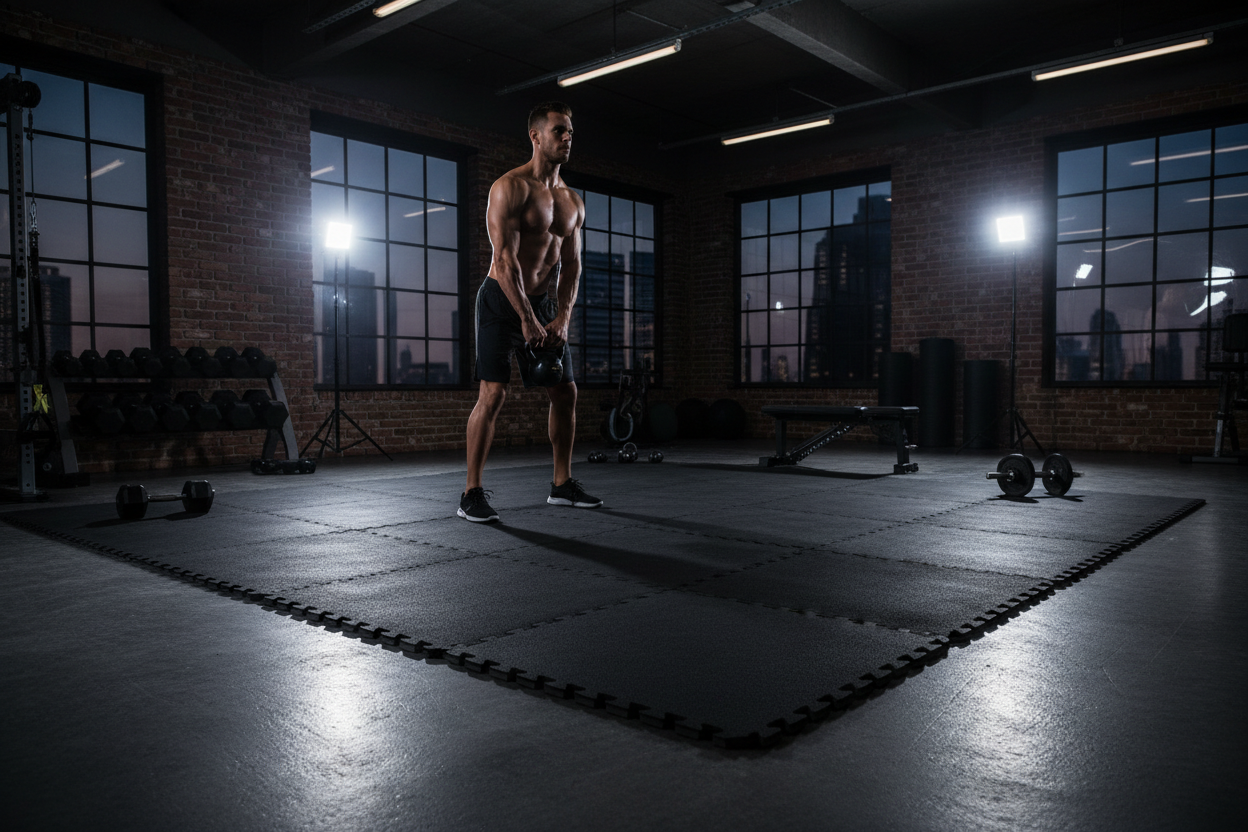
We have tested dozens of flooring solutions in our facility, and I can tell you firsthand that skimping on your foundation will cost you more in the long run. Last year, I set up a secondary deadlift platform using standard 3/4-inch interlocking rubber square gym mats. The grip was phenomenal; my feet felt rooted even during heavy, chalked-up pulls. However, a word of caution: if you buy recycled crumb rubber mats, be prepared for a strong odor for the first few weeks. We had to leave our garage door open and run a high-velocity fan to off-gas them. If you are sensitive to smells, invest in virgin rubber or premium low-odor recycled options.
Frequently Asked Questions
Are gym square mats better than rolled flooring?
Square mats are generally easier for DIY installation and cheaper to ship. If a single square gets damaged, you can replace it without tearing up the entire floor, unlike heavy rolled rubber.
How many square mats for gym setups do I need?
It depends on your footprint. An 8x8 foot lifting area requires sixteen 2x2 foot square mats. Always buy 10-15% more than your exact square footage to account for cutting and wall edges.
Do I need to glue down square gym mats?
Usually, no. Heavy 3/4-inch rubber mats and interlocking tiles stay in place under their own weight and the weight of your equipment. Double-sided carpet tape is a great alternative if you experience minor shifting.